EPR Compliance Guide

Bio-PE & EPR Regulations: Future-Proof Your Packaging

Extended Producer Responsibility is reshaping packaging rules. Learn why bio-PE's full recyclability and carbon benefits make it a strategic choice for EPR-driven markets.

View Bio-PE Products
EPR Compliant
100% Recyclable
Bio-based
Bio-PE EPR compliance and recyclability
Click to enlarge

Key Takeaways

Share:
  • EPR is changing the game: Recyclability now directly affects fees and compliance costs
  • Bio-PE = PE: Chemically identical, fits existing recycling infrastructure with no changes
  • Lower fees, lower risk: Mono-PE structures qualify for favorable EPR fee tiers
  • Dual strategy: Use compostable where infrastructure exists, bio-PE where recycling dominates

EPR Is Changing the Rules of the Game

Extended Producer Responsibility (EPR) is reshaping how brands approach packaging. What was once a nice-to-have sustainability practice is now a regulatory requirement with real financial teeth. In Europe, Asia-Pacific, and North America, new packaging regulations are pushing brands to rethink materials—and fast.

Recyclability is the priority now. Over the next five years, fees and labeling requirements will depend increasingly on how recyclable your packaging is, how much recycled content it contains, and whether it might contaminate existing collection systems.

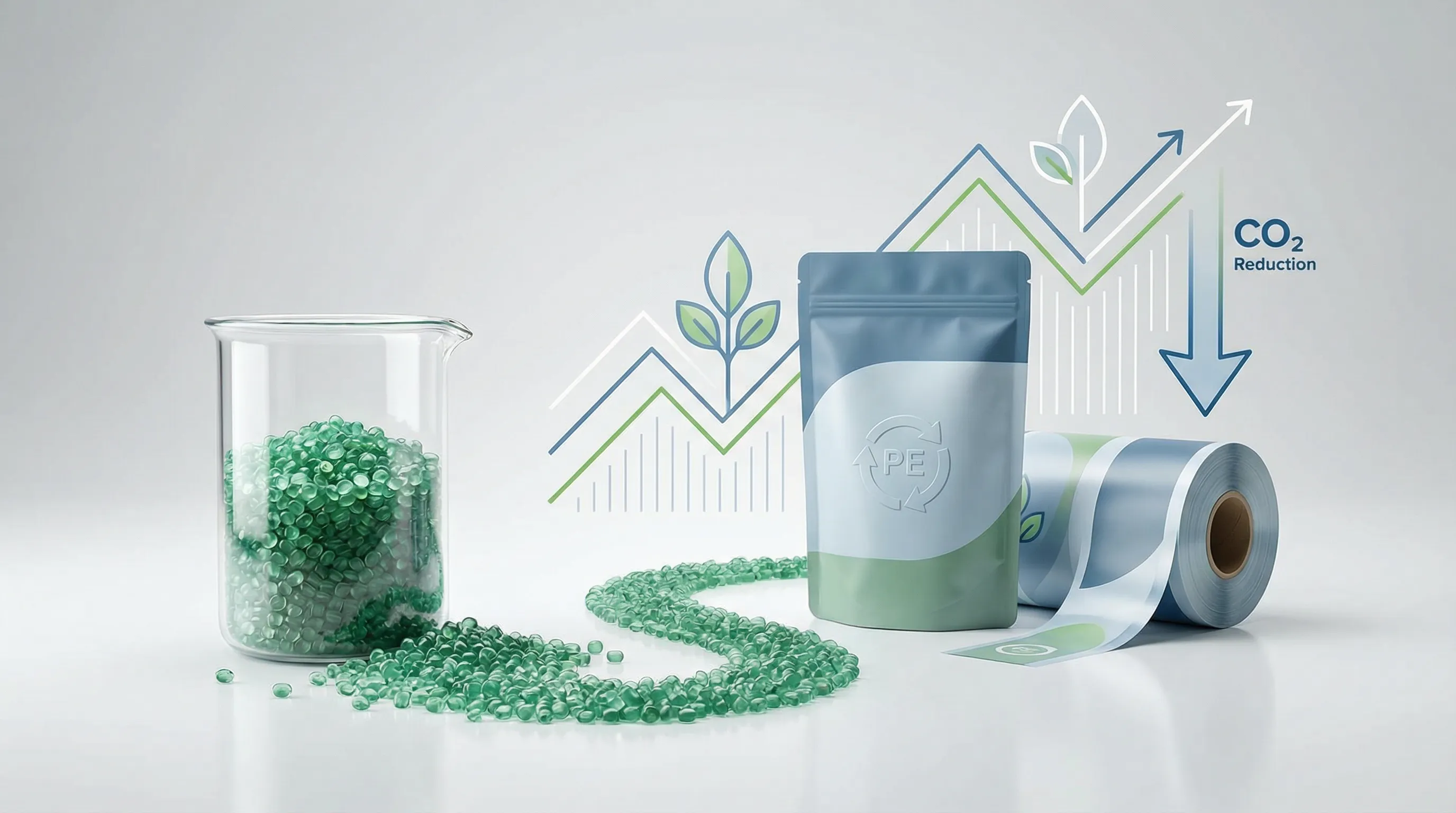
Bio-PE sits at the crossroads of two critical trends: it offers bio-based climate benefits while remaining fully recyclable as polyethylene. Lower carbon and lower regulatory risk—that combination makes it a strategic option for brands preparing for EPR-driven markets.

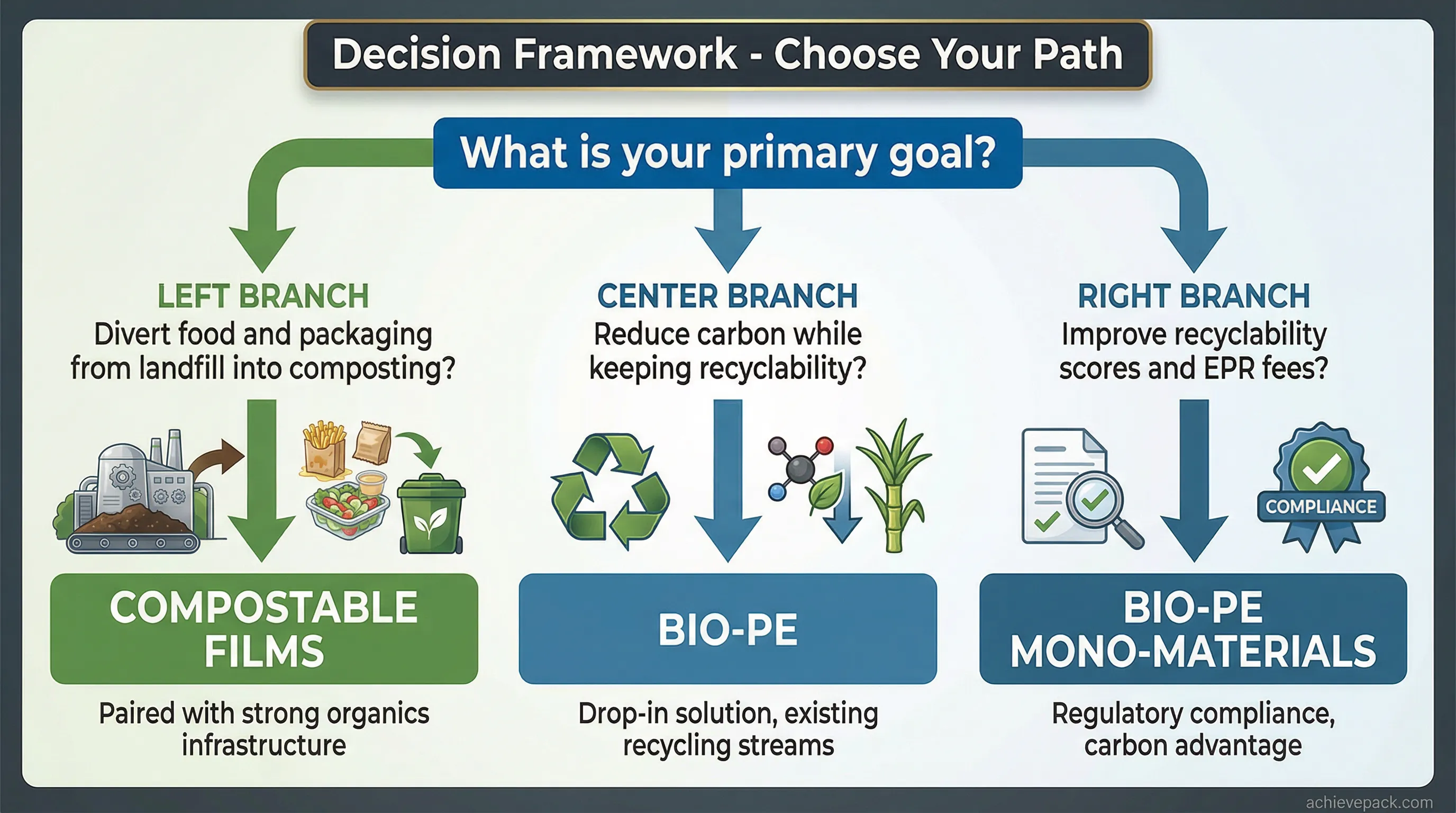
EPR regulatory framework decision path
Regulatory decision framework for packaging materials
Click to enlarge

Regulatory Focus: Recyclability First

Policymakers across the globe are sending the same signal: materials that are easy to collect, sort, and recycle are favored. Materials that require entirely new systems, or worse, contaminate existing ones, face higher fees and scrutiny.

Compostable and biodegradable plastics are increasingly viewed with suspicion. When these materials end up in mechanical recycling streams, they disrupt the entire process.

Fee modulation is coming to more markets. Several European EPR schemes already adjust fees based on recyclability ratings. As this spreads globally, choosing high-recyclability materials becomes a direct cost lever.

Bio-PE's Role in PE Recycling Systems

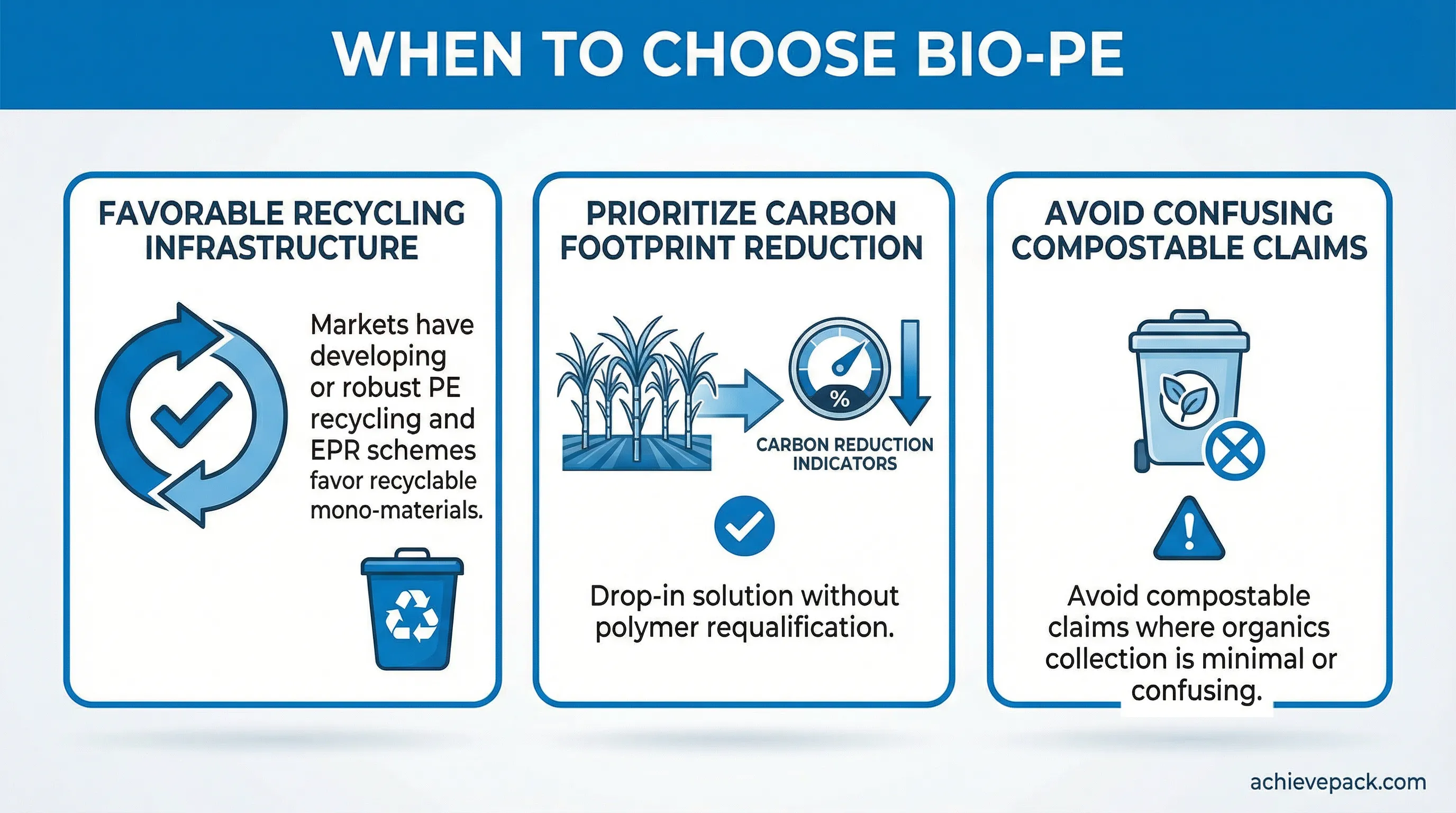
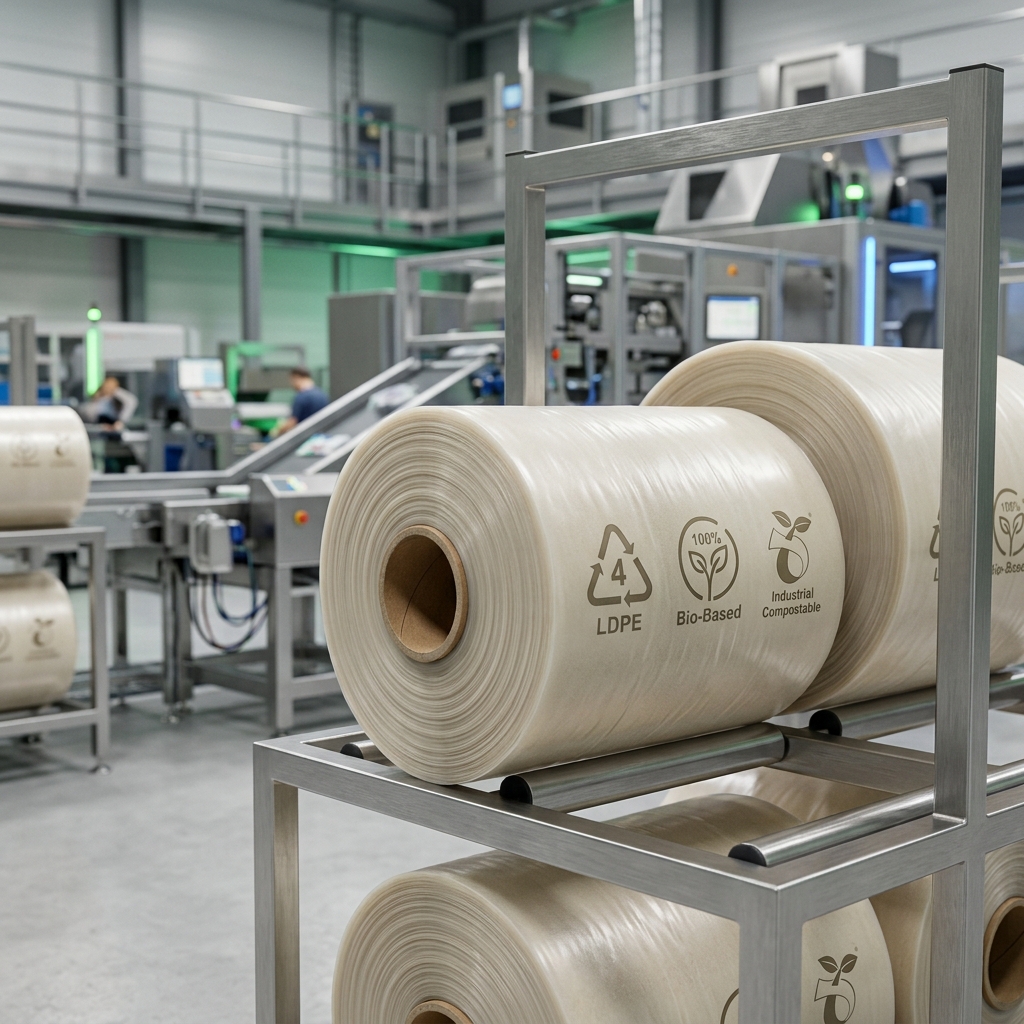
Here's the game-changer: bio-PE is chemically identical to fossil PE. From the recycling system's perspective, they're the same material.

Sorting technologies based on density and near-infrared (NIR) spectroscopy see no difference. Mechanical recycling processes handle both together. When you design packaging using mono-PE—whether it's fossil-based or bio-based—that structure fits cleanly into existing PE recycling infrastructure.

  • No new collection systems needed
  • No new sorting equipment
  • No consumer education required

Under EPR frameworks that prioritize recyclability and existing infrastructure, bio-PE mono-PE structures are classified as fully recyclable—often qualifying for the same low fee tier as fossil PE.

Bio-PE integration with PE recycling systems
Bio-PE seamlessly integrates with existing PE recycling
Click to enlarge
Mono-material structure comparison
Mono-material structures simplify recycling and lower EPR fees
Click to enlarge

Mono-Material Structures Lower Costs and Risk

Under EPR, complexity costs. Multi-layer laminates combining PE, aluminum, and adhesive create sorting and recycling challenges. They fall into lower recyclability tiers, triggering higher fees.

Mono-PE structures are straightforward. Single polyethylene layers are easy to collect, easy to sort, easy to recycle. No surprises, no contamination risks.

Multi-Layer Risk

  • • Higher EPR fees
  • • Sorting challenges
  • • Contamination risk

Mono-PE Benefit

  • • Lower fee tiers
  • • Easy recycling
  • • No contamination

How Bio-PE Fits Into Existing Infrastructure

The recycling journey for bio-PE is no different than for fossil PE, which is exactly the point:

  1. Consumers toss mono-PE packaging into their PE recycling bin
  2. Collection trucks gather it
  3. At the sorting facility, NIR scanners recognize it as PE
  4. It goes onto the PE line alongside all other PE material
  5. Mechanical recyclers process it into pellets
  6. Those pellets become new packaging, bottles, or industrial applications

No reclassification needed. No special training for sorters. No infrastructure investments. This is why, from a regulatory perspective, bio-PE mono-PE structures make such practical sense.

Bio-PE recycling infrastructure flow
Bio-PE fits seamlessly into existing PE recycling workflows
Click to enlarge
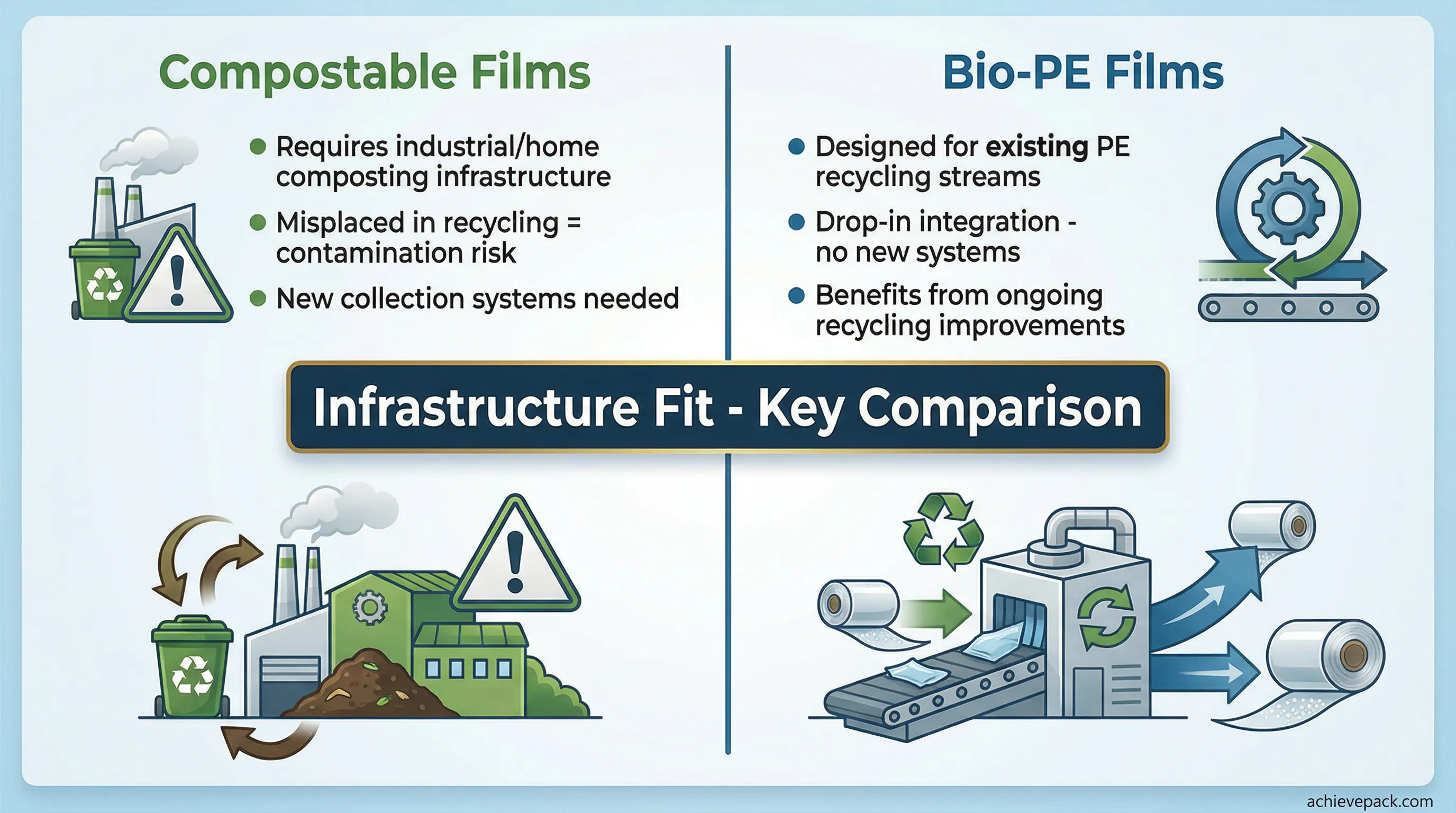
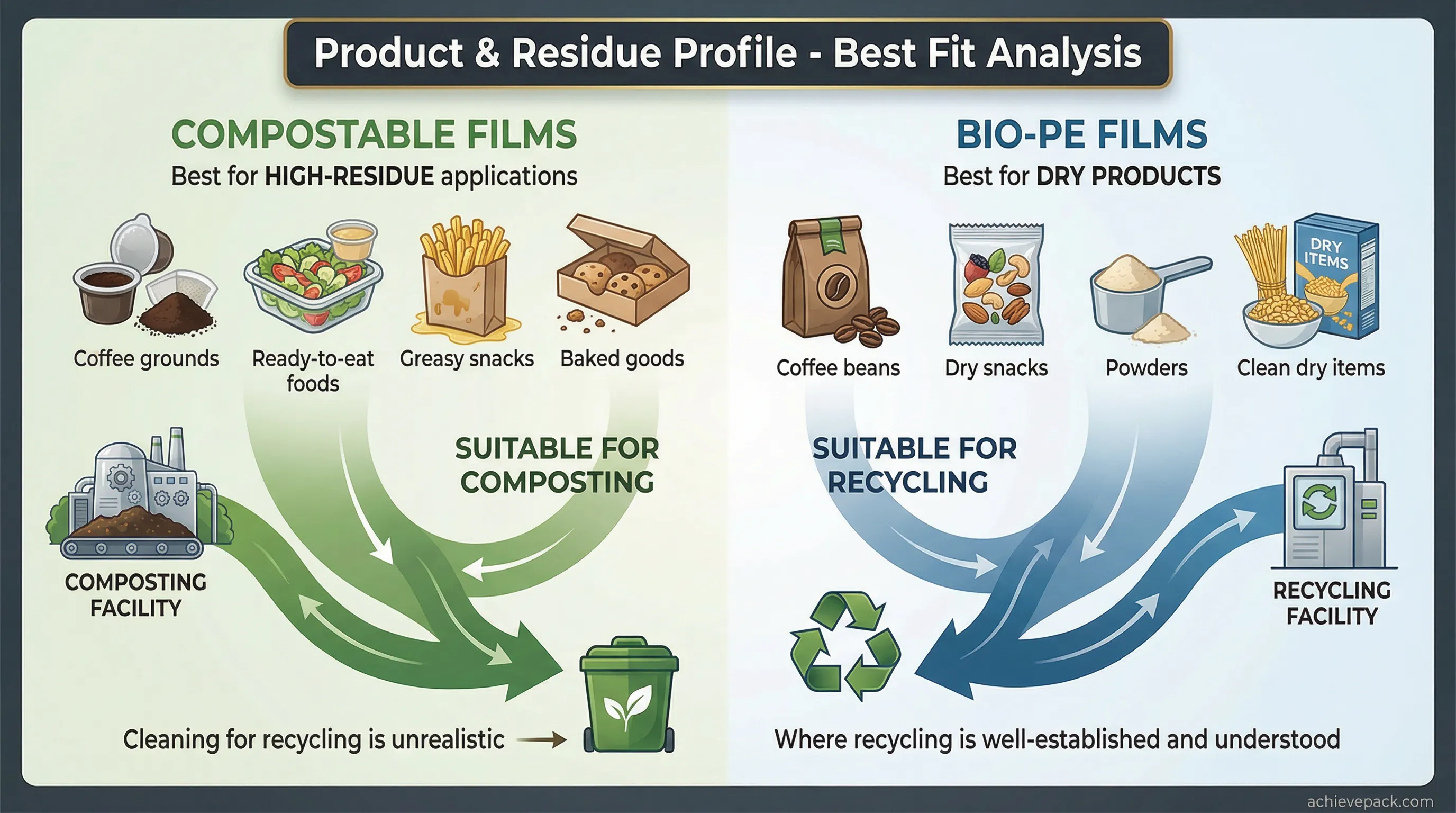
Compostable vs Bio-PE strategy comparison
Strategic material selection by market infrastructure
Click to enlarge

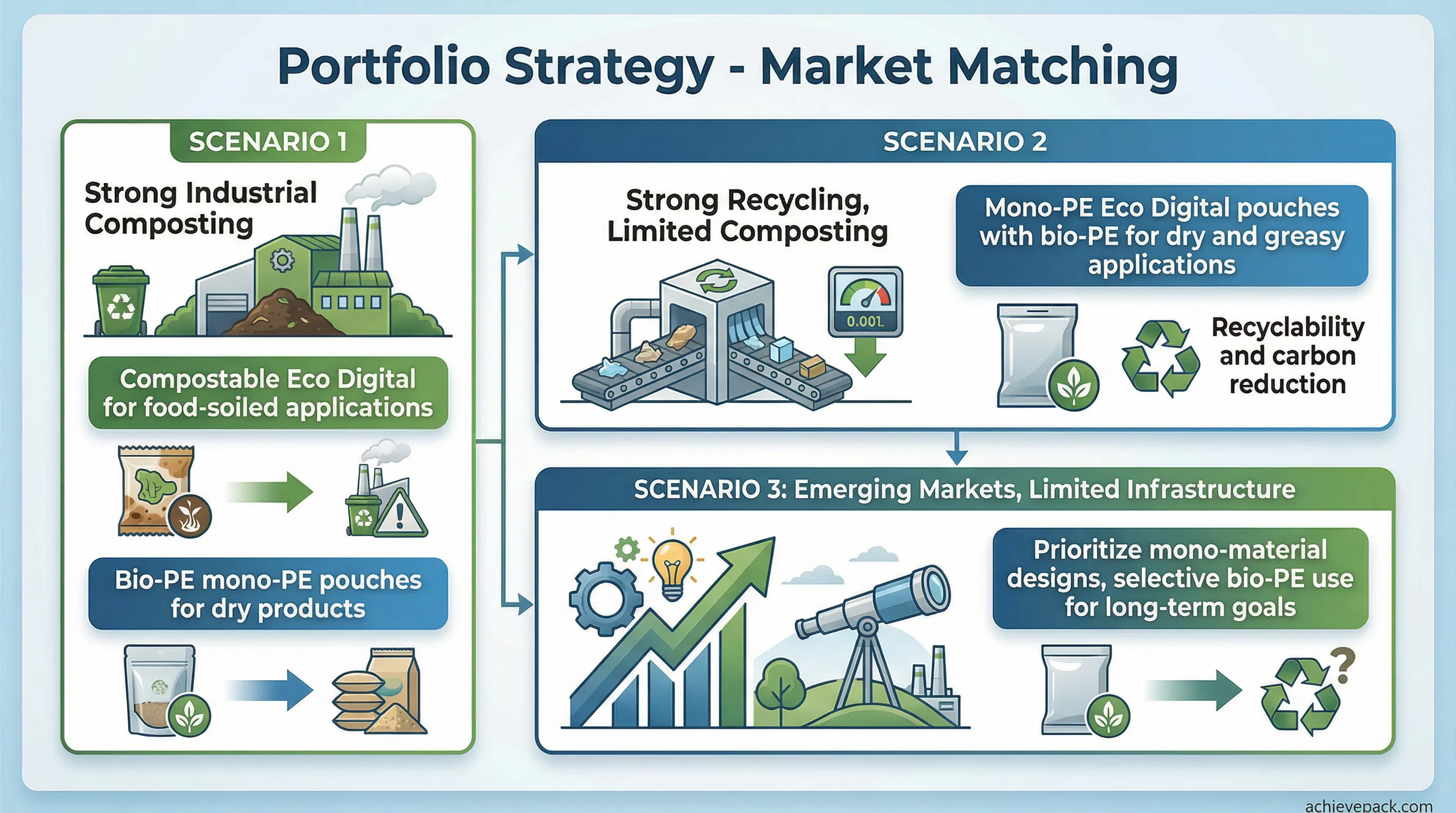
Compostable and Bio-PE: A Dual Strategy

Here's the nuance that many brands miss: EPR schemes are not uniform. Neither should your global strategy be.

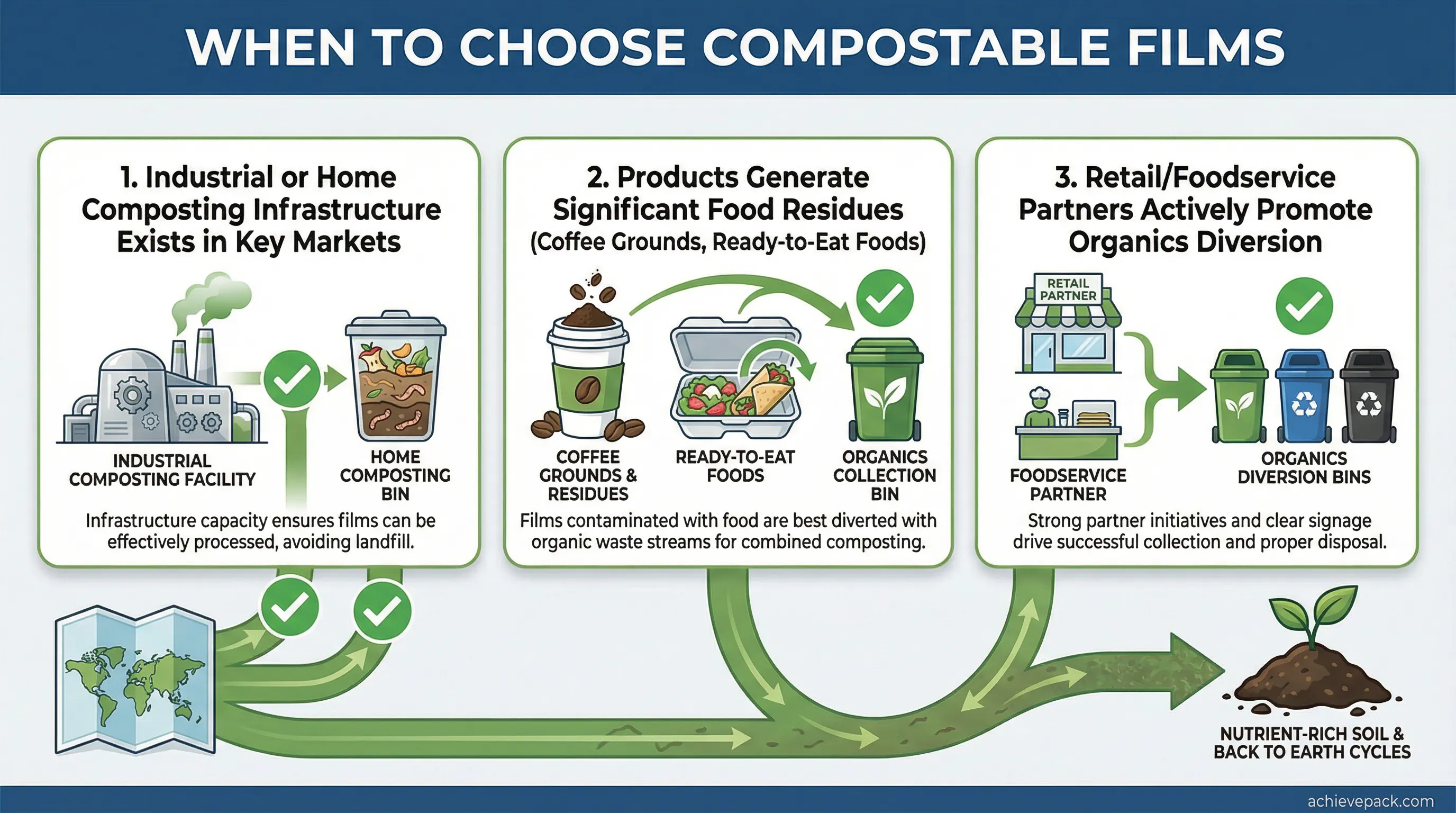
Compostable materials still have a role—but only in specific contexts. In markets with robust industrial composting infrastructure, compostable packaging for food-soiled applications makes sense.

But in markets where mechanical recycling is the policy priority—where organics collection is weak—compostable packaging is a liability. It risks contaminating PE recycling streams.

The strategic move: Treat your portfolio regionally. Use compostable where infrastructure supports it. Use bio-PE where recycling is the system of choice.

5 Common Bio-PE & EPR Compliance Problems (And Solutions)

1. High EPR Compliance Costs

Pain Point: Non-recyclable packaging incurs heavy EPR fees in Europe and North America.

Solution: Transition to mono-material Bio-PE structures which qualify for the lowest EPR fee brackets due to their 100% recyclability in existing PE streams.

2. Barrier Performance Loss

Pain Point: Switching to mono-material PE often sacrifices oxygen and moisture barriers.

Solution: Use advanced MDO-PE combined with EVOH coatings that maintain high barrier properties without compromising recyclability.

3. Sorting Facility Rejection

Pain Point: Multi-layer packaging is often rejected by optical sorters at recycling facilities.

Solution: Bio-PE mono-materials reflect NIR sensors identically to conventional PE, ensuring 100% sorting accuracy and recovery.

4. Machinability & Sealing Issues

Pain Point: Sustainable films often suffer from poor heat resistance, causing sealing issues on high-speed lines.

Solution: Engineer the Bio-PE structure with high-density outer layers for heat resistance and metallocene inner layers for high-strength sealing.

5. Brand Sustainability Verification

Pain Point: Brands struggle to prove their packaging's bio-based origin and recyclability.

Solution: Utilize carbon-14 dating certification for the Bio-PE content and recognized recyclability certifications (e.g., Cyclos-HTP) for transparent claims.

Bio-PE and EPR compliance problems and solutions
Modern engineering solutions for Bio-PE compliance
Click to enlarge

Building Future-Proof Eco Digital Portfolios

Navigating this landscape requires strategy, flexibility, and speed. Achieve Pack helps brands build portfolios that align with both today's regulations and tomorrow's uncertainties.

  • Market intelligence: We track regulatory and infrastructure shifts across key markets
  • SKU categorization: We map portfolios against future recyclability criteria
  • Eco Digital flexibility: Low MOQ lets you test structures without full commitment
Future-proof packaging portfolio strategy
Building a future-proof Eco Digital portfolio
Click to enlarge
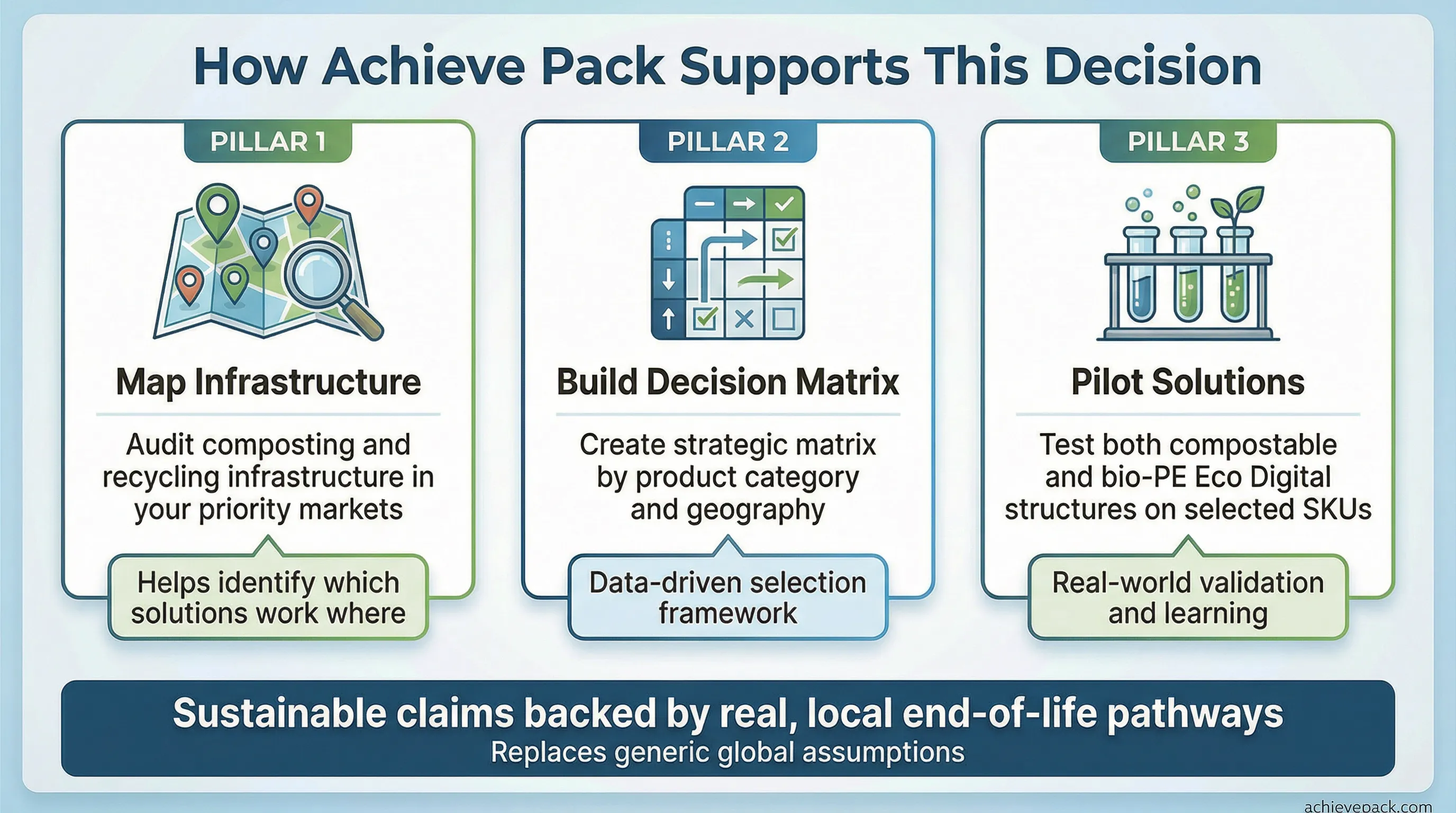
Achieve Pack EPR compliance support services
Achieve Pack supports your EPR compliance journey
Click to enlarge

How Achieve Pack Supports Your EPR Strategy

If you're preparing for upcoming EPR and recyclability rules, Achieve Pack can help:

  • Map your current portfolio against future recyclability criteria and EPR fee exposure
  • Identify where bio-PE and compostable each add the most value and least risk
  • Design and test Eco Digital structures that align with regulatory and climate goals
  • Stay agile with low MOQ and digital printing so you adjust as regulations evolve

Frequently Asked Questions

What is EPR and why does it matter for packaging?
Extended Producer Responsibility (EPR) is a policy approach where producers take responsibility for the entire lifecycle of their products, including end-of-life. For packaging, this means brands pay fees based on how recyclable their materials are. More recyclable materials = lower fees. EPR is now active in Europe and expanding to North America and Asia-Pacific.
How does bio-PE help with EPR compliance?
Bio-PE is chemically identical to fossil PE, so it fits into existing PE recycling streams without any modifications. Under EPR schemes that prioritize recyclability, bio-PE mono-PE structures qualify for the same low fee tier as conventional PE while offering additional carbon benefits from renewable feedstocks.
What's the difference between recyclable and compostable under EPR?
Recyclable materials (like PE and bio-PE) fit into existing collection and recycling infrastructure. Compostable materials require separate organic waste collection and industrial composting facilities. EPR schemes increasingly favor recyclable materials because they work with existing systems, while compostable materials face scrutiny if infrastructure is lacking.
Will bio-PE contaminate recycling streams?
No. Bio-PE is chemically identical to fossil PE. Recycling facilities, sorting equipment (NIR scanners), and mechanical recyclers cannot distinguish between them. They process together as a single PE stream. This is a key advantage over compostable materials, which can contaminate PE recycling if mis-sorted.
Should I use compostable or bio-PE packaging?
It depends on your markets. Use compostable in regions with strong industrial composting infrastructure and for food-soiled applications. Use bio-PE in markets where PE recycling is established and EPR fees penalize non-recyclable materials. Many brands use both strategically across different markets and product lines.

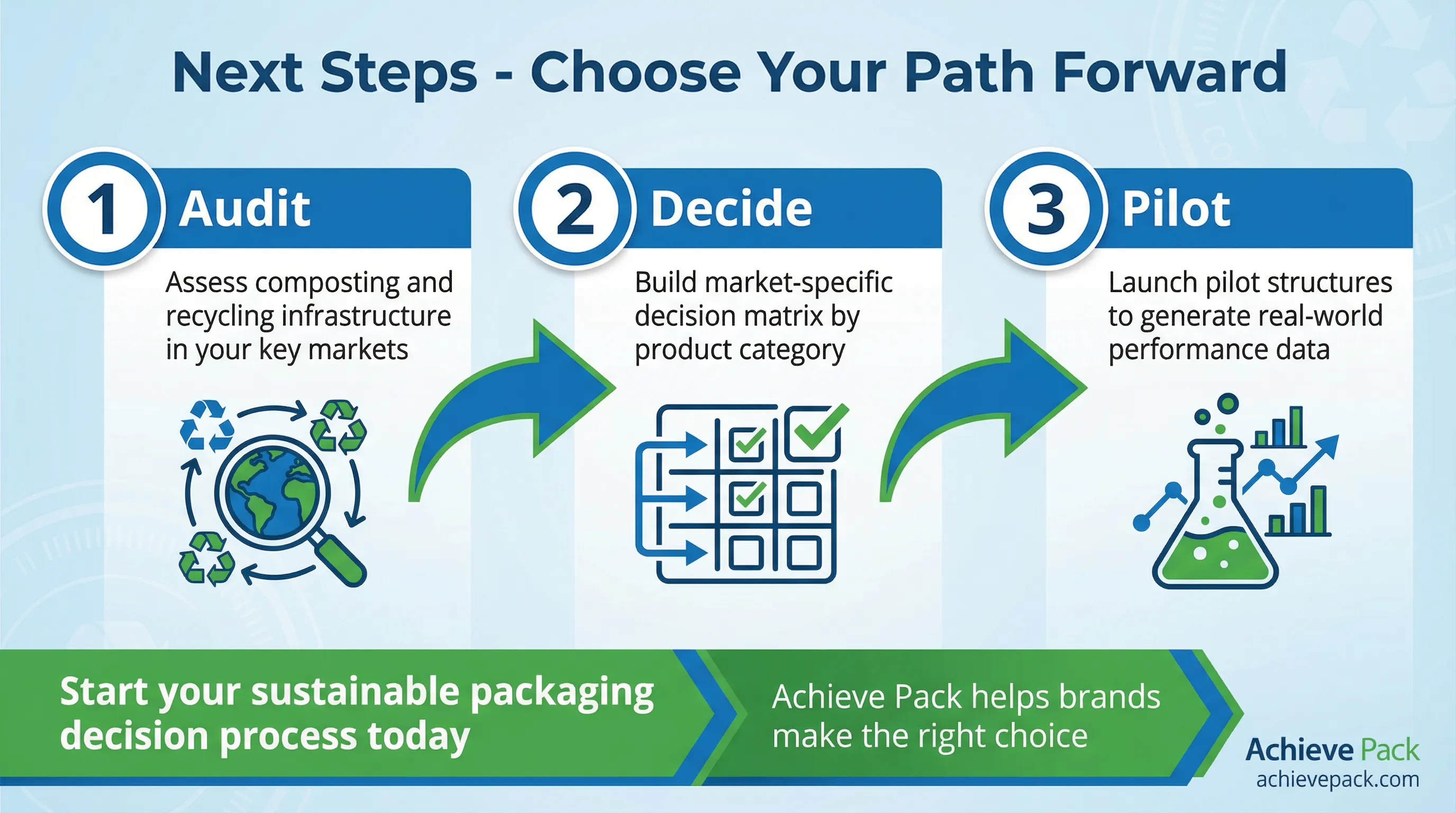
Take Action Now

Materials that are both recyclable and lower carbon will gain competitive advantage in EPR-driven markets over the next five years. Bio-PE offers a practical route to that combination.

Regulatory timelines are compressing. Brands that understand the landscape and position portfolios strategically will lead their categories. Those that hesitate will scramble.

Order Sample PackBrowse Store
Next steps for EPR compliance
Click to enlarge
Still reading the footer? You must be serious.
$40+ sample kit — credited to your first order. Or book 15 minutes with a human.
Get the Sample KitBook a Call
WhatsApp (Real Person)LIVE
Book Meeting (Real Person)1:1
AI Packaging Assistant

We use cookies to improve your experience. View our Cookie Policy.