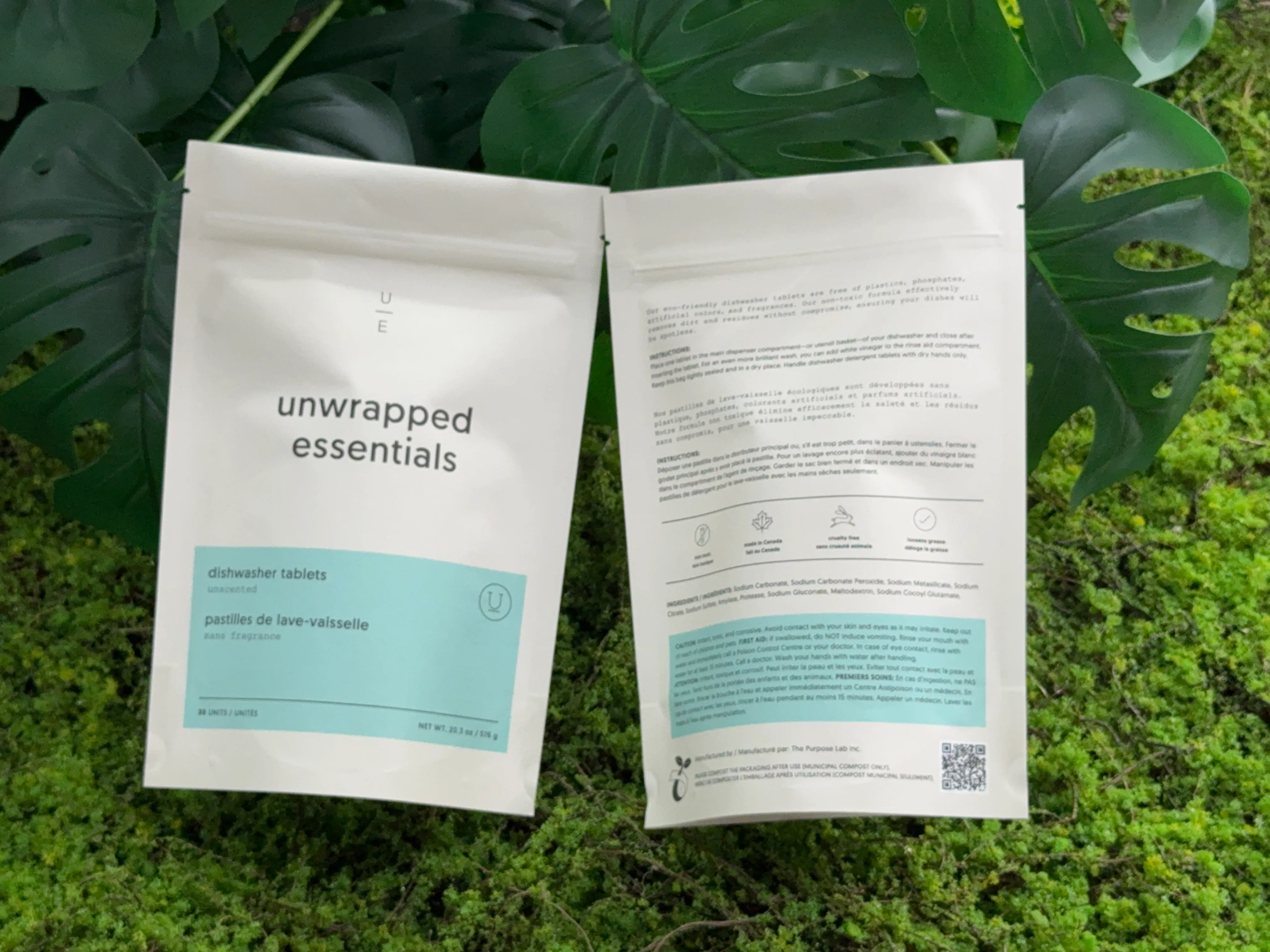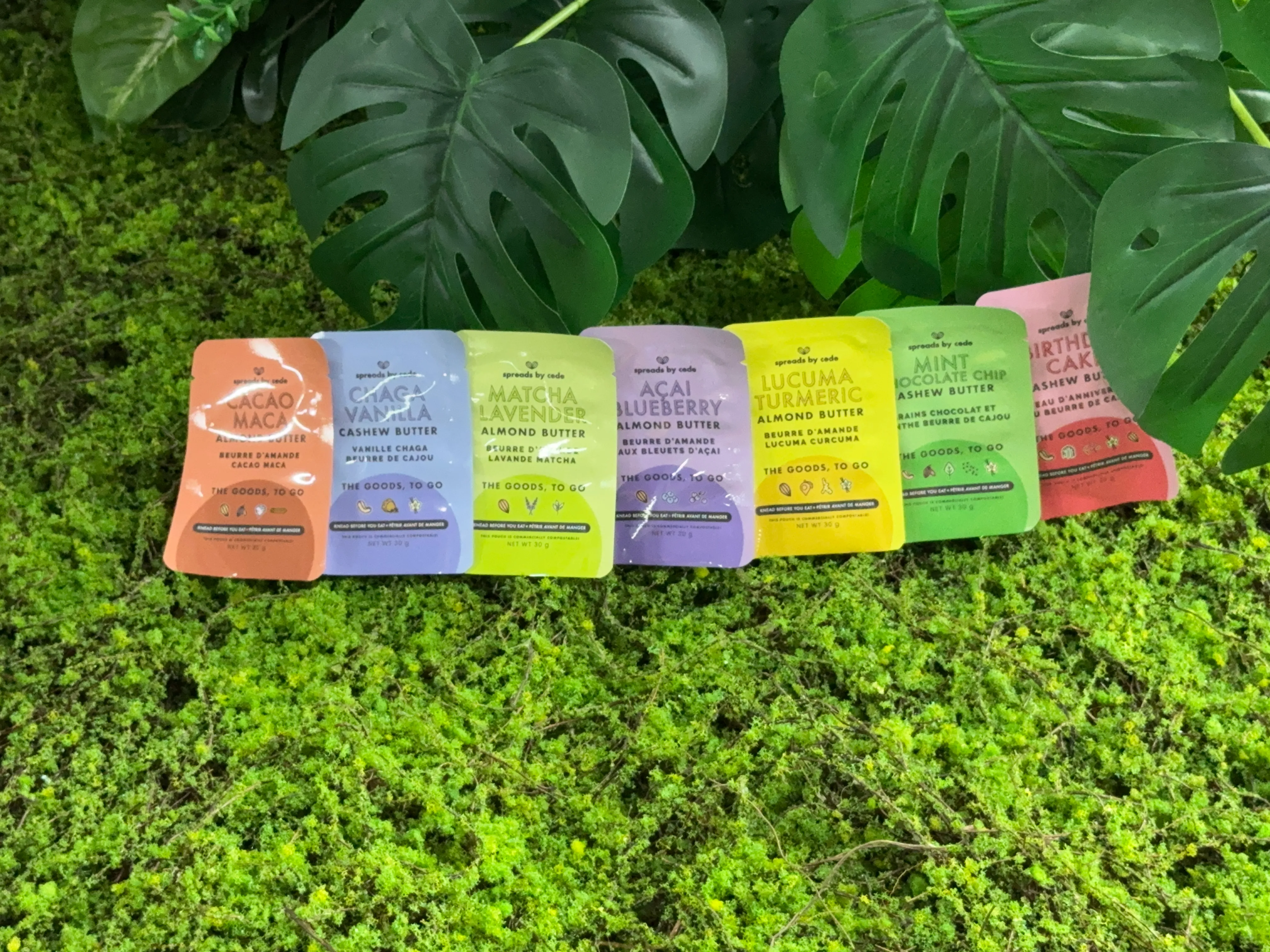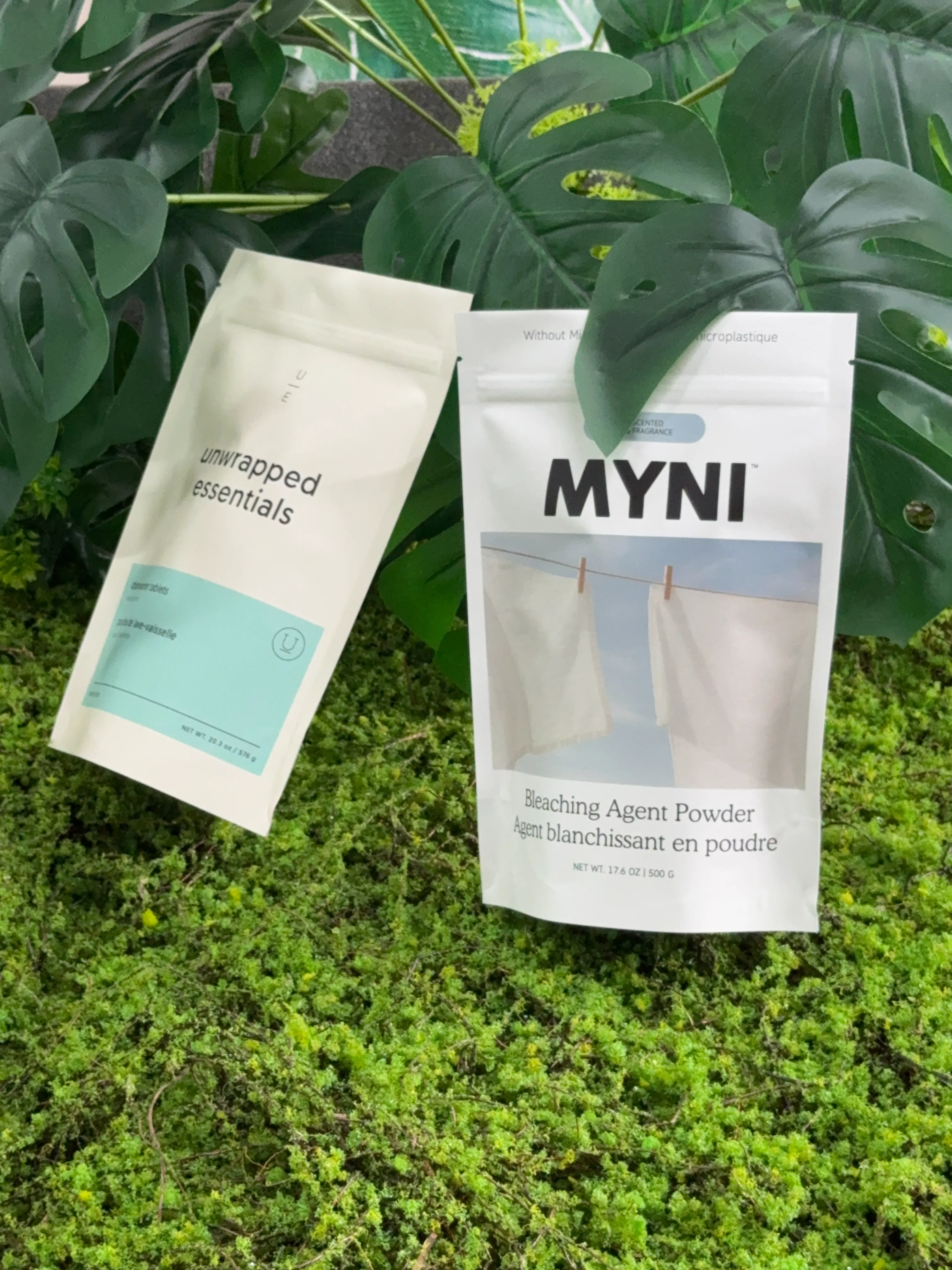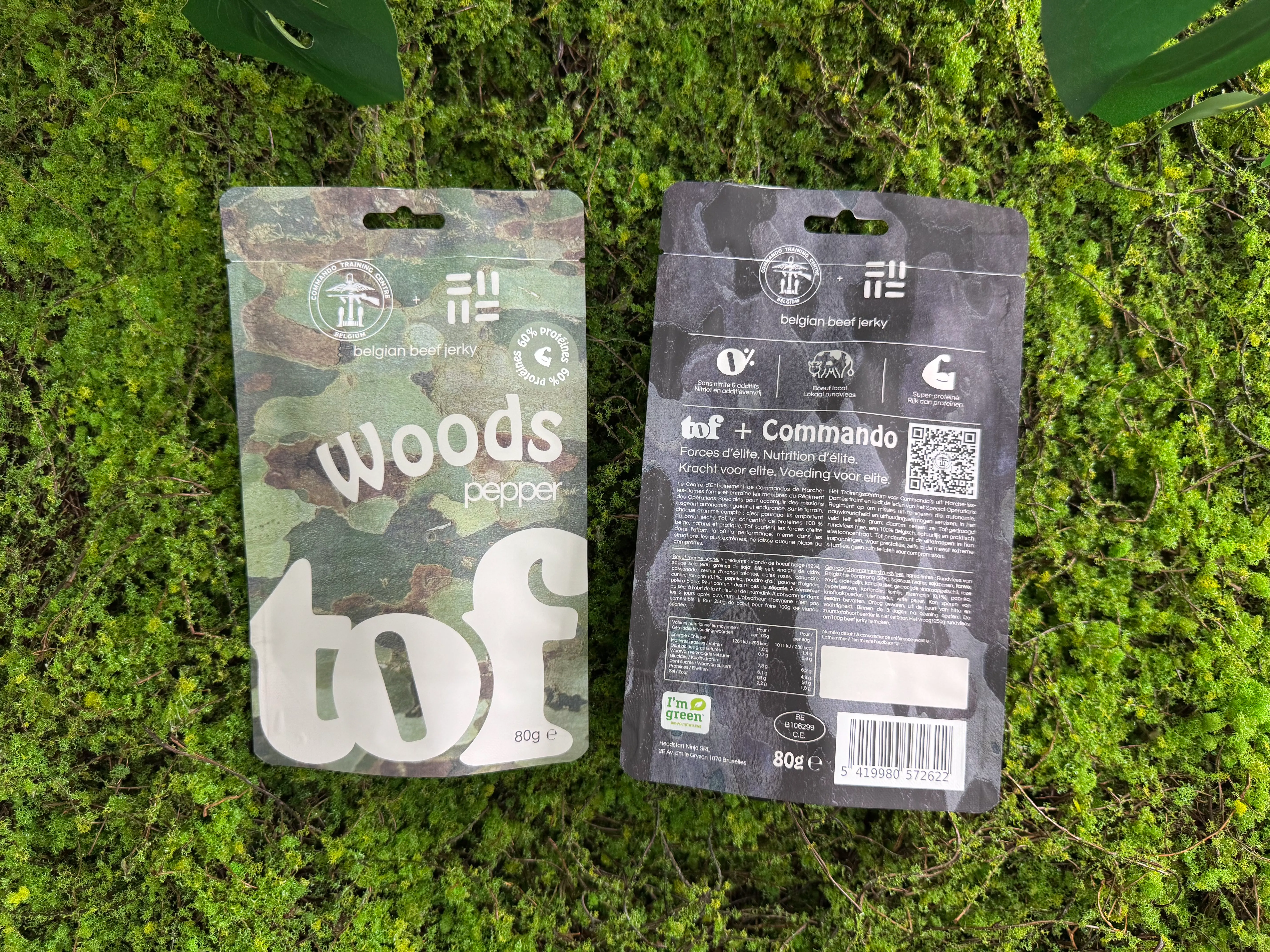
Coffee Roastery Case Study | Compostable Packaging with Degassing Valve Specifications
Solving Core Packaging Challenges for Coffee Roastery Case Study | Compostable Packaging with Degassing Valve
Concise B2B technical benchmarks designed to eliminate transit failures, regulatory penalties, and shelf-life loss.
Aroma Loss & Degassing Failure in Speciality Roast
Risk: Beans oxidize quickly, resulting in customer complaints and lost brand value.
One-Way Eco Degassing Valve + Metallized High-Barrier Film
Preserves CO2 outgassing without admitting oxygen or moisture.
Plastic Tax Liability & EU PPWR Compliance Risks
Risk: Non-recyclable multi-layer plastics incur heavy customs tariffs & fines in EU/US.
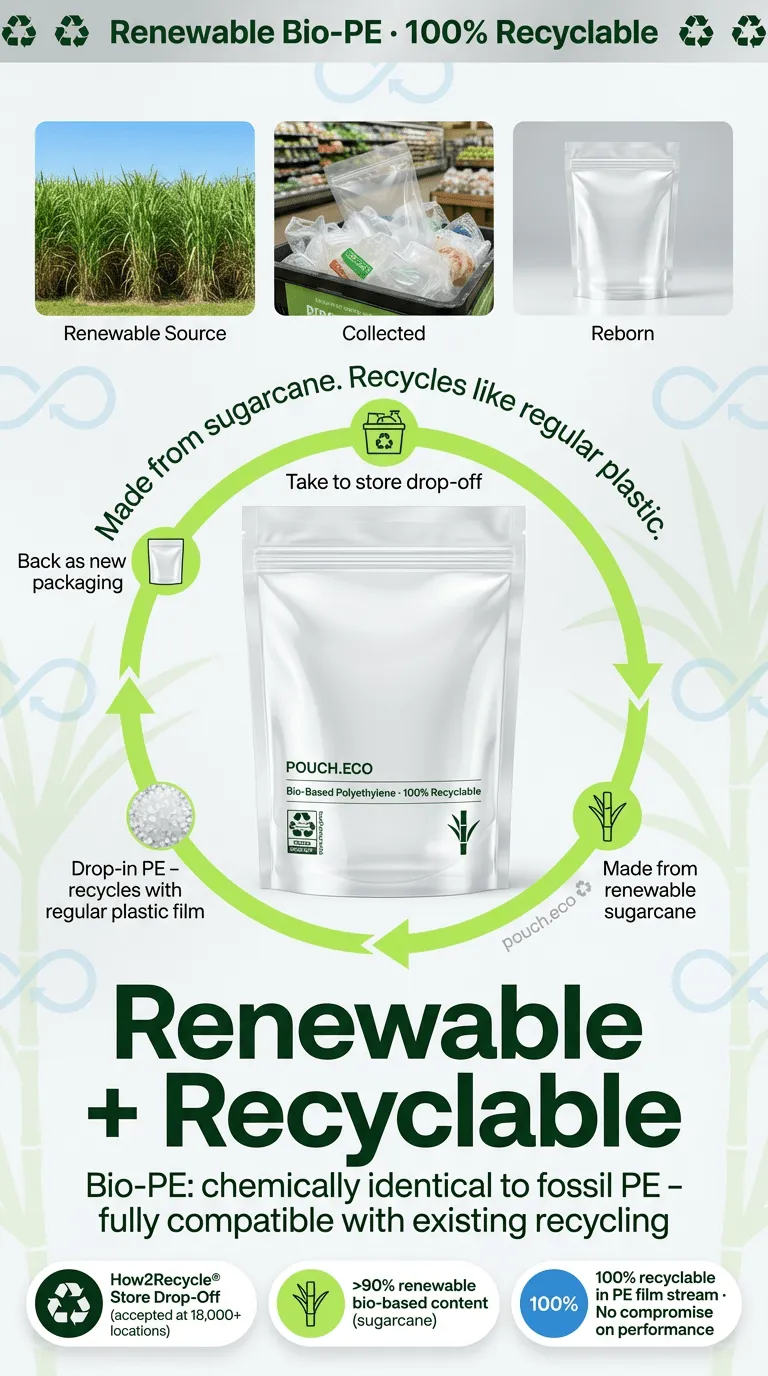
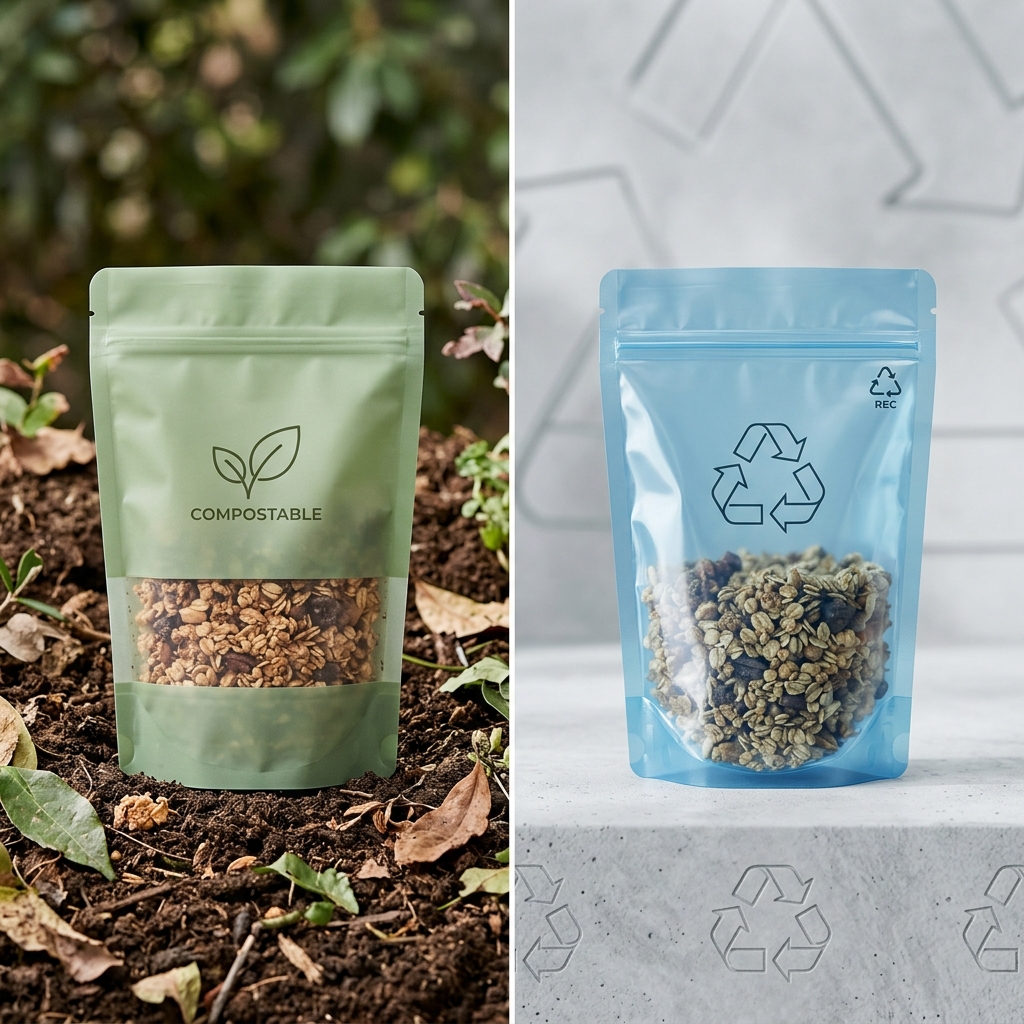
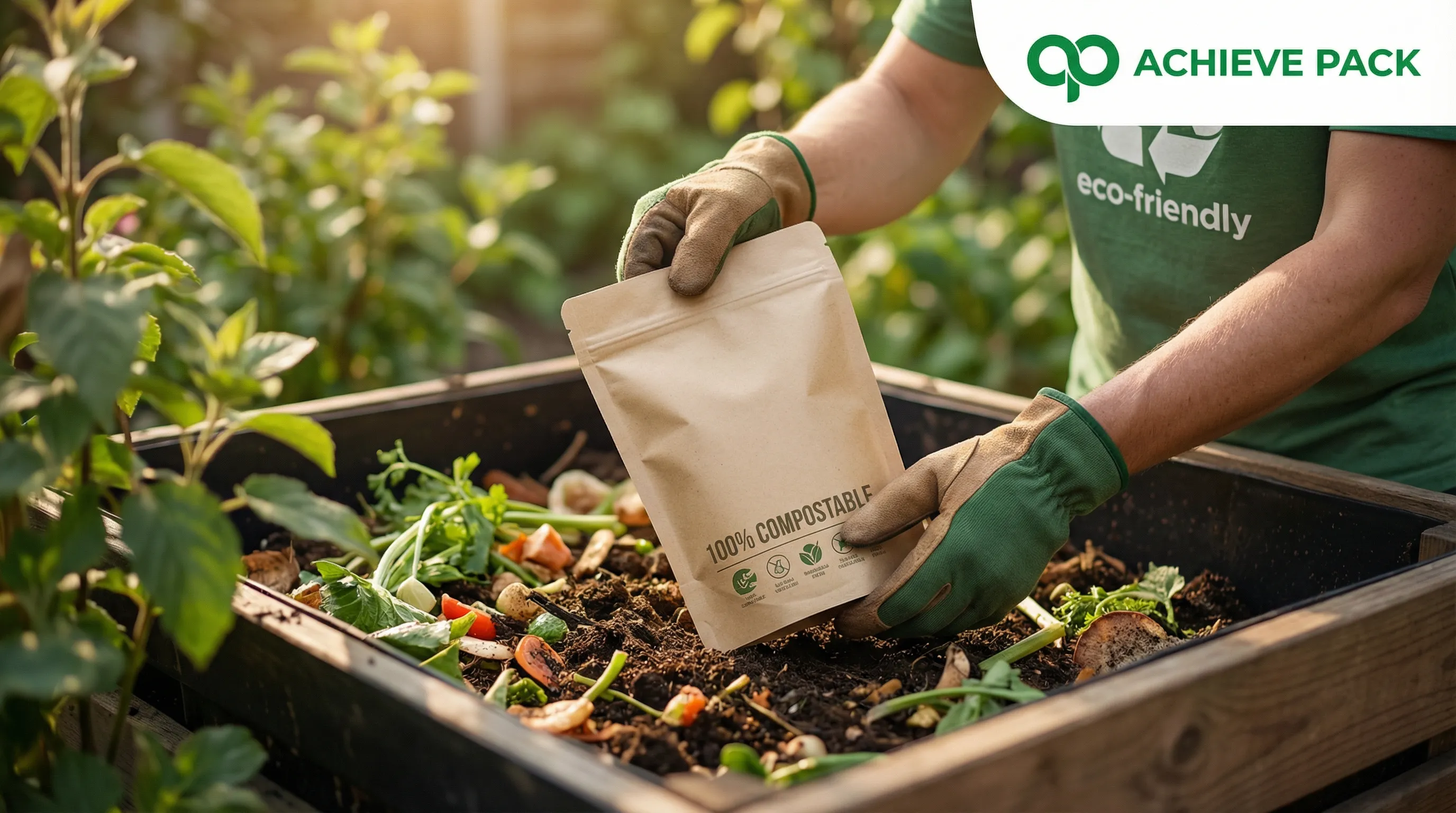
100% Home Compostable (PLA) or Mono-Material Recyclable PE
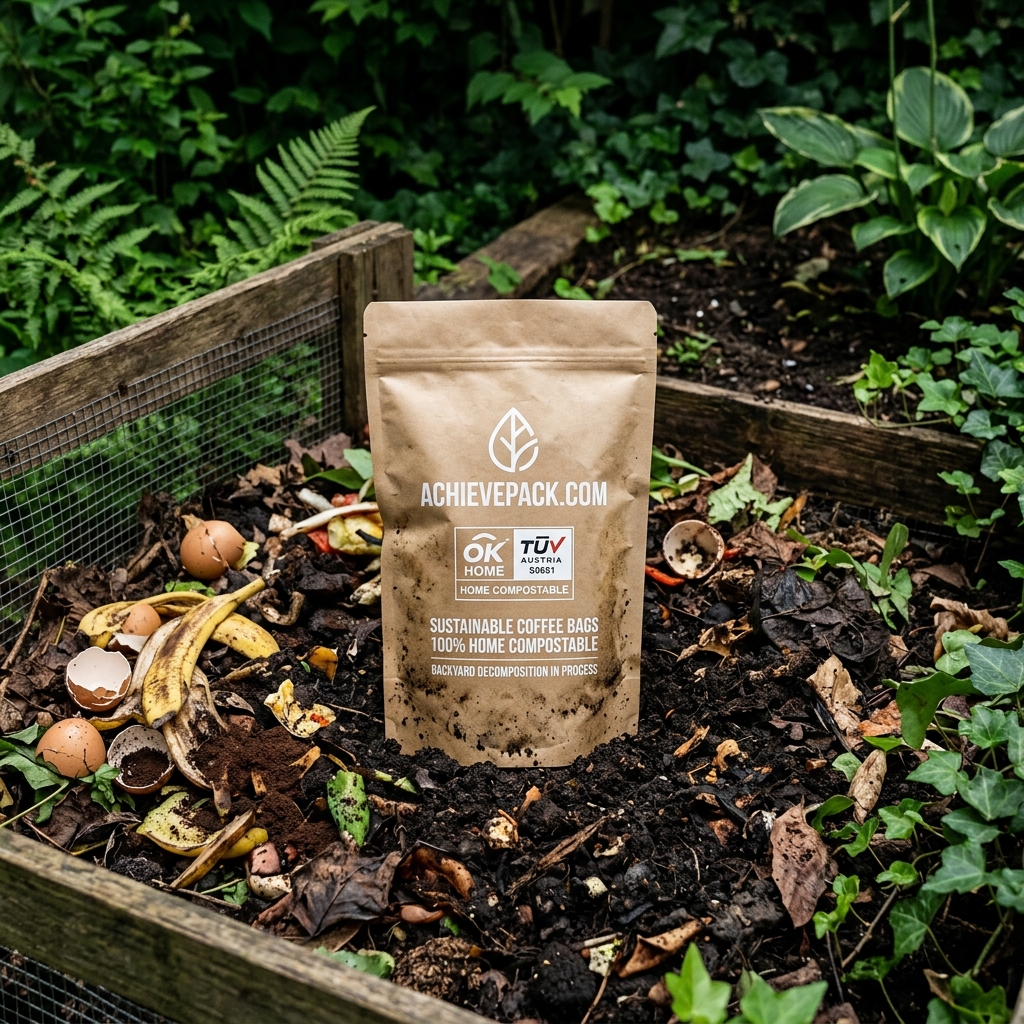
Fully GRS & TÜV OK Compost HOME certified for global distribution.
High MOQs & Generic Stock Packaging Stifling DTC Launches
Risk: Small brands forced to buy 10,000+ units or rely on plain generic bags.
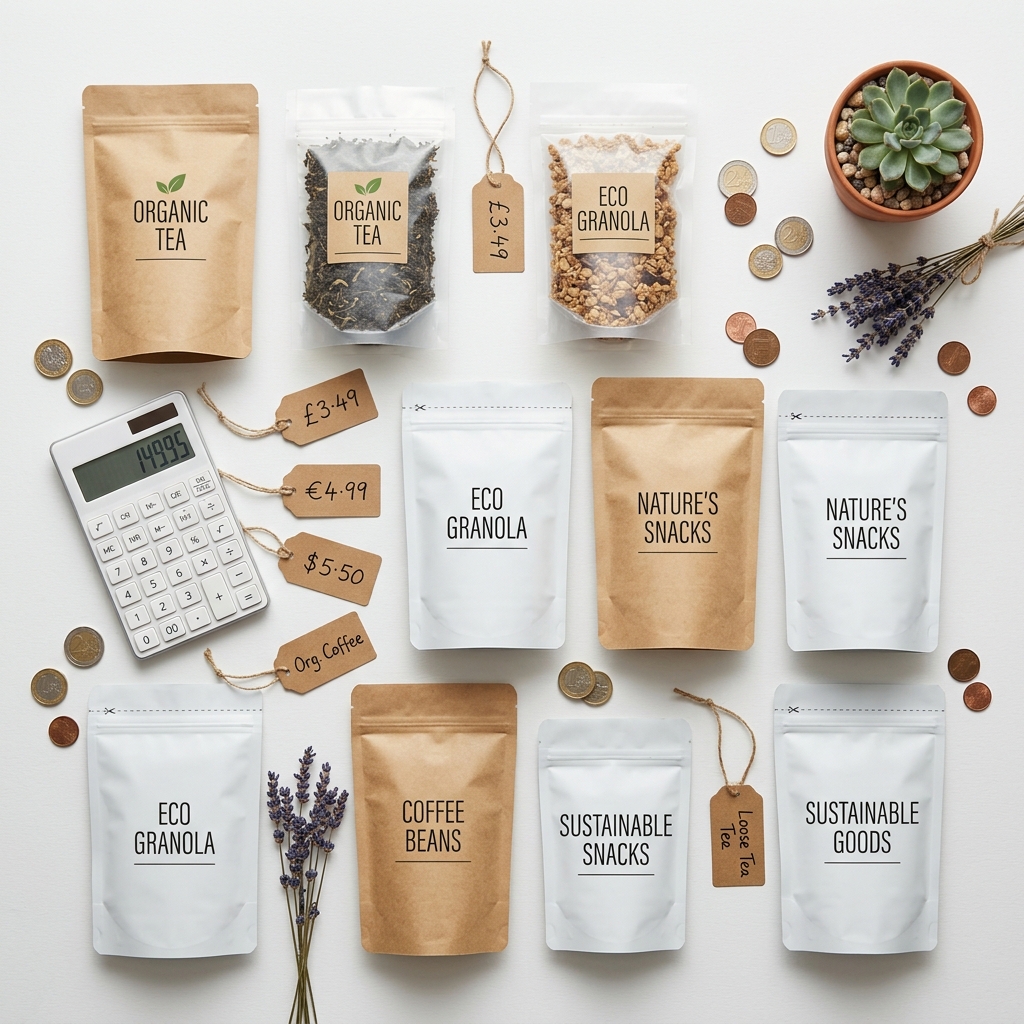
Digital HD Printing with 500-Unit Low MOQs & 3D Interactive Design
Print multi-SKU designs instantly with zero plate fees.
Experience 3D Packaging Design & Free Dielines
Preview your pouch in 3D WebGL Studio and export production-ready dielines.
Who Is This Client?
Company
Specialty coffee roastery (name withheld)
Industry
Specialty Coffee
Location
Portland, Oregon, USA
Package Type
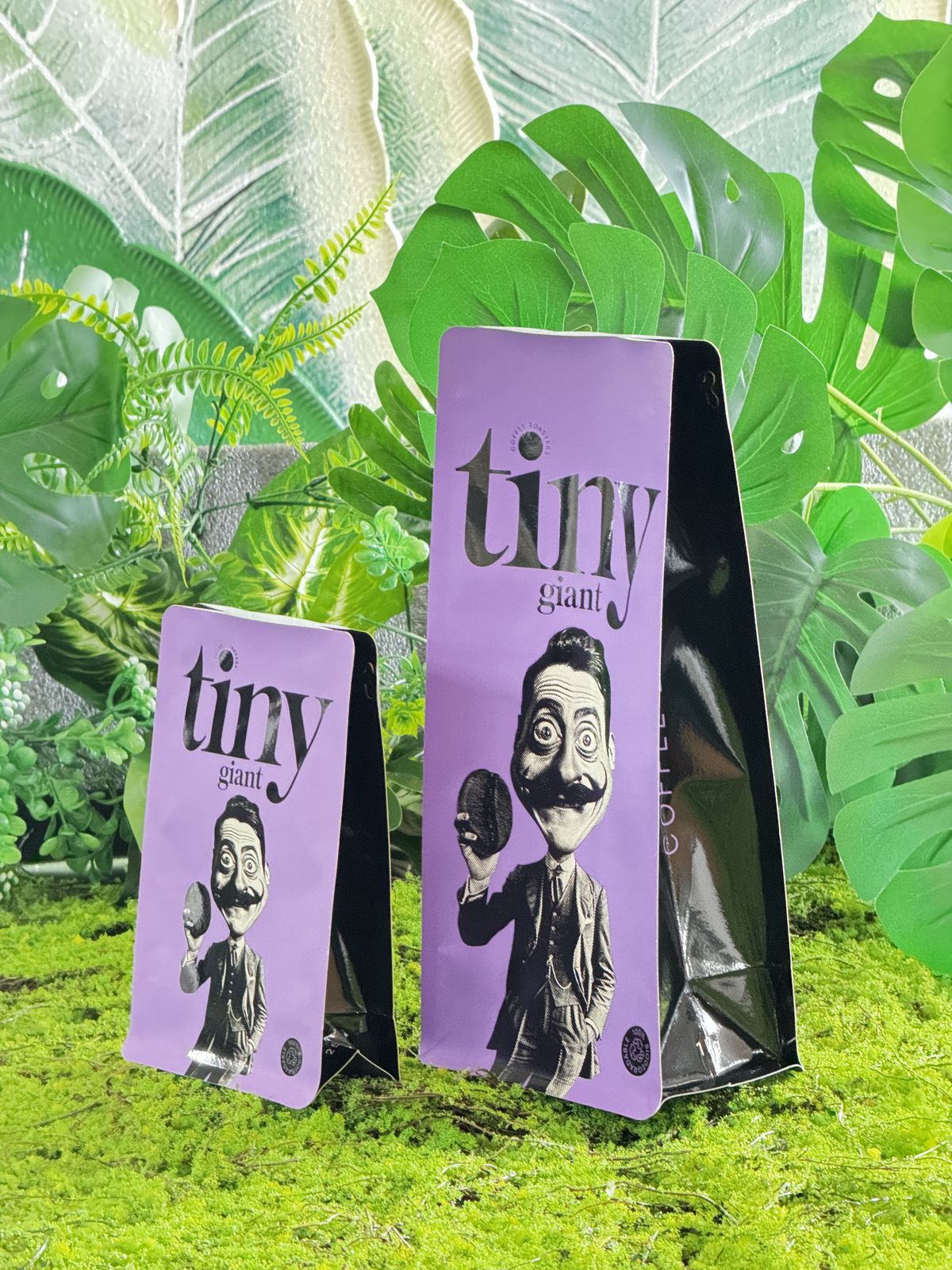
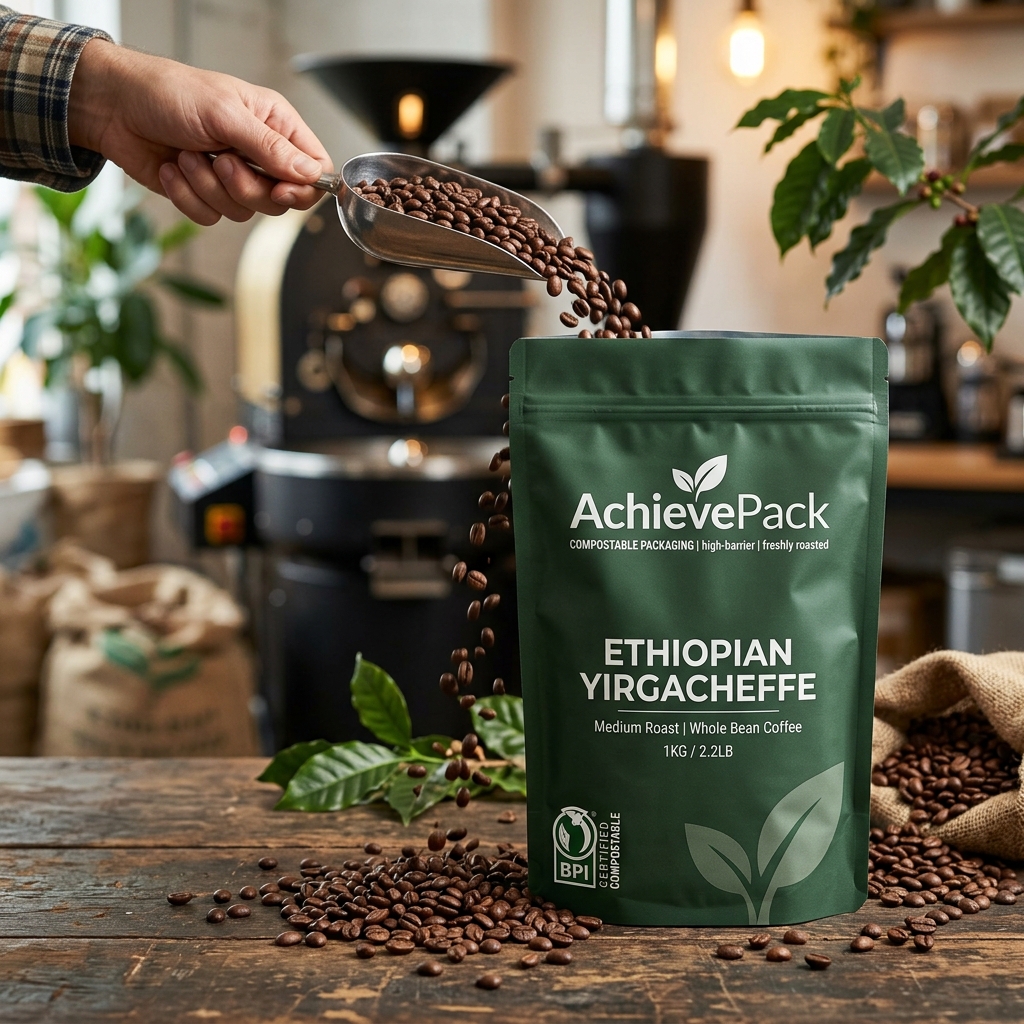
Stand-Up Pouches with Valve
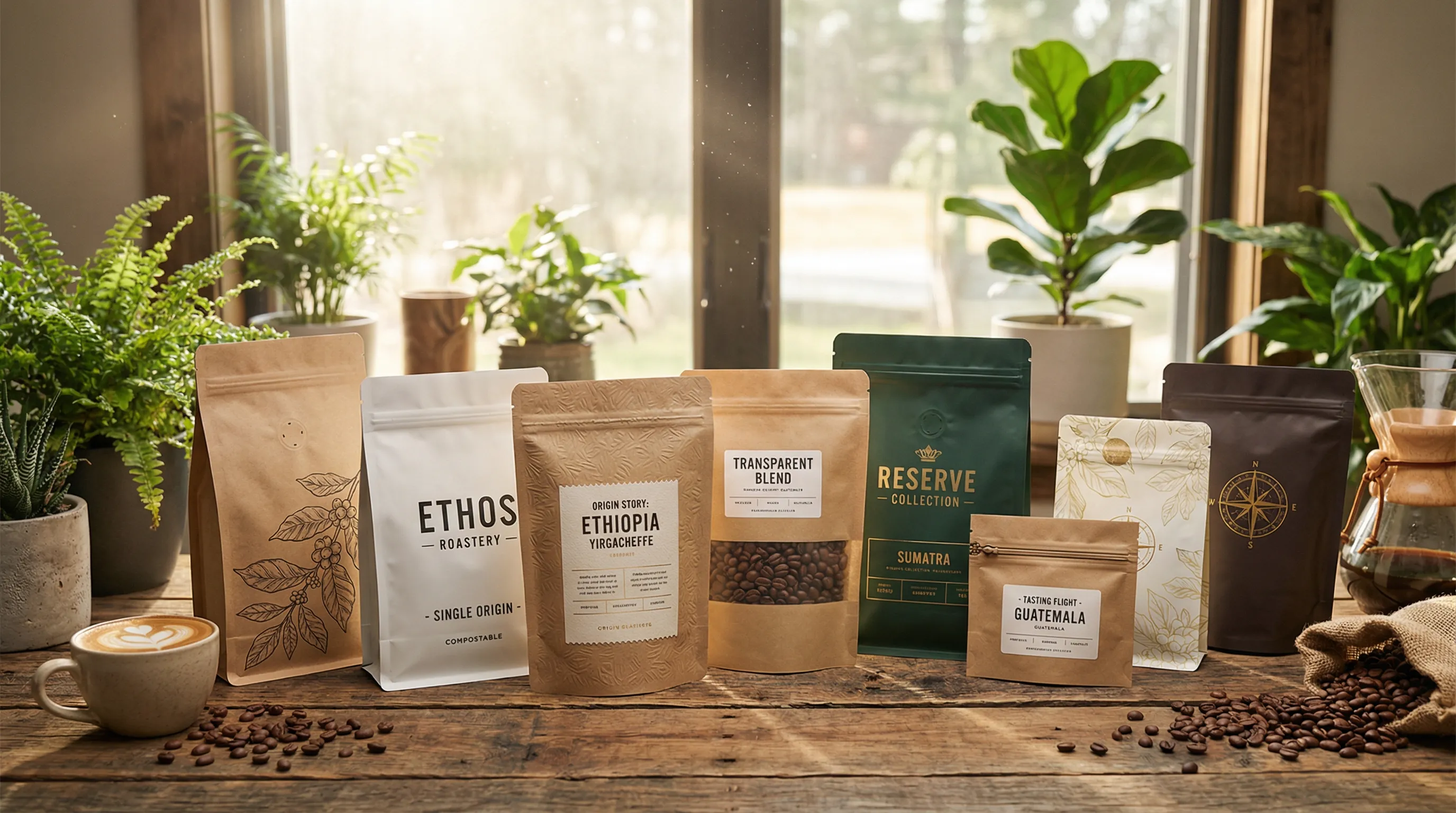
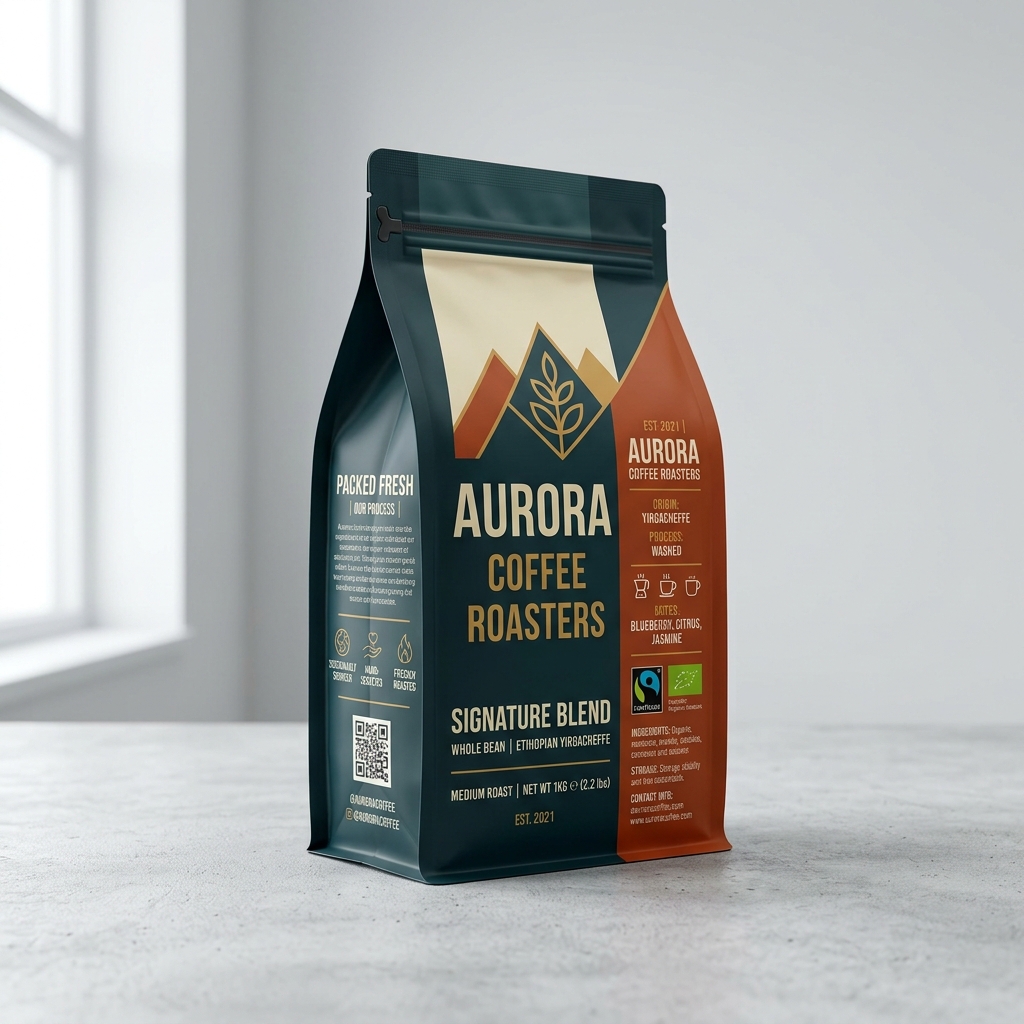
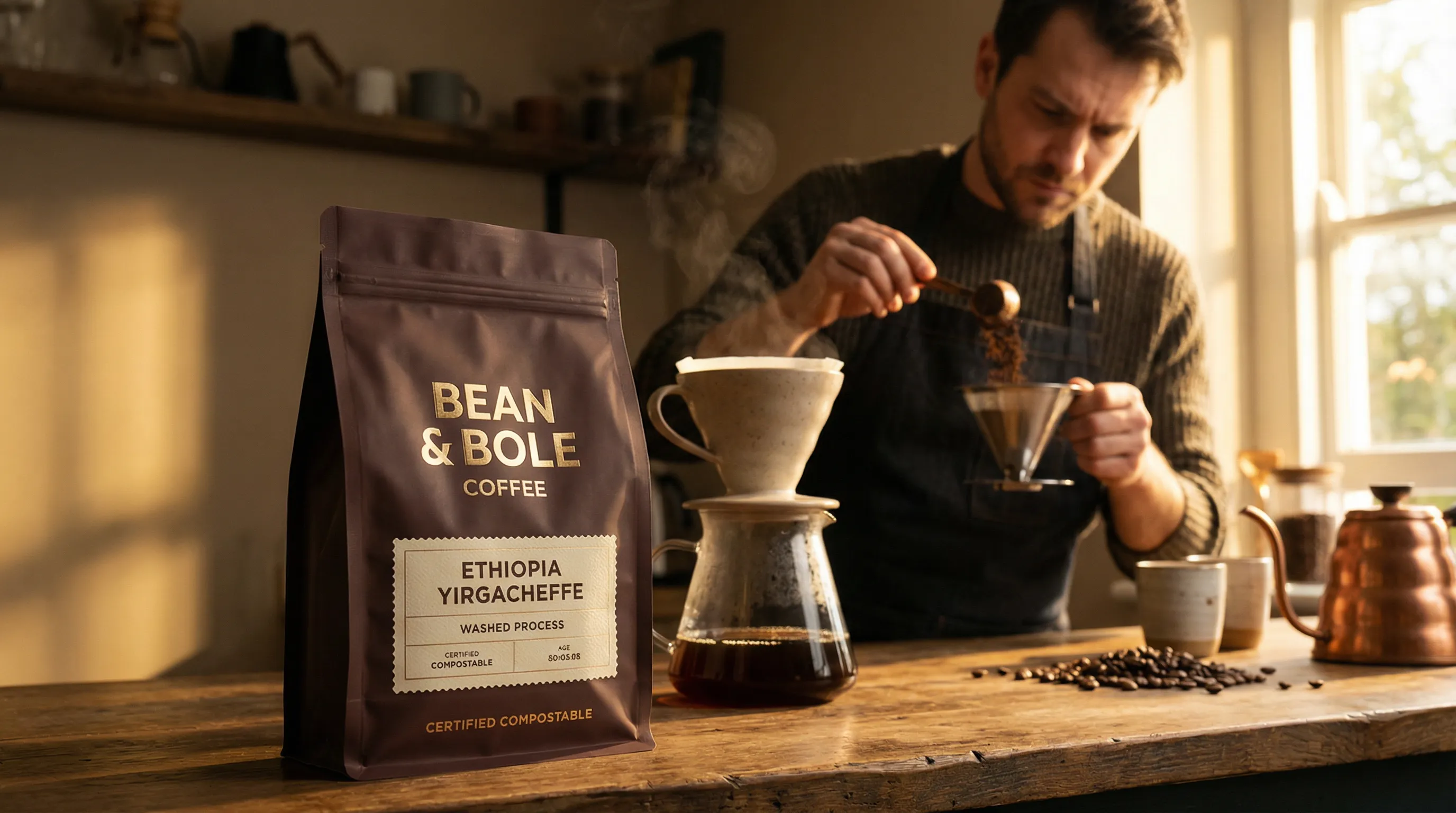
A 12-person specialty coffee roastery in Portland, Oregon, built on direct-trade relationships with farmers and sustainable practices. They needed packaging that matched their environmental values while keeping premium single-origin beans fresh. They found Achieve Pack through a search for eco-friendly coffee packaging suppliers.
What Challenge Did They Face?
Here's what the roastery was up against:
- ✗Traditional multi-layer plastics conflicted with their sustainability values
- ✗Barrier requirements for coffee freshness seemed incompatible with eco materials
- ✗High MOQ from other suppliers (10,000+ bags) was too much for their small-batch approach
- ✗Degassing valve compatibility with sustainable materials was unclear
How Did Achieve Pack Help?
Here's how we worked with their team to develop a custom packaging solution:
Material Selection
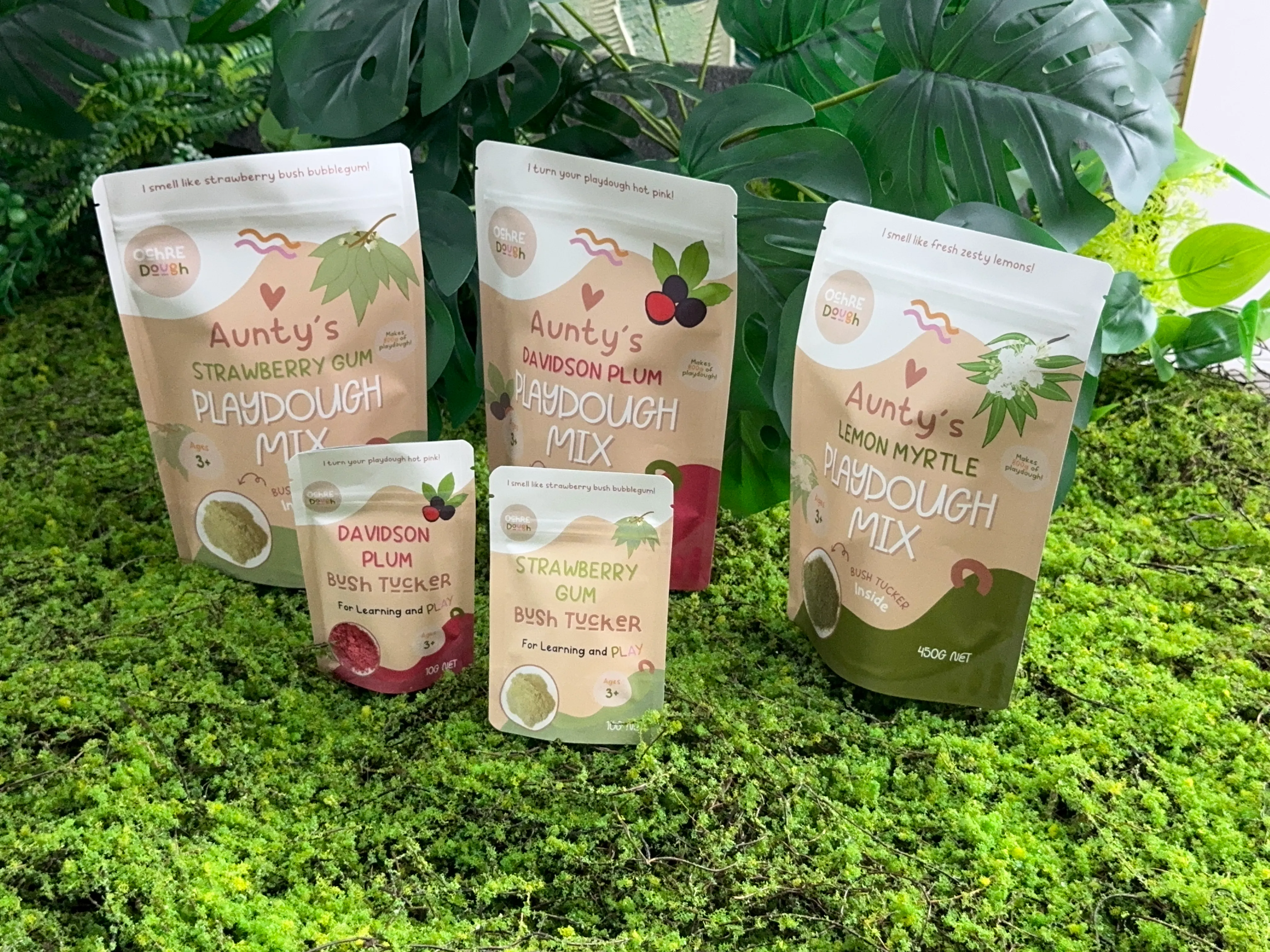
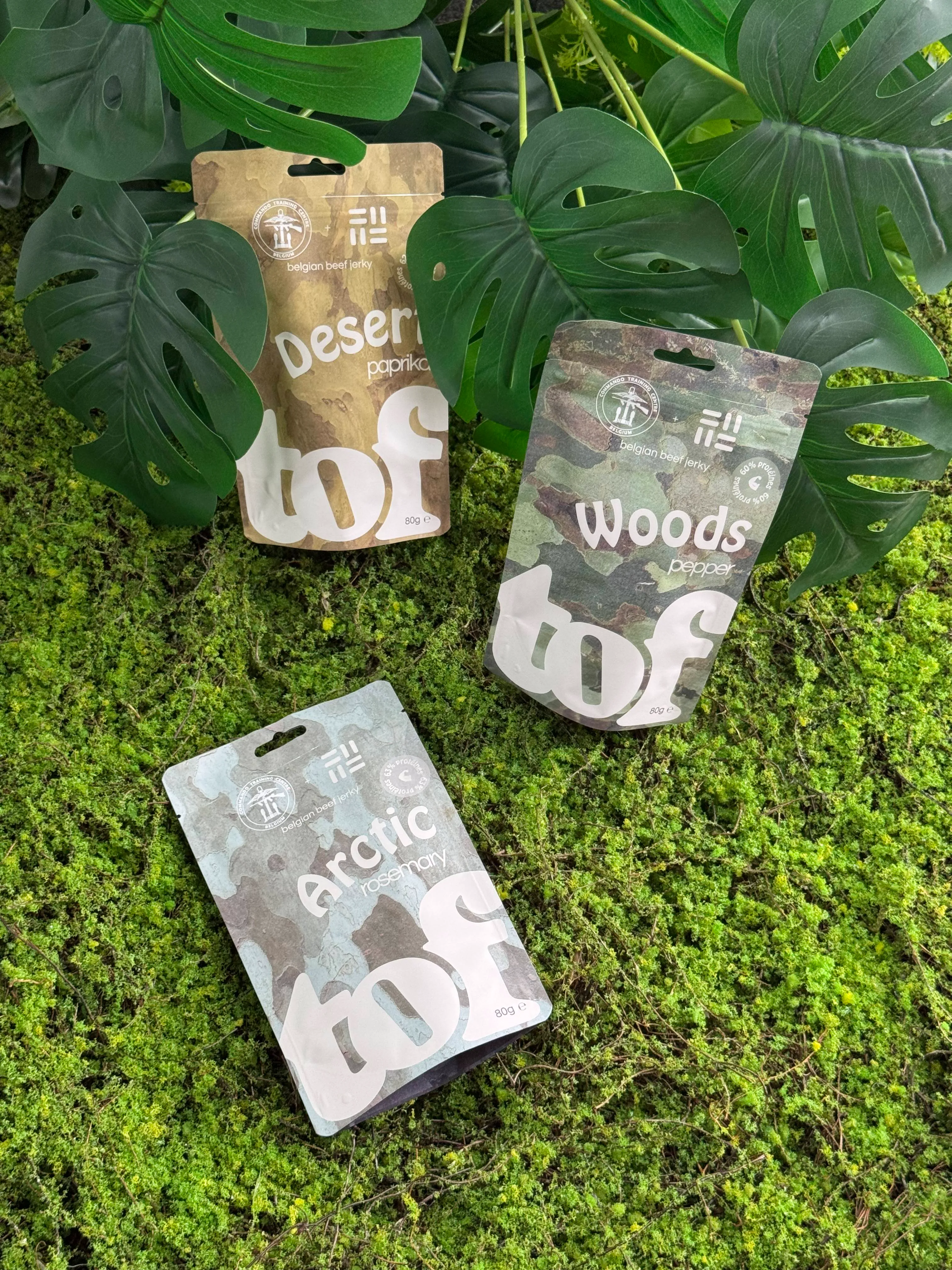
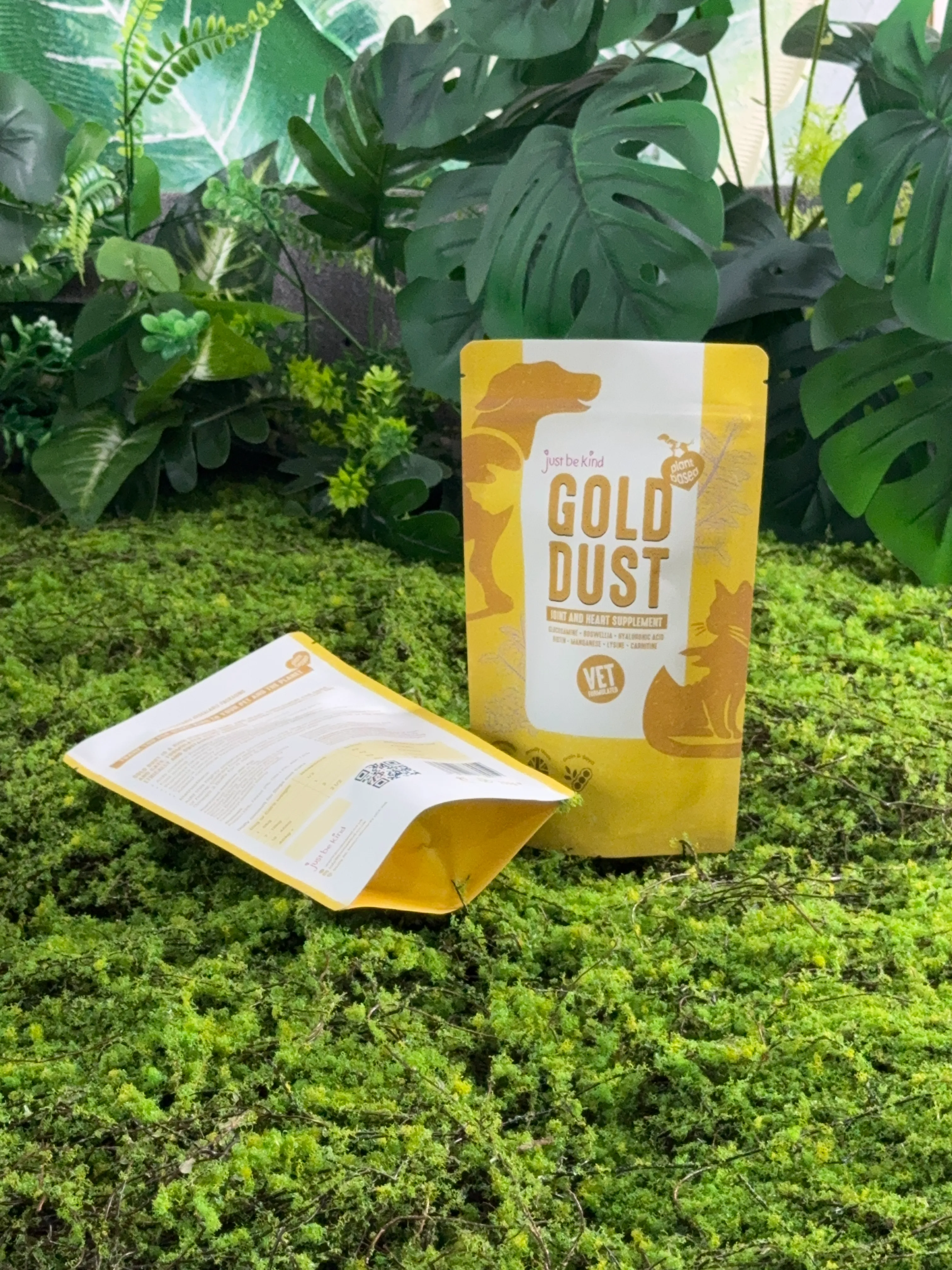
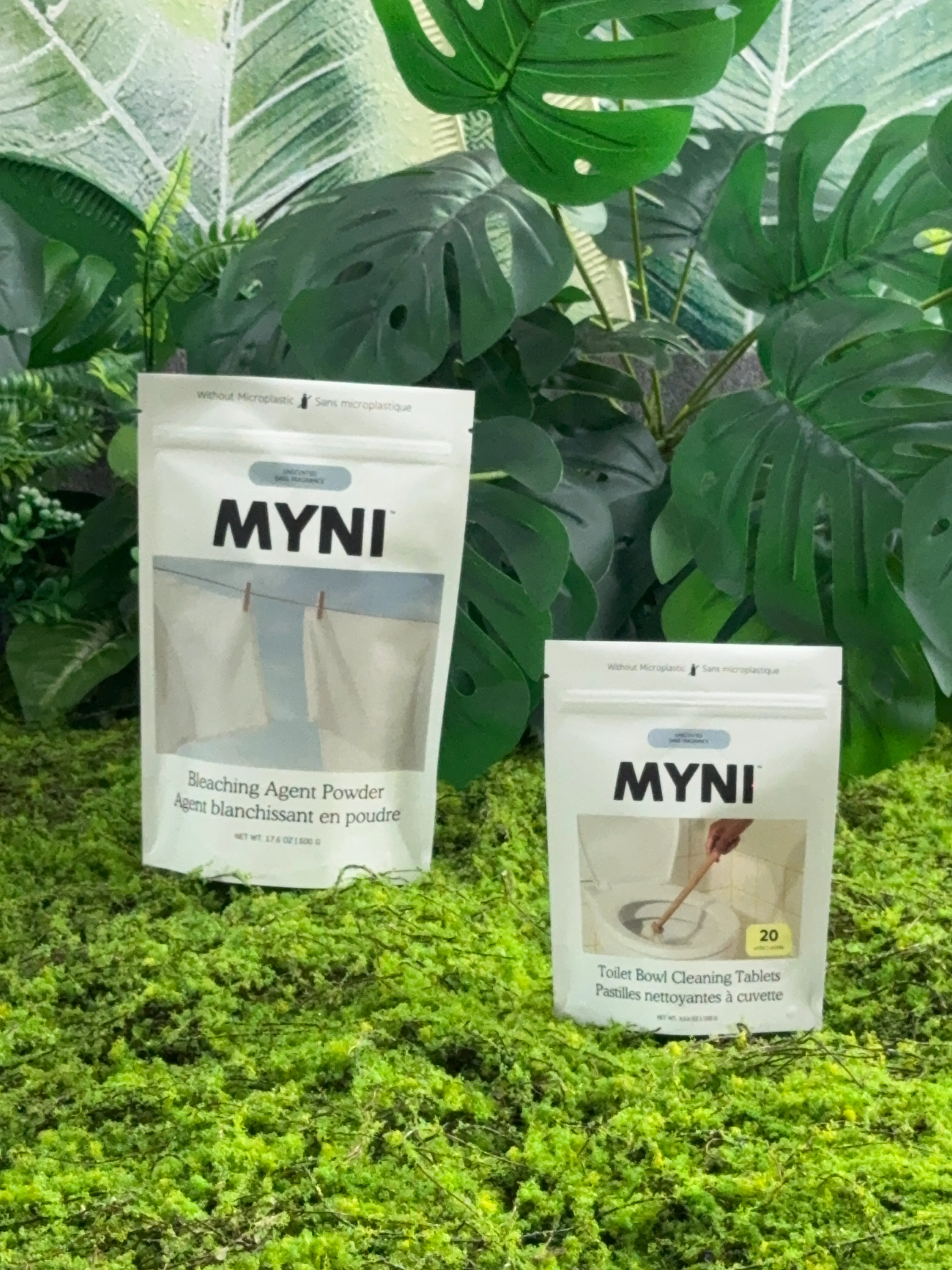
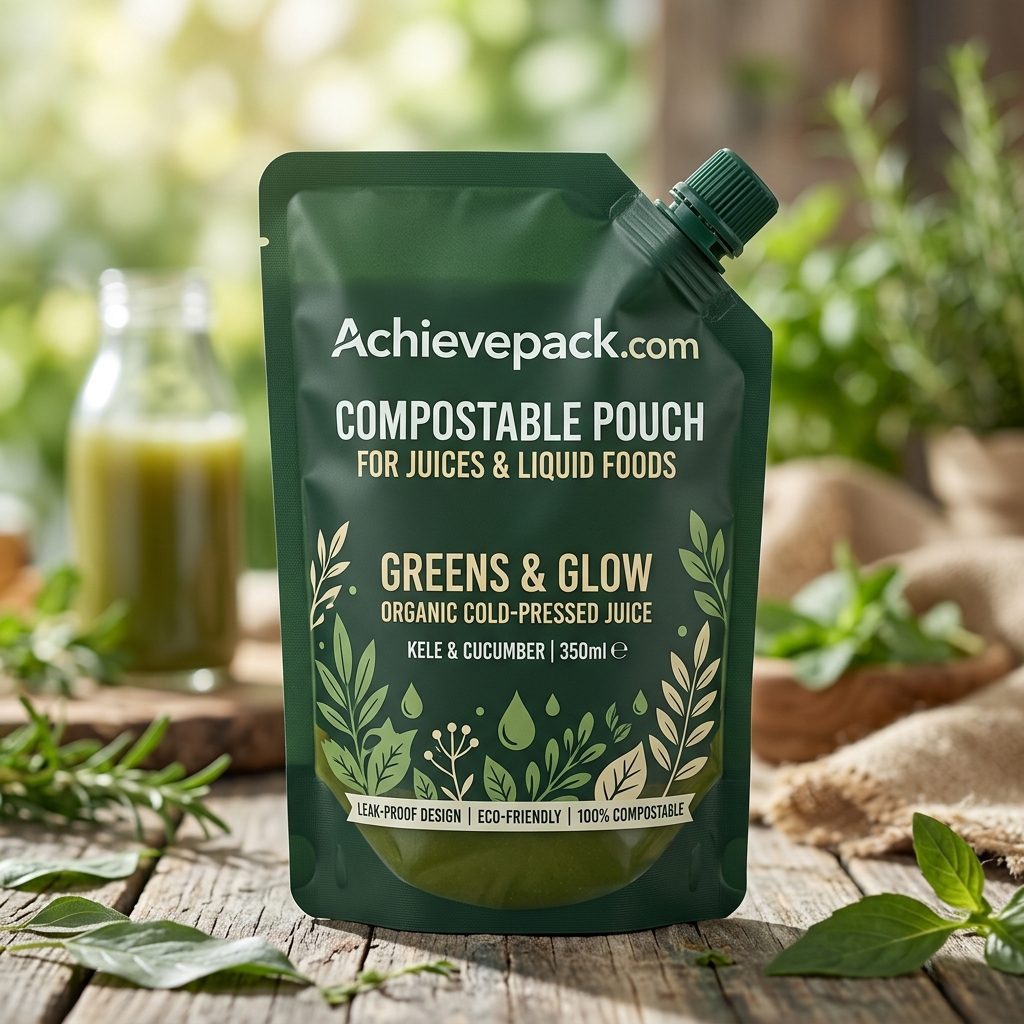
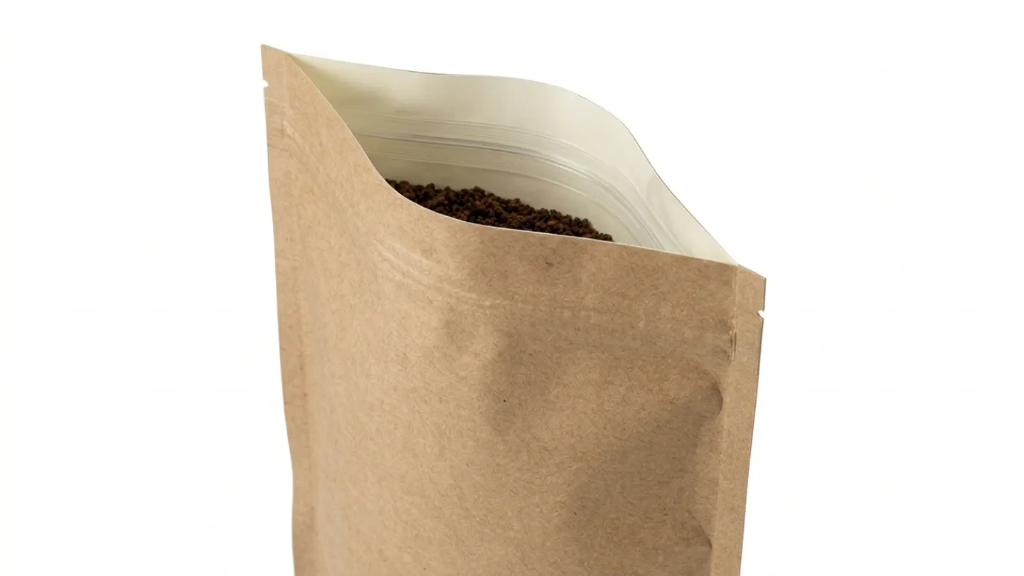
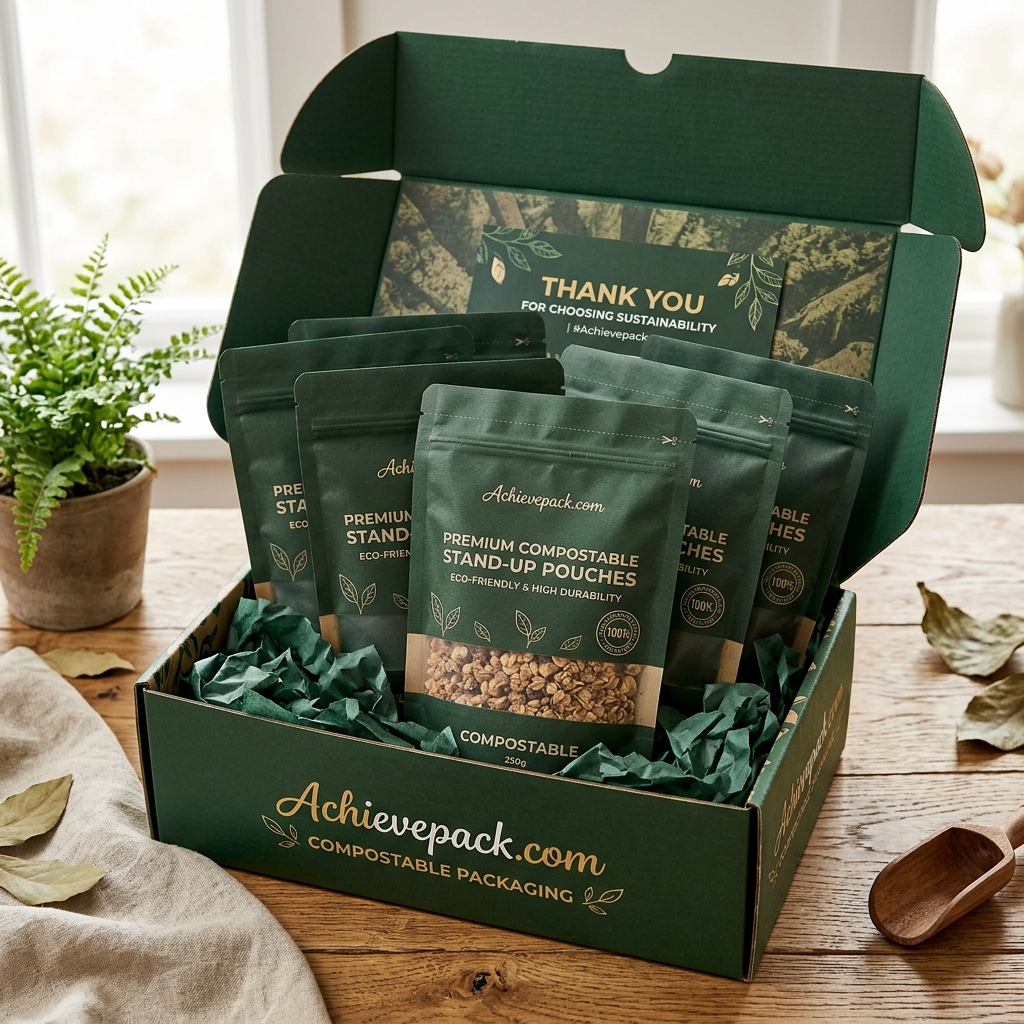
Kraft paper exterior with compostable PLA inner layer, providing medium-high barrier suitable for 3-4 month shelf life. Certified EN 13432 compostable.
Degassing Valve
Compatible one-way valve integrated to release CO2 from freshly roasted beans while preventing oxygen entry.
Small Batch Production
Initial order of just 500 bags per SKU using digital printing—perfect for testing and their artisan approach.
Premium Finish
Matte finish with spot UV on logo for tactile premium feel that matches their brand positioning.
What Results Did They Achieve?
"Our customers love that they can compost our coffee bags. It's become a key differentiator for us in the specialty coffee market. Achieve Pack made the transition seamless."
What Packaging Specs Were Used?
What This Case Study Does NOT Mean for You
Before you copy this spec, know the limits:
- • Compostable kraft + PLA does NOT give you a 12-month shelf life. Expect 3-4 months. If your distribution is slower, our recyclable mono-PE with a valve is the honest choice.
- • "Compostable" does NOT mean your customer's backyard. EN 13432 certifies industrial composting—check whether your city actually collects it before printing claims.
- • Their 35% satisfaction increase is NOT a promise. It reflects their brand, their customers, and their roast quality—not just the bag.
- • A standard degassing valve is NOT compostable. It must be removed before composting; fully compostable valves exist but cost 2-3x more.
Want to test this exact structure on your beans? The $40+ sample kit (credited to your first order) includes compostable coffee pouches with valves. Questions: /support/contact.
What Can You Learn From This?
What made this project work for a small-batch roaster:
- Low MOQ (500 pieces): Perfect for small-batch specialty roasters
- Certified compostable: EN 13432 certification for authentic sustainability claims
- Degassing valve compatible: Essential for freshly roasted coffee
- Premium finishing: Matte + spot UV for brand differentiation
Looking for similar solutions?
Read our in-depth guide: How to Choose a Sustainable Packaging Supplier →
Coffee Packaging Engineering & Valve Testing
Roasting coffee releases carbon dioxide and is extremely sensitive to oxygen. We validate our degassing valve release pressure, OTR/WVTR barrier, and heat seal strength to ensure coffee aroma protection and long-term shelf life.
MOCON OTR Barrier Test
Tested under ASTM D3985 to preserve coffee aromatics and lock out oxygen.
GC-MS Solvent Residue
Gas Chromatography-Mass Spectrometry guarantees zero odor transfer into coffee beans.
Heat Seal Strength (ASTM F88)
Optimized seal strength to support heavy 1kg coffee bags without seam ruptures.
Valve Seating Pressure
Tested pressure release to expel internal CO₂ while maintaining a hermetic oxygen seal.
Puncture Test (ASTM F1306)
Prevents whole roasted coffee beans from piercing the inner laminate layers.
VFFS Line Speed Match
Sliding friction coefficient optimized for high-speed automatic bagging lines.
Packaging Transformation for Coffee Roastery Case Study | Compostable Packaging with Degassing Valve
See how upgrading from generic commoditized bags to precision-engineered flexible barrier packaging eliminates transport failures and boosts shelf authority.
Standard / Generic Packaging (Before)
Standard stock bags fail under transit stress and expose sensitive goods to moisture, UV light, and oxygen.
- Rapid Oxidation & Flavor DegradationCheap films allow O2 & moisture ingress, spoiling contents in < 30 days.
- High Seal Breakage in TransitThin seams fail under drop tests, leading to customer refunds & lost trust.
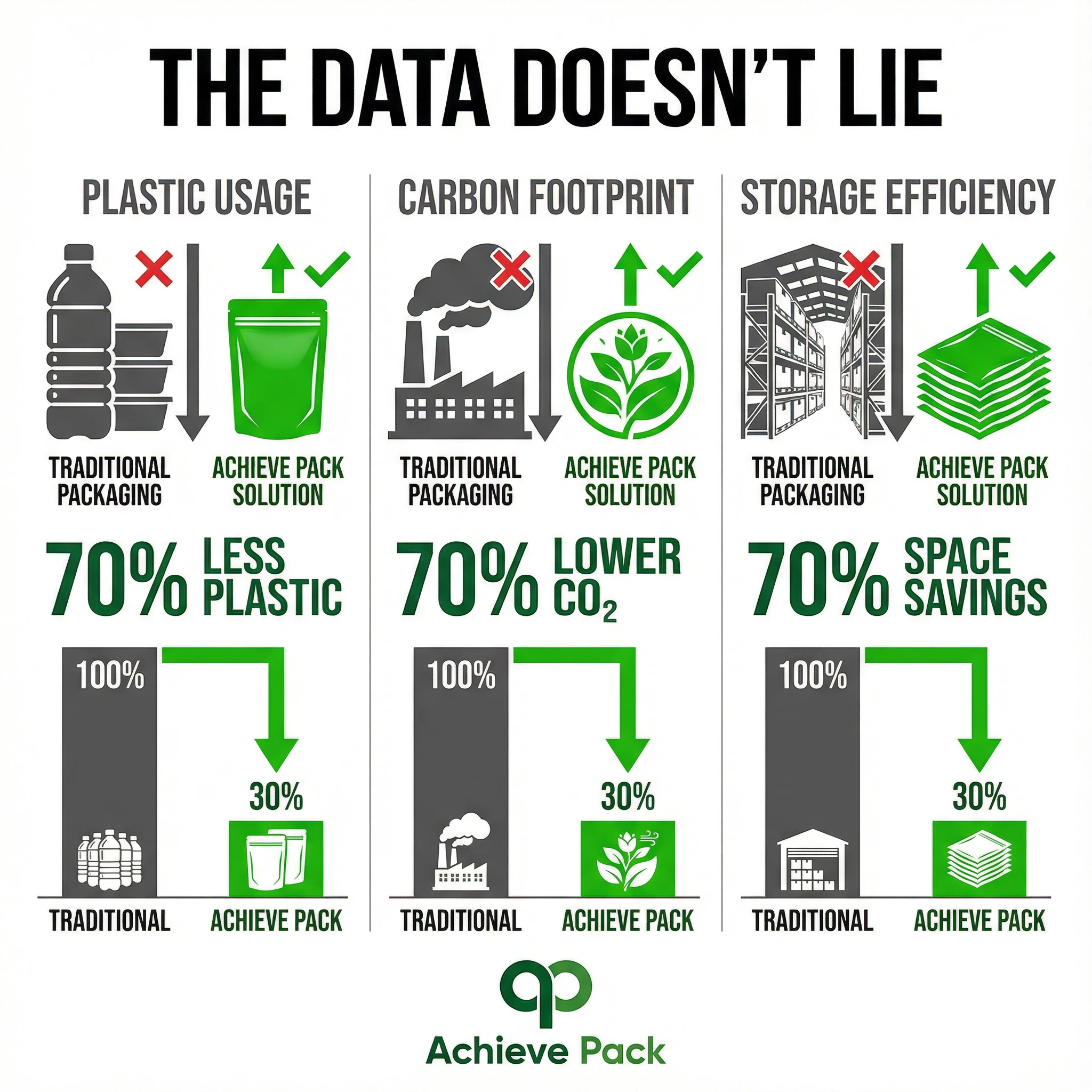
- Heavy Plastic Tax PenaltiesMulti-layer unrecyclable packaging incurs up to €800/ton in EU PPWR fines.
- High MOQs & Plate Cost FrictionTraditional printers force 10,000+ unit minimums and $1,500 cylinder fees.
Achieve Pack / Pouch Eco Solution (After)
Custom engineered multi-layer pouch structure tailored to your exact moisture barrier, seal strength, and aesthetic requirements.
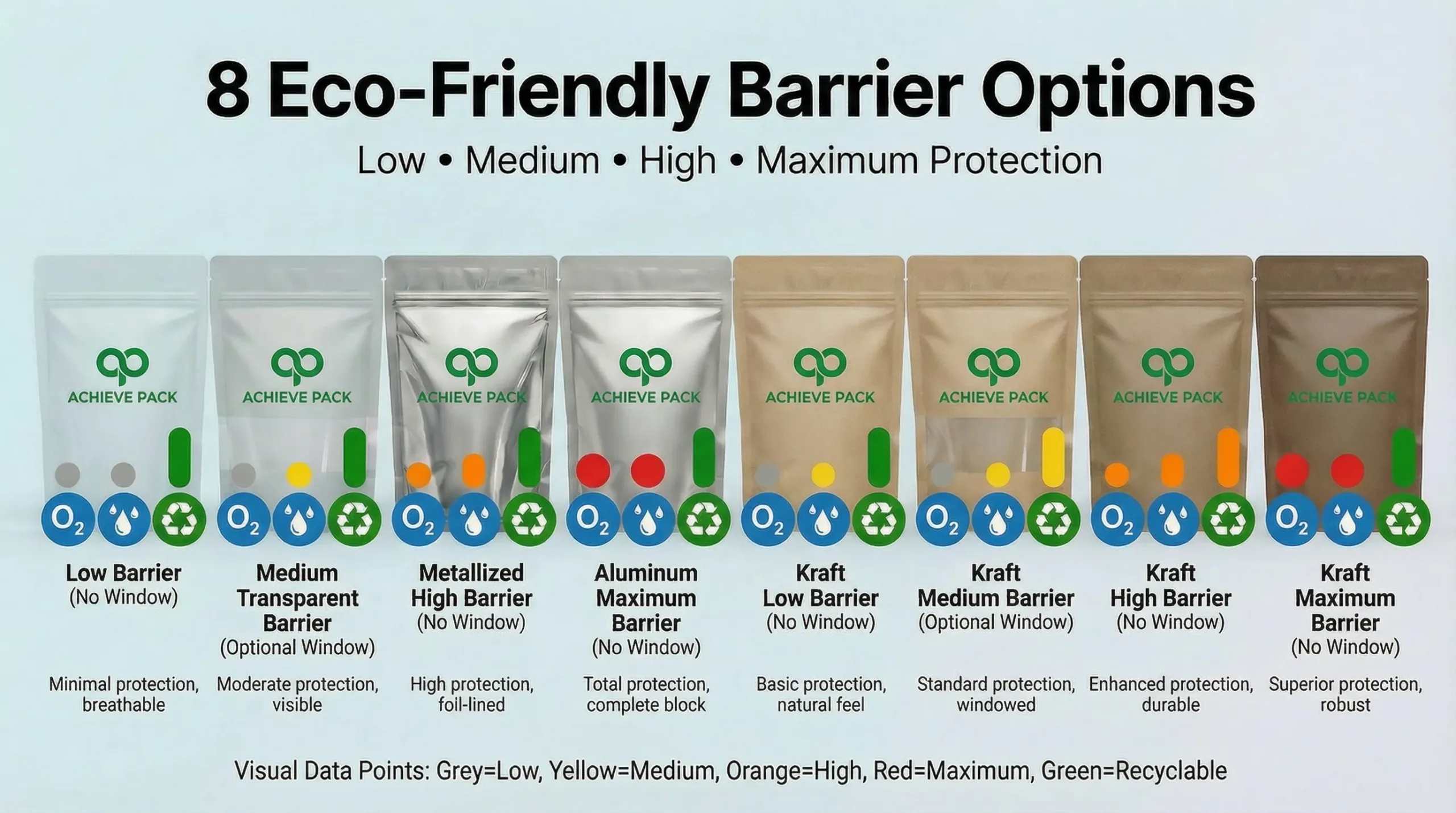
- Ultra High-Barrier Foil/EVOH CoreGuaranteed OTR < 0.1 cc/m²/day, keeping contents fresh for 18–24 months.
- Reinforced 45N/15mm Localized Heat Seal180°C precision seam dwell time prevents bursting even under 2-meter drops.
- 100% Certified Eco ComplianceTÜV OK Compost HOME (EN13432) & Mono-PE Recyclable structures (0% Tax).
- HD Digital Printing with 500-Unit Low MOQsPrint multi-SKU runs in 7 business days with zero setup plate charges.
Questions We Get Asked
Can compostable coffee bags have degassing valves?▼
What is the minimum order for compostable coffee pouches?▼
How long is the shelf life with compostable coffee packaging?▼
Are compostable coffee bags more expensive than plastic?▼
What certifications should compostable coffee bags have?▼
Related Stuff
How We Ensure Absolute Accuracy and Trustworthiness
At Achieve Pack, sustainable packaging isn't just about printing; it's about hands-on material science. This article has been written and verified by Ryan Wong, a packaging specialist with 14+ years of experience engineering biopolymer stacks for DTC startups and Fortune 500 companies.
All research, material barrier specifications (OTR, WVTR), heat-seal values (N/15mm), and compostability timelines cited in our guides are backed by testing inside the Achieve Pack Materials Testing Lab. We cross-reference our data with official certification registries from BPI (Biodegradable Products Institute), TÜV Austria (OK Compost HOME), and FSC (Forest Stewardship Council).

Ryan Wong
Supply Chain Director
B.Eng honors degree graduate from Hong Kong Polytechnic University. Serving brands in 8 countries.
View Expert Profile →Roasting Coffee and Ditching Plastic?
Tell us your roast volume and shelf-life target. We'll tell you honestly whether compostable fits—or whether recyclable mono-PE serves your customers better.
Compostable Solution
Fully compostable flexible packaging certified under ASTM D6400 and EN 13432. Engineered to break down completely in industrial or home composting environments within 180 days, returning to the soil with zero toxic residues.
- ASTM D6400 & EN 13432 Certified
- Breaks down within 180 days in soil
- High gas & moisture barrier options
- Food-contact safe (FDA compliant)