B2B Sustainability Guide10 min read

Bio-PE Sustainable Flexible Packaging

Plant-Based Carbon Without Changing Your Recycling Story

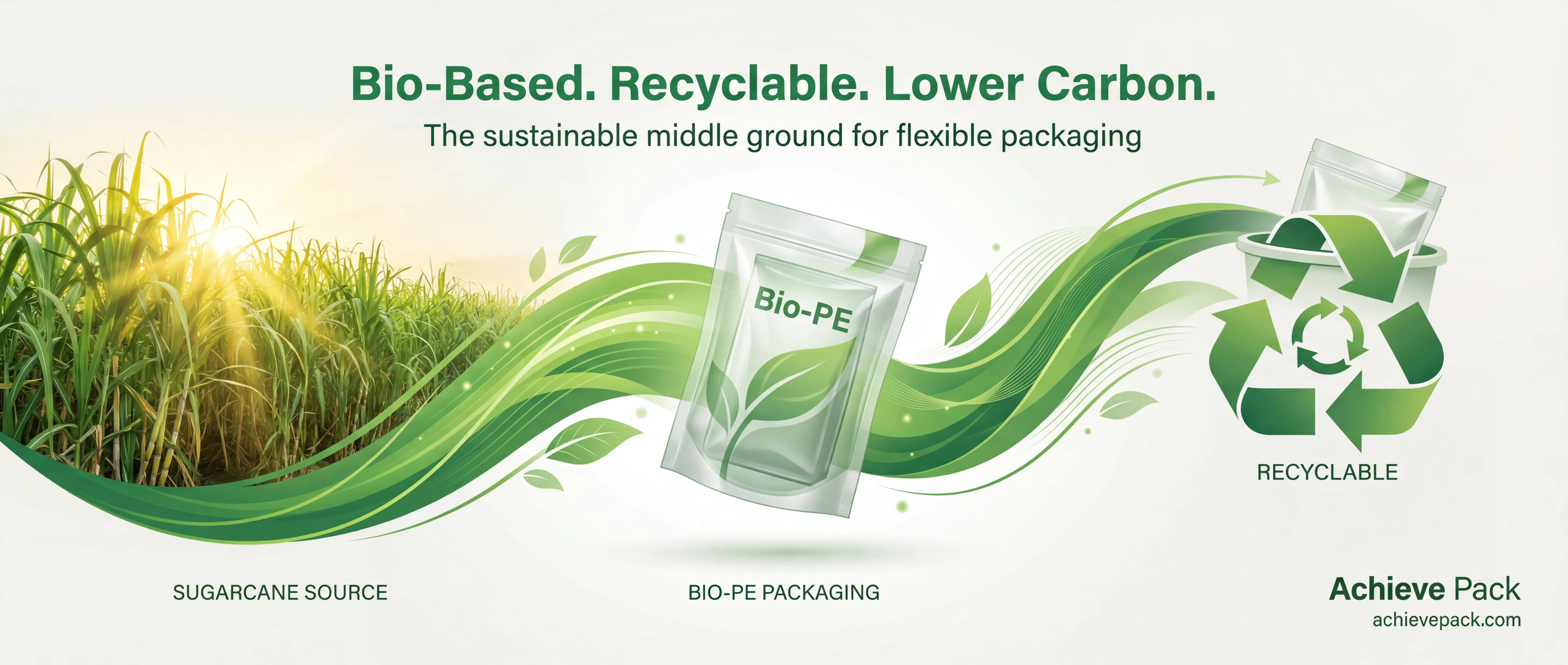
If you need a bio-based claim that survives procurement review, Bio-PE is the practical route: same performance as the PE you already run, recyclable in the same stream, with bio-based content you can verify by ASTM D6866 testing. This guide covers what it is, what it isn't, and how to spec it.

Order Sample PackBrowse Store

Key Takeaways for Procurement Teams

  • Bio-PE is chemically identical to conventional PE—same performance, same recyclability
  • Not compostable—sustainability benefits come from feedstock and carbon footprint
  • Fully recyclable in existing PE recycling streams—no sorting challenges
  • Request ASTM D6866 certification to verify bio-based content claims
Share:
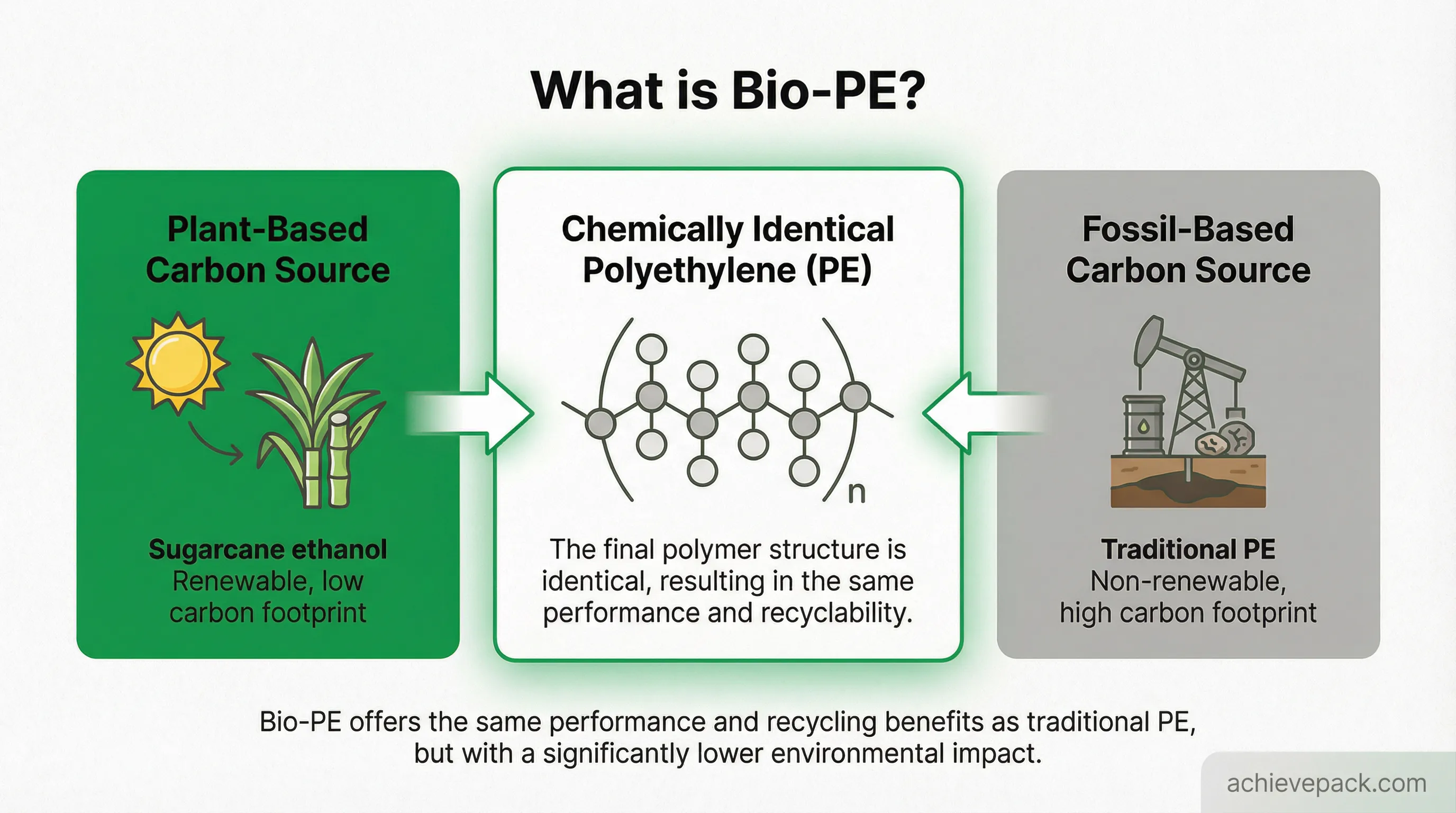
What is Bio-PE - polyethylene made from renewable sugarcane feedstocks
Bio-PE: chemically identical to fossil PE, made from renewable resources
Click to enlarge

What is Bio-PE?

Bio-PE is polyethylene made from renewable feedstocks—typically sugarcane-derived ethanol—rather than fossil oil. The key insight: chemically, they're identical.

This molecular equivalence means bio-PE behaves like standard PE in terms of:

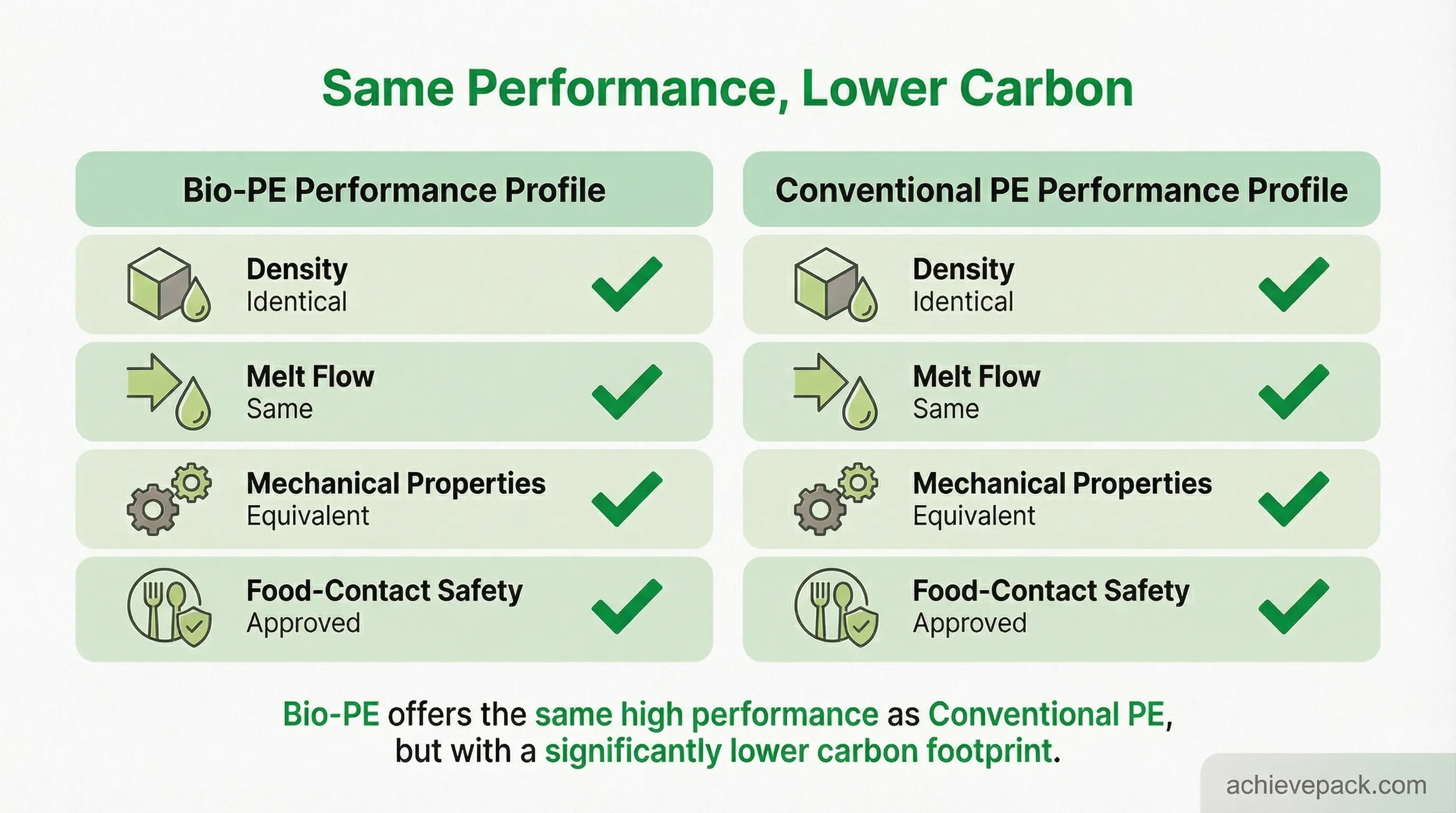
  • Density & Melt Flow: Identical processing characteristics
  • Mechanical Properties: Same strength and flexibility
  • Food-Contact Safety: Same regulatory approvals

The Practical Advantage: Existing PE equipment can process bio-PE with minimal adjustment.

Bio-PE Performance Profile

Because bio-PE is chemically identical to fossil PE, it delivers the same performance across all critical dimensions. Procurement teams benefit from operational familiarity and equipment compatibility.

Barrier Properties: Same moisture and oxygen protection as conventional PE

Seal Strength: Identical heat-seal performance and durability

Machinability: Runs on existing filling and sealing equipment

Shelf Life: Same product protection and freshness preservation

Bio-PE Performance Profile showing identical performance to fossil PE
Bio-PE delivers identical performance across all critical dimensions
Click to enlarge
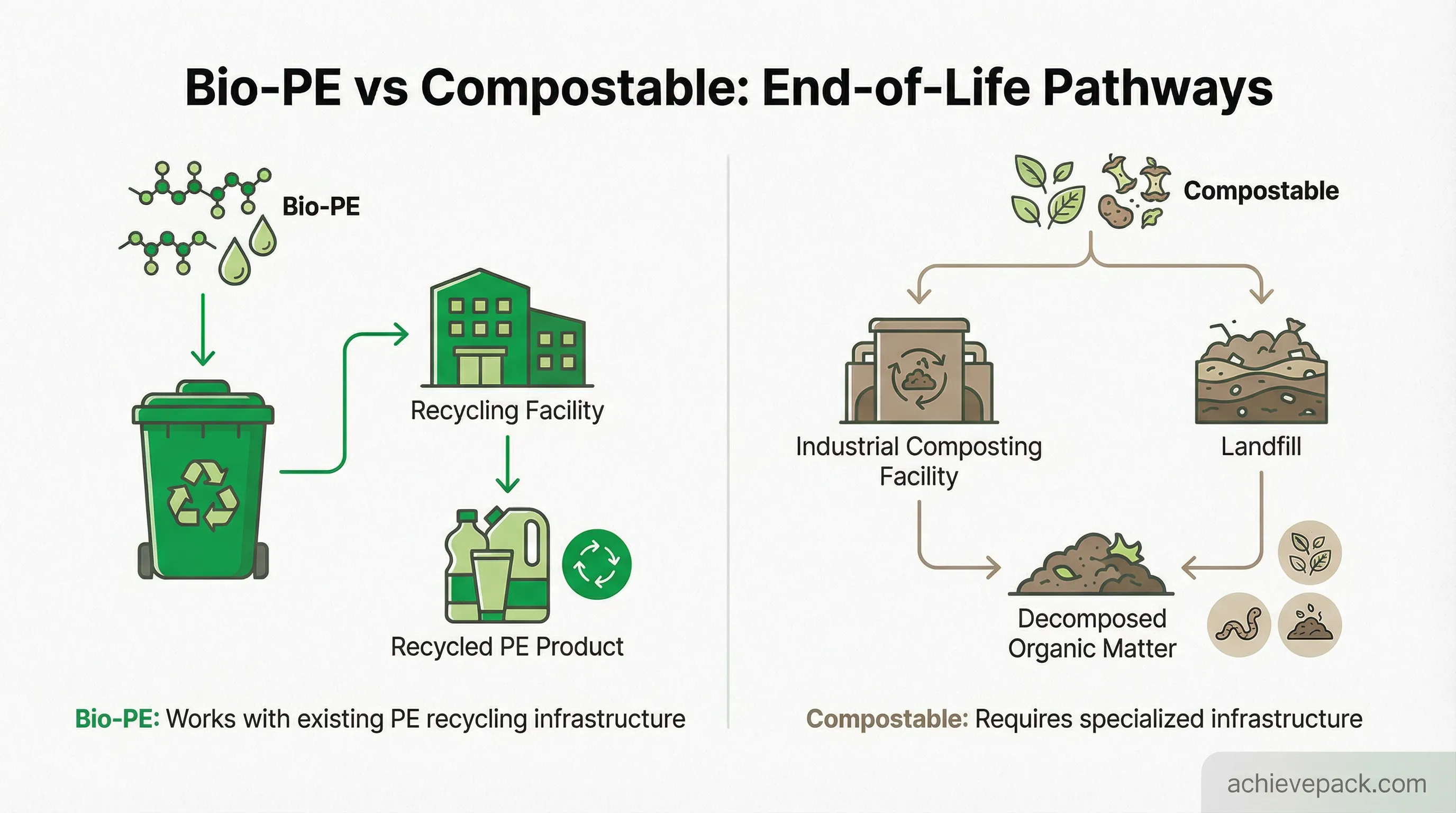
Bio-PE vs Compostable end-of-life infrastructure comparison
Critical distinction: Bio-PE is recyclable, not compostable
Click to enlarge

Bio-PE vs Compostable: End-of-Life

A critical distinction: bio-PE is not compostable. Its sustainability benefits derive from feedstock and carbon footprint, not end-of-life degradation.

Bio-PE Advantage: Fully compatible with existing PE recycling streams—no sorting challenges, no contamination risk.

Compostable Challenge: Requires specialized composting infrastructure that's limited in many regions.

Unlike many compostable plastics, bio-PE is a drop-in to existing recycling where PE infrastructure exists.

Carbon Footprint Reduction

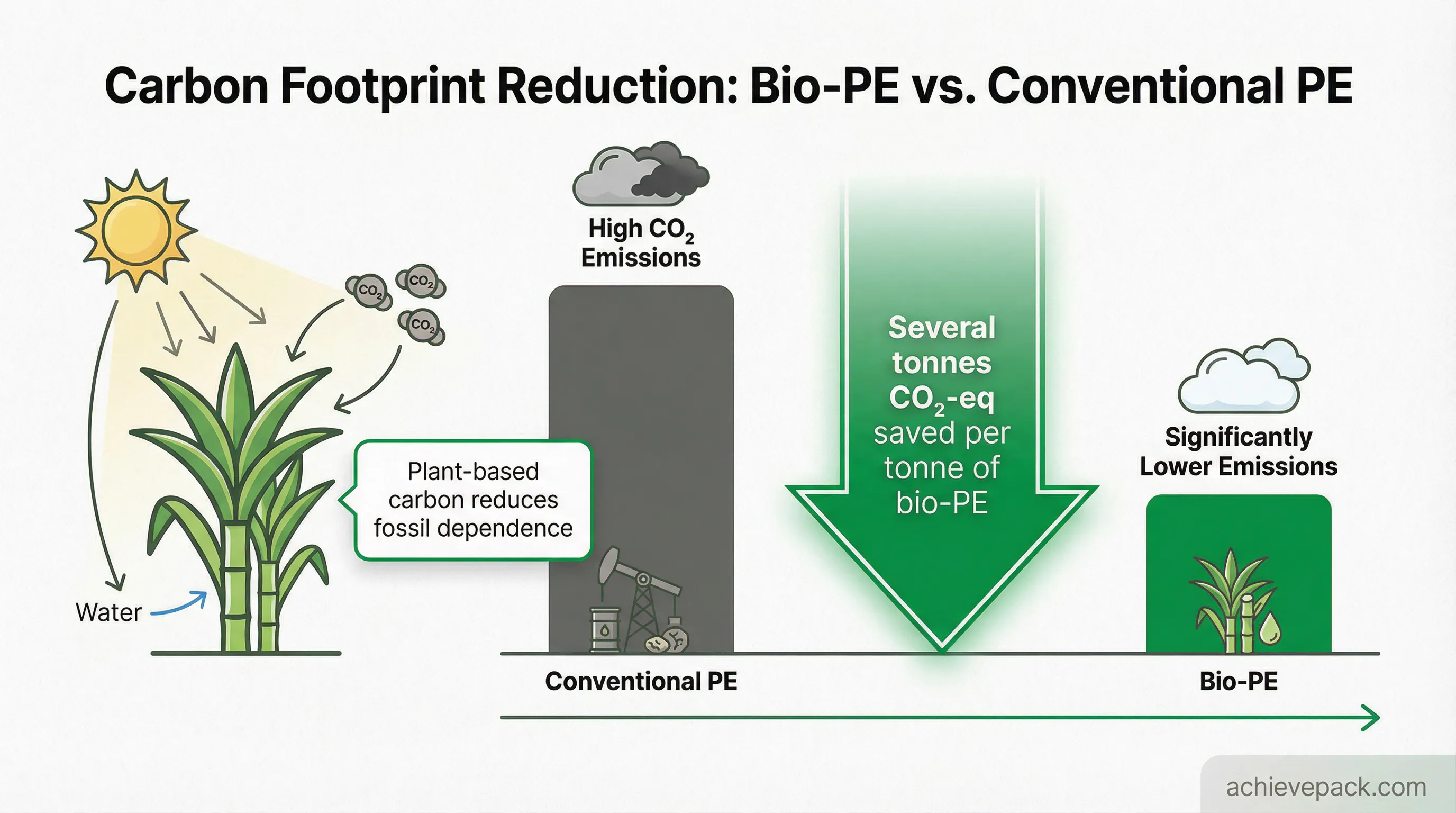
The primary environmental benefit of bio-PE is its reduced greenhouse gas footprint. During sugarcane cultivation, the plant absorbs CO₂ from the atmosphere—this becomes part of the carbon in the polymer.

Lifecycle Assessment Benefit

Each tonne of bio-PE can avoid several tonnes of CO₂-equivalent emissions (cradle-to-gate), depending on system boundaries and energy mix.

This carbon capture during feedstock growth is the key differentiator from fossil-based PE, even though both materials perform identically in use and recycling.

Carbon footprint reduction benefits of Bio-PE from sugarcane cultivation
Sugarcane cultivation captures atmospheric CO₂ into the polymer
Click to enlarge
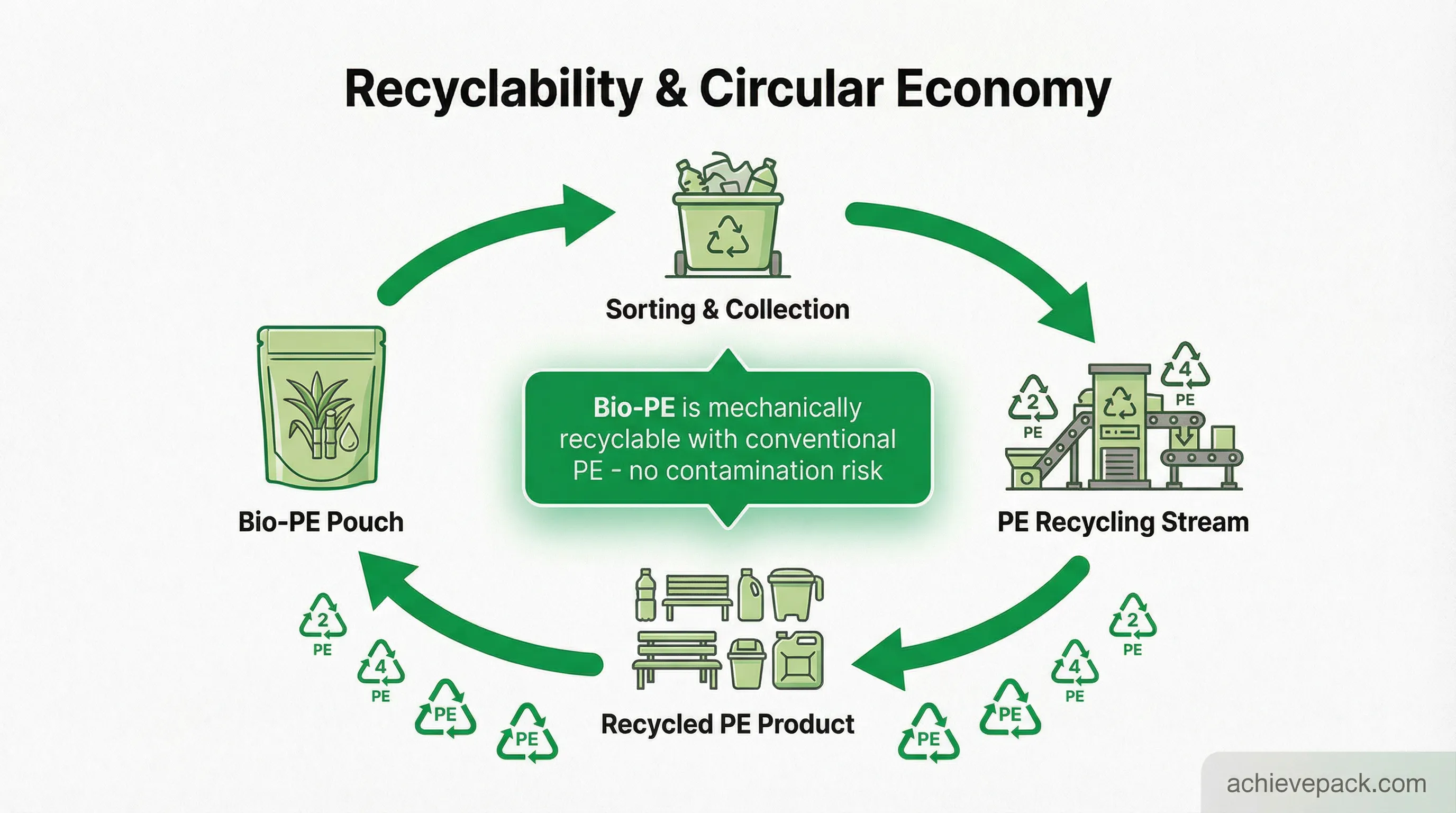
Bio-PE recyclability and circular economy compatibility
Bio-PE is a drop-in to existing PE recycling systems
Click to enlarge

Recyclability & Circular Economy

Bio-PE is a drop-in to existing PE recycling systems. Sorting technology recognizes PE by density or NIR signatures, treating bio-PE identically to conventional PE.

  • No Sorting Challenges: Recognized as standard PE by recycling facilities
  • No Contamination Risk: Compatible with PE recycling streams
  • Bio-Based Content Added: Without sacrificing recyclability

Brand Opportunity: Position selected SKUs as "bio-based and recyclable" without requiring customers to find composting facilities.

Eco Digital Solutions by Achieve Pack

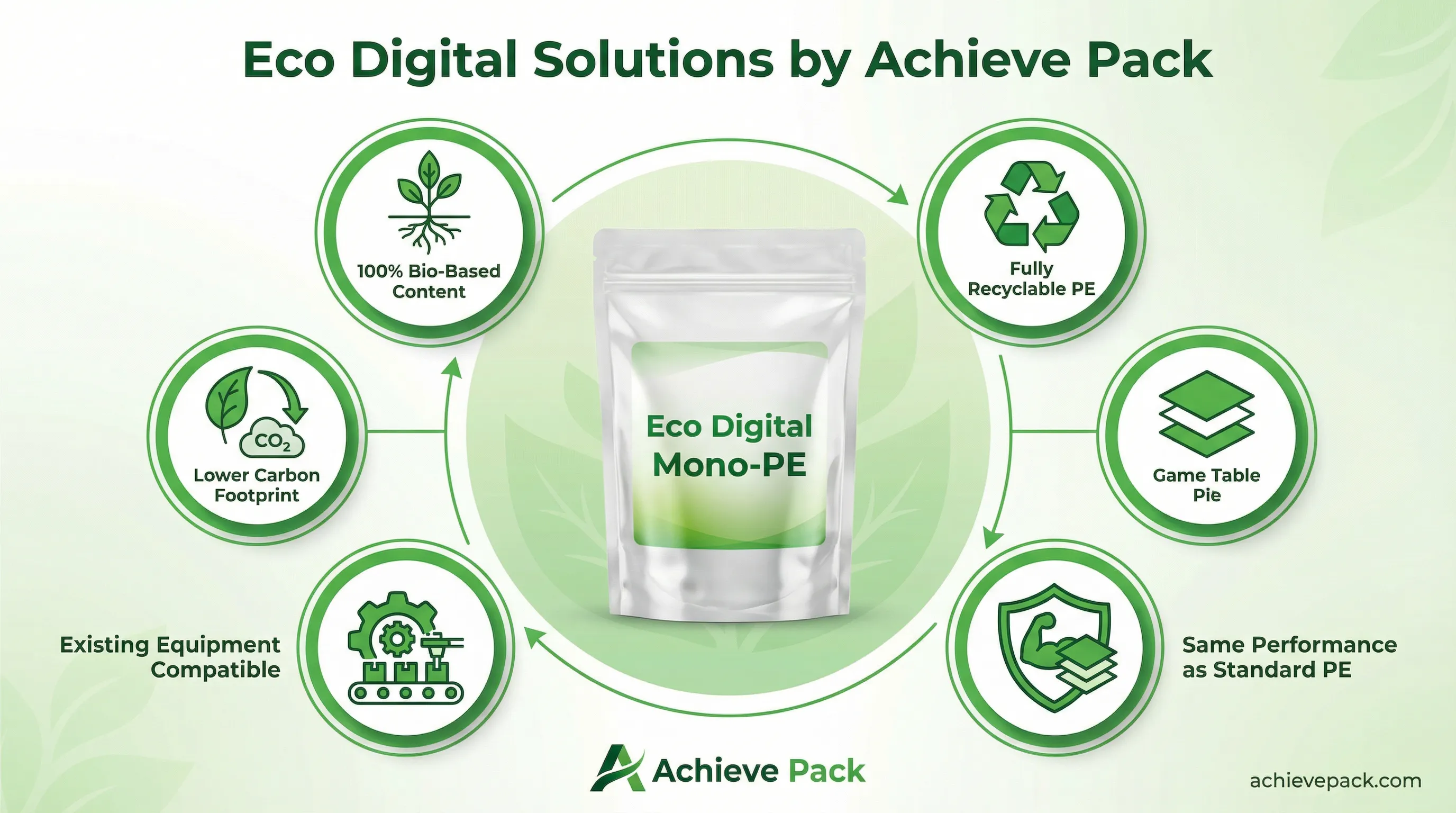
Achieve Pack's Eco Digital mono-PE pouch structures combine:

  • Operational Familiarity: Runs on existing PE filling lines
  • Recyclability: Single-material PE in appropriate streams
  • Climate Benefits: Plant-based carbon from sugarcane

Ideal for: Coffee, snack, and wellness brands who want to position selected SKUs as "bio-based and recyclable" without redesigning existing filling and sealing workflows.

Explore Bio-PE materials
Achieve Pack Eco Digital mono-PE pouch solutions with bio-PE
Eco Digital: Bio-based carbon benefits with operational familiarity
Click to enlarge
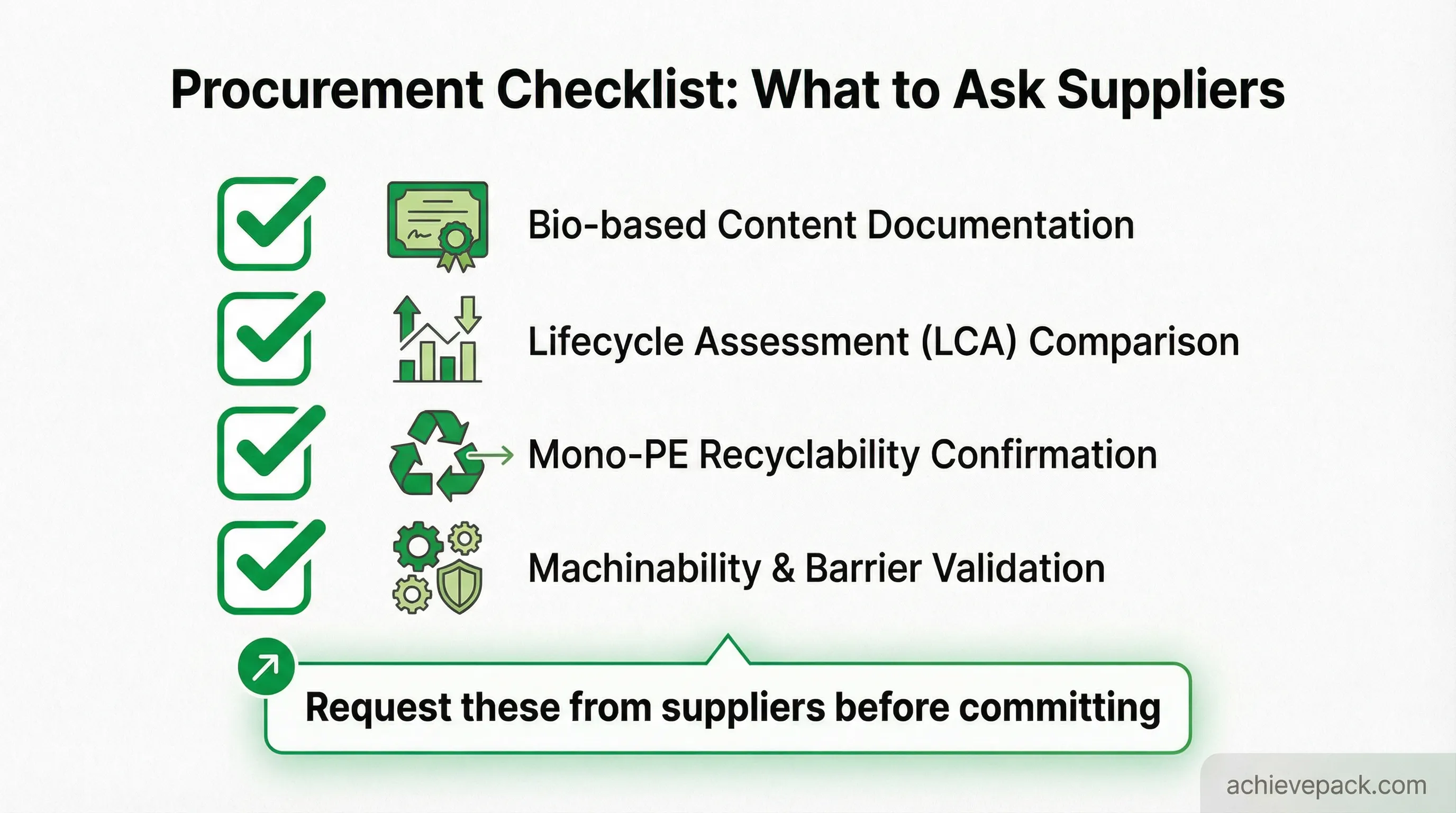
Bio-PE procurement checklist for sustainability and procurement teams
Key documentation to request when evaluating Bio-PE solutions
Click to enlarge

Procurement Checklist

When evaluating bio-PE solutions, procurement and sustainability teams should request:

  1. 1
    ASTM D6866 Documentation

    Third-party test results verifying bio-based content percentage

  2. 2
    Lifecycle Assessment Summaries

    Carbon footprint comparison: bio-PE vs fossil PE in relevant system boundaries

  3. 3
    Mono-PE Recyclability Confirmation

    Verification that structures remain mono-PE and recyclable in priority markets

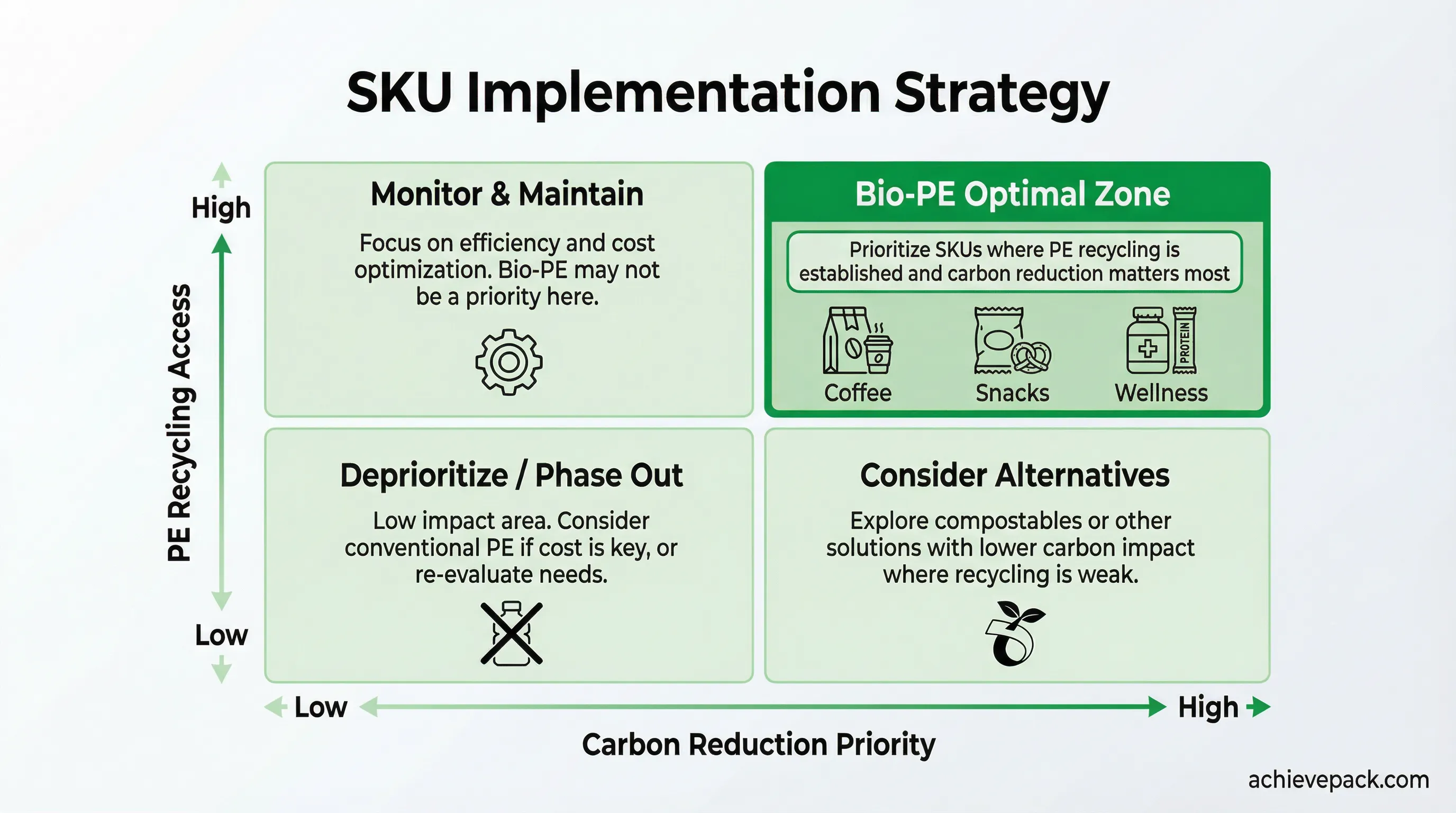
SKU Implementation Strategy

Shortlisting SKUs strategically ensures maximum sustainability impact. Focus on products where:

  • PE Recycling Access is High: Markets with established PE recycling infrastructure
  • Carbon Reduction is a Priority: Products with sustainability positioning
  • Brand Sustainability Commitments: Aligns with corporate ESG goals

Start Small: Pilot bio-PE on 2-3 hero SKUs before full portfolio rollout.

Bio-PE SKU implementation strategy for maximum impact
Strategic SKU selection maximizes sustainability impact
Click to enlarge
5 Common Bio-PE Problems and Solutions
Addressing common challenges with bio-based polyethylene
Click to enlarge

5 Common Bio-PE Problems (And Solutions)

High Cost Premium

Optimize thickness and blend ratios.

Sourcing Instability

Partner with established suppliers with secured supply chains.

Certification Ambiguity

Require ASTM D6866 and ISCC PLUS certifications.

Processing Parameters

Fine-tune extrusion and sealing temperatures.

Greenwashing Accusations

Provide transparent LCA (Life Cycle Assessment) data.

Frequently Asked Questions

What is Bio-PE and how is it different from conventional PE?
Bio-PE (Bio-based Polyethylene) is chemically identical to conventional PE but made from renewable sugarcane-derived ethanol instead of fossil oil. This molecular equivalence means bio-PE behaves exactly like standard PE in terms of density, melt flow, mechanical properties, and food-contact safety.
Is Bio-PE compostable?
No, bio-PE is not compostable. Its sustainability benefits come from feedstock origin and reduced carbon footprint, not end-of-life degradation. Bio-PE is fully recyclable in existing PE recycling streams, making it compatible with circular economy infrastructure.
What certifications should I request for Bio-PE packaging?
Request: (1) ASTM D6866 test results documenting bio-based content percentage, (2) third-party certificates verifying plant-based origin, and (3) lifecycle assessment summaries comparing bio-PE vs fossil PE carbon footprint in relevant system boundaries.
Can bio-PE be recycled with regular plastic?
Yes. Bio-PE is a drop-in replacement for conventional PE in recycling systems. Sorting technology recognizes PE by density or NIR signatures, treating bio-PE identically to fossil PE. No sorting challenges or contamination risk.
What is the carbon footprint benefit of Bio-PE?
During sugarcane cultivation, plants absorb CO₂ from the atmosphere—this becomes part of the carbon in the polymer. Lifecycle assessments show each tonne of bio-PE can avoid several tonnes of CO₂-equivalent emissions compared to fossil PE (cradle-to-gate basis).

What Bio-PE Will NOT Do

  • • NOT compostable, NOT biodegradable. Bio-PE is chemically identical to fossil PE — it goes into the PE recycling stream (#4). Never put compostable or biodegradable claims on it.
  • • NOT curbside-recyclable everywhere. Flexible Bio-PE film usually travels the store drop-off (#4) route, not the curbside bin. The honest claim is \"recyclable where facilities exist\".
  • • NOT a license for \"carbon negative\" artwork. Sugarcane feedstock lowers footprint, but the final figure depends on the LCA boundary. Claim verified bio-based content (ASTM D6866), not blanket carbon negativity.
  • • NOT a barrier upgrade. Same polymer, same performance: modest oxygen barrier alone. Pair with EVOH or metallized layers for long shelf-life products.

Questions on a specific SKU? Order the $40+ sample kit (credited toward your first order) or talk to our team.

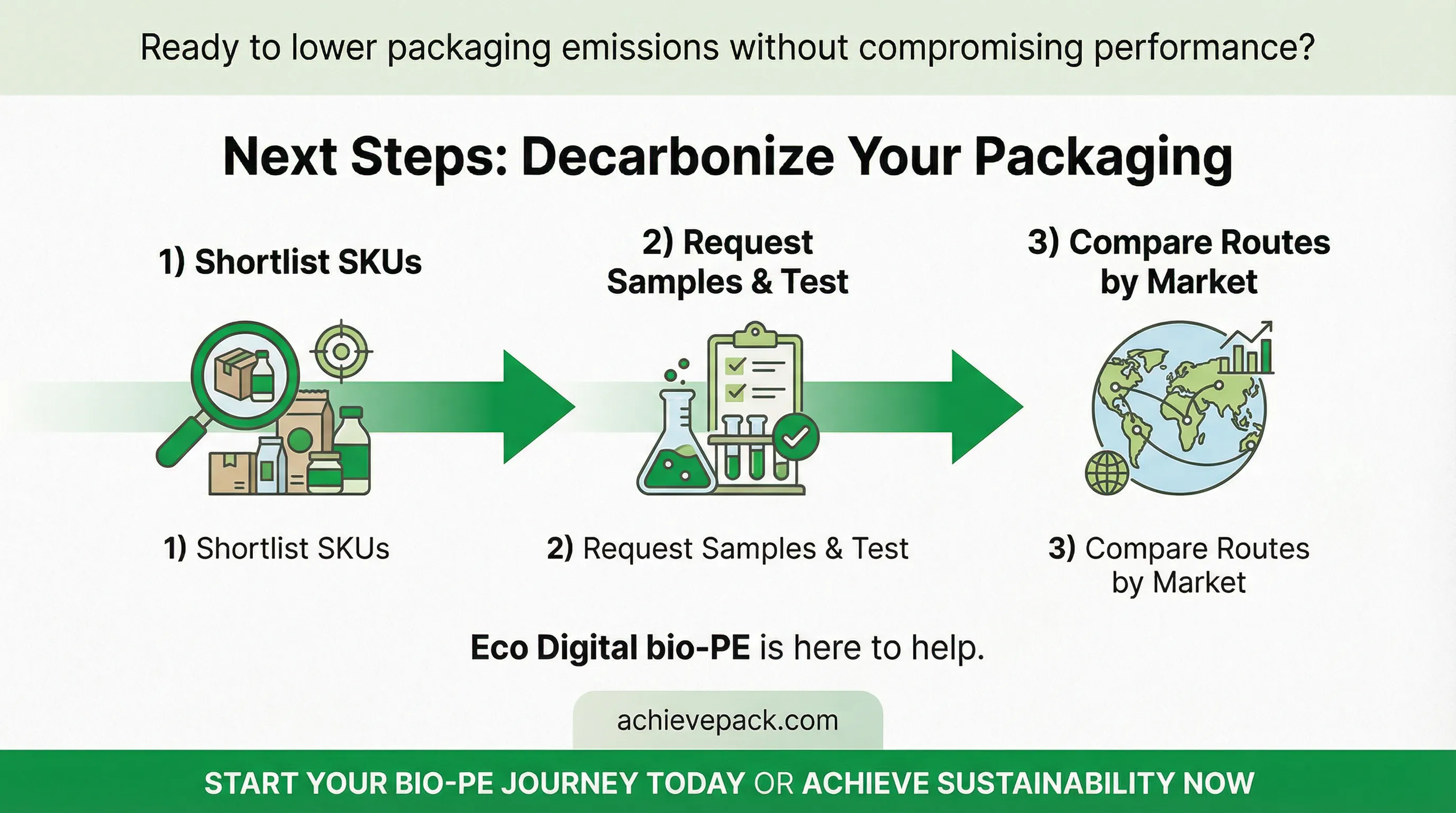
Next steps for Bio-PE packaging implementation
Ready to decarbonize flexible packaging without sacrificing performance?
Click to enlarge

Run Bio-PE on Your Own Line First

Bio-PE drops into existing PE converting and filling equipment — but you should still verify seals, print, and shelf life on your product. Order the $40+ sample kit (credited toward your first order) or book a call to spec a 500 pc pilot run.

Order Sample PackBrowse Store
Still reading the footer? You must be serious.
$40+ sample kit — credited to your first order. Or book 15 minutes with a human.
Get the Sample KitBook a Call
WhatsApp (Real Person)LIVE
Book Meeting (Real Person)1:1
AI Packaging Assistant

We use cookies to improve your experience. View our Cookie Policy.