PCR Complete Guide

What Is PCR Plastic and How Does It Impact My Packaging Quality?

From buzzword to spec. Understanding PCR in practical terms for brand, procurement and sustainability teams.

View PCR Products
PCR Explained
Food-Grade Safe
Quality Assured
What Is PCR Plastic and How Does It Impact My Packaging Quality?
Click to enlarge

Key Takeaways

Share:
  • PCR closes the loop: Made from materials consumers have already used and recycled
  • Quality can match virgin: Food-grade PCR meets similar performance requirements
  • Appearance may vary slightly: Design can embrace or minimize visual differences
  • Start with 20-50% PCR: Test on hero products before scaling portfolio-wide

From Buzzword to Spec

"Made with recycled plastic" has become a common tagline on packaging, but for SME brands the real questions are simple: What exactly is PCR plastic, and what does it do to my pack quality, operations and brand perception?

This article explains PCR in practical terms and outlines how Achieve Pack's Eco Digital PCR structures can help you trial recycled content without compromising performance.

What Is Post-Consumer Recycled (PCR) Plastic?
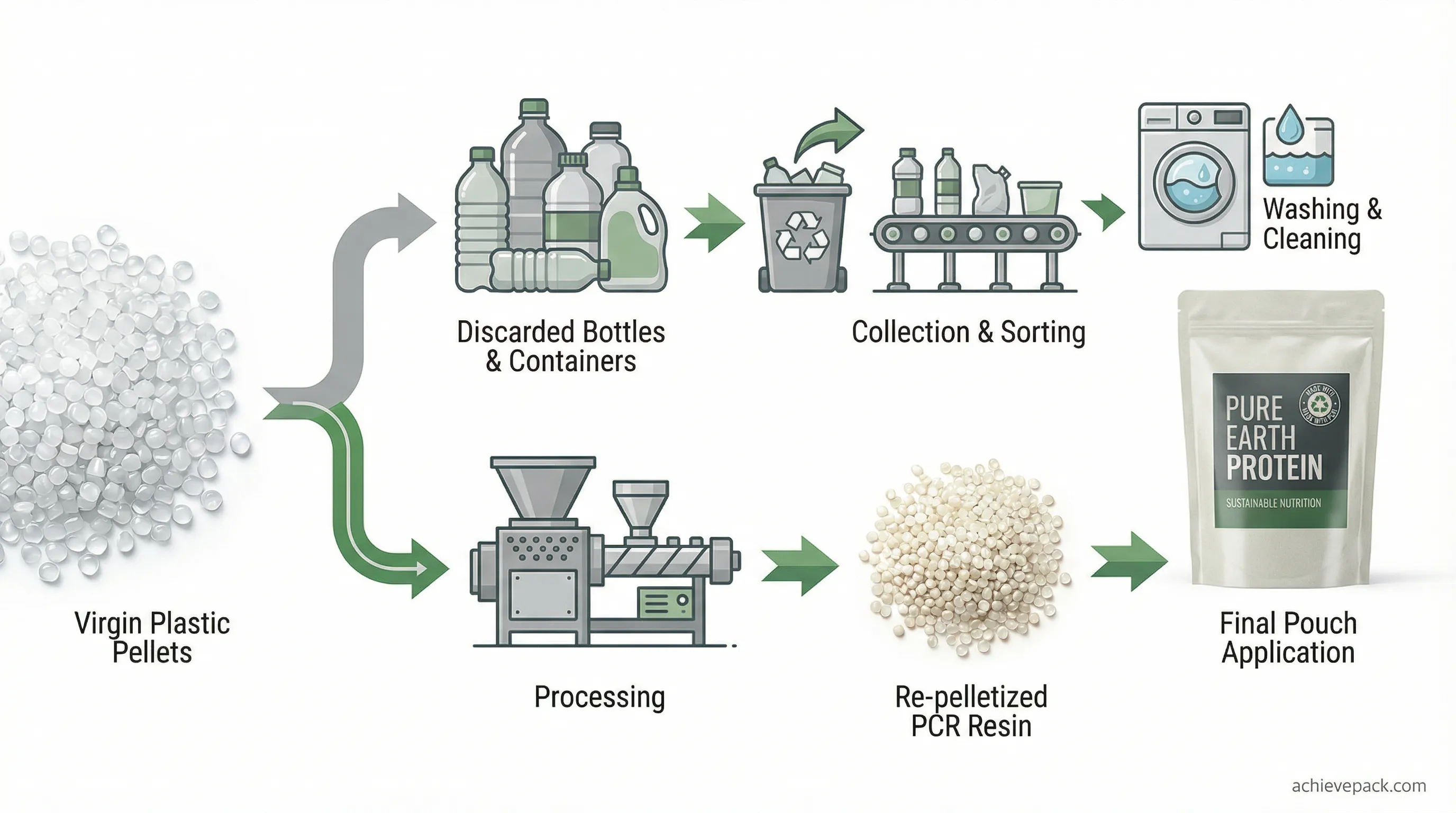
PCR is made from consumer-used materials that have been recycled
Click to enlarge

What Is Post-Consumer Recycled (PCR) Plastic?

PCR plastic is made from materials that consumers have already used and placed into recycling systems, such as bottles, containers and films collected via curbside programs or deposit schemes.

After collection, this material is sorted, cleaned, processed and re-pelletized into resins that can be used again in new packaging.

PCR Is Distinct From Other Recycled Content

Pre-Consumer Recycled Content

Comes from process scrap and offcuts generated before products reach consumers

Recyclable Plastic

May be technically recyclable but not necessarily collected and reprocessed in practice

Post-Consumer Recycled (PCR)

Closes more of the loop by actually incorporating material that has gone through the consumer and waste-management system

PCR Is Distinct From Other Recycled Content
PCR closes the loop by incorporating material from the consumer waste system
Click to enlarge
Does PCR Compromise Packaging Quality?
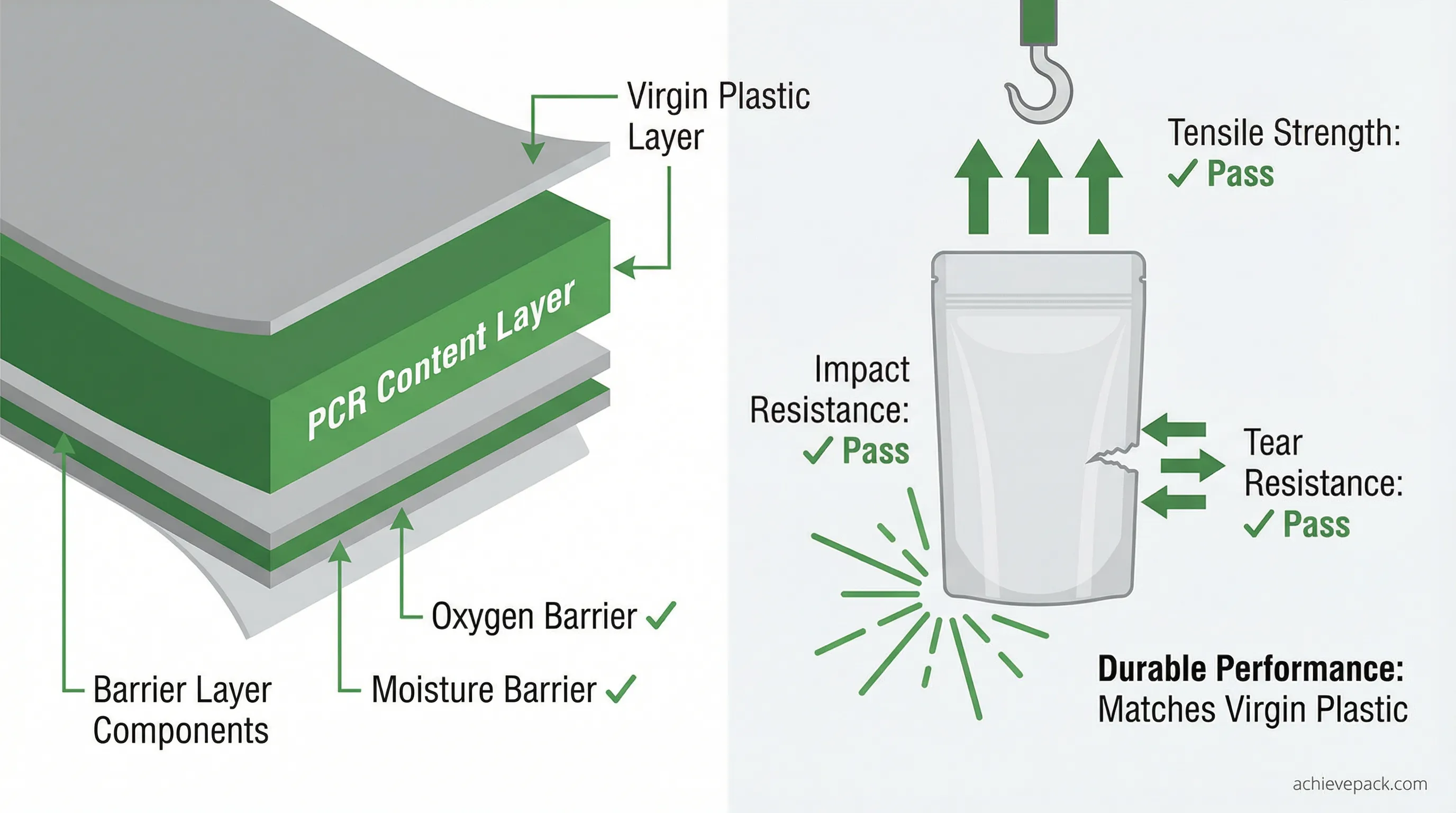
Food-grade PCR can match mechanical and barrier requirements
Click to enlarge

Does PCR Compromise Packaging Quality?

For SME brands, the biggest worry is that PCR will make packaging feel cheaper, less safe or less premium. The reality is more nuanced.

Mechanical and Barrier Performance

Food-grade PCR resins are engineered to meet similar performance requirements:

  • Mechanical strength: properly specified PCR films can match tensile, impact and seal strength
  • Barrier: PCR structures can deliver adequate oxygen and moisture barrier for many applications

Processing windows can be narrower than virgin, so it's important to work with converters who understand PCR film design.

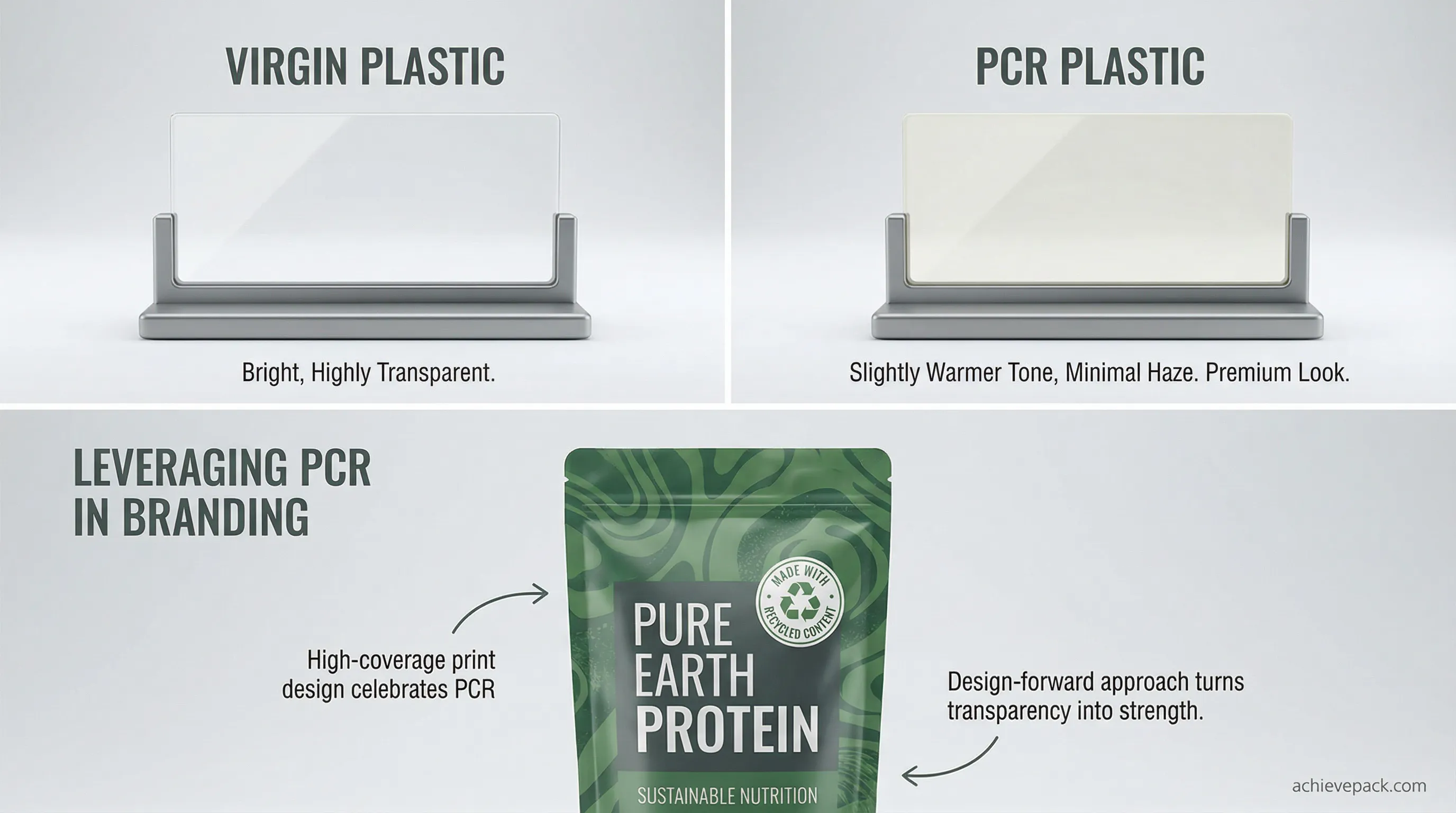
Appearance and Aesthetic Considerations

PCR can introduce slight variations in color, haze and surface finish compared with virgin material:

  • Clear films may appear a bit less "water-white" and more off-tone
  • There can be minor batch-to-batch fluctuations in clarity and tint

Many brands turn this into a design feature by:

  • • Using full-coverage or high-coverage print so the film base is less visible
  • • Intentionally communicating that slight variations are a sign of genuine recycled content
Appearance and Aesthetic Considerations
PCR may show slight variations in color and clarity
Click to enlarge
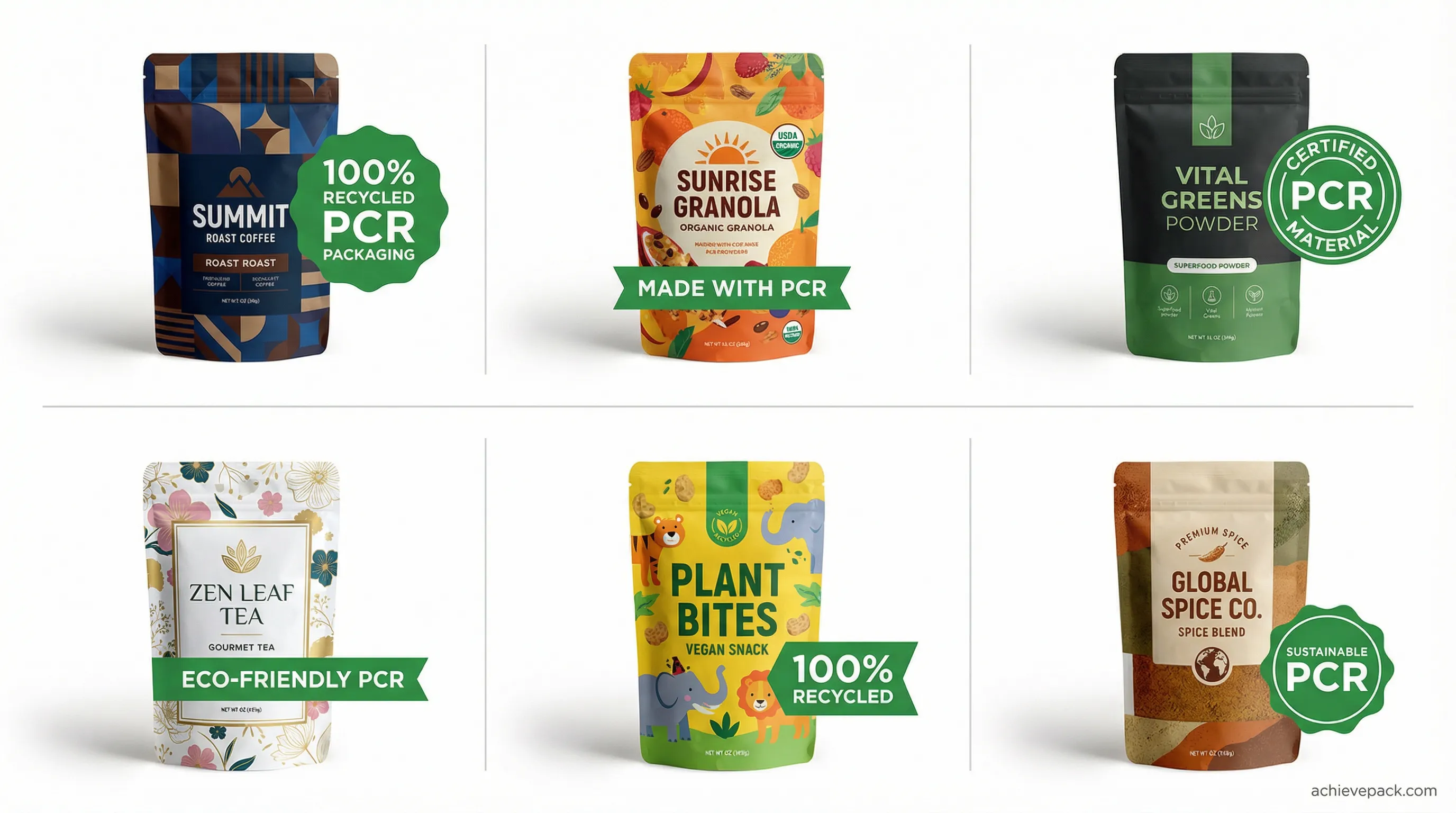
Design That Celebrates PCR
Eco Digital printing supports designs that celebrate PCR
Click to enlarge

Design That Celebrates PCR

Eco Digital printing from Achieve Pack supports an approach that celebrates PCR rather than trying to hide it.

Digital printing allows you to adapt artwork so PCR's visual differences become a feature, not a bug. Low MOQ means you can test different design approaches without large plate investments.

Is PCR Safe for Food and Personal Care Packaging?

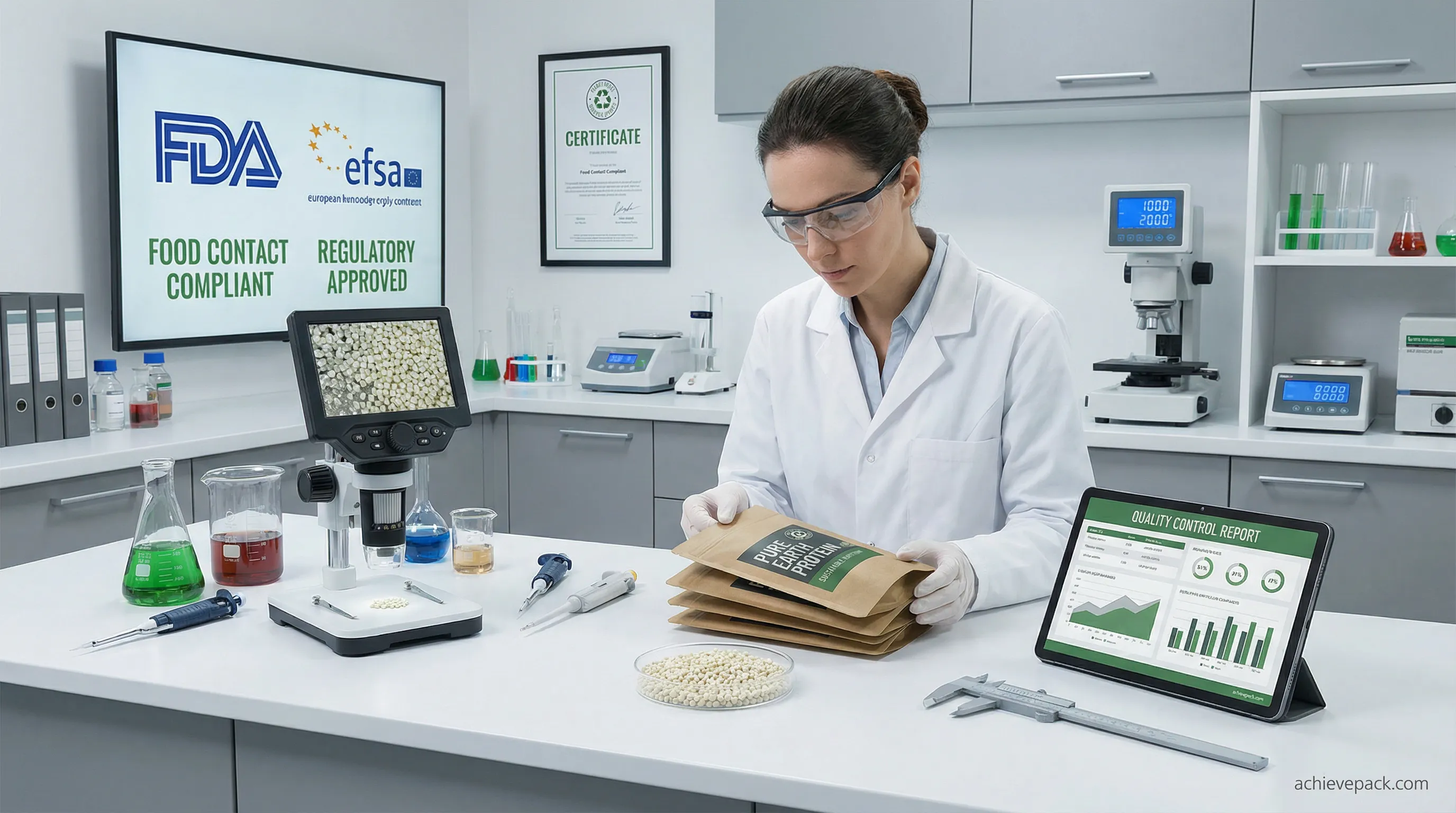
PCR used in food-contact packaging must meet strict regulatory and safety requirements. High-quality PCR resins go through intensive sorting, washing and decontamination processes.

Regulators in key markets (such as FDA in the US and EFSA in the EU) provide frameworks for evaluating PCR processes and materials for food-contact use.

SME brands should:

  • Work only with suppliers who can provide regulatory opinions or no-objection letters
  • Request documentation on decontamination processes and compliance

Achieve Pack's Eco Digital PCR solutions are based on food-grade PCR inputs and supported by technical documentation to satisfy retailer and regulator expectations.

Is PCR Safe for Food and Personal Care Packaging?
Food-grade PCR meets strict regulatory and safety requirements
Click to enlarge
Practical Impacts on Your Operations
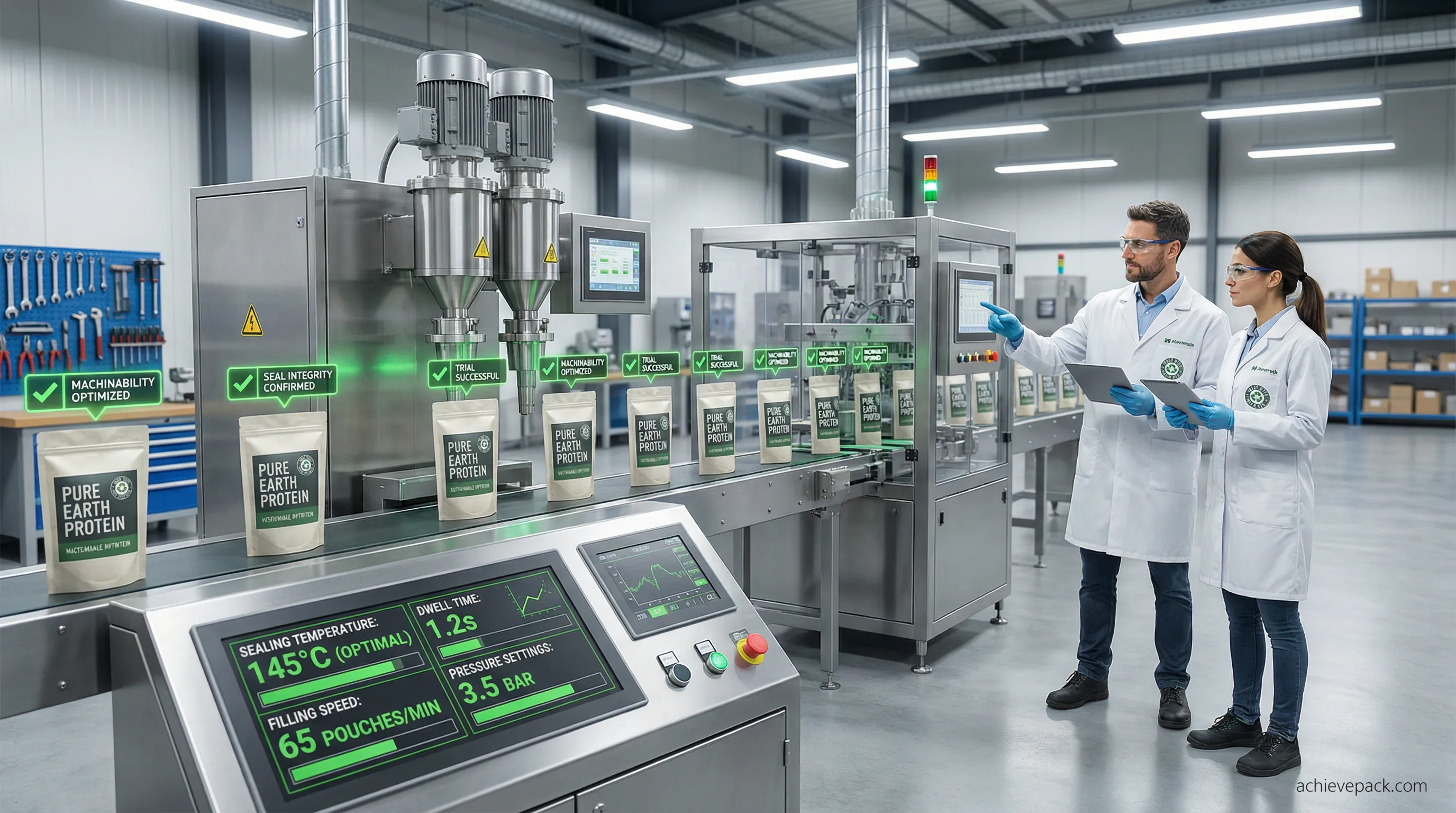
Simple line trials help fine-tune sealing and filling parameters
Click to enlarge

Practical Impacts on Your Operations

Switching to PCR can have some operational implications, but for most SME brands they are manageable with testing and support.

Sealing and Machinability

  • • Some PCR blends may have slightly different stiffness or coefficient of friction
  • • Simple line trials allow you to fine-tune sealing temperature, dwell time and filling speeds

Consistency and Supply

  • • Food-grade PCR is still a constrained resource, quality varies by supplier
  • • Working with a partner who qualifies PCR streams reduces risk

Eco Digital PCR pouches from Achieve Pack are designed as drop-in options for typical stand-up and flat pouch formats, with lab testing to de-risk sealing, drop, and transport.

How Achieve Pack's Eco Digital PCR Can Help You Start

Achieve Pack offers Eco Digital flexible packaging structures that incorporate post-consumer recycled content while preserving the functionality SME brands need:

  • Stand-up and flat pouches with 20-50% PCR content as a starting range
  • Mono-material designs where possible to maintain or improve recyclability
  • Digital printing from low MOQs so you can pilot PCR without large plate fees

This lets you test PCR on one or two hero products, gather data on customer response and operations, and then decide if and how to scale.

How Achieve Pack's Eco Digital PCR Can Help You Start
Start with 20-50% PCR and scale based on results
Click to enlarge

5 Common PCR Problems (And Solutions)

1. Impurities and Gel Particles (Black Spots)

PCR materials often contain trace contaminants that appear as black spots or gels in the film.

Solution: We use advanced optical sorting and multi-stage melt filtration to ensure high clarity and purity.

2. Inconsistent Color and Appearance

Variations in recycled feedstocks can lead to unpredictable tints (often yellowish or grayish) in the final product.

Solution: Employing multi-layer co-extrusion technology, we place the PCR layer in the core, surrounded by virgin layers for a consistent, premium finish.

3. Reduced Mechanical and Barrier Strength

The recycling process can degrade polymer chains, reducing tensile strength and barrier performance.

Solution: We blend PCR with high-performance virgin resins and apply specialized barrier coatings (like EVOH or AlOx) to meet strict shelf-life requirements.

4. Residual Odors

Post-consumer plastics can retain odors from their previous uses, which is unacceptable for food or cosmetic packaging.

Solution: Our suppliers utilize intensive washing and vacuum degassing during pelletization to eliminate volatile organic compounds (VOCs).

5. Unreliable Heat Sealing

Using PCR in the sealing layer can cause inconsistent seal strength, leading to leaks.

Solution: We guarantee the innermost sealing layer remains 100% virgin LLDPE, ensuring reliable, hermetic seals on every pouch.

PCR Problems and Solutions
Click to enlarge

Frequently Asked Questions

What is PCR plastic?
PCR (Post-Consumer Recycled) plastic is made from materials that consumers have already used and placed into recycling systems, such as bottles, containers and films. After collection, this material is sorted, cleaned, processed and re-pelletized into resins for new packaging. This is distinct from pre-consumer recycled content (process scrap) and recyclable plastic.
Does PCR compromise packaging quality?
Not when specified correctly. Food-grade PCR resins are engineered to meet similar performance requirements as virgin plastics. Mechanical strength and barrier performance can match requirements for pouches and bags. However, there may be slight variations in color and clarity compared to virgin material.
Is PCR safe for food packaging?
Yes, when sourced properly. PCR used in food-contact packaging must meet strict regulatory and safety requirements. High-quality PCR resins go through intensive sorting, washing and decontamination processes. Regulators like FDA and EFSA provide frameworks for evaluating PCR materials for food-contact use.
What PCR percentage should I start with?
Achieve Pack recommends starting with 20-50% PCR content for most applications. This range is easier to source, has lower quality variation risk, and still makes credible sustainability claims. You can increase percentages over time as supply and confidence grow.
Will PCR work on my filling line?
PCR blends may have slightly different stiffness or friction than virgin structures, but for most SME brands these differences are manageable. Simple line trials allow you to fine-tune sealing temperature, dwell time and filling speeds. Achieve Pack provides pre-tested Eco Digital PCR pouches designed as drop-in options.

Ready to Explore PCR for Your Packaging?

PCR plastic is not a like-for-like copy of virgin material, but when specified correctly it can deliver strong performance, compelling sustainability claims and satisfy retailer and regulatory expectations.

If your team is exploring PCR for the first time, Achieve Pack can help you select the right structure, run line trials, and develop on-pack language that accurately communicates your use of post-consumer recycled content.

Order Sample PackBrowse Store
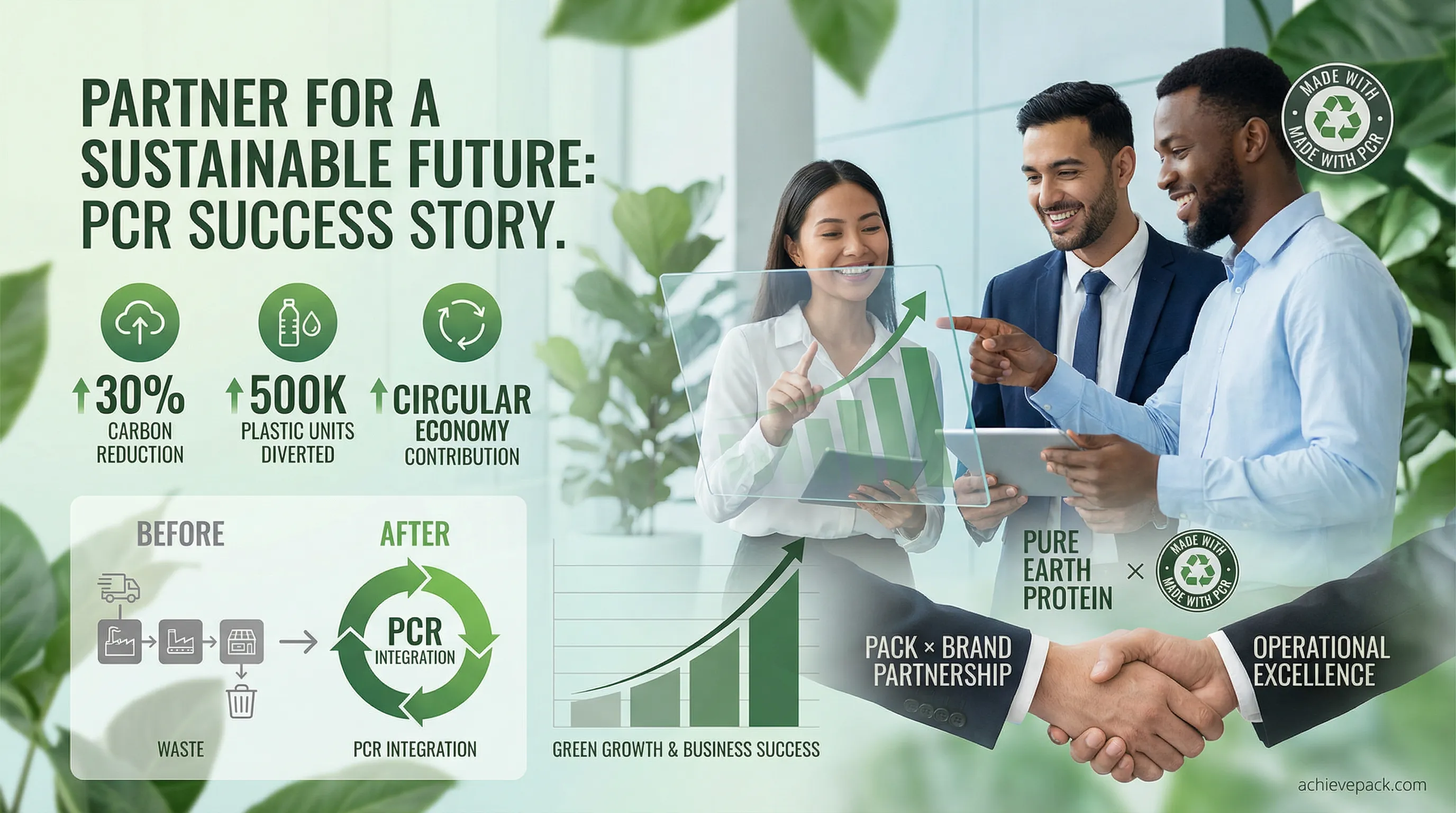
PCR sustainability impact story
Click to enlarge
Still reading the footer? You must be serious.
$40+ sample kit — credited to your first order. Or book 15 minutes with a human.
Get the Sample KitBook a Call
WhatsApp (Real Person)LIVE
Book Meeting (Real Person)1:1
AI Packaging Assistant

We use cookies to improve your experience. View our Cookie Policy.