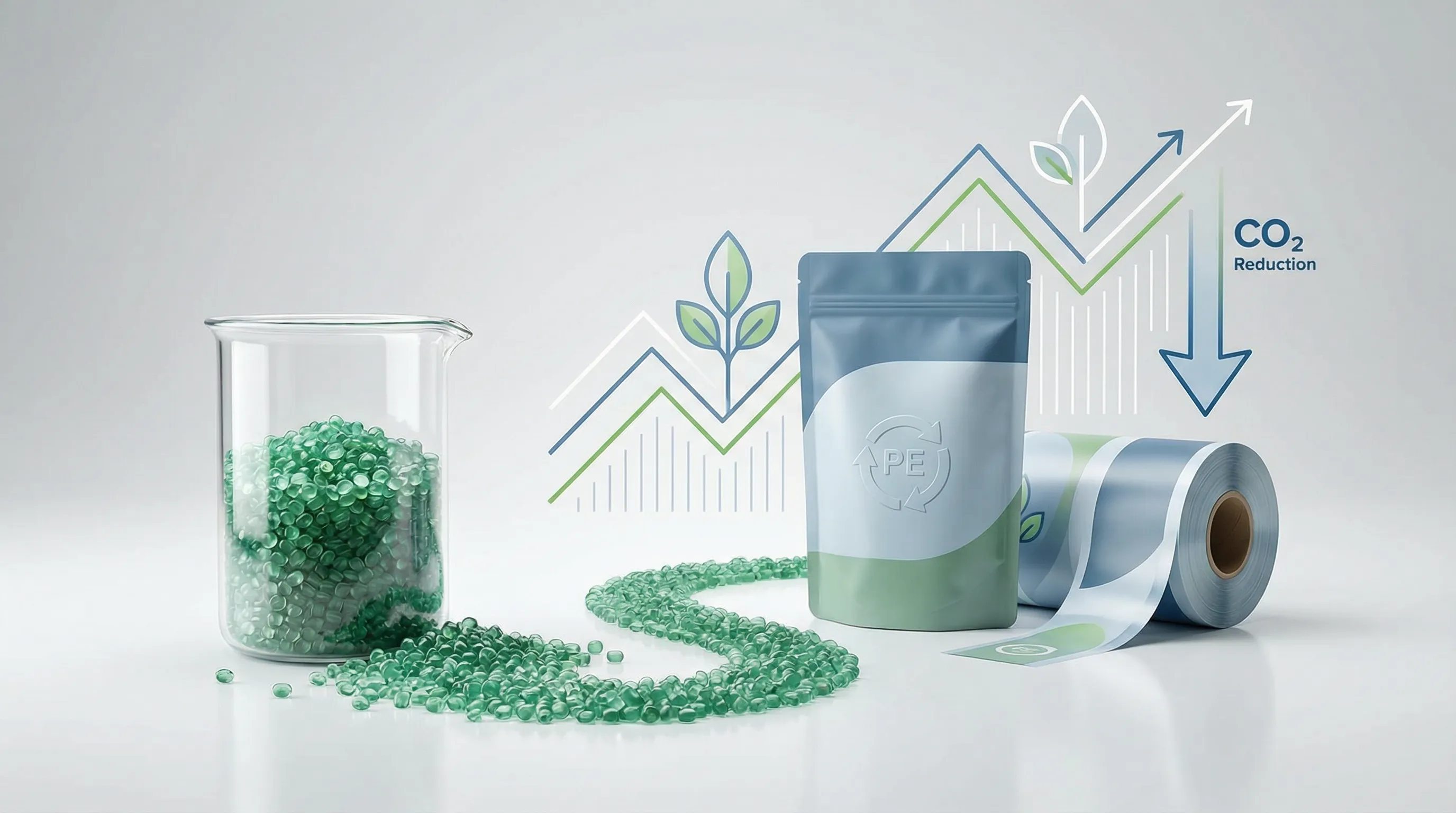
Key Takeaways for Procurement Teams
- One goal, different routes—compostable, bio-PE, and mono-recyclables all reduce impact differently
- Compostable films work best where composting infrastructure exists and food residue is significant
- Bio-PE shines where recycling is strong and carbon footprint reduction is the priority
- Portfolio approach—most brands benefit from matching material to market infrastructure
Introduction: One Goal, Different Routes
Brand owners today have several credible levers to make flexible packaging more sustainable: compostable structures, bio-based polyolefins like bio-PE, and recyclable mono-materials.
All can reduce environmental impact, but they depend on very different systems and behaviors.
This Article Is For: Packaging, procurement and sustainability teams who need to decide when to choose compostable films and when to choose bio-PE, based on infrastructure, product requirements and regulatory trends.
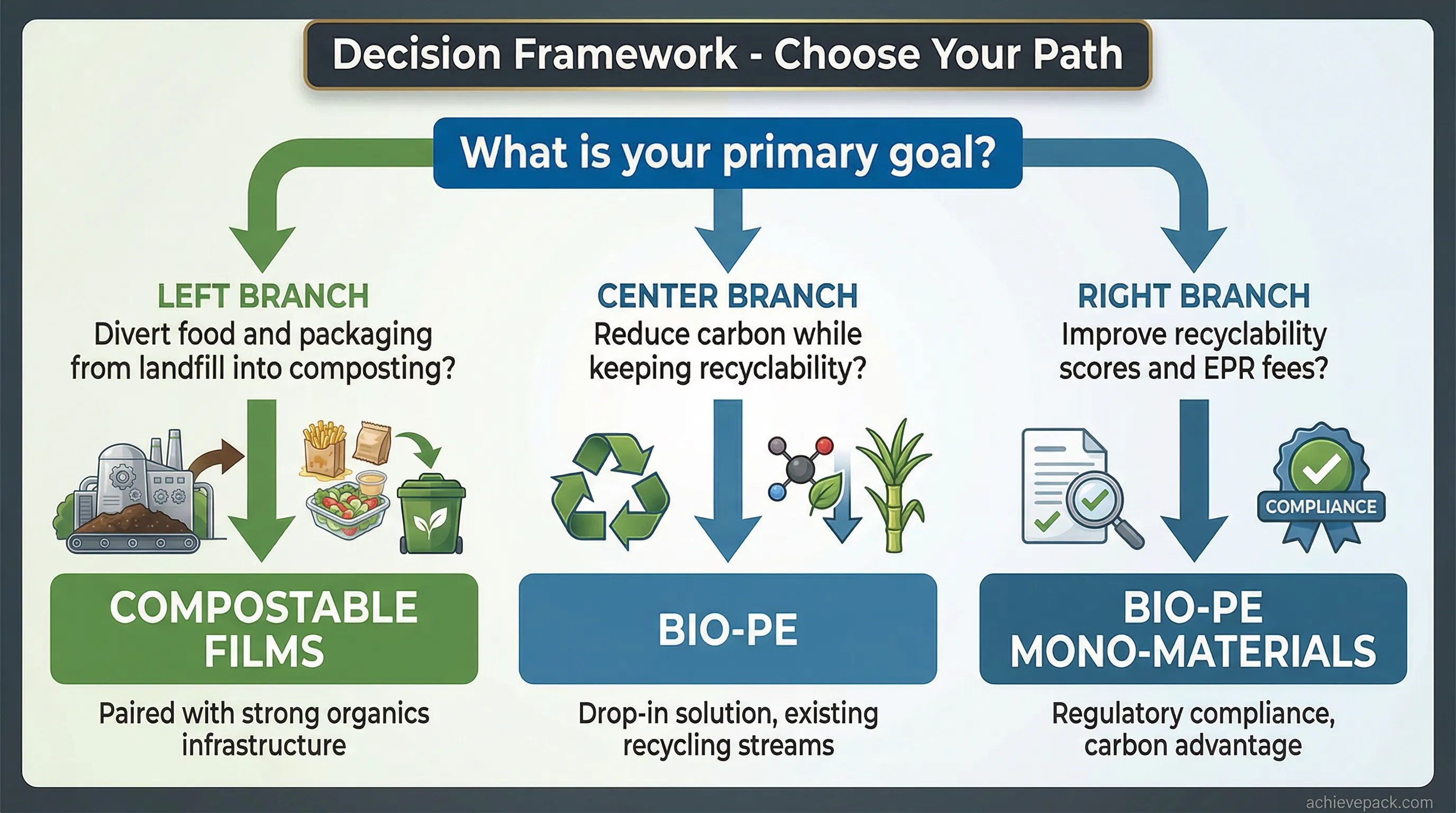
What Problem Are You Trying to Solve?
Before choosing materials, clarify the primary objective:
Divert from Landfill
Divert food and packaging from landfill into composting systems?
Reduce Carbon
Reduce fossil resource use and carbon footprint while keeping recyclability?
EPR Compliance
Improve recyclability scores and EPR fees under upcoming regulations?
Compostable Films: When Waste Behaves Like Food
Compostable films are engineered to break down under defined composting conditions—home or industrial—into CO₂, water, biomass and minerals without toxic residues.
When paired with organics collection and composting infrastructure, they allow soiled packaging to follow the same route as food waste.
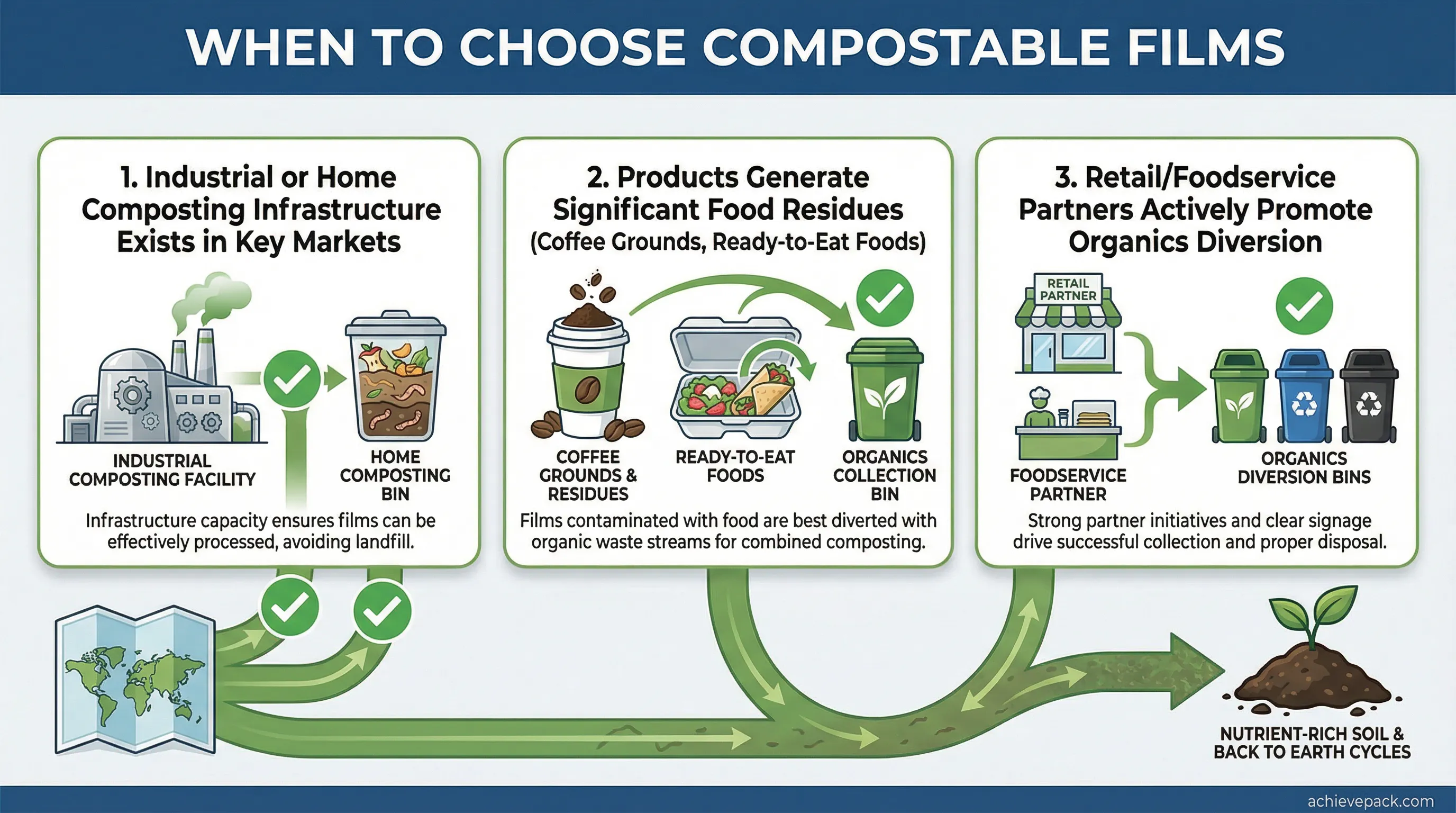
They are most compelling when:
- Your key markets have industrial composting facilities and collection for food scraps and packaging
- Your products generate significant food residues that interfere with mechanical recycling
- Retail or foodservice partners are actively promoting organics diversion and zero-waste initiatives
Important: Compostable structures do not help where composting infrastructure is minimal and items end up in landfill or standard recycling streams.
Bio-PE: When Recycling and Carbon Are the Focus
Bio-PE offers a different value proposition. It keeps the same end-of-life route as conventional PE—recycling—but replaces fossil carbon with renewable carbon from feedstocks such as sugarcane.
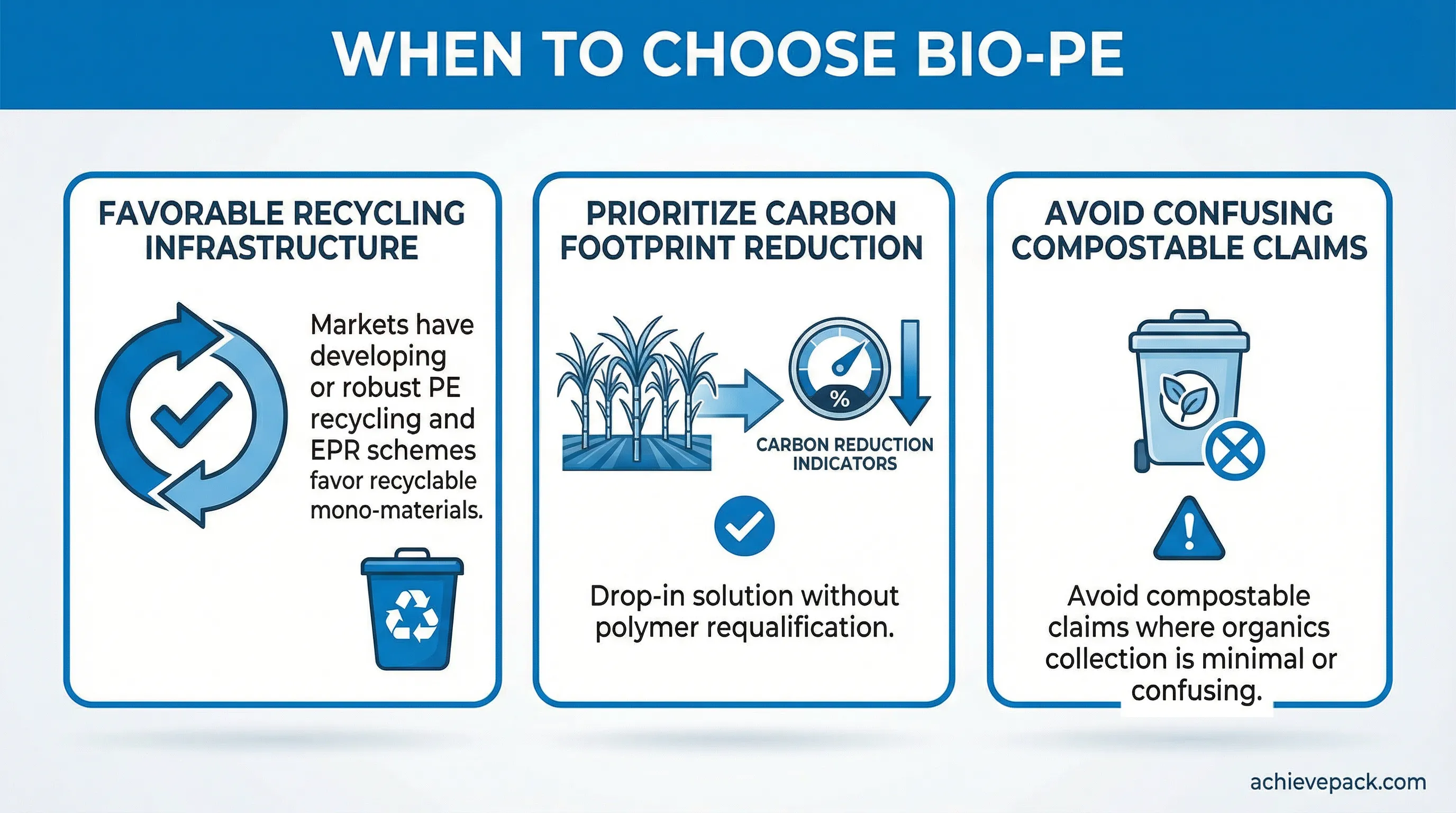
Bio-PE structures make sense when:
- Your markets have developing or robust PE recycling and EPR schemes favor recyclable mono-materials
- Carbon footprint reduction is a priority and you want a drop-in solution that avoids requalifying new polymers
- You want to avoid compostable claims in regions where organics collection is absent or confusing for consumers
Key Insight: In this scenario, composting is not the main lever; recyclability and carbon are.
Key Decision Factors: A Practical Comparison
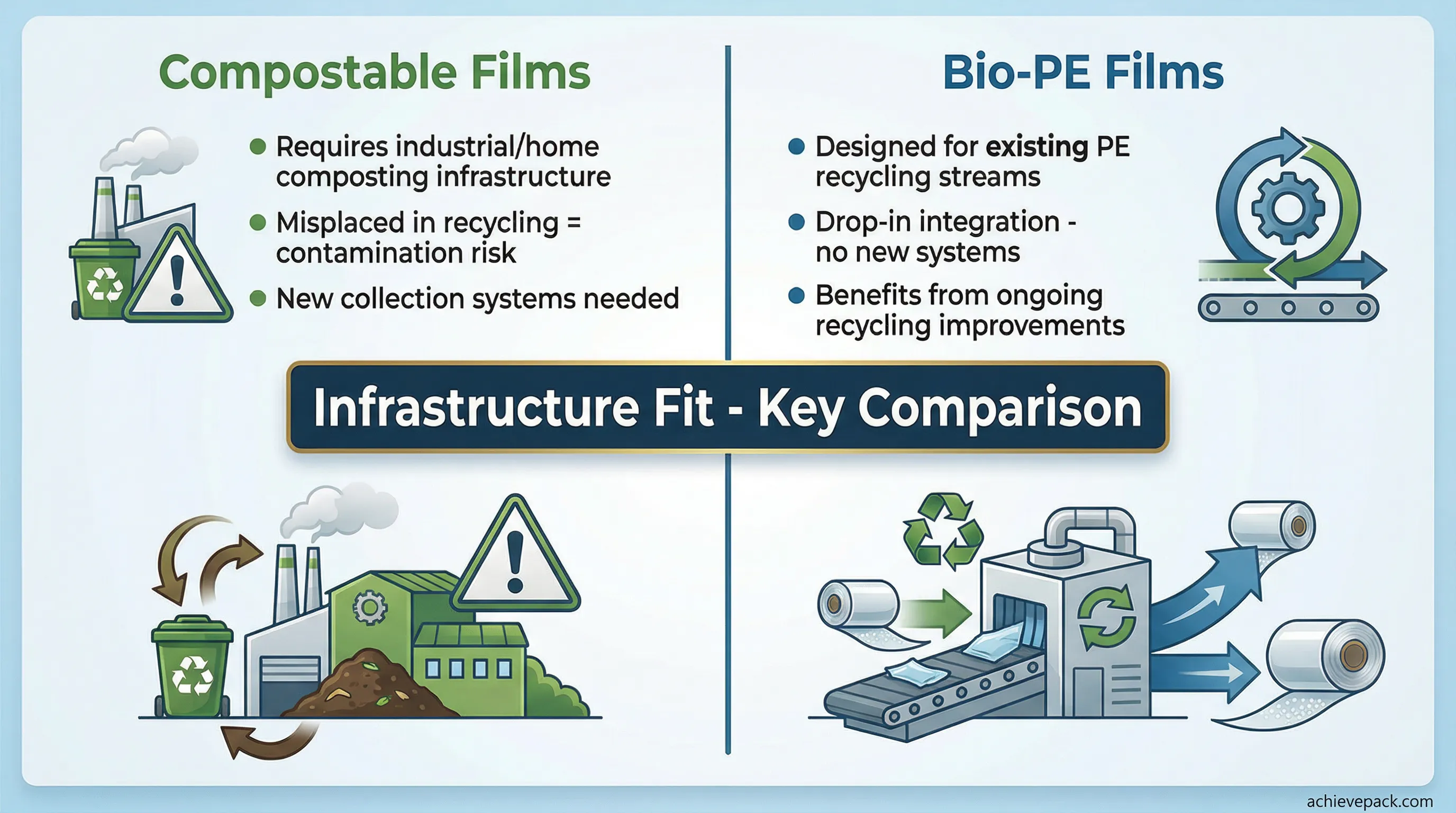
1. Infrastructure Fit
Compostable Films
Require industrial or home composting infrastructure that accepts packaging. Misplaced in recycling bins, they can contaminate polyolefin streams.
Bio-PE
Designed to enter existing PE recycling streams as a drop-in. Do not require new collection systems; benefit from ongoing improvements in plastics recycling.
2. Product and Residue Profile
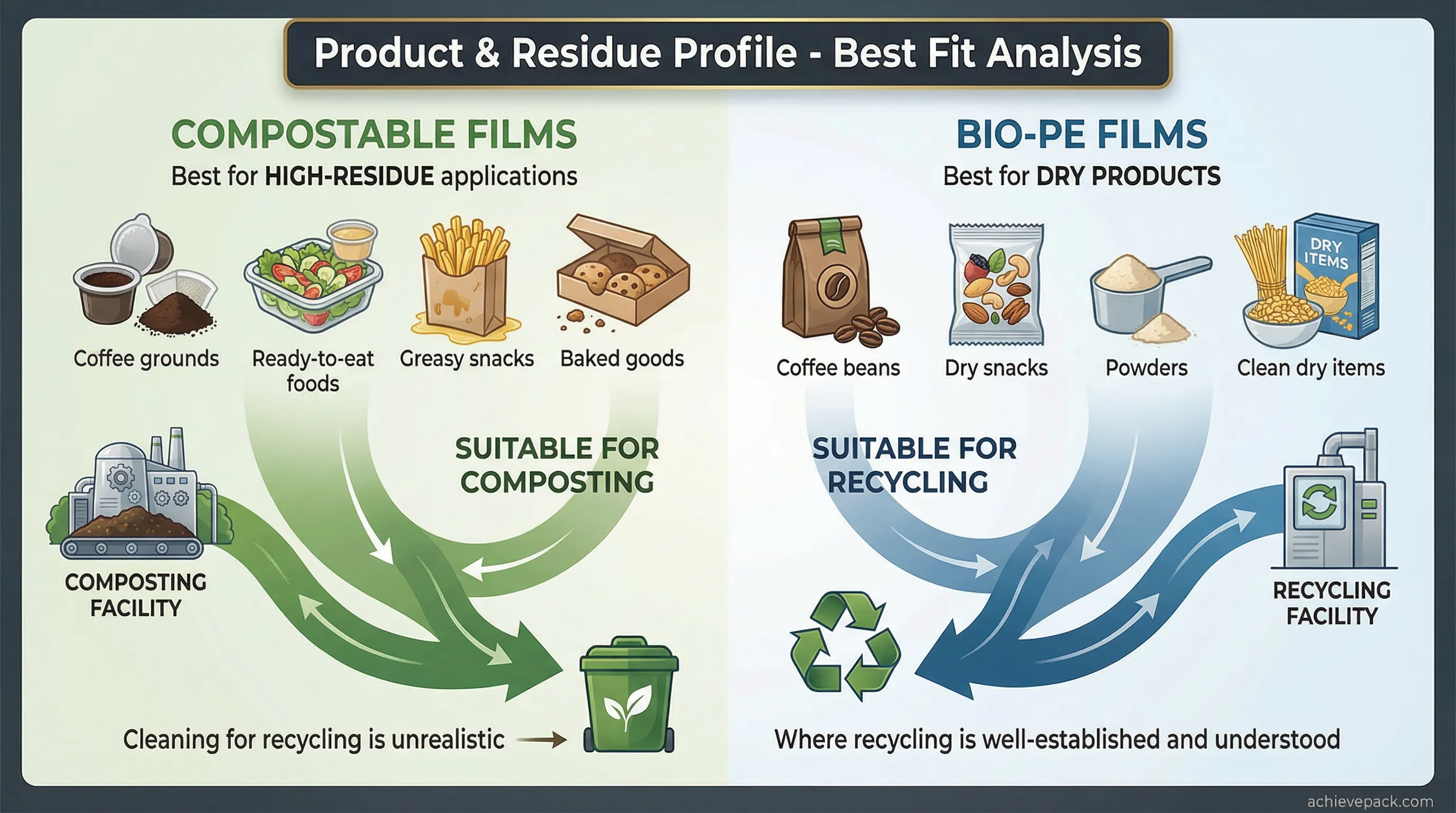
Compostable is Attractive For:
High-residue applications (coffee grounds, ready-to-eat foods, greasy snacks) where cleaning for recycling is unrealistic.
Bio-PE is Well Suited For:
Dry products and categories where consumers already understand plastic recycling, such as coffee beans, dry snacks and powders.
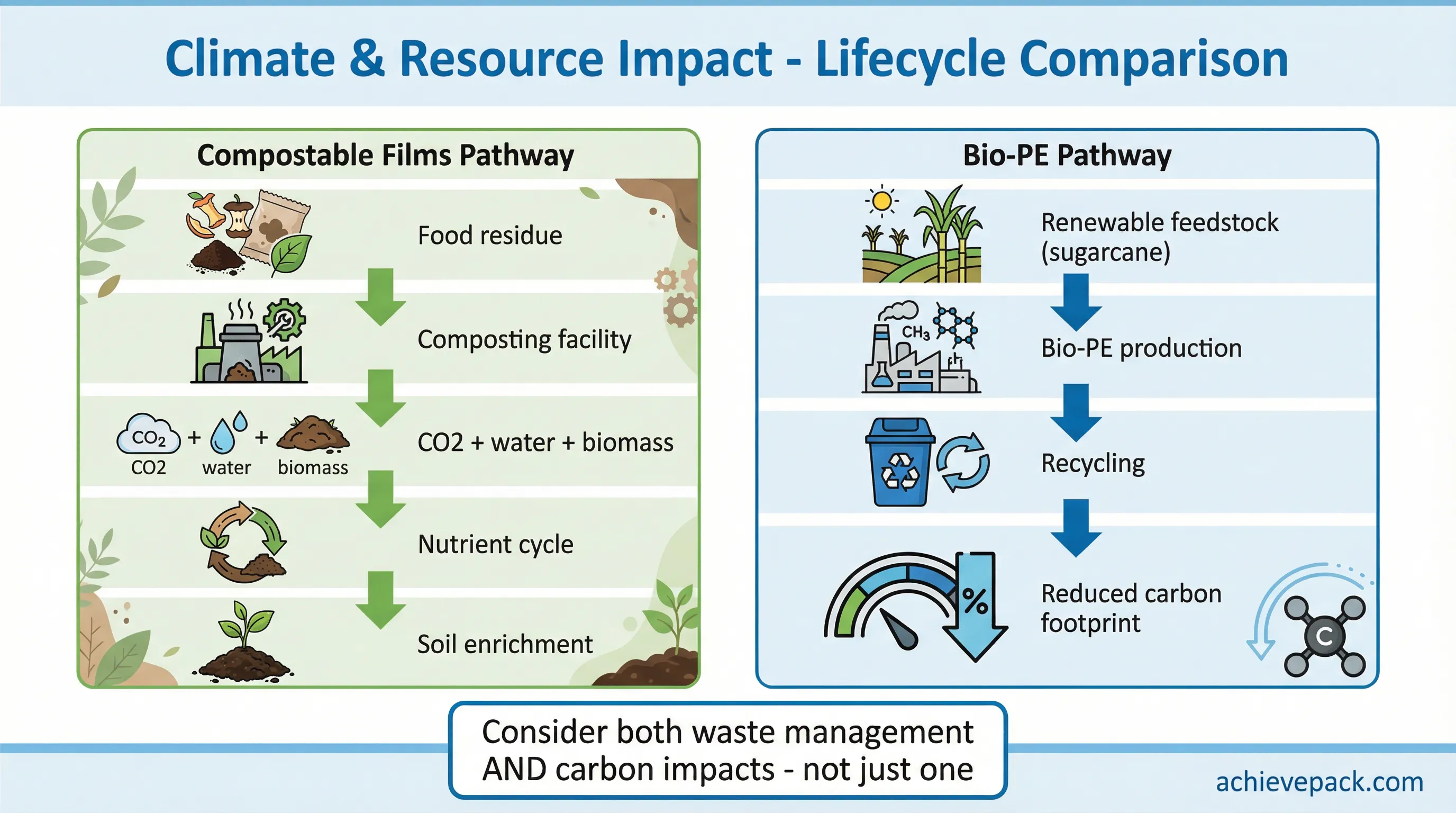
3. Climate and Resource Use
Compostable Materials
Can reduce contamination of landfills and incinerators and enable nutrient cycling when correctly processed.
Bio-PE
Reduces reliance on fossil feedstocks and typically lowers cradle-to-gate CO₂ emissions compared with fossil PE, while keeping recyclability.
Recommendation: A full comparison for your SKUs should consider both waste-management and carbon impacts, not just one.
Using Both in a Portfolio Strategy
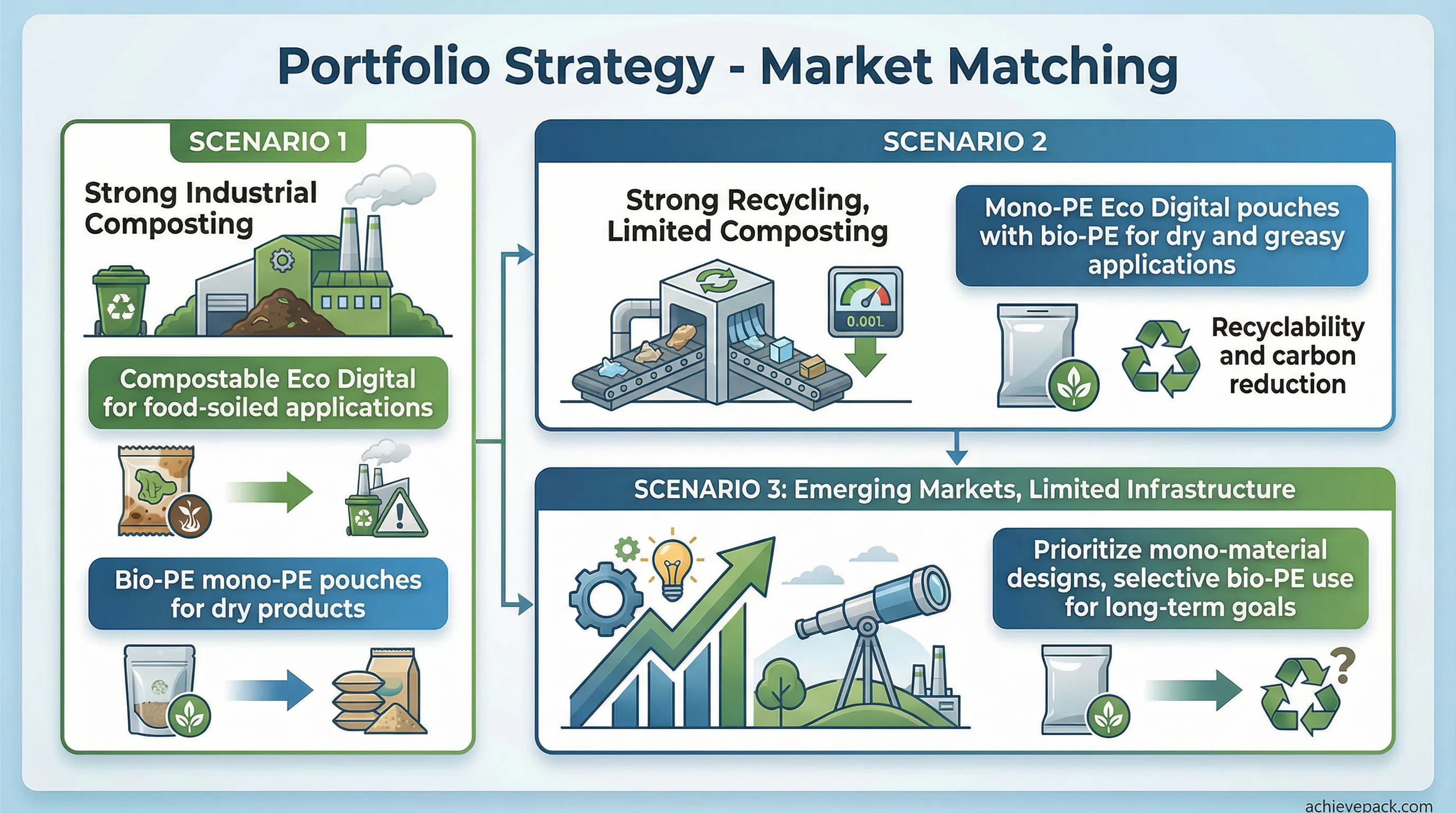
For most brands, the answer is not "only compostable" or "only bio-PE," but a portfolio that matches material to market.
Examples:
Markets with Strong Industrial Composting
Compostable Eco Digital structures for food-soiled applications. Bio-PE in mono-PE pouches for dry products where recycling is well-established.
Markets with Strong Recycling but Little Composting
Mono-PE Eco Digital pouches with bio-PE content for both dry and some greasy applications, focusing on recyclability and carbon.
Emerging Markets with Limited Infrastructure
Prioritize mono-material designs, and use bio-PE selectively where it can support long-term goals and future-proofing.
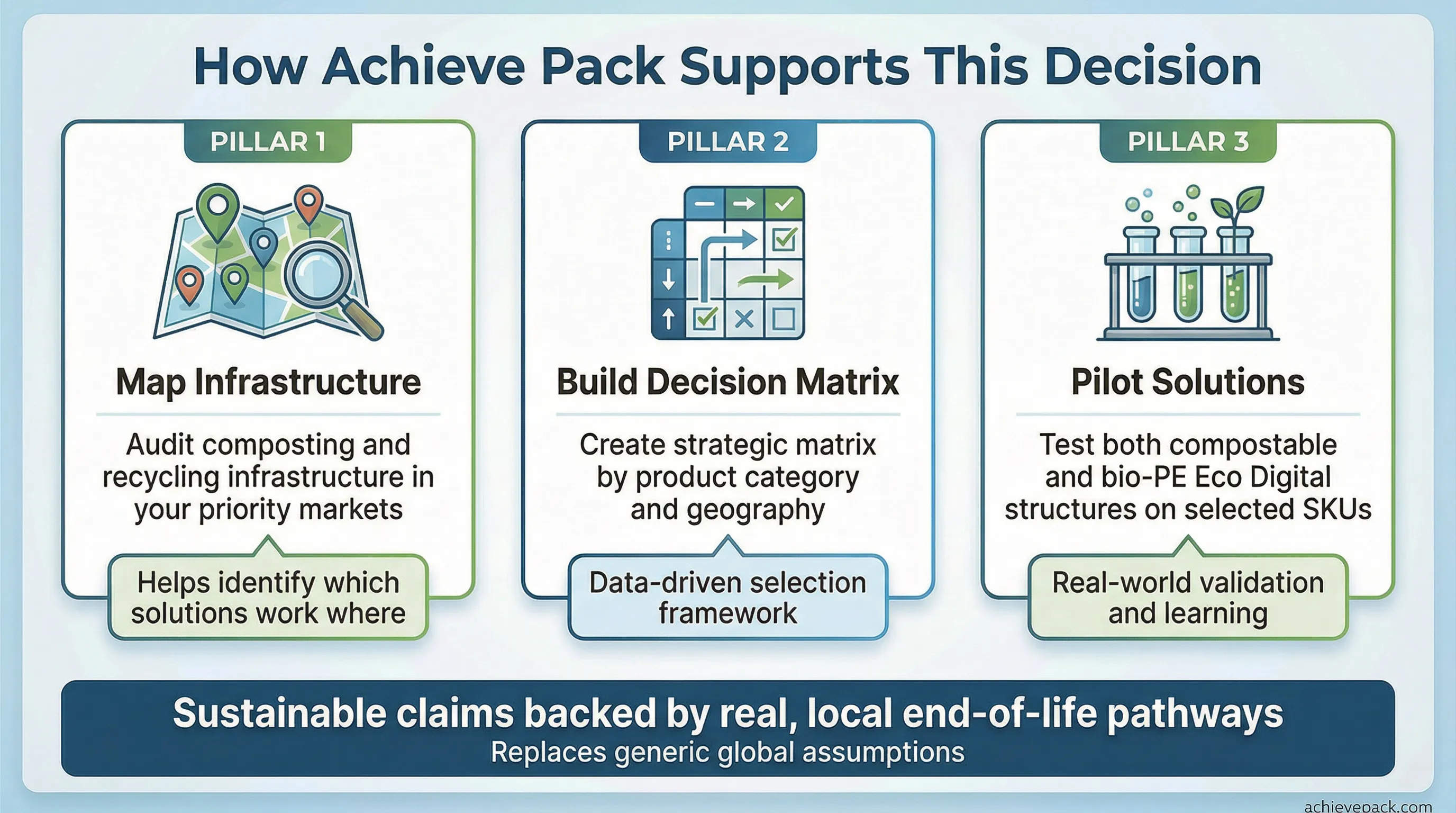
How Achieve Pack Supports This Decision
Achieve Pack works with brand and procurement teams to:
- Map composting and recycling infrastructure in priority markets
- Select compostable Eco Digital laminates where organics systems exist
- Deploy bio-PE-based Eco Digital mono-PE structures where recyclability and carbon reduction are the dominant levers
Our Promise: Ensure that "sustainable" claims are backed by real, local end-of-life pathways rather than generic global assumptions.
What Neither Material Will Do
- • NOT interchangeable claims. Bio-PE is recyclable (#4 PE stream) but never compostable; compostable films break down industrially but contaminate PE recycling. Pick one story per pack — printing both is greenwashing.
- • NOT universally supported by infrastructure. Bio-PE film typically needs store drop-off (#4), not curbside. Industrial compostable needs commercial facilities most regions still lack. Check your actual sales regions first.
- • NOT equal on barrier. Bio-PE matches conventional PE; compostable high-barrier films reach roughly 70% of foil's oxygen barrier. Long shelf-life products may rule compostable out on performance alone.
- • NOT free of admin. Bio-based content claims need ASTM D6866 verification; the BPI logo on your pack needs a sub-license (about $3,000/yr). Budget for certification paperwork either way.
Want both materials in hand to compare? Order the $40+ sample kit (credited toward your first order) or talk to our team.
Decide With Data, Not Guesswork
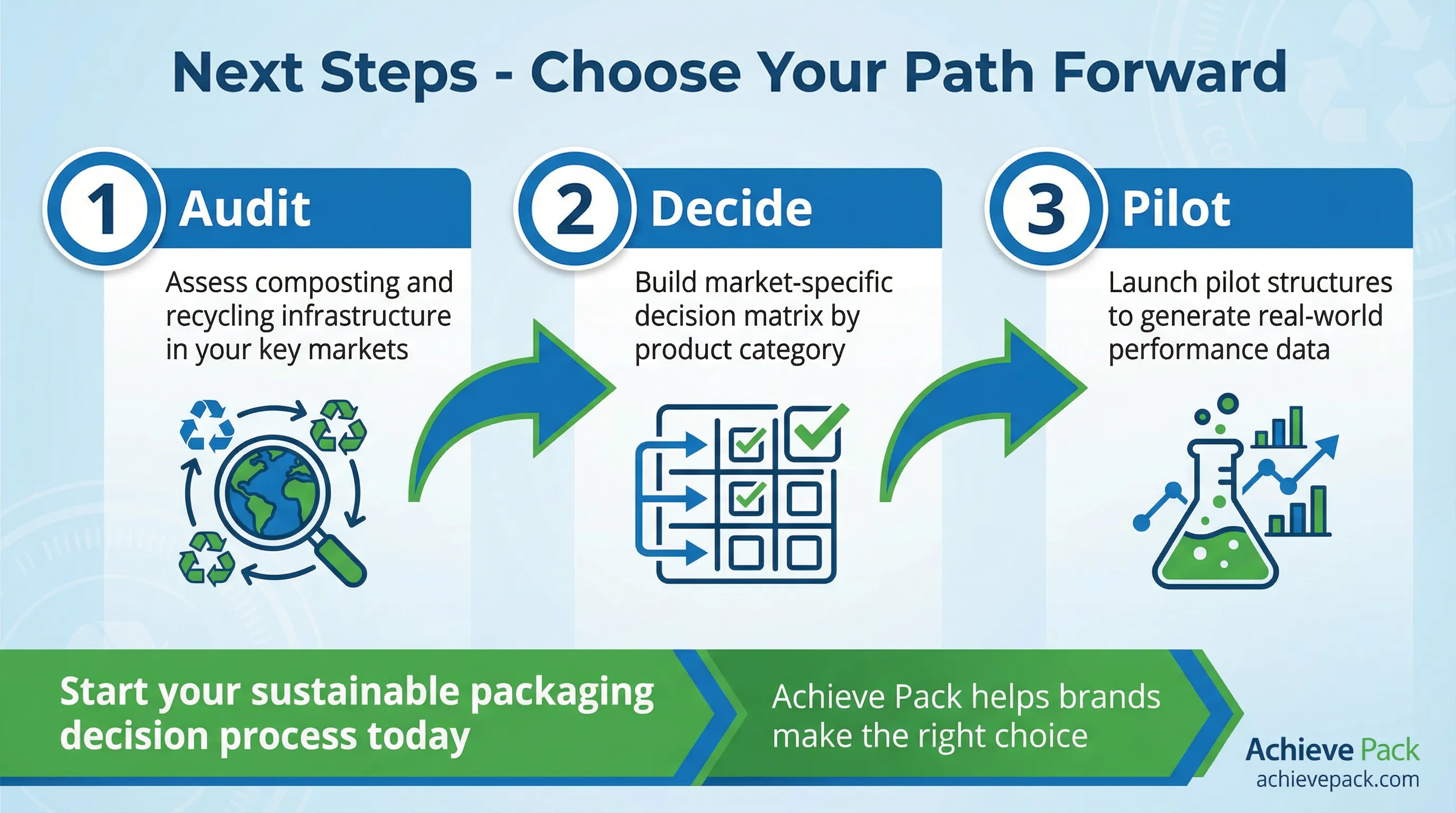
The right choice depends on where your packaging ends up after use — and that's a question you can answer with a pilot, not a guess. Run both structures on selected SKUs and let real disposal and shelf-life data decide.
Here's how you can get there with us:
- Audit infrastructure in your main markets
- Build a decision matrix by category and geography
- Pilot both compostable and bio-PE Eco Digital structures on selected SKUs to generate real-world data
5 Common Bio-PE vs Compostable Problems (And Solutions)
Shelf Life and Degradation Risk
Solution:Bio-PE provides identical barrier properties to traditional PE, ensuring a long shelf life without premature breakdown, unlike some compostable films.
Recycling Stream Confusion
Solution:Implement clear labeling and consumer education so Bio-PE enters the PE recycling stream (RIC 4), and compostable packaging goes to industrial composters.
Barrier to Oxygen and Moisture
Solution:For sensitive products like food or pharmaceuticals, Bio-PE is engineered to maintain high barrier integrity, outperforming standard compostable alternatives.
Cost and Scalability Challenges
Solution:Bio-PE drops perfectly into existing PE extrusion infrastructure, reducing manufacturing overhead and offering better cost scalability than novel compostable resins.
End-of-Life Infrastructure Gaps
Solution:Align material choice with target market capabilities: use compostable where industrial facilities are prevalent, and Bio-PE where PE recycling is well-established.
