Automating Molded Pulp Packaging Lines 2026 | Achieve Pack Specifications
Solving Core Packaging Challenges for Automating Molded Pulp Packaging Lines 2026 | Achieve Pack
Concise B2B technical benchmarks designed to eliminate transit failures, regulatory penalties, and shelf-life loss.
Barrier Specified Wrong, Shelf Life Lost
Risk: A film that is too thin lets oxygen and moisture through before the date code.
Structure Matched to Your Product, Quoted With OTR & WVTR
You get the barrier numbers before you approve the quote.
Compliance Documents Arriving Too Late
Risk: Retailers and co-packers hold the order until the supplier file clears their QA.
Approval Pack Issued With the Quote, Not After It
Product specification, SDS, food-grade statement, lot code statement, PFAS statement, letter of guarantee.
Plate Fees and High MOQs Killing the Range
Risk: Every variant needs its own cylinders, so the line-up never gets launched.
Digital Printing from 500 Units per SKU
Multiple designs in one run, zero plate charges.
Experience 3D Packaging Design & Free Dielines
Preview your pouch in 3D WebGL Studio and export production-ready dielines.
Automating Molded Pulp Packaging Lines
Scaling sustainable packaging requires more than just buying eco-friendly materials; it demands seamless integration into high-speed automation. As B2B enterprise facilities transition from EPS foam to eco-degradable molded pulp boxes, they face unique challenges in pick-and-place robotics, denesting, and inline thermal transfer coding (TTO).
Automating molded pulp effectively hinges on material predictability. Unlike flexible plastic films on Vertical Form Fill Seal (VFFS) machines, rigid pulp requires exact dimensional tolerances. A variation of just 2mm can cause robotic suction cups to miss their target, leading to costly line jams. Our thermoformed molded pulp is pressed at 5 tons of pressure, ensuring a ±0.5mm tolerance that automation engineers trust.
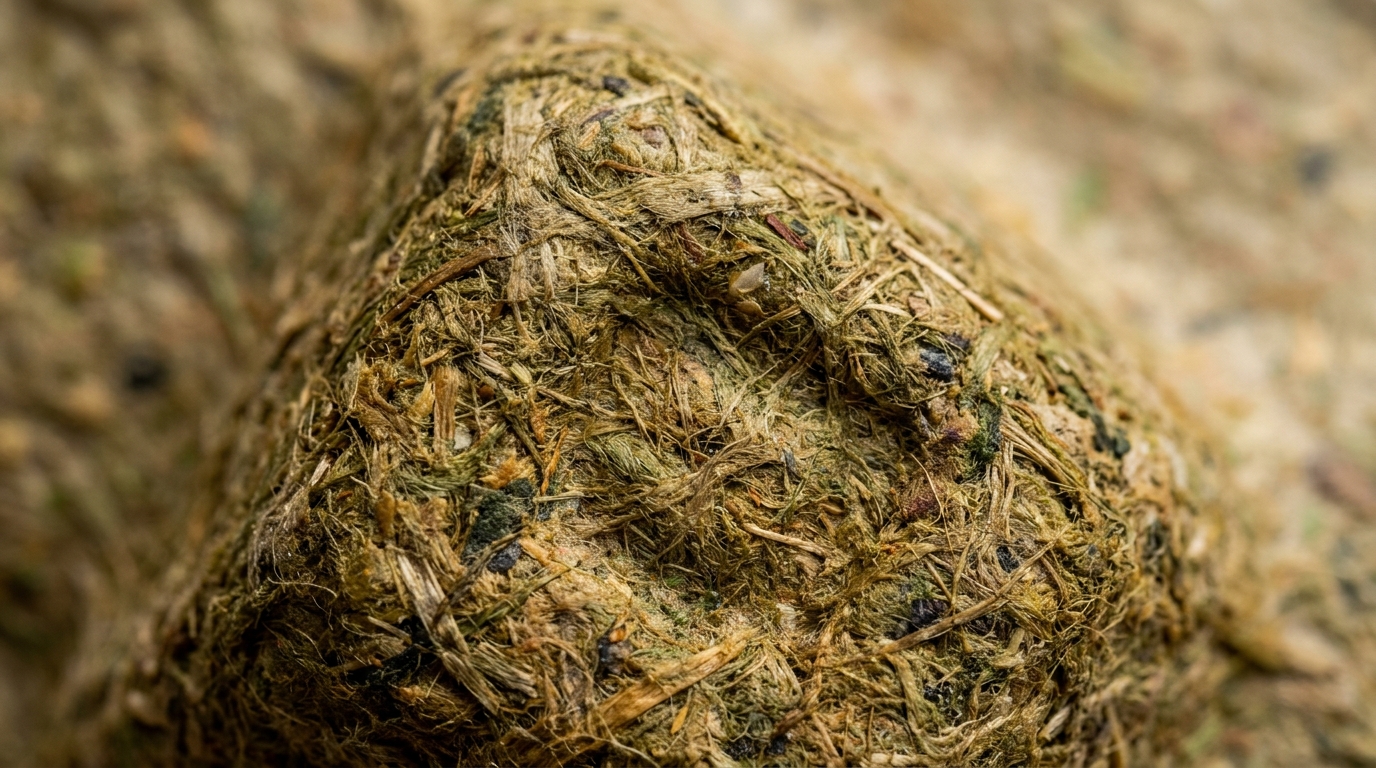
Precise digital coding relies on the ultra-smooth surface finish of thermoformed pulp.
In this technical guide, we explore the integration of molded pulp into modern cleanroom manufacturing environments, focusing on denesting mechanisms, robotic handling, and compliance coding. To understand the baseline properties of the material, review our Molded Pulp Guide.
5 Packaging Automation Pain Points & Solutions
Robotic Pick-and-Place Misfires
Standard dry-pressed pulp warps during oven drying, causing vacuum suction cups to lose seal. Solution: We utilize Thermoformed Wet-Pressing (Type 4) which locks the fibers into an exact ±0.5mm tolerance, guaranteeing a 99.9% robotic grip success rate at speeds of 120 units per minute.
Denesting Jams in Tray Feeders
Pulp trays nested too tightly create a vacuum lock, causing multiple trays to drop at once. We engineer specific 3-degree draft angles and integrated denesting lugs (micro-bumps) that ensure a consistent 1mm air gap between stacked trays, allowing flawless mechanical separation.
Illegible Inline Coding and Barcodes
Thermal Transfer Overprinters (TTO) and inkjet coders struggle on rough, porous surfaces, causing ink bleed and unreadable barcodes. Our calendared smooth-finish pulp provides a high-dyne, non-porous flat zone specifically designed for crisp 300 DPI compliance printing.
Dust Generation in Cleanrooms
Low-grade recycled pulp sheds cellulose dust, risking contamination in food or pharmaceutical cleanrooms. We utilize long-fiber virgin bagasse with advanced internal sizing, virtually eliminating particulate shedding and ensuring compliance with Class 10,000 cleanroom standards.
Adhesive Failure on Sealing Lines
Standard hot-melt glues often fail on pulp due to its porosity absorbing the adhesive before it cures. We recommend and formulate specific high-viscosity EVA hot-melt adhesives applied at exactly 160°C to bridge the fiber gaps and create a secure, tamper-evident bond.
From Ryan Wong's Engineering Notebook
Expert Engineering Insight
"We recently integrated our molded pulp trays into a high-speed cosmetics packaging line running at 80 units/min. The client's initial 6-axis robot kept dropping trays because the vacuum end-effector couldn't seal against the rough texture. Instead of changing their expensive robot tooling, we modified the pulp CNC mold to include a perfectly flat, highly polished 25mm circular 'landing zone'. The vacuum grip succeeded instantly, and line downtime dropped by 94%."
Ryan Wong
14+ Years Packaging Engineering | GRS & FSC Auditing Expert
Polytechnic materials science expert helping 500+ global brands scale from prototype testing to industrial vertical packaging lines.
Have a technical question? Schedule a 15-minute packaging audit with Ryan →Recommended Eco-Friendly Store Products
Technical Factory Validation & Quality Control
We don't just supply pouches; we validate every batch. Every raw material and finished pouch runs through our 6-step testing protocol to guarantee automatic packaging line compatibility and food-safe barrier preservation.
OTR & WVTR Barrier (MOCON)
Tested under ASTM D3985 & ASTM F1249 to ensure fresh shelf life up to 18 months.
GC-MS Solvent Residue
Gas Chromatography-Mass Spectrometry ensures zero odor transfer and absolute food safety.
Heat Seal Strength (ASTM F88)
Guarantees no seam burst under high pressure, perfect for VFFS automatic packing lines.
BRCGS Global Standard
Produced in Class 100,000 dust-free cleanrooms, ensuring zero contamination.
Puncture Resistance (ASTM F1306)
Prevents tear or puncture from sharp, hard items like coffee beans and pet kibble.
Tensile Strength (ASTM D882)
Ensures shape retention and structural integrity when heavy bags are dropped or stacked.
Packaging Transformation for Automating Molded Pulp Packaging Lines 2026 | Achieve Pack
See how upgrading from generic commoditized bags to precision-engineered flexible barrier packaging eliminates transport failures and boosts shelf authority.
Standard / Generic Packaging (Before)
Standard stock bags fail under transit stress and expose sensitive goods to moisture, UV light, and oxygen.
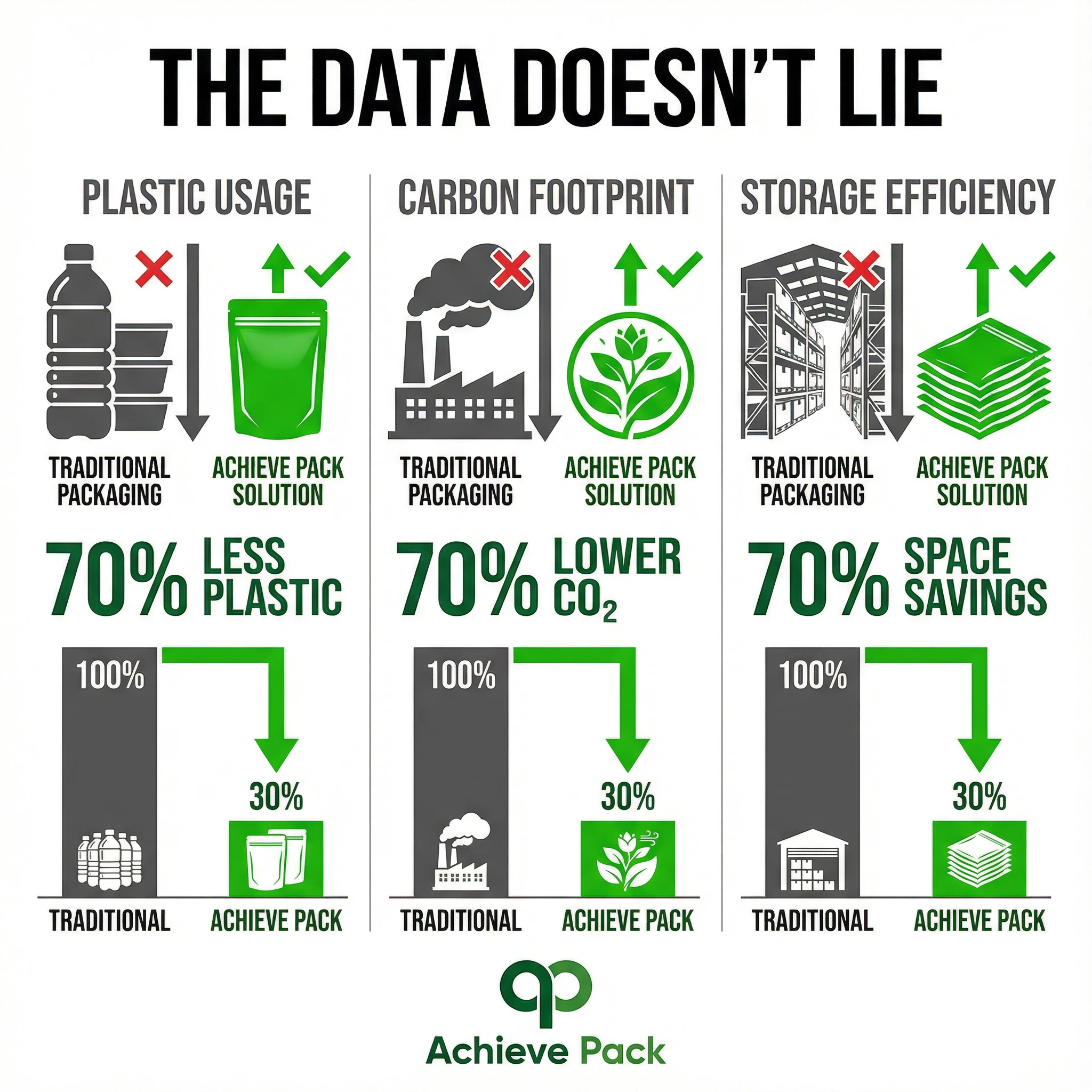
- Rapid Oxidation & Flavor DegradationCheap films allow O2 & moisture ingress, spoiling contents in < 30 days.
- High Seal Breakage in TransitThin seams fail under drop tests, leading to customer refunds & lost trust.
- Heavy Plastic Tax PenaltiesMulti-layer unrecyclable packaging incurs up to €800/ton in EU PPWR fines.
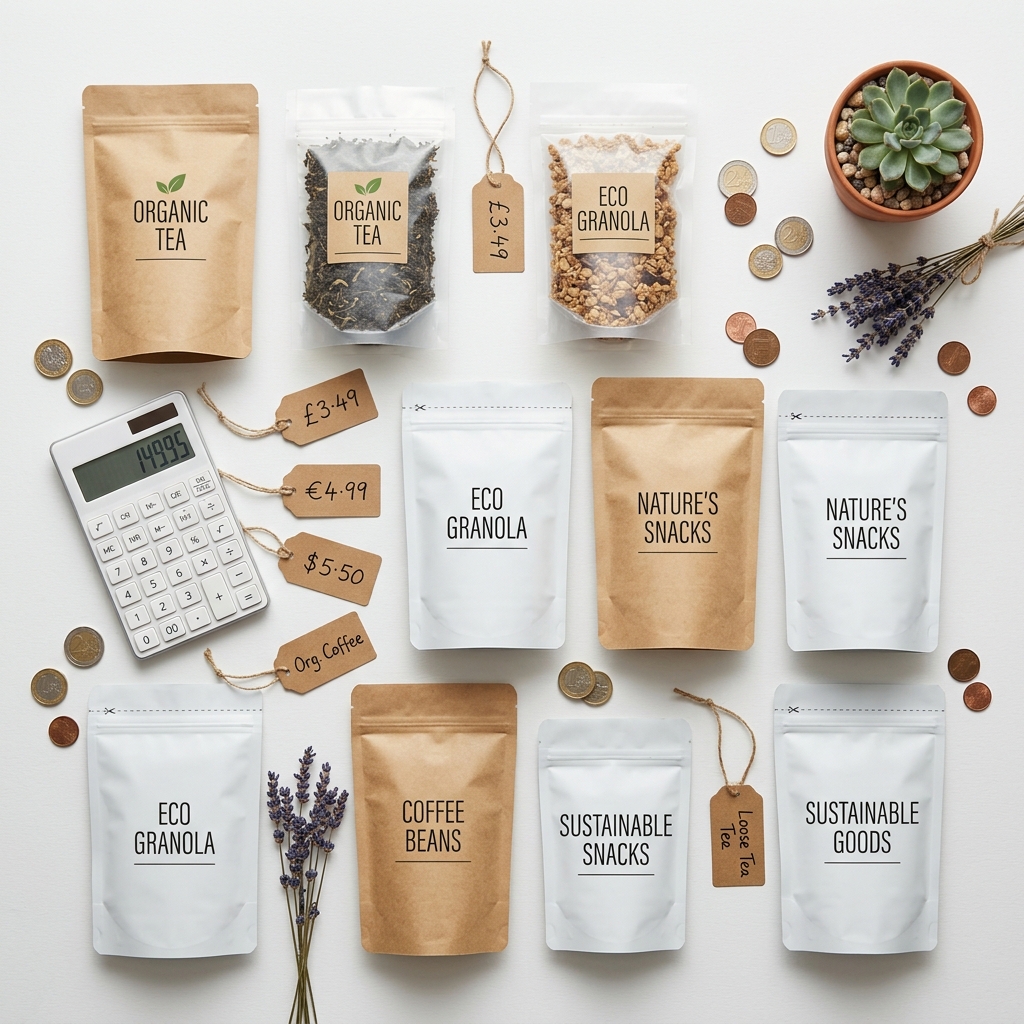
- High MOQs & Plate Cost FrictionTraditional printers force 10,000+ unit minimums and $1,500 cylinder fees.
Achieve Pack / Pouch Eco Solution (After)
Custom engineered multi-layer pouch structure tailored to your exact moisture barrier, seal strength, and aesthetic requirements.
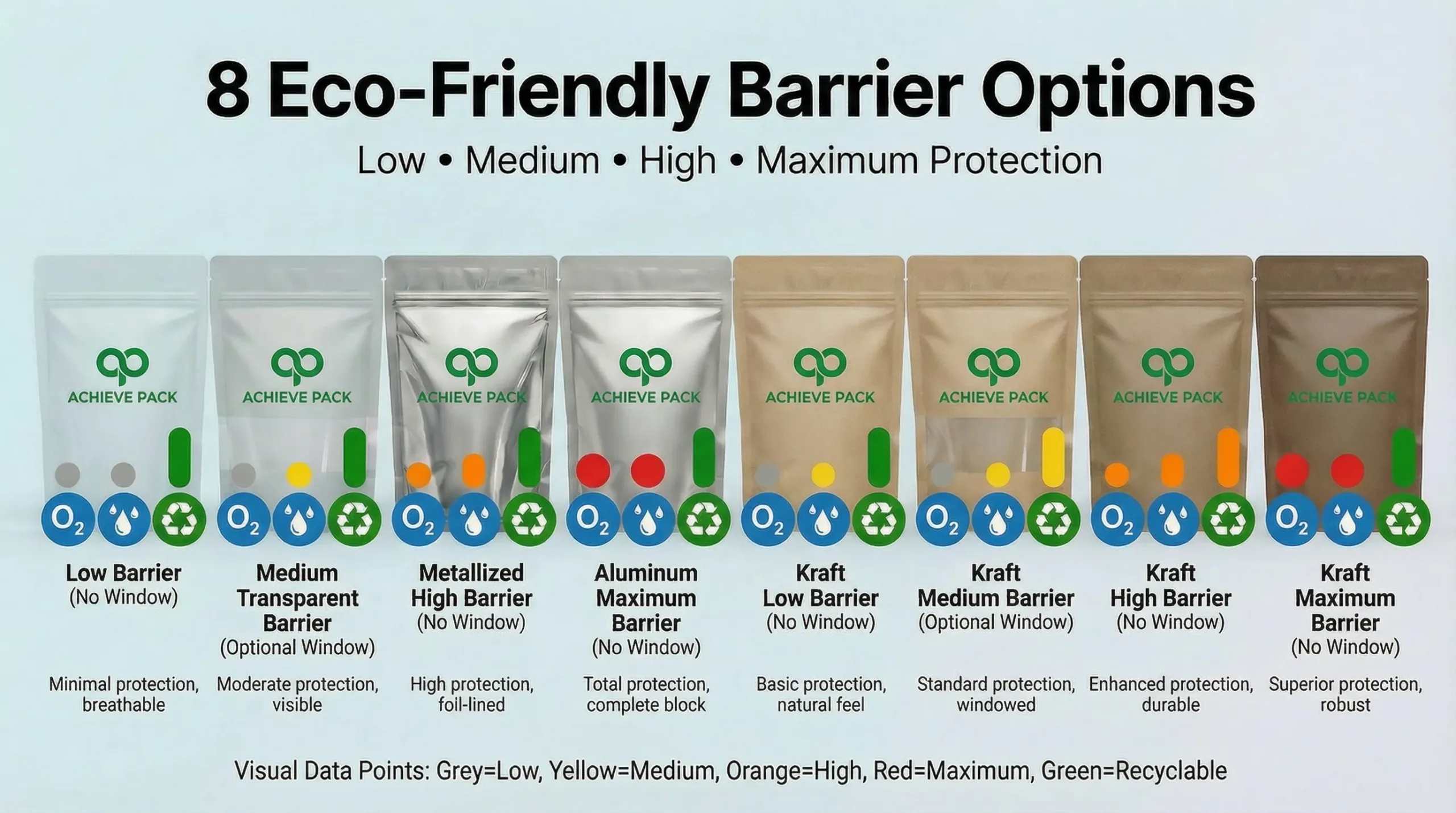
- Ultra High-Barrier Foil/EVOH CoreGuaranteed OTR < 0.1 cc/m²/day, keeping contents fresh for 18–24 months.
- Reinforced 45N/15mm Localized Heat Seal180°C precision seam dwell time prevents bursting even under 2-meter drops.
- 100% Certified Eco ComplianceTÜV OK Compost HOME (EN13432) & Mono-PE Recyclable structures (0% Tax).
- HD Digital Printing with 500-Unit Low MOQsPrint multi-SKU runs in 7 business days with zero setup plate charges.
Automation Compatibility Parameters
| Specification | Requirement for Automation | Our Thermoformed Pulp Spec |
|---|---|---|
| Dimensional Tolerance | Max ±1.0mm | ±0.5mm |
| Surface Roughness | Low (for TTO coding) | Calendared Smooth |
| Draft Angle | Min 2.0 degrees | 3.0 degrees |
| Denesting Gap | Min 0.5mm air gap | 1.0mm (via engineered lugs) |
| Dust Shedding | Minimal (Cleanroom compliant) | Zero-shed Bagasse formula |
Questions We Get Asked
Can vacuum suction cups lift molded pulp?▼
Is molded pulp safe for food or pharmaceutical cleanrooms?▼
What type of glue works best on molded pulp?▼
Related Stuff
How We Ensure Absolute Accuracy and Trustworthiness
At Achieve Pack, sustainable packaging isn't just about printing; it's about hands-on material science. This article has been written and verified by Ryan Wong, a packaging specialist with 14+ years of experience engineering biopolymer stacks for DTC startups and Fortune 500 companies.
All research, material barrier specifications (OTR, WVTR), heat-seal values (N/15mm), and compostability timelines cited in our guides are backed by testing inside the Achieve Pack Materials Testing Lab. We cross-reference our data with official certification registries from BPI (Biodegradable Products Institute), TÜV Austria (OK Compost HOME), and FSC (Forest Stewardship Council).

Ryan Wong
Supply Chain Director
B.Eng honors degree graduate from Hong Kong Polytechnic University. Serving brands in 8 countries.
View Expert Profile →Ready to Get Started?
Contact our packaging experts for a free consultation and quote.
See the Material in Action
Real footage of our eco-friendly packaging structures in action.
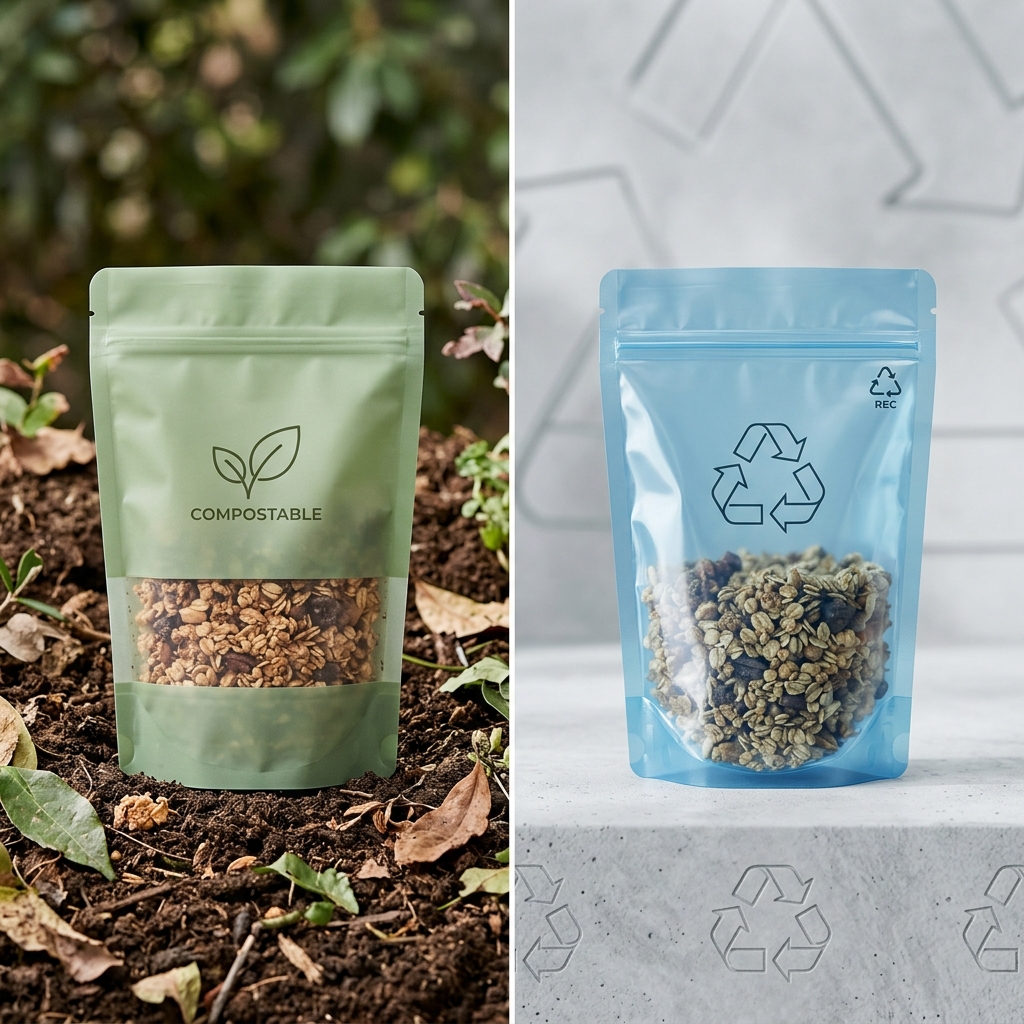
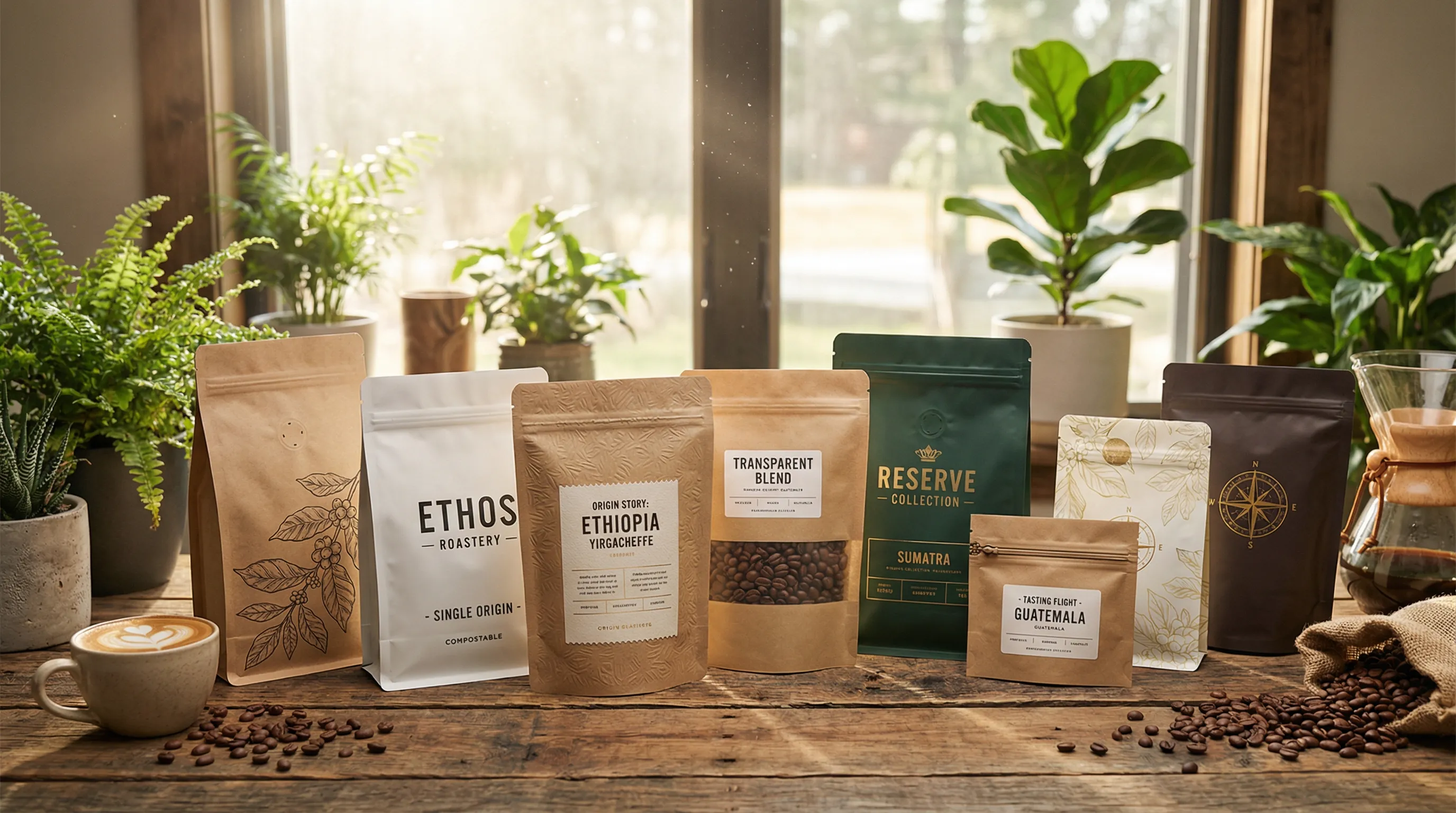
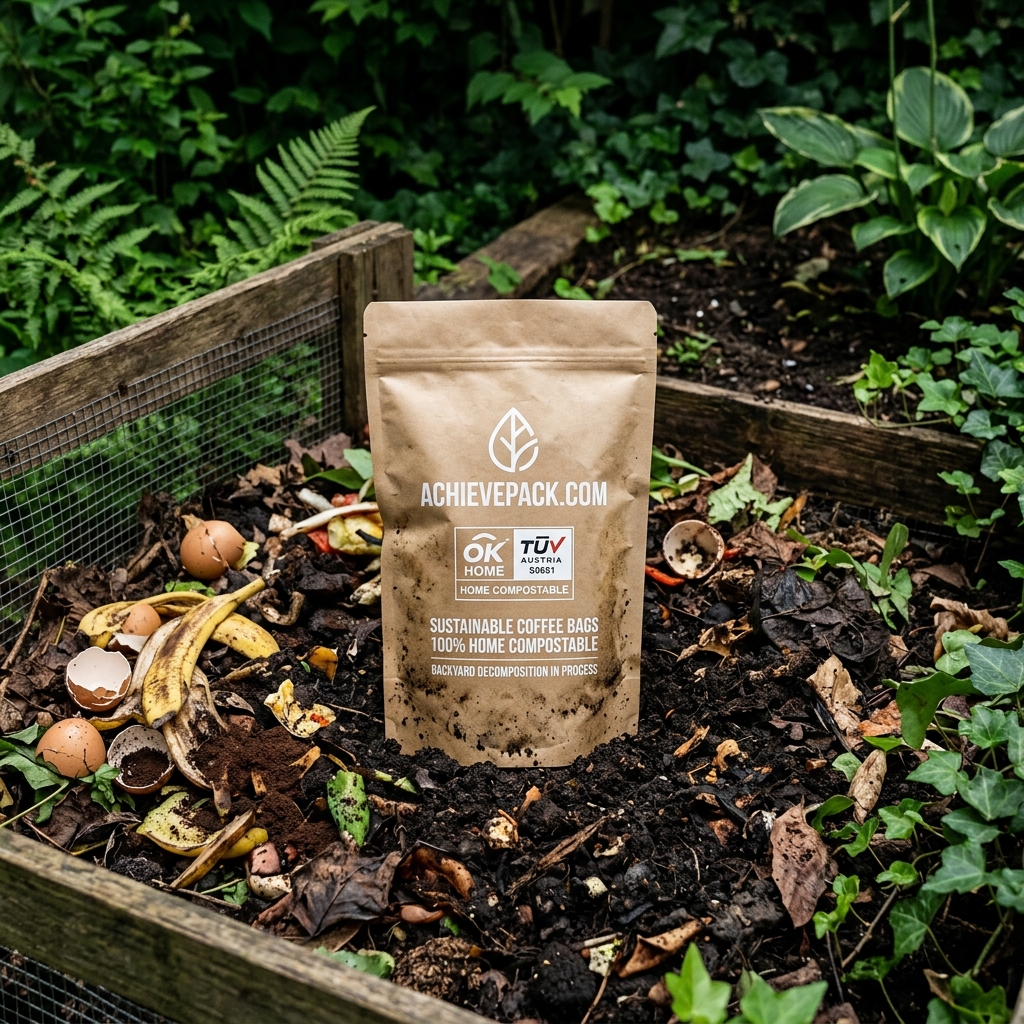
Compostable Solution
Fully compostable flexible packaging certified under ASTM D6400 and EN 13432. Engineered to break do...
- ASTM D6400 & EN 13432 Certified
- Breaks down within 180 days in soil
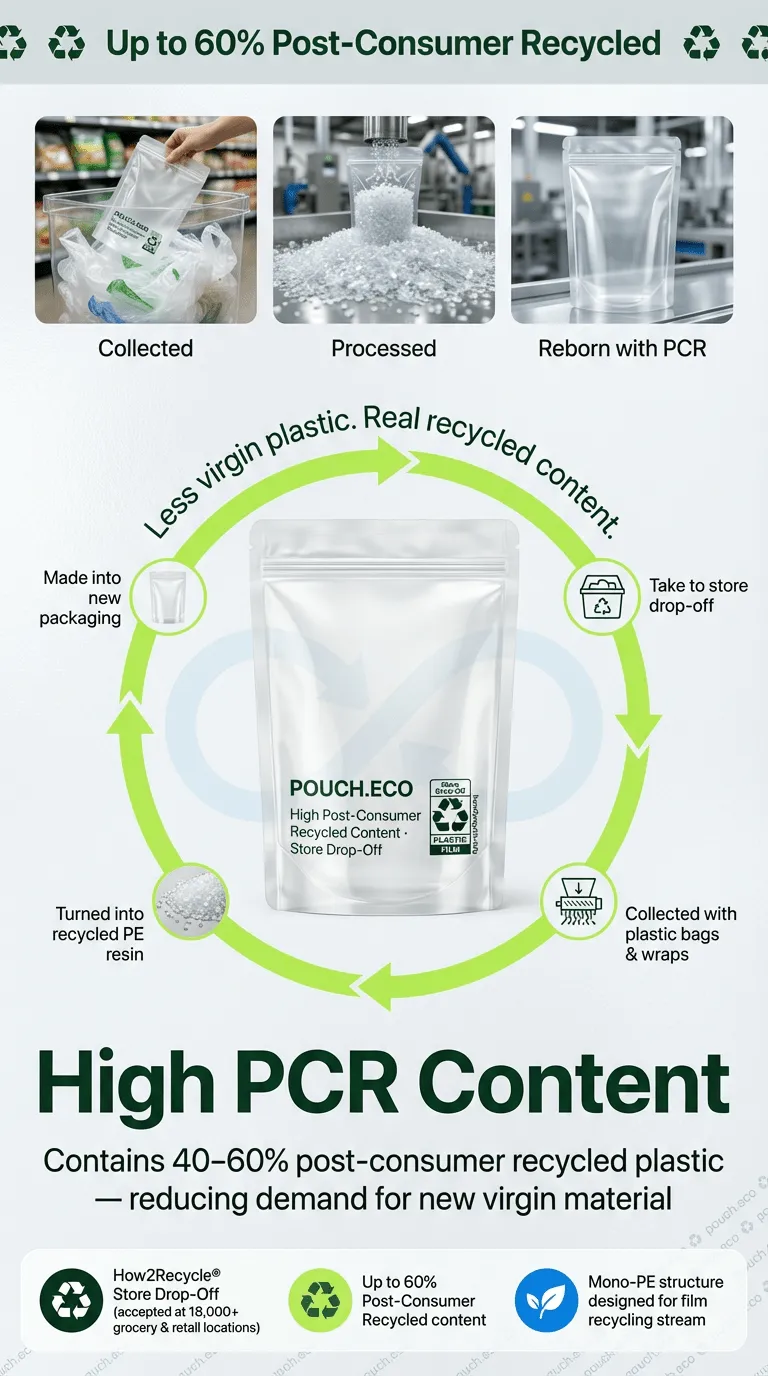
Post-Consumer Recycled (PCR)
Made from high-quality post-consumer recycled plastic waste. Our PCR structures reduce carbon footpr...
- Saves post-consumer waste from landfills
- Lowers carbon footprint substantially
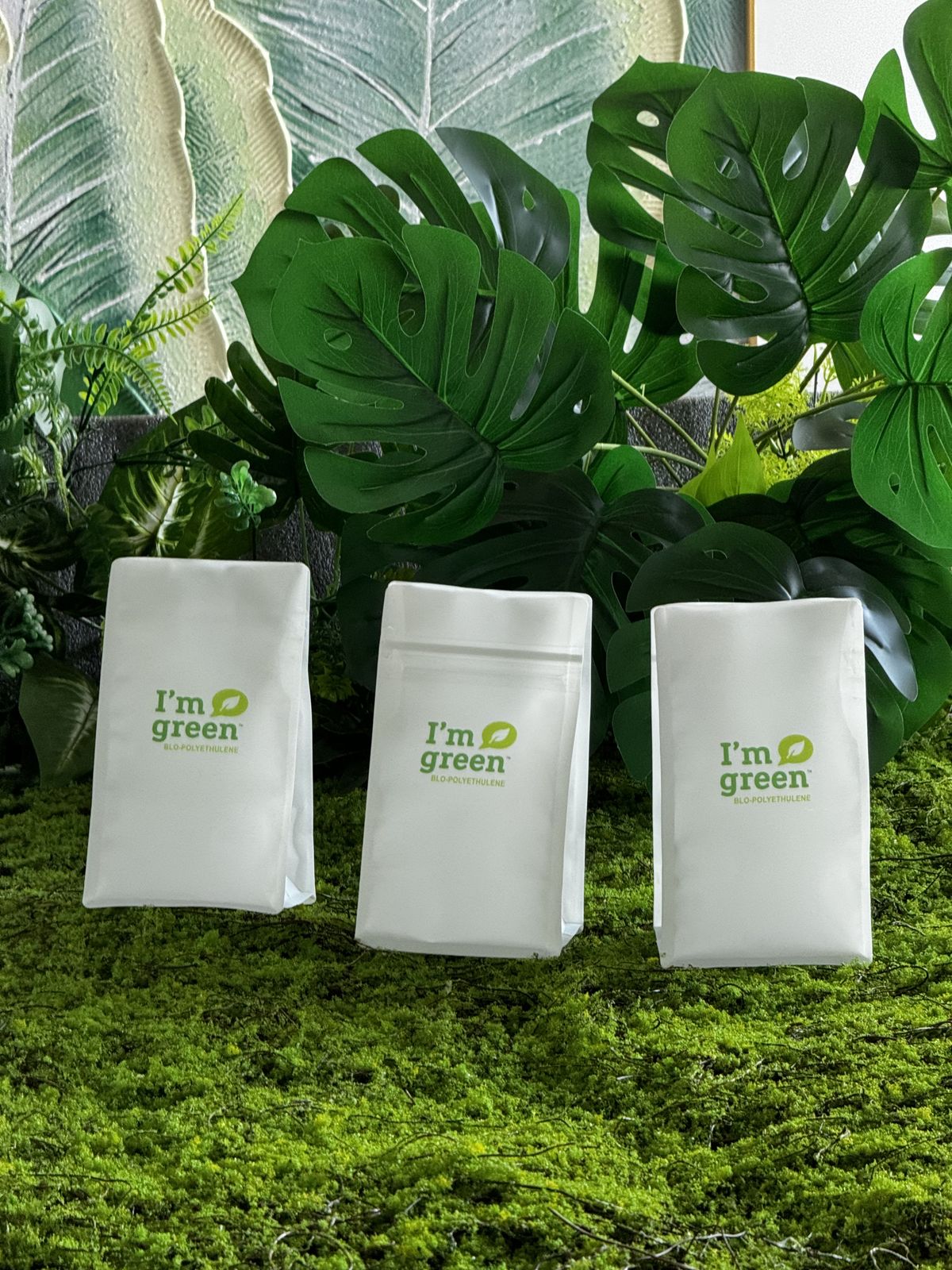
Plant-Based Bio-PE
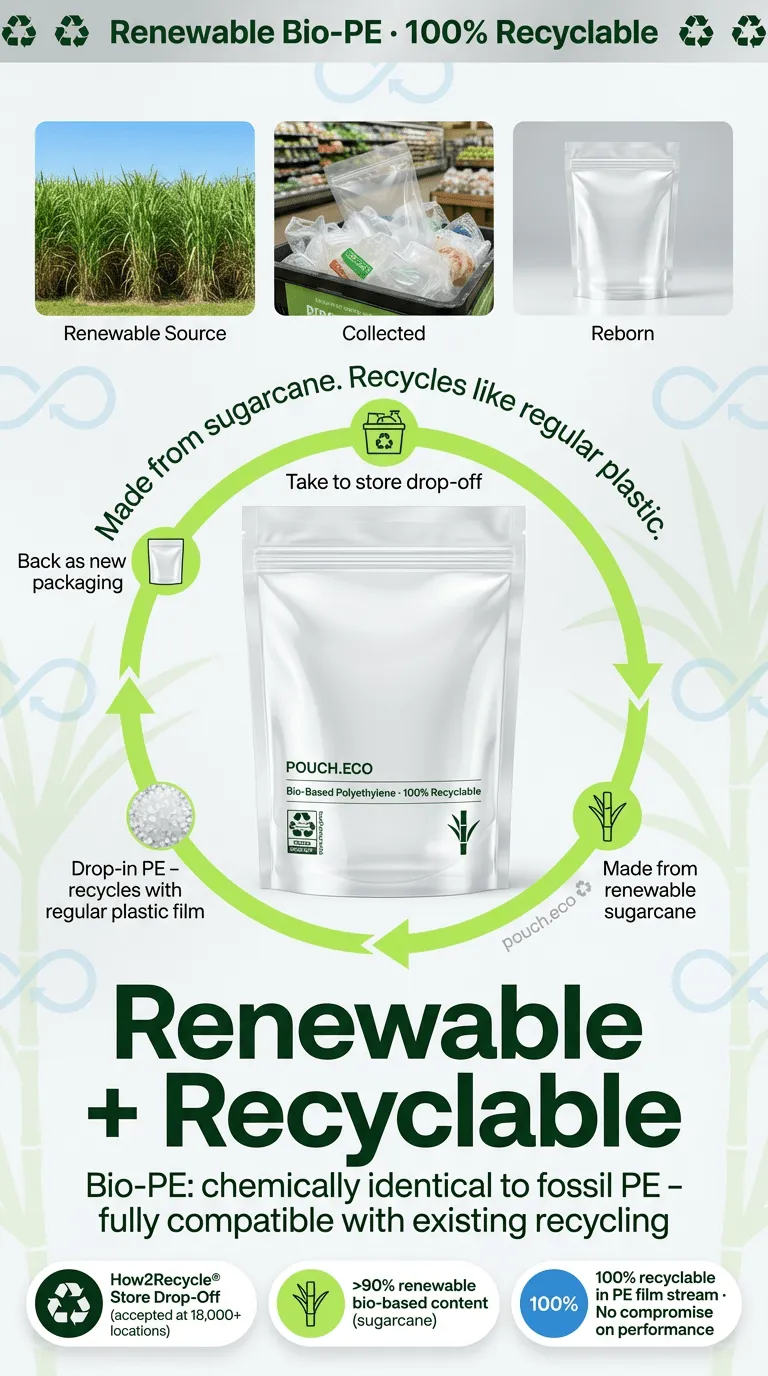
Derived from sustainably-farmed Brazilian sugarcane. It captures atmospheric CO2 during growth and i...
- Captures CO2 during plant growth
- 100% recyclable in regular PE stream (#4)
Recyclable Mono-Material
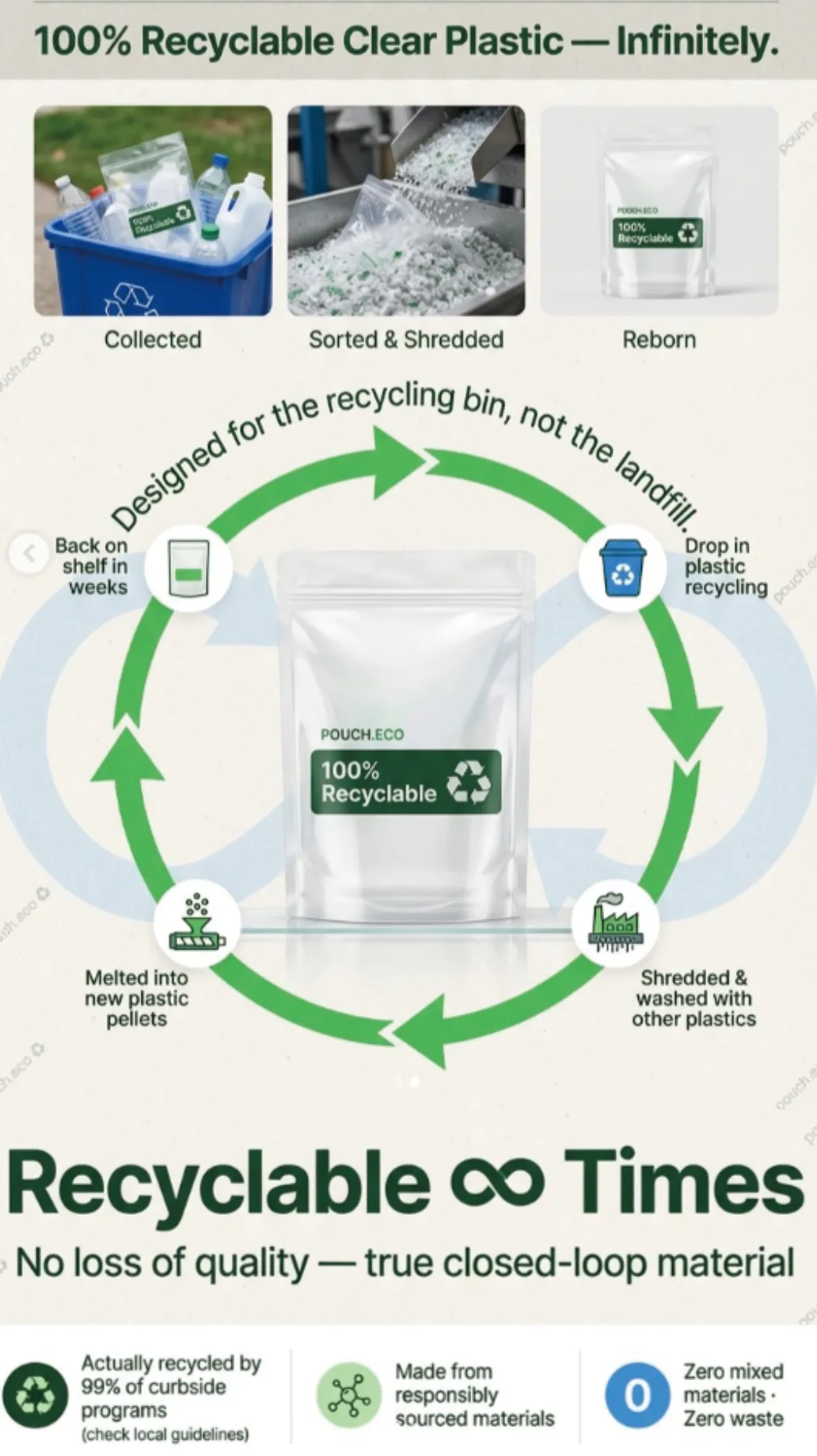
Engineered using Mono-PE or Mono-PP structures to enable simple, circular sorting and recycling. Com...
- 100% recyclable mono-polymer structure
- Meets EU Circular Economy directives