Understanding Writable Stampable Recyclable Pouches in Modern Sourcing
Key Sourcing Takeaways:
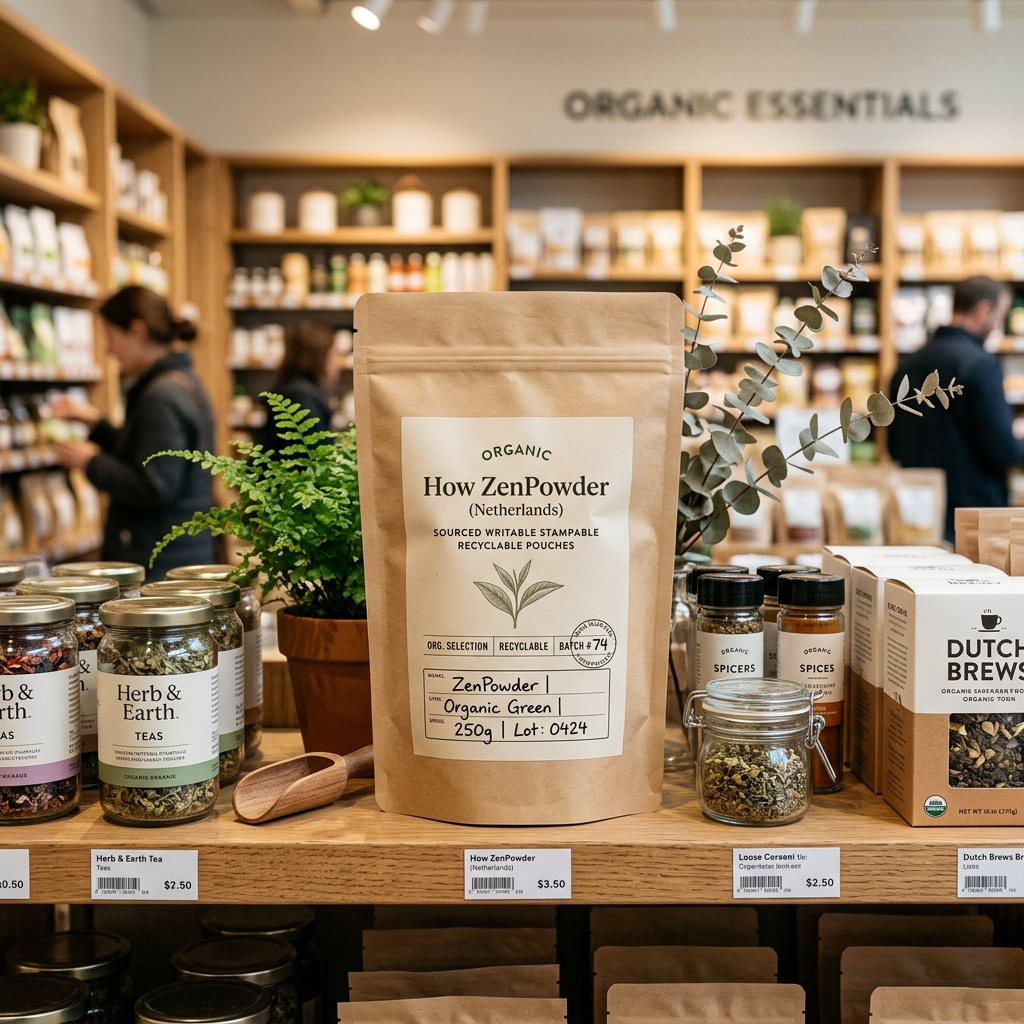
- ✔Takeaway 1: the brand required writable surfaces for batch stamping to comply with Netherlands retail traceability rules.
- ✔Takeaway 2: Standard films failed drop and barrier tests during sea freight from Asia to Rotterdam.
- ✔Takeaway 3: Mono-PE structures with stampable matte coatings enable full recyclability under local sorting schemes.
The brand's initial kraft pouches lacked durability and could not accept stamps without smudging during warehouse handling. Their search focused on recyclable mono-materials that support writing and stamping while surviving 6-week ocean transit. They identified writable stampable recyclable pouches after reviewing PPWR draft requirements and Dutch sorting infrastructure.
The chosen structure delivers strong oxygen and moisture barriers verified through 1.5m drop tests. Bulk pricing tiers start at 100 pieces for prototypes, with lead times of 10-14 days via air freight to the Netherlands. This supports the brand's startup-friendly rapid iteration cycle.
Technical Specifications & Sourcing Blueprint
| Specification | Technical Parameter | B2B Sourcing Value & Meaning |
|---|---|---|
| Material Structure | Specify the structure (e.g. Mono-PE with EVOH or PLA/PBAT) | 100% recyclable/compostable, satisfies Netherlands packaging laws |
| Size / Dimensions | Custom OEM pouch dimensions | Fitted exactly to the brand's production line specifications |
| Surface Finish | Premium finish choice (matte, glossy, or tactile) | Protects graphic branding during transit and retail display |
| Packaging / Delivery | Master export cartons with polybags | Double-lined moisture-proof protection preventing transit damage |
Mono-PE with EVOH gas locks was selected for its recyclability and ability to maintain powder freshness in humid Dutch climates. These materials meet PPWR targets and qualify for eco-tax incentives. The stampable coating allows direct batch coding without secondary labels.
VFFS compatibility was confirmed at 60 packs per minute with a 120-140C sealing window. Vacuum leak and drop tests passed EU retail standards. The brand validated all parameters during a 100-piece prototype run before scaling.
Certifications & B2B Application Scenarios
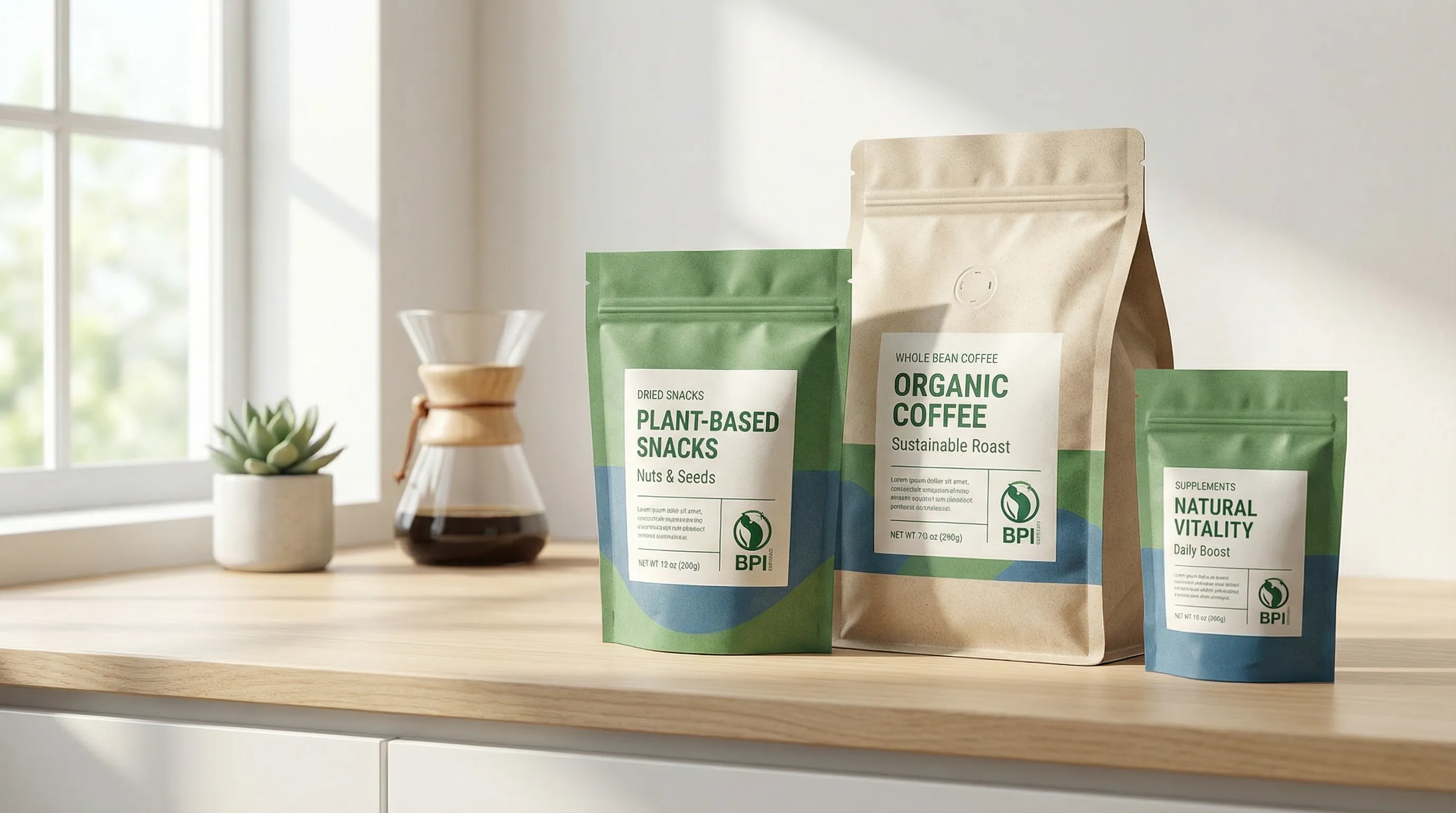
BPI ASTM D6400, TÜV Austria, GRS, and FSC certificates protect the brand from greenwashing audits in the Netherlands. These credentials also unlock reduced EPR fees and easier retail placement with eco-focused chains.
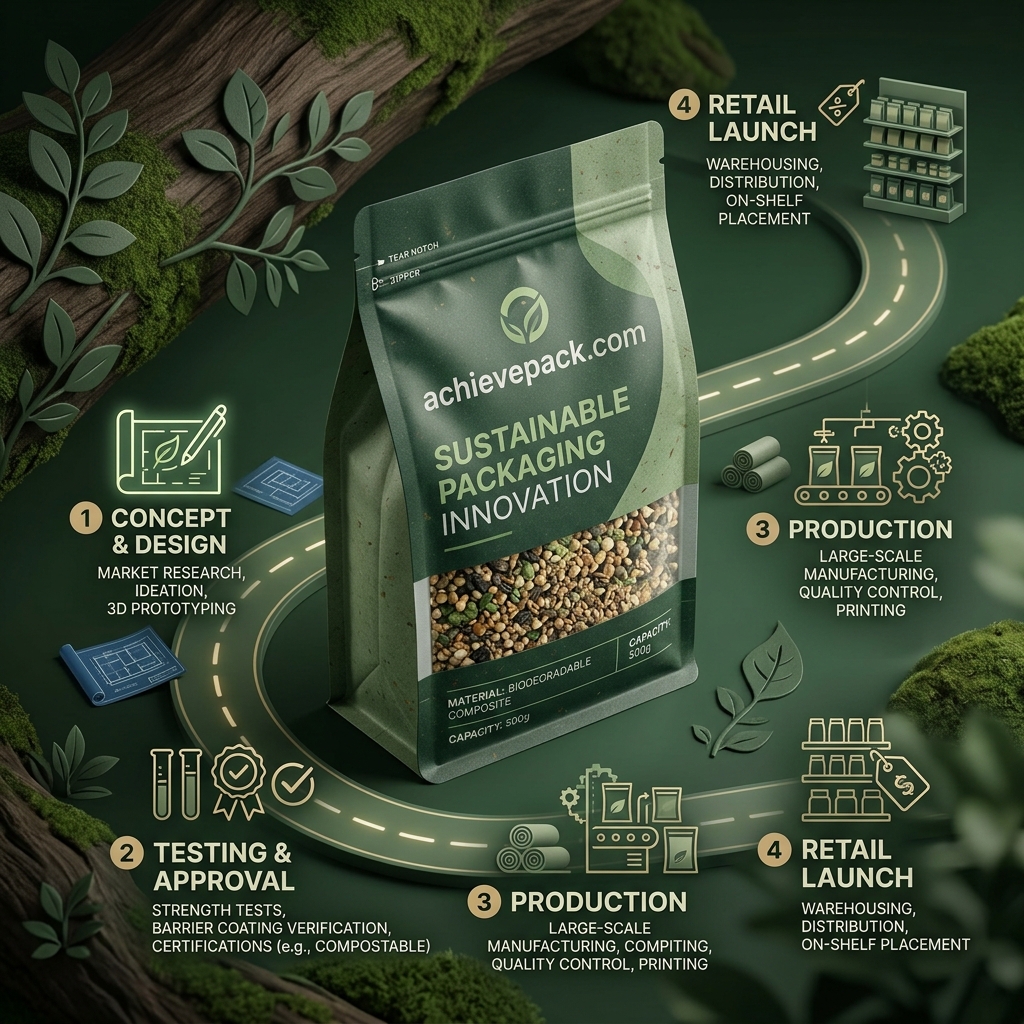
The brand began with a 100-piece digital print test on one SKU. After verifying shelf life and stamp performance, they moved to gravure production at 10,000 units while maintaining full traceability for local compliance.
Contextual B2B Store Products
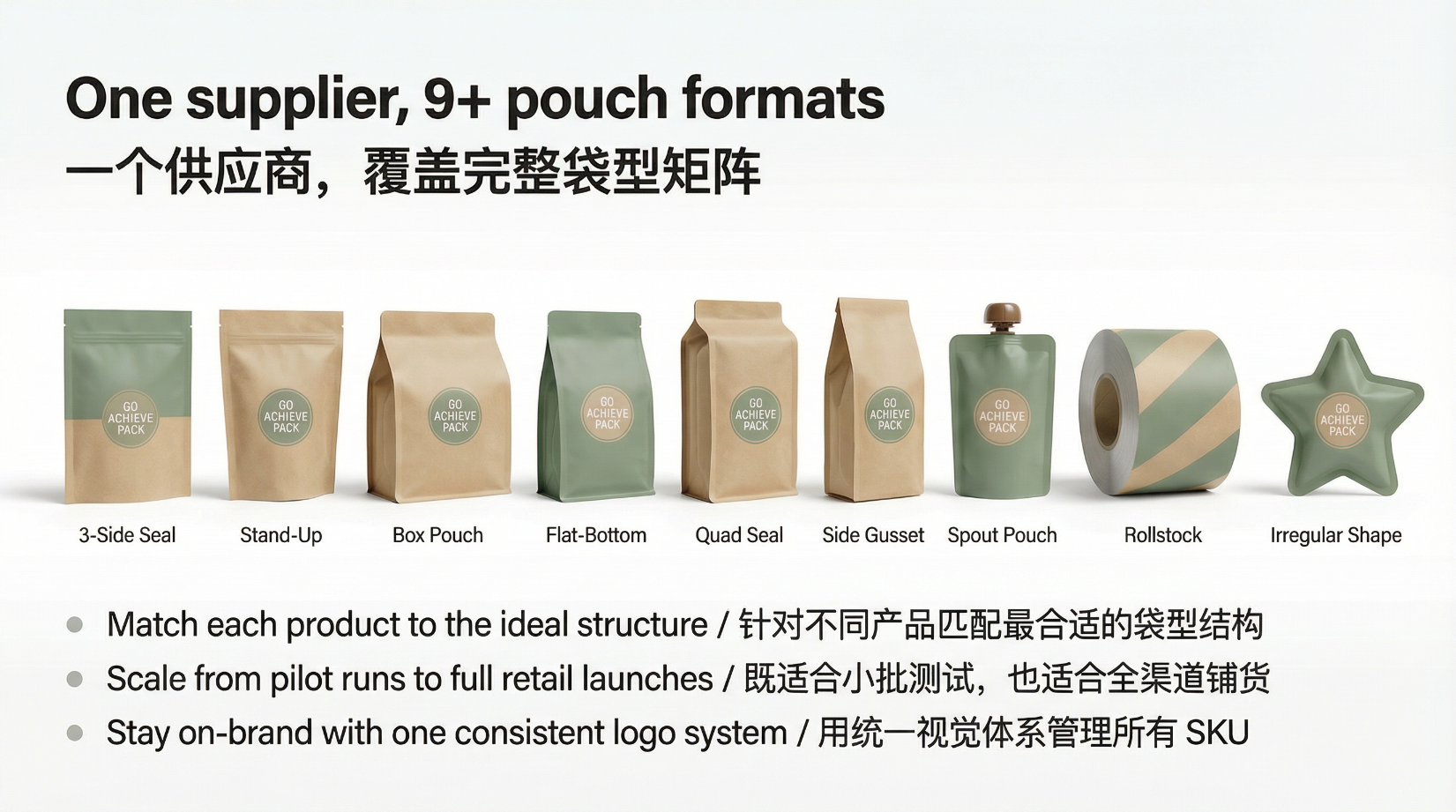
For packaging buyers planning their next production run, we recommend starting with our B2B Biodegradable Sample Kit to evaluate material thickness and barrier performance. For high-speed form-fill-seal automated packaging lines, check out our Custom Eco Rollstock Film. If you are packaging confectionery or small items, our premium Cellophane Candy Wrapper offers excellent clarity and compostability.
5 Common Compostable Packaging Problems (And Solutions)
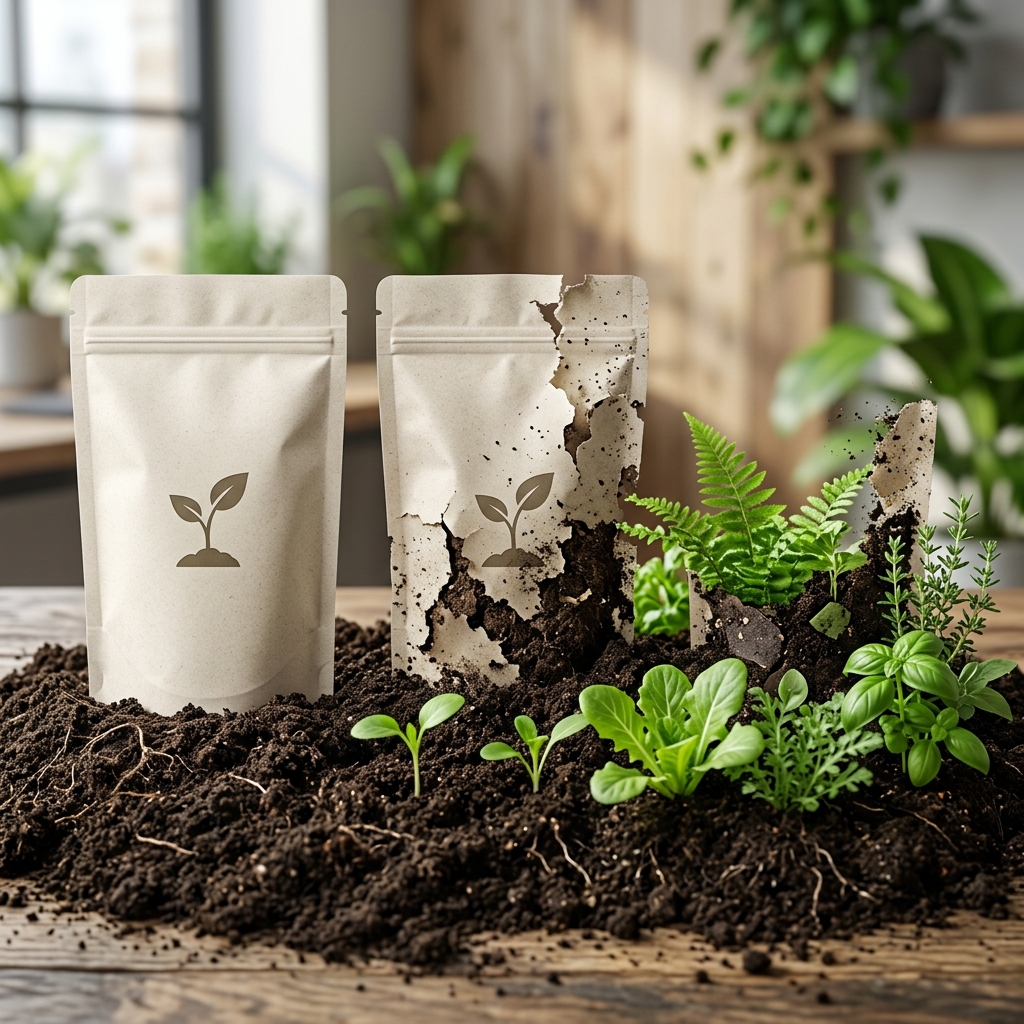
- Poor Moisture BarrierAdvanced biopolymer lamination.
- Weak Seal StrengthOptimized heat sealing profiles.
- Short Shelf LifeHigh-barrier metallized compostable films.
- Tearing During TransitReinforced film structures and impact-resistant materials.
- Incomplete DegradationCertified industrial/home compostable materials strictly adhering to EN 13432.
5 Common Flexible Pouch Problems (And Solutions)
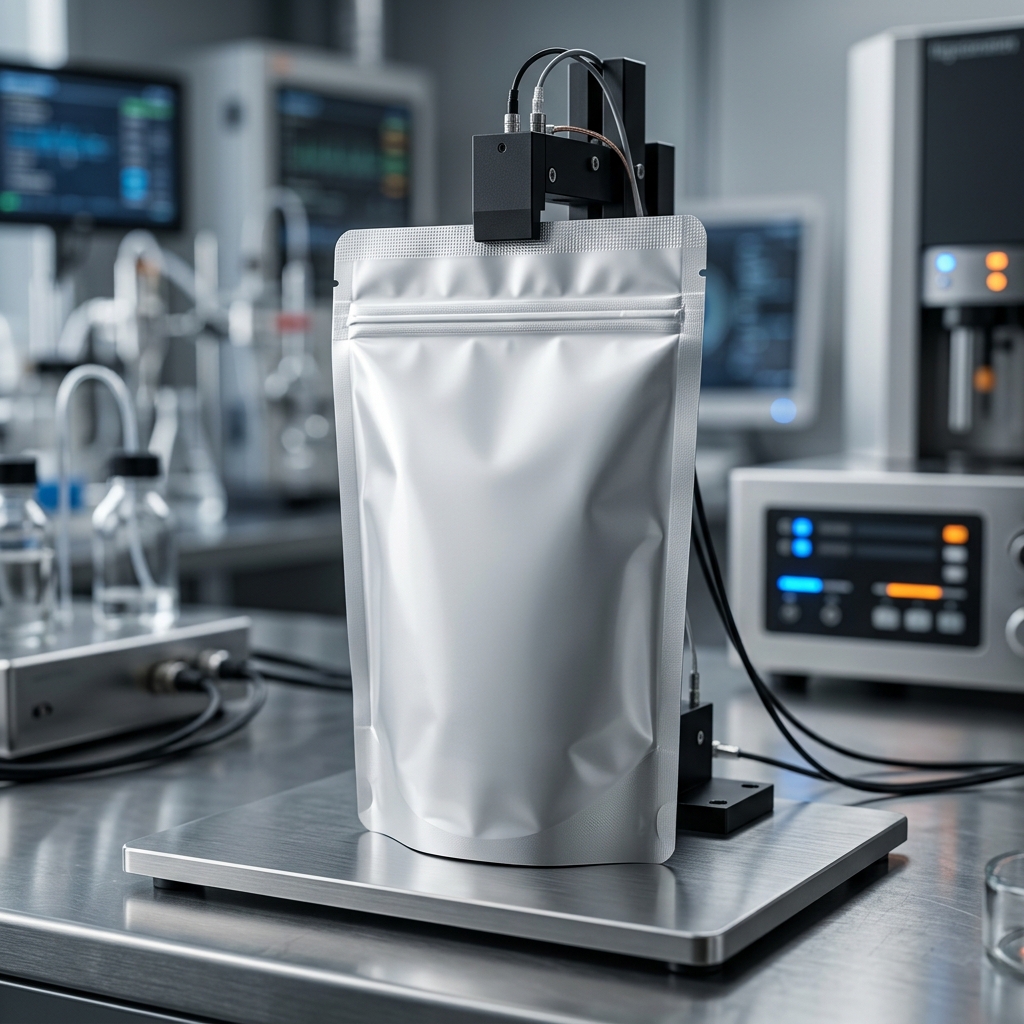
- Seal Leakage and BurstingPrecision thermal seal validation and optimized multi-layer composite structures.
- Inadequate Oxygen & Moisture BarrierHigh-barrier EVOH, AL, or metallized film lamination to preserve freshness.
- Puncture and Tear FailuresNylon (BOPA) or PET structural reinforcement layers to absorb impact.
- Gas Buildup & Pouch BloatingIntegration of high-precision one-way degassing valves to vent internal pressure.
- Film Delamination & WrinklingAdvanced solventless adhesive bonding and web tension control during lamination.
AchievePack Eco Material Specifications
Direct-Factory Certified Sustainable Laminates
AchievePack designs and manufactures five classes of circular flexible barrier packaging materials. These options help brand owners meet regulatory standards (like EU PPWR and state-level laws) without sacrificing barrier performance or shelf-life.
1. Curbside Recyclable Mono-PE
Made from 100% Polyethylene (LDPE #4). This single-polymer structure is fully recyclable through European/UK curbside collection and USA Store Drop-Off networks. Optional EVOH coatings (<5% total weight) deliver extreme oxygen and moisture barriers without compromising the recycling stream.
2. Heat-Resistant Recyclable Mono-PP
Formulated from single-polymer Polypropylene (PP #5), providing excellent optical clarity, high rigidity, and thermal tolerance. Engineered specifically to survive hot-fill processes, pasteurization, retort cooking, and microwave sterilization lines.
3. Certified Compostable Biopolymers
Constructed from plant-derived biopolymers including natural Kraft paper, NatureFlex cellulose, and certified PLA/PBAT/PHA sealable blends. Extensively tested and certified under ASTM D6400 (USA) and EN 13432 (EU) to degrade into organic soil nutrients within 180 days.
4. PCR (Post-Consumer Recycled) Polymers
Integrates GRS-certified post-consumer recycled plastic resins into the laminate structure. Helps brands reduce dependence on virgin fossil resources, lower carbon footprints, and completely bypass plastic packaging taxes in global regions.
5. Carbon-Negative Sugarcane Bio-PE
Sourced from sugarcane bio-PE that acts exactly like petroleum PE. Captures atmospheric CO₂ during sugarcane growth, delivering carbon-negative performance while remaining 100% recyclable in standard PE sorting streams (#4).
Biopolymer Lab Validation & Compostability Proof
We don't make vague green claims. Our biopolymers (NatureFlex, PLA/PBAT) are batch-tested to verify 100% biodegradation in home and industrial composting within 180 days with zero toxic ecotoxicity residues.
Compostable Barrier (OTR)
Tested barrier layers (NK/NatureFlex) ensuring moisture and aroma protection.
Organic Chemical Purity
Exceeds EN 13432 criteria for organic safety and clean soil composting.
Biopolymer Sealing Window
Narrowed sealing temperature range preventing biopolymer deformation or thermal burn.
TÜV OK Compost HOME
Guarantees complete organic degradation in backyard compost bins within 26 weeks.
Puncture Strength (ASTM F1306)
Ensures biopolymer bag walls resist puncture during manual handling and packing.
Tensile Strength (ASTM D882)
Ensures biopolymer bags support products securely without structural stretch.