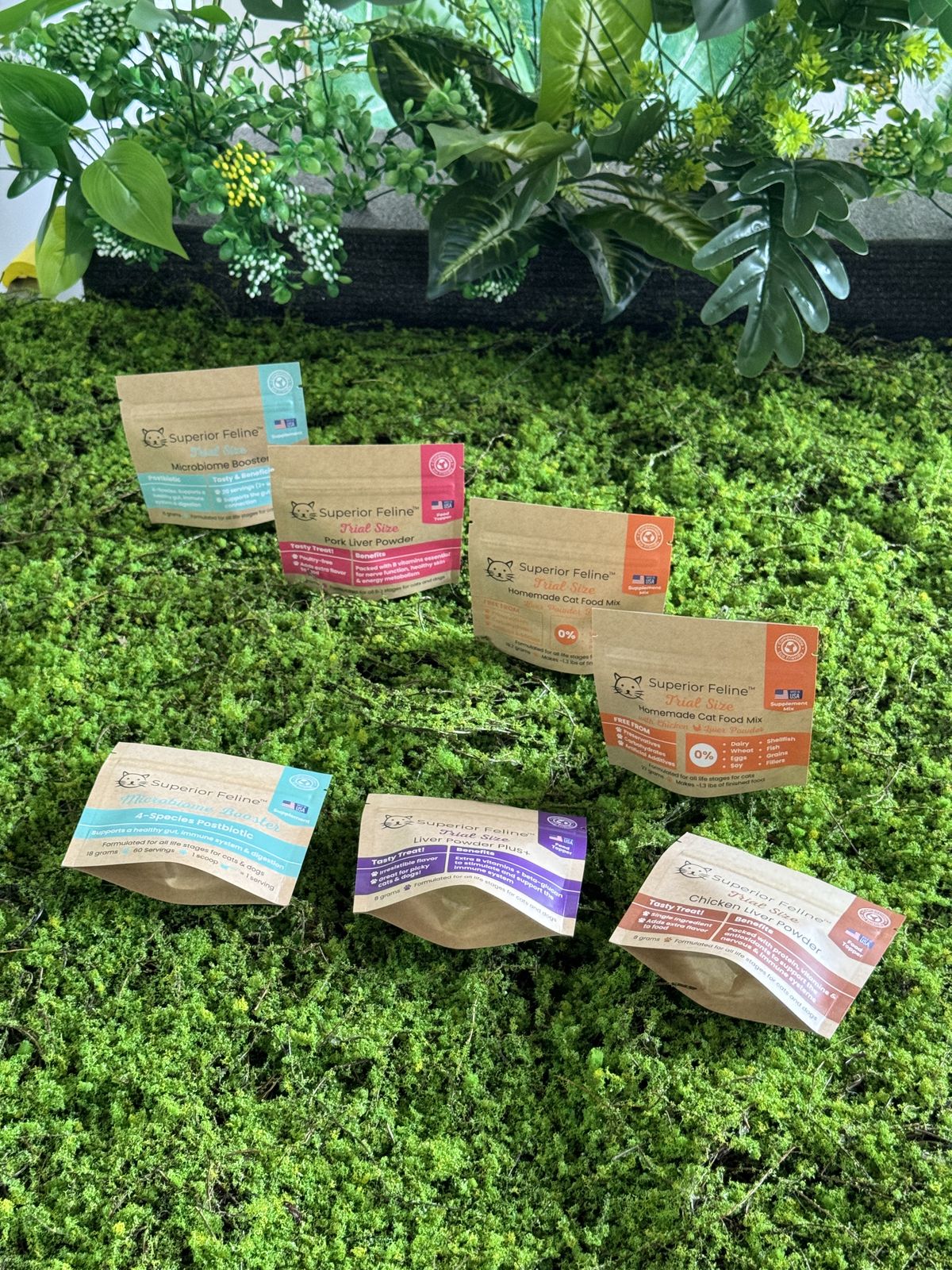
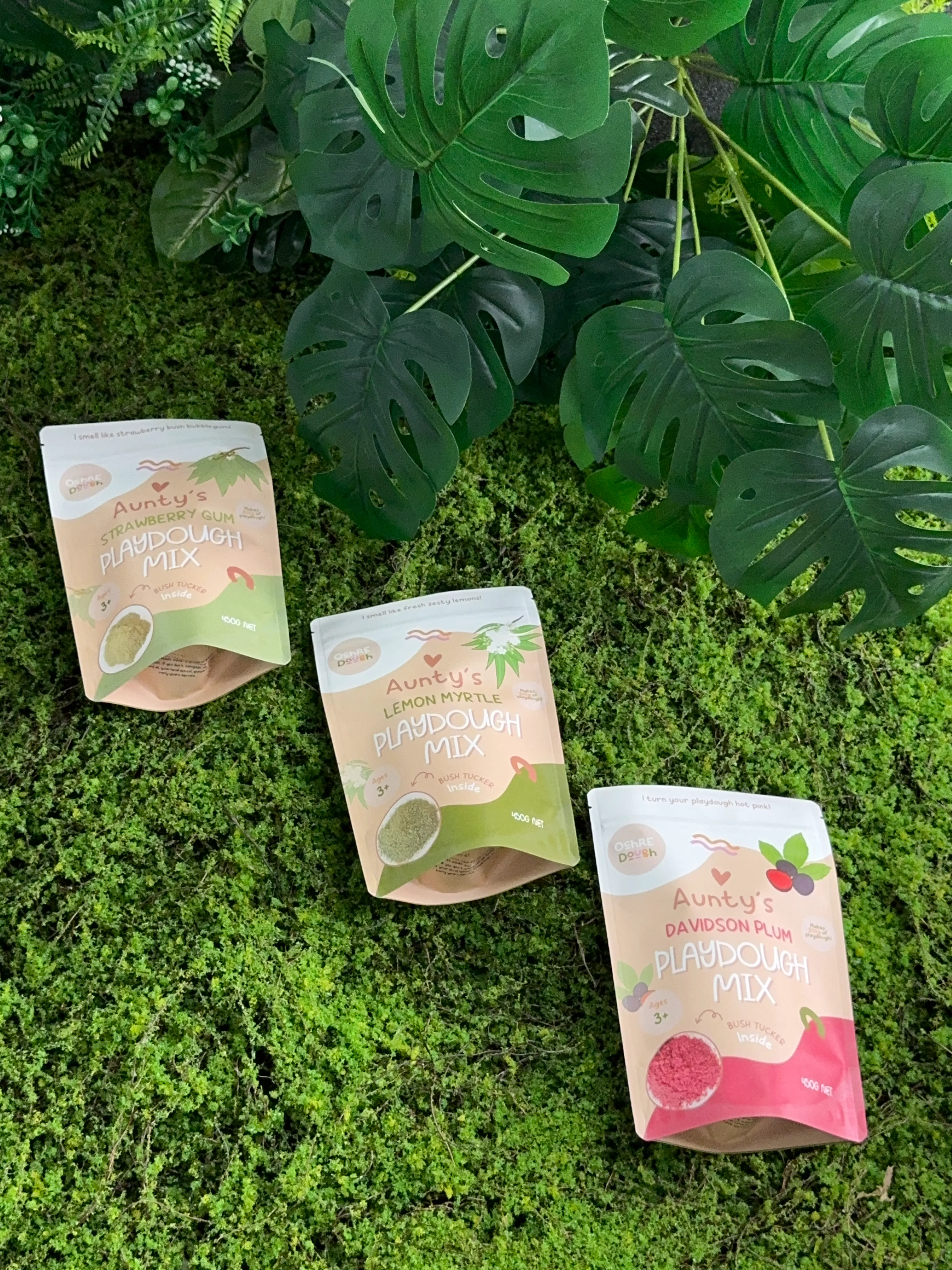
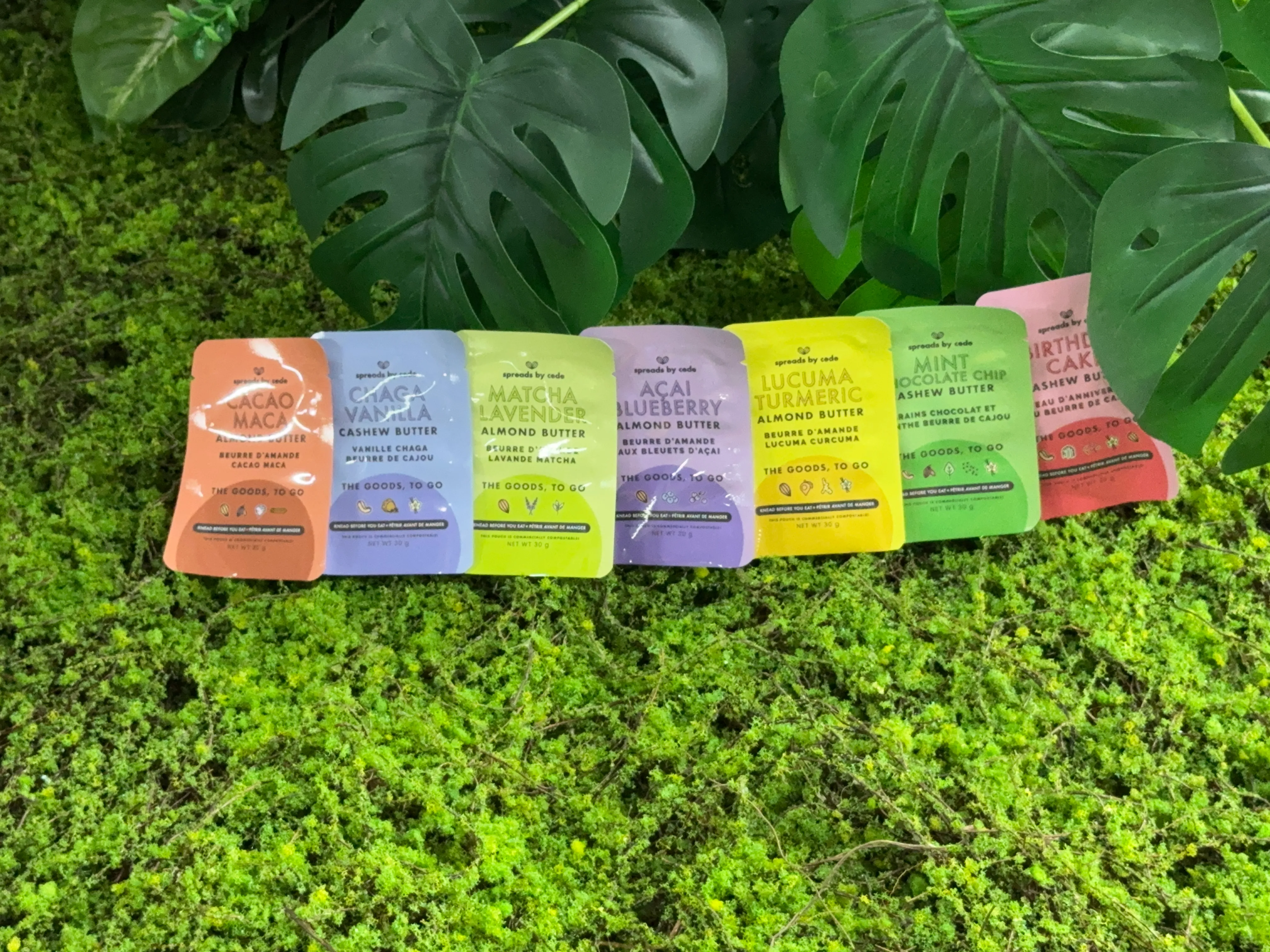
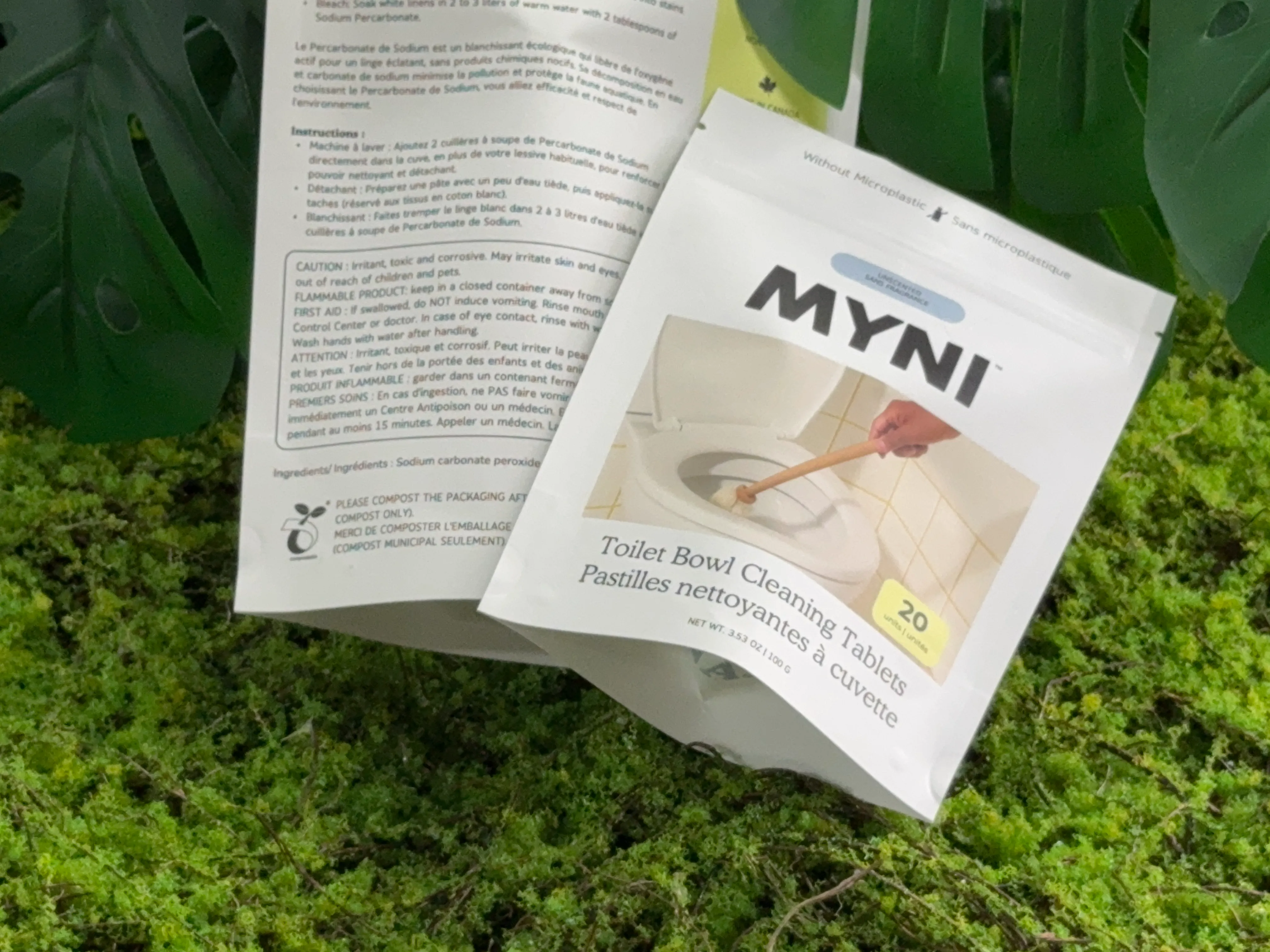
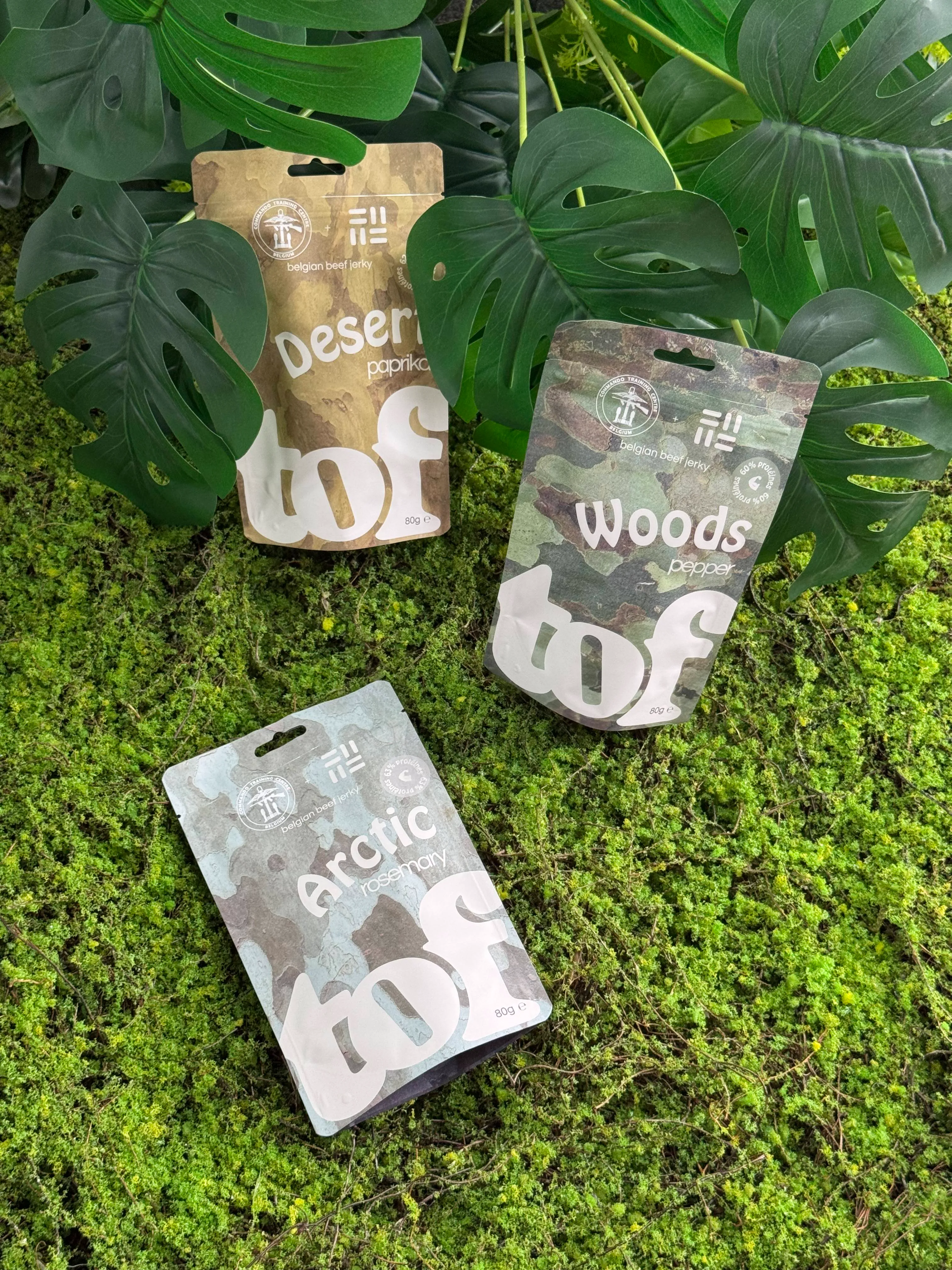
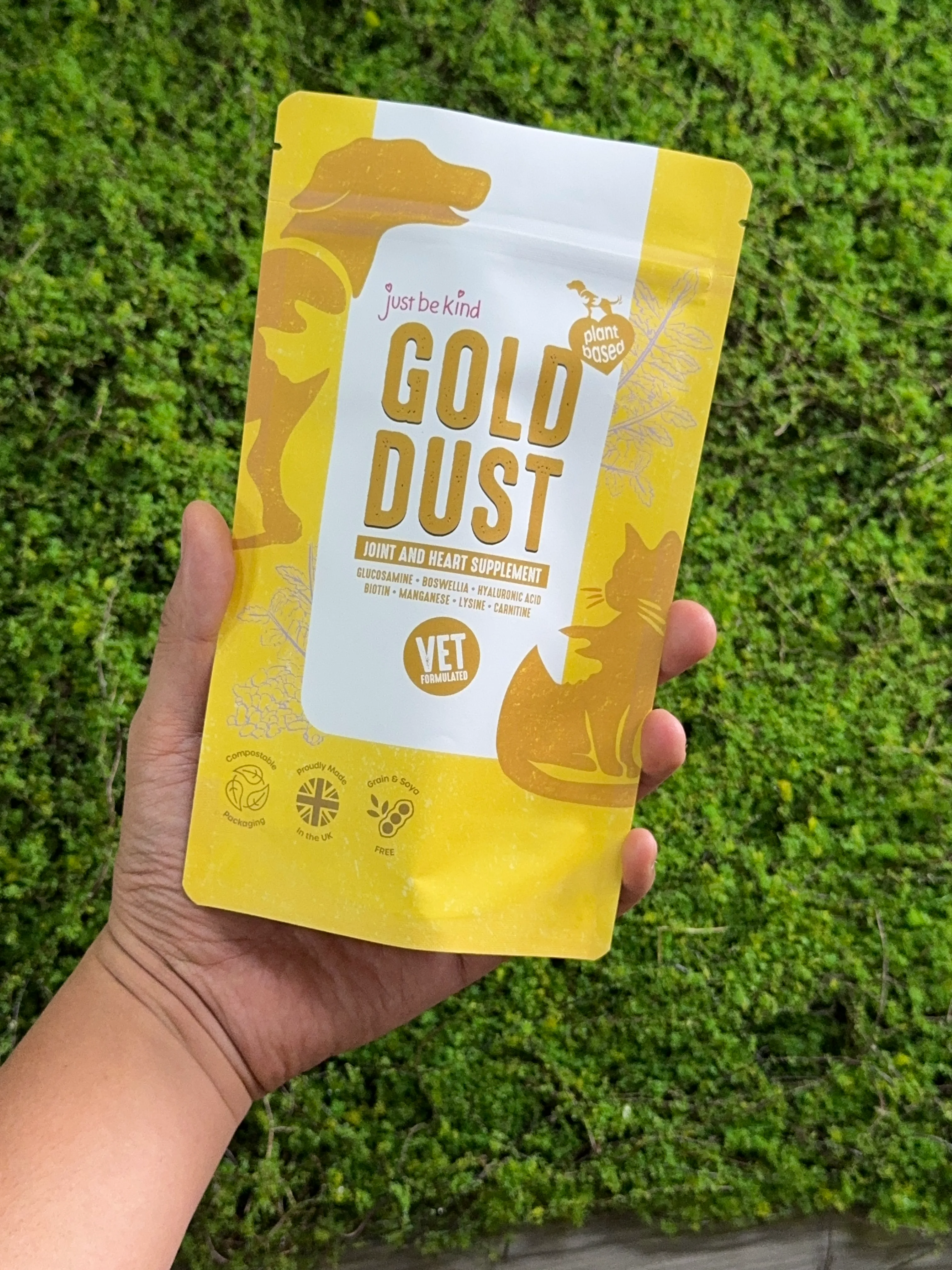
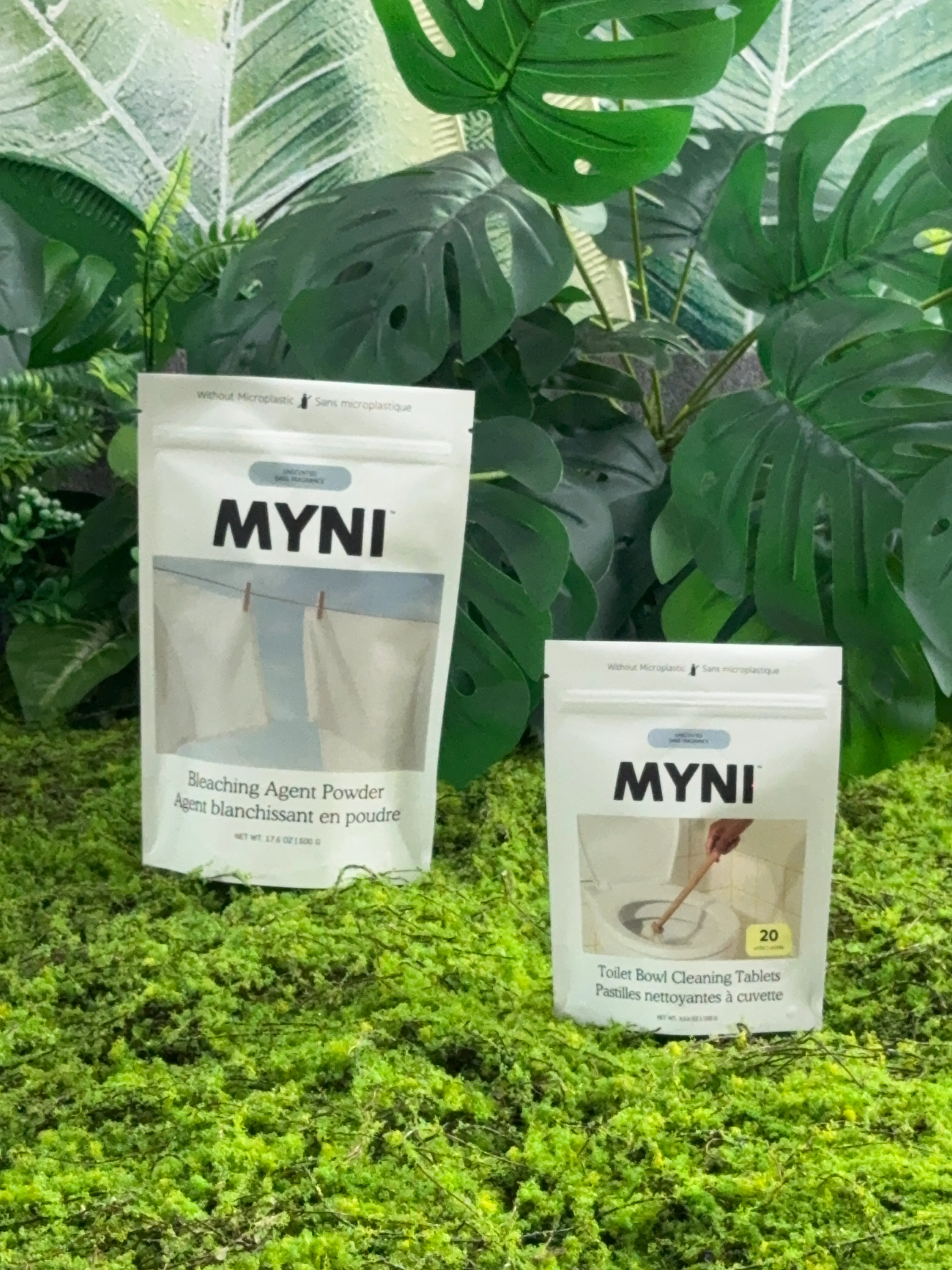
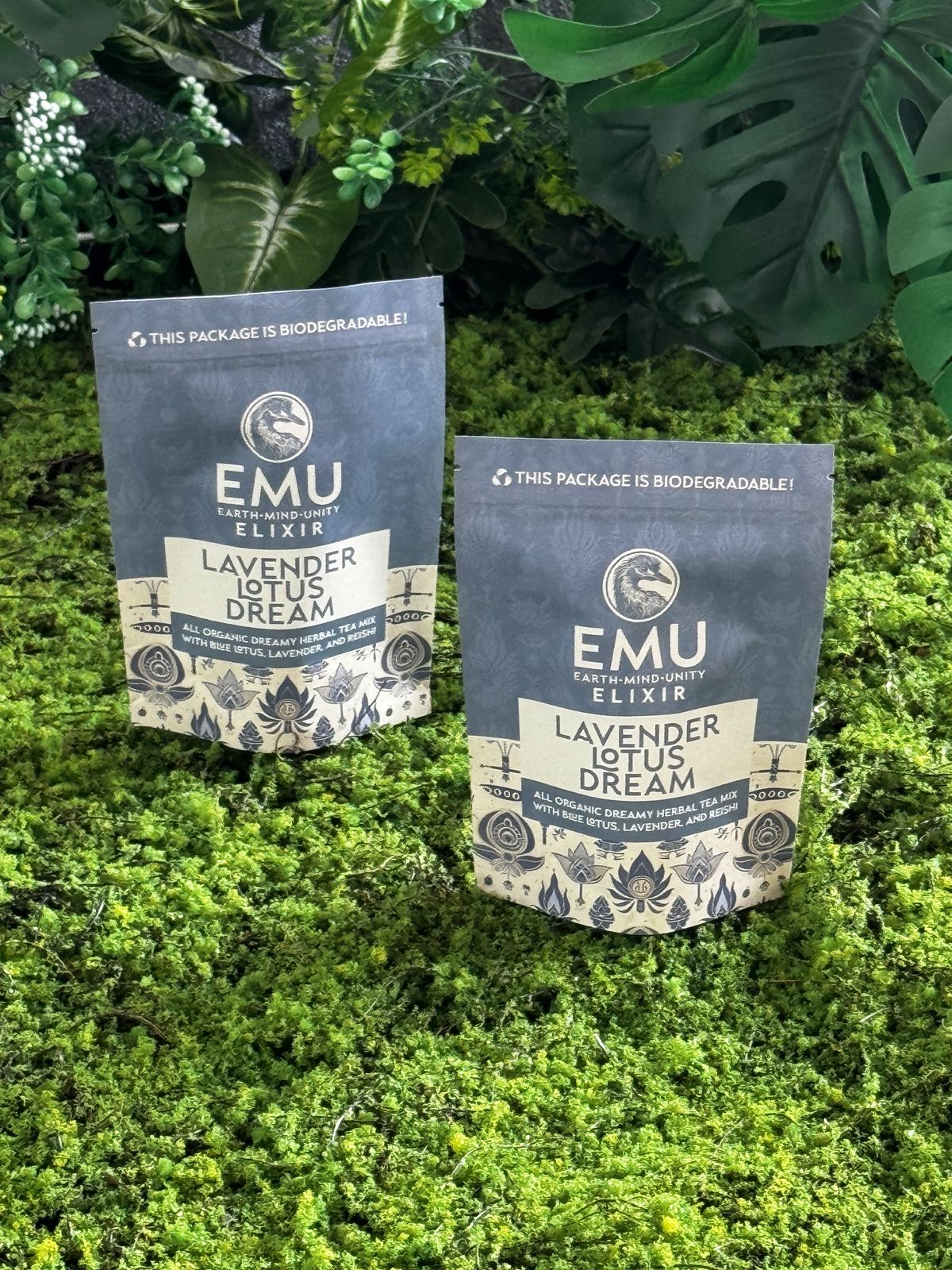
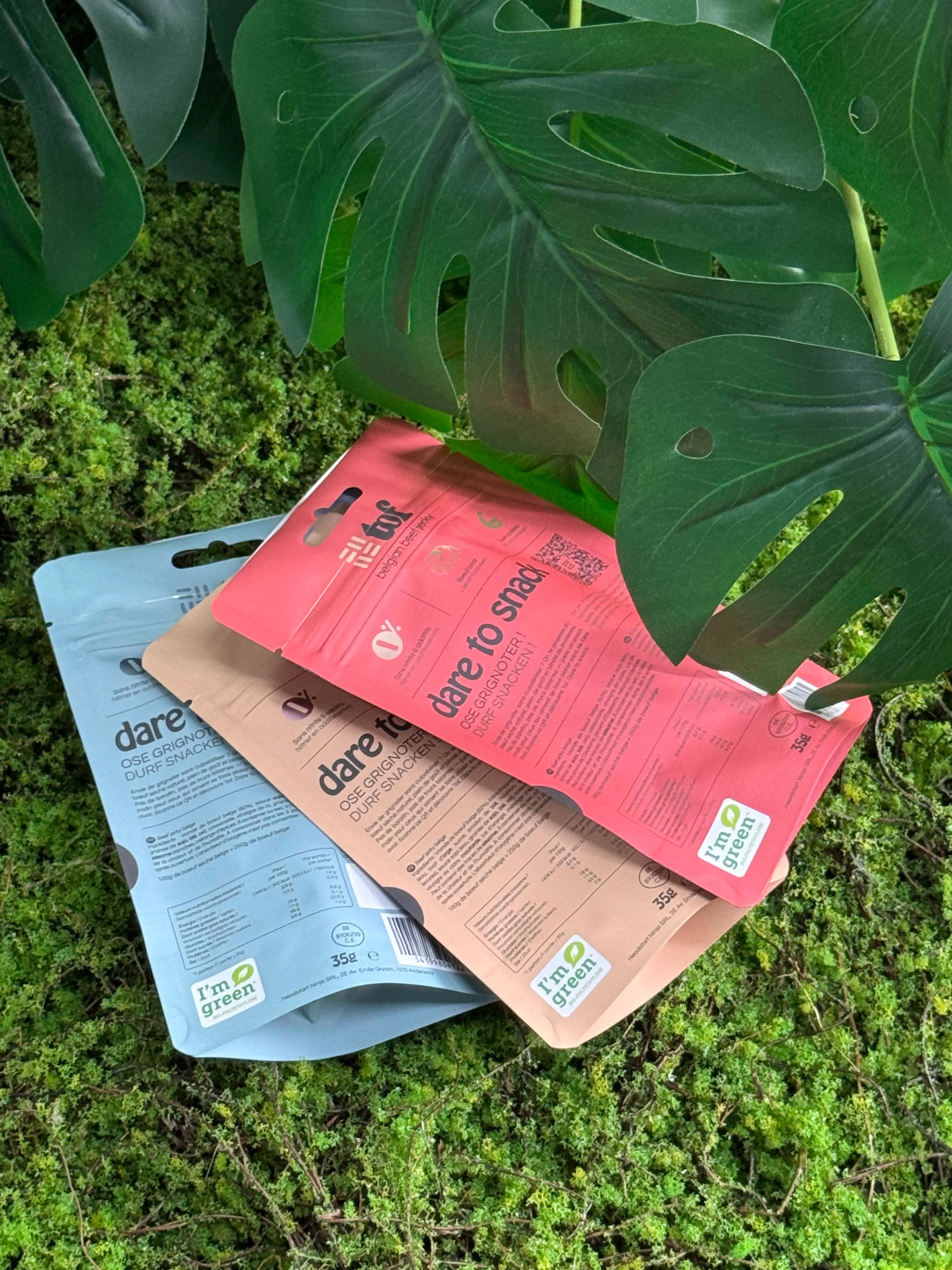
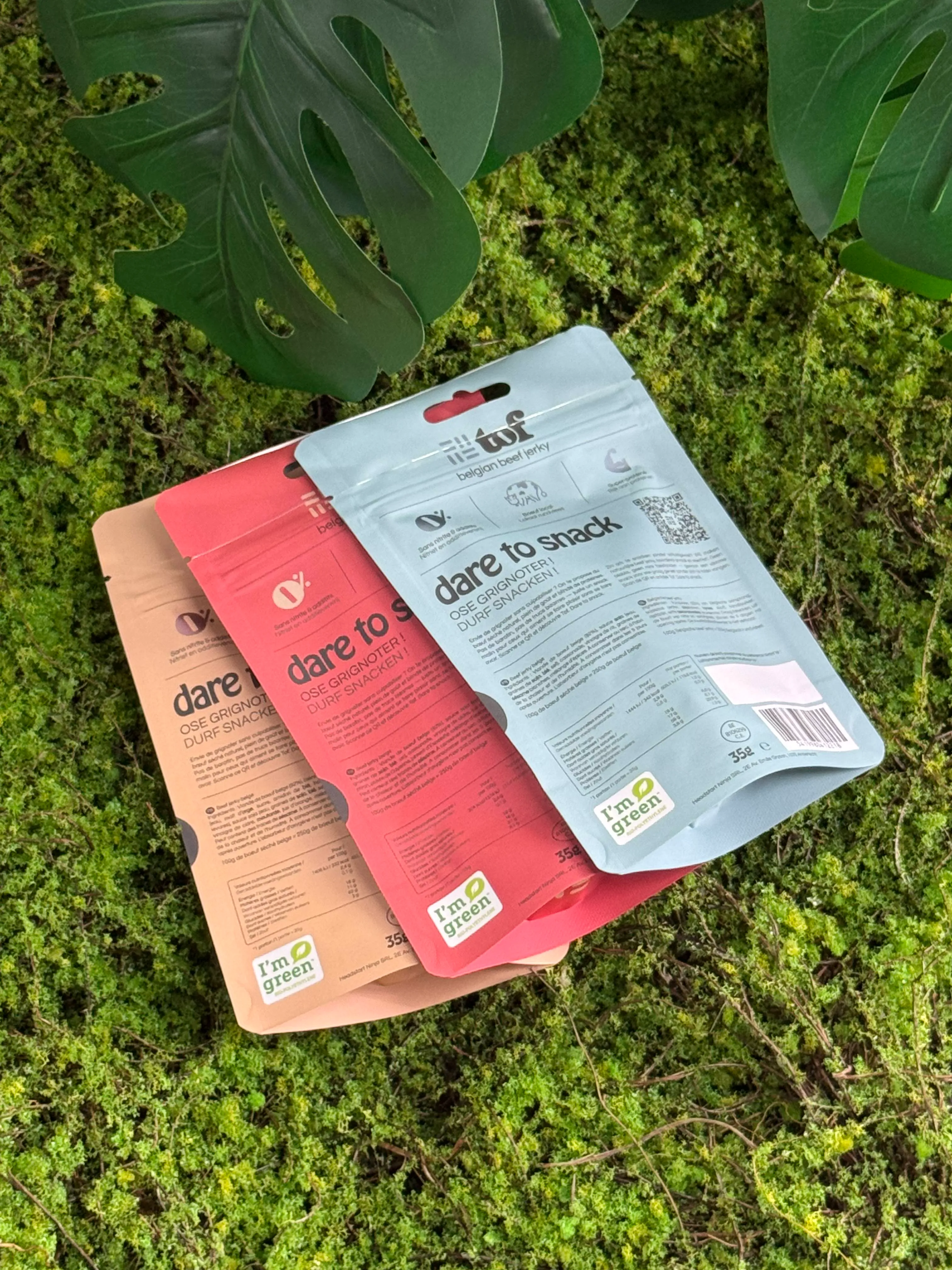
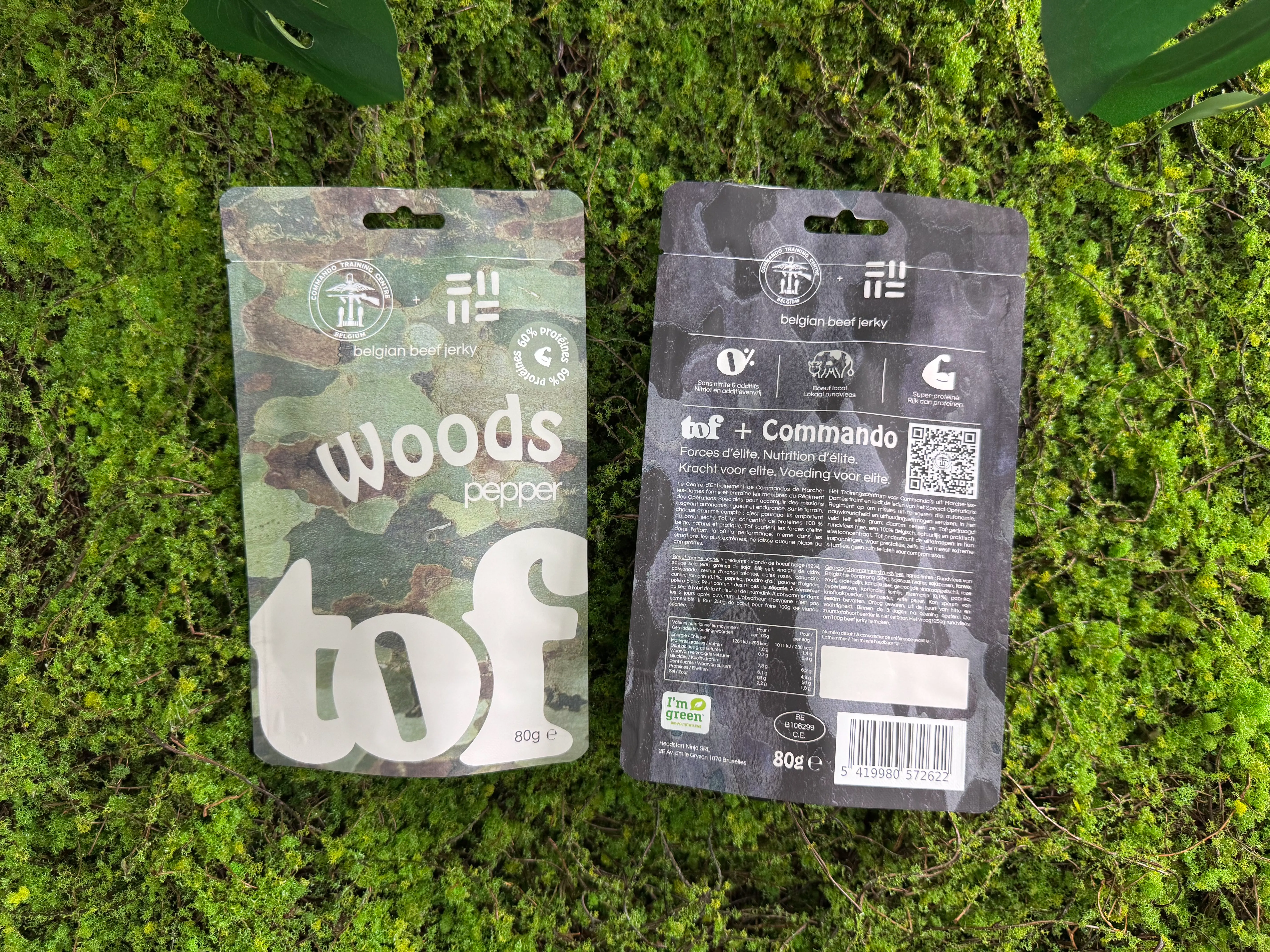
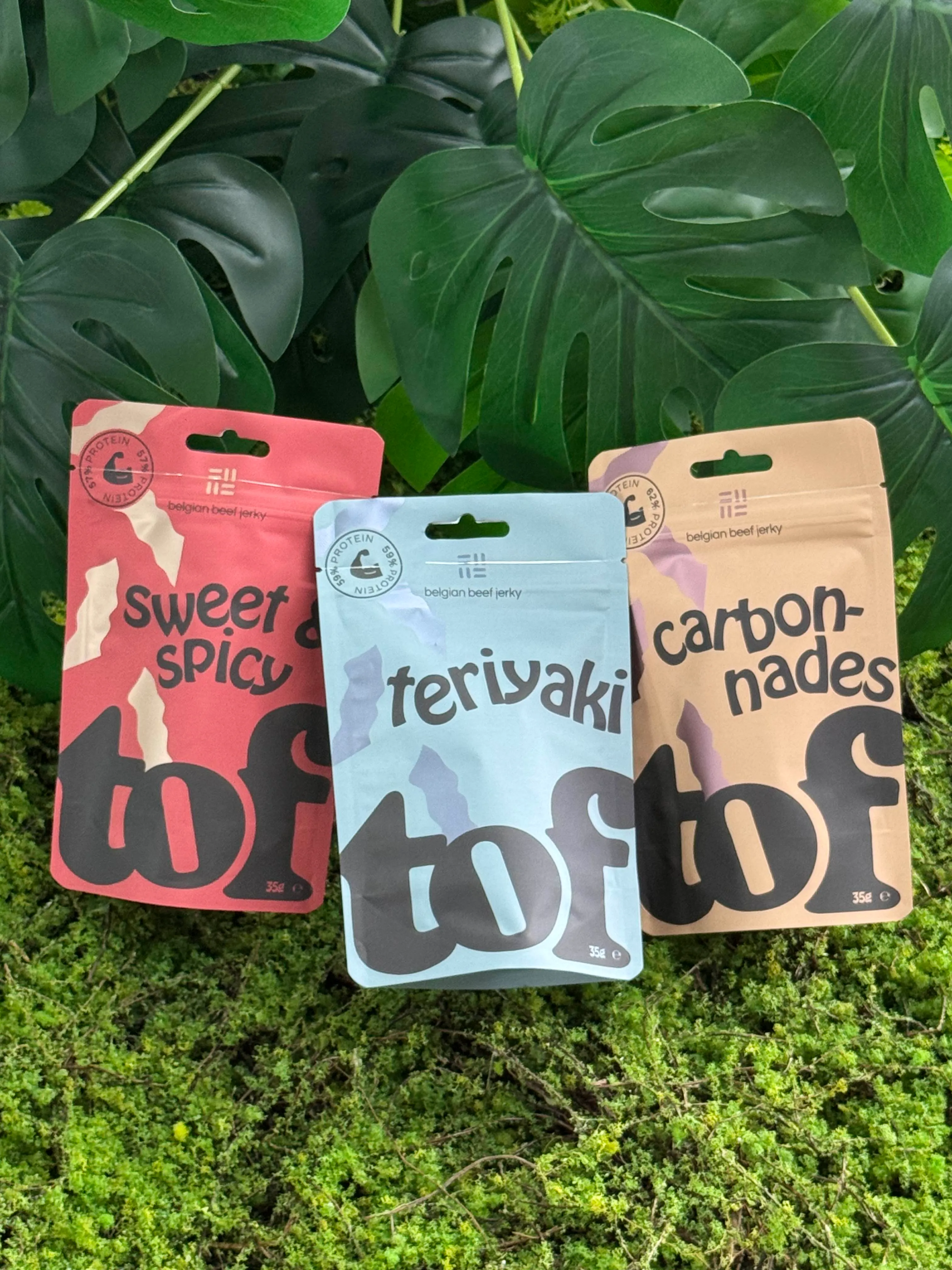
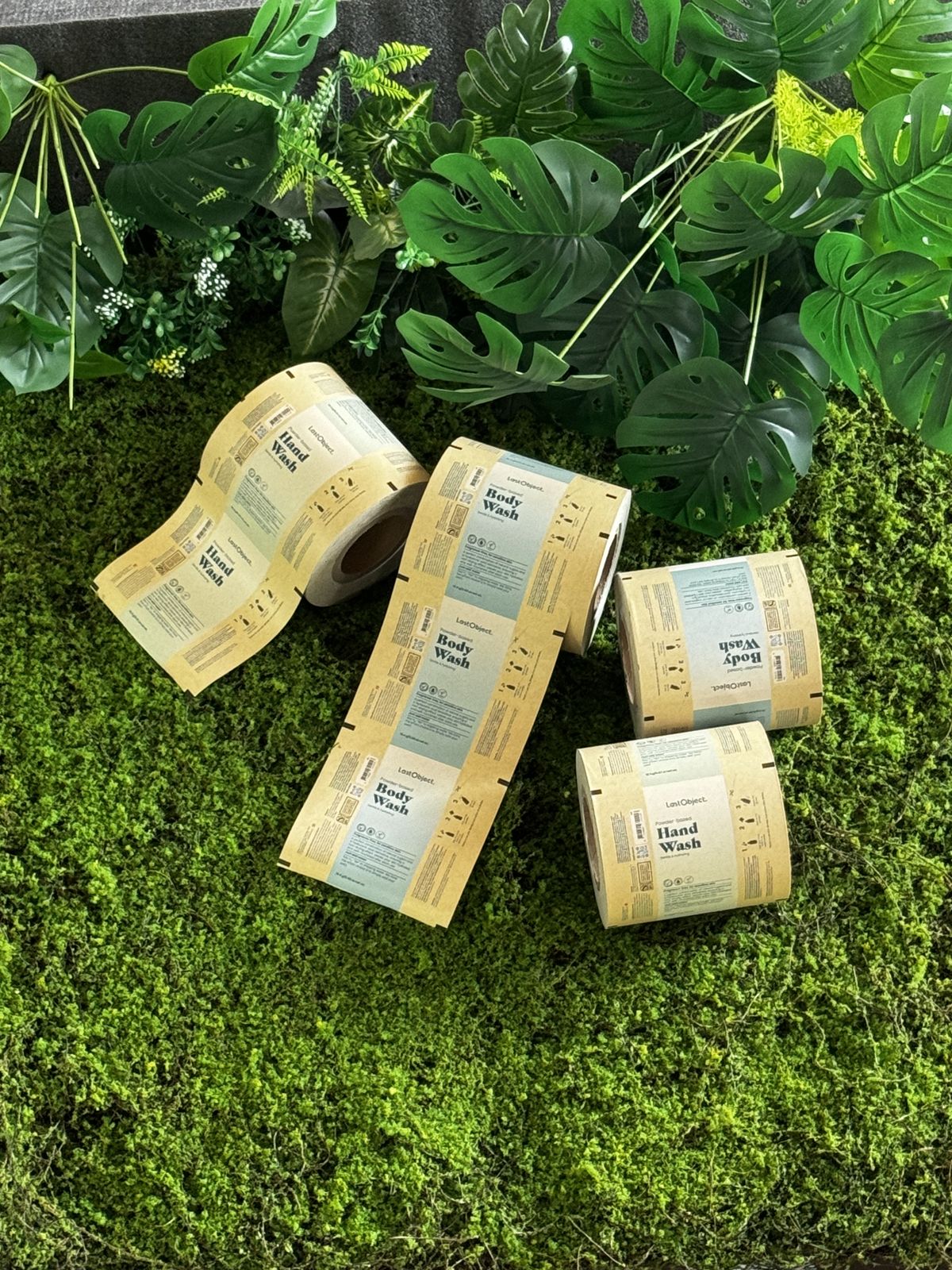
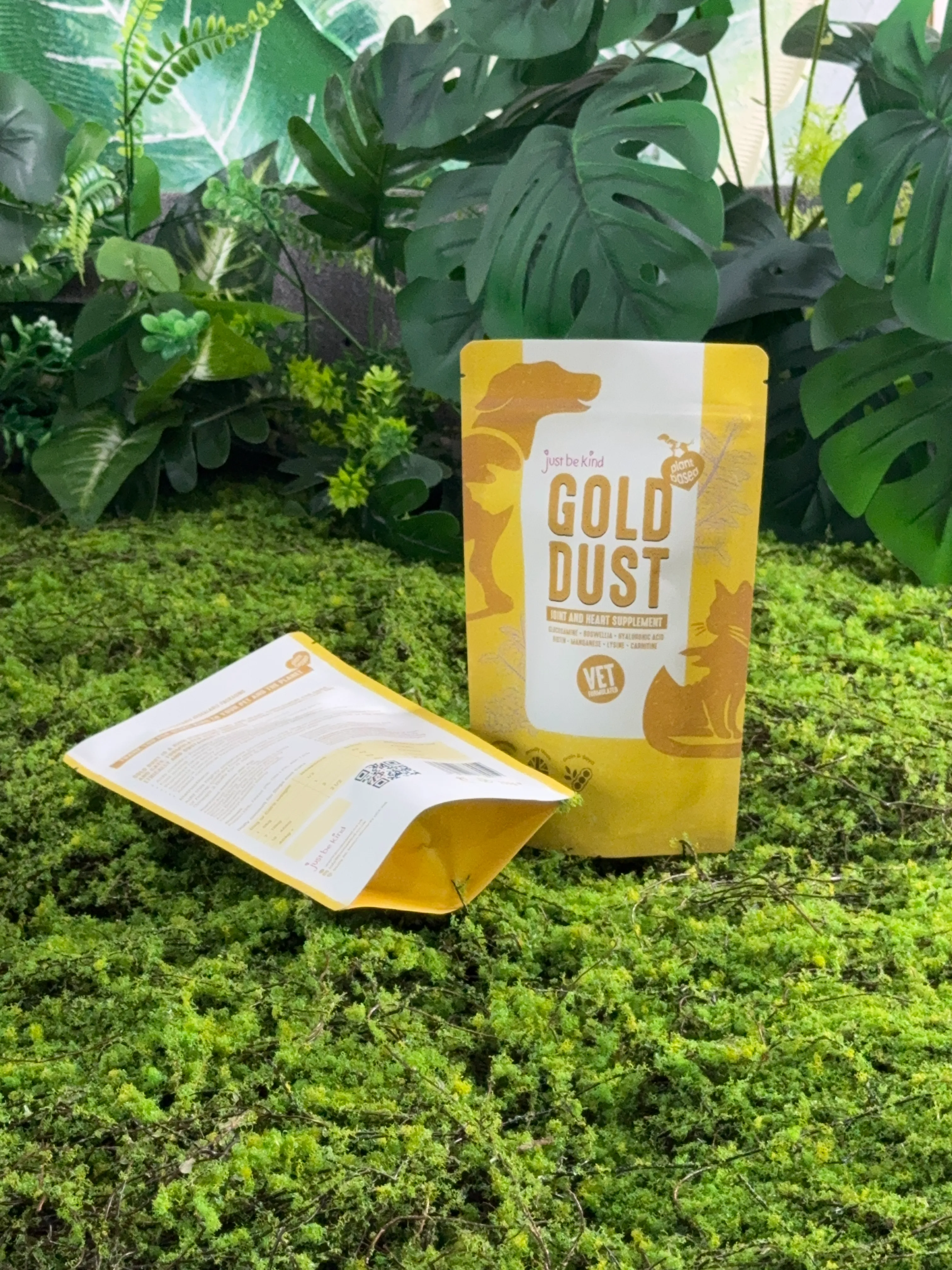
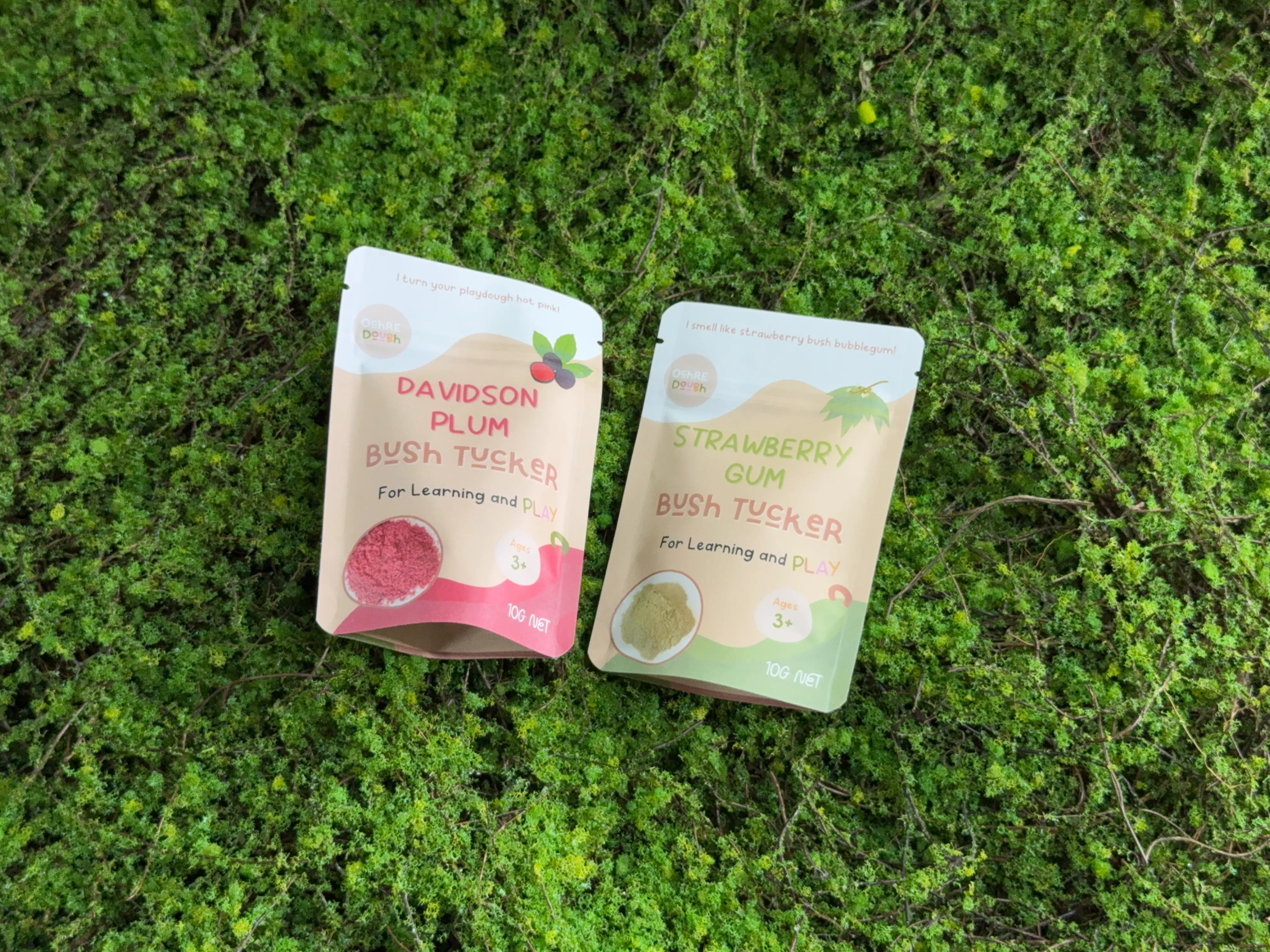
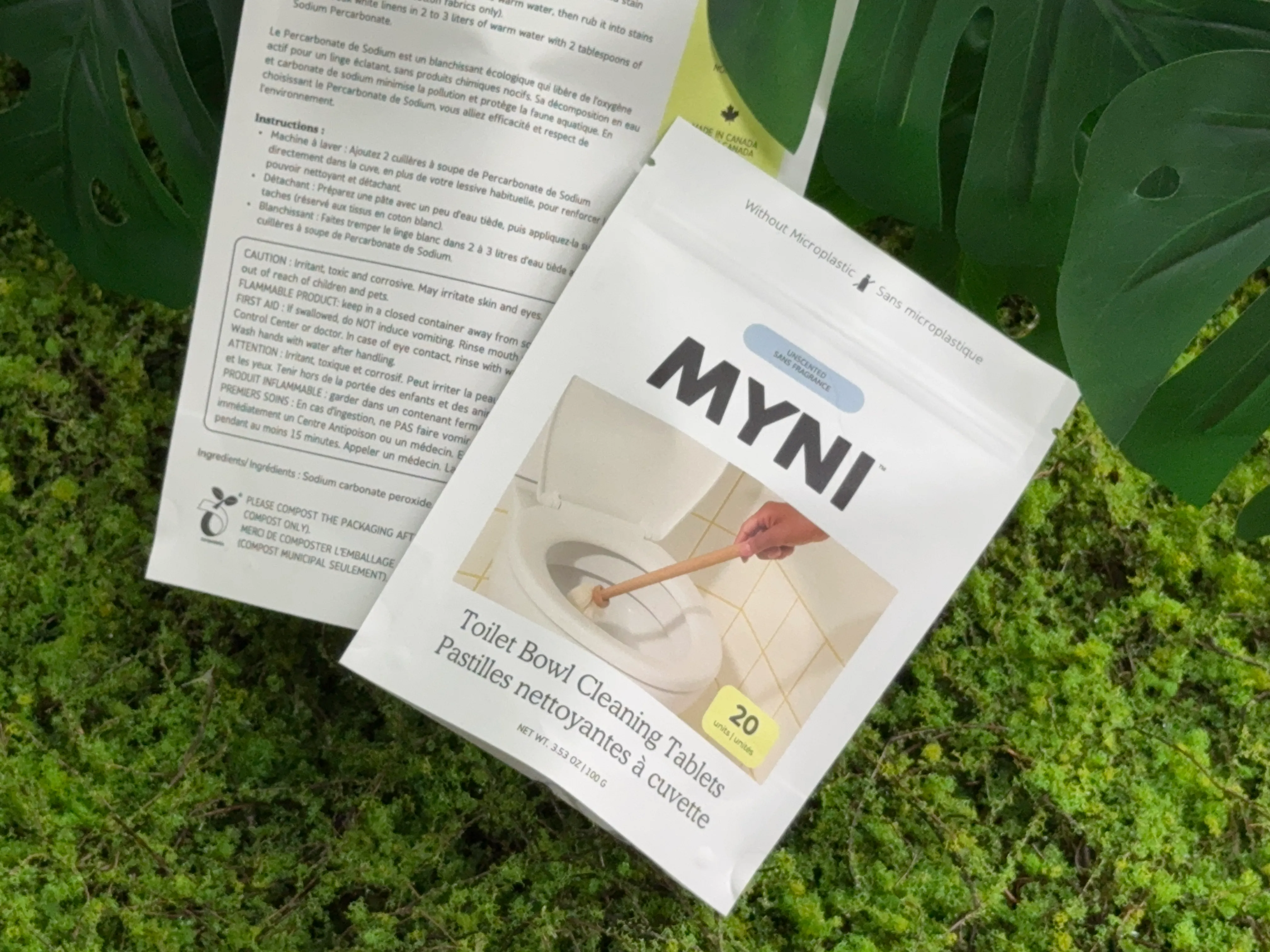
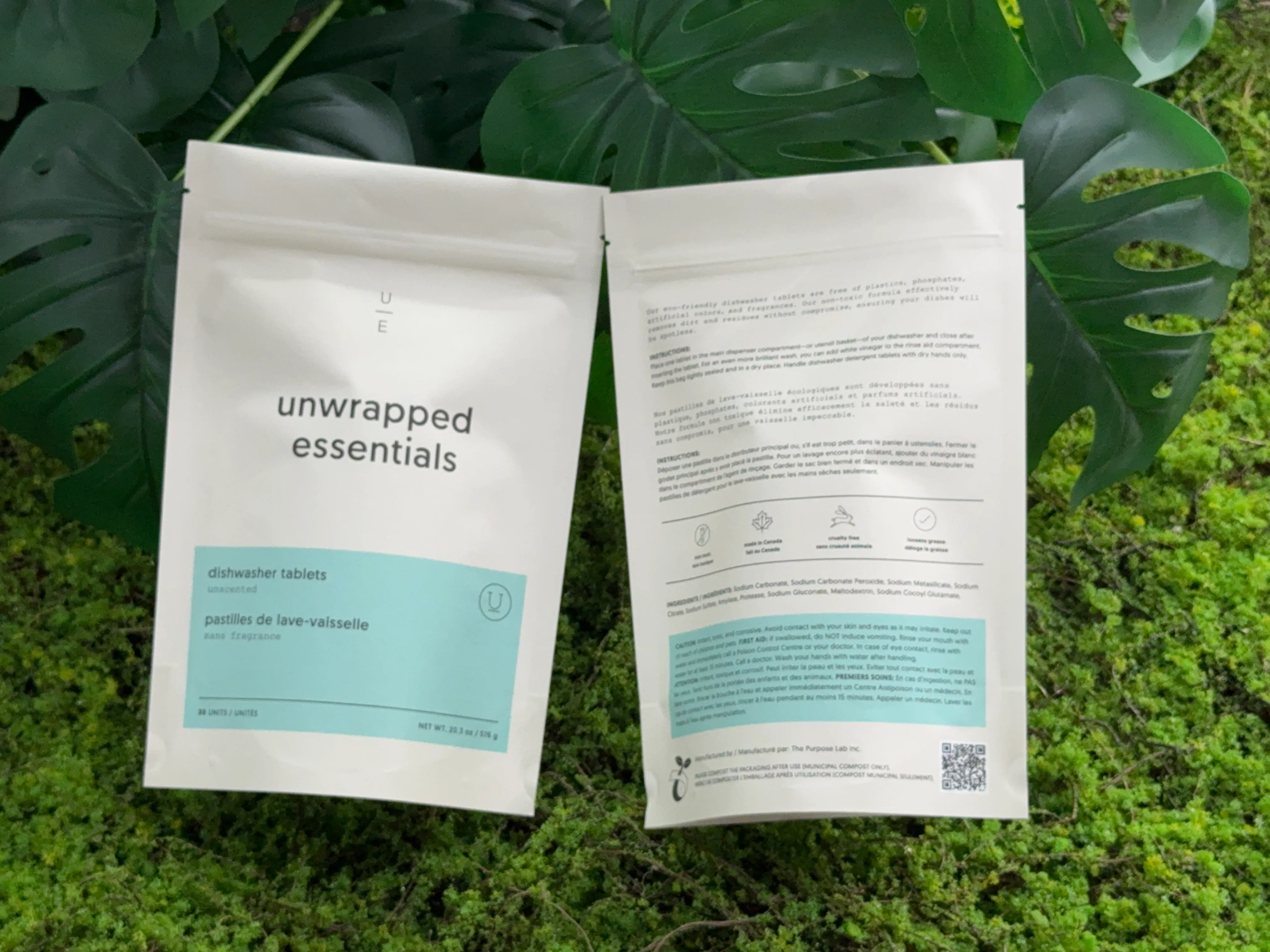
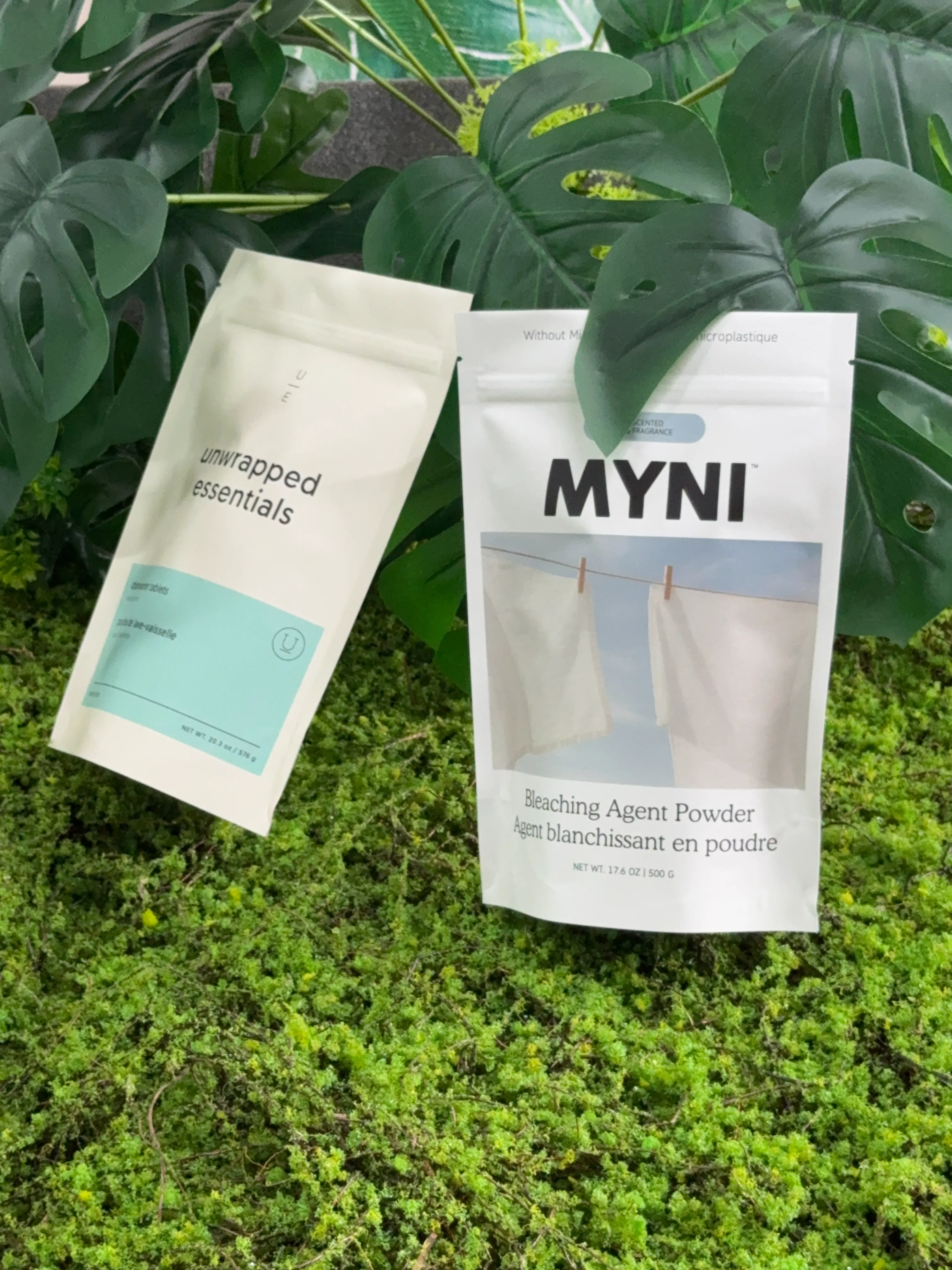
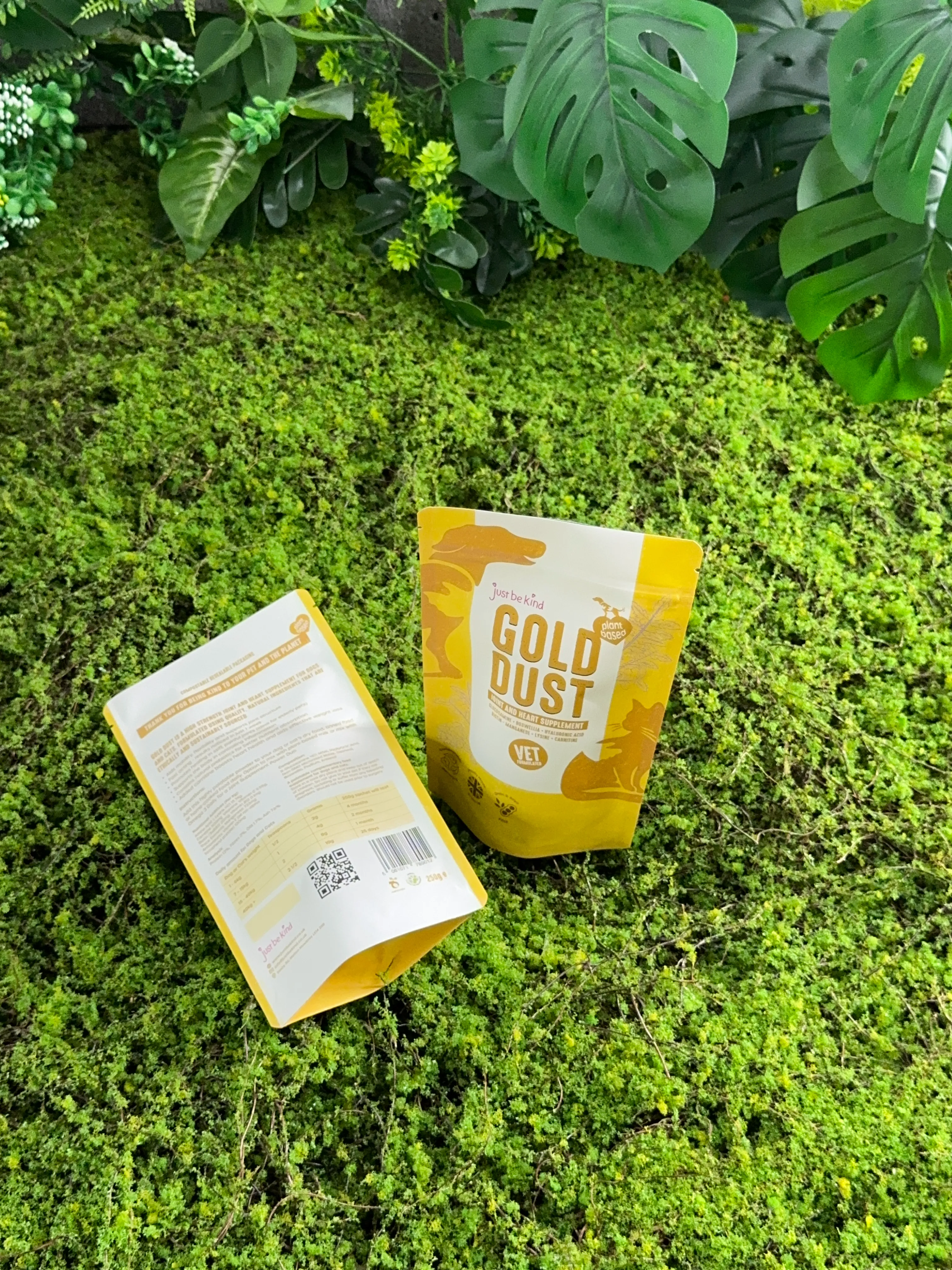
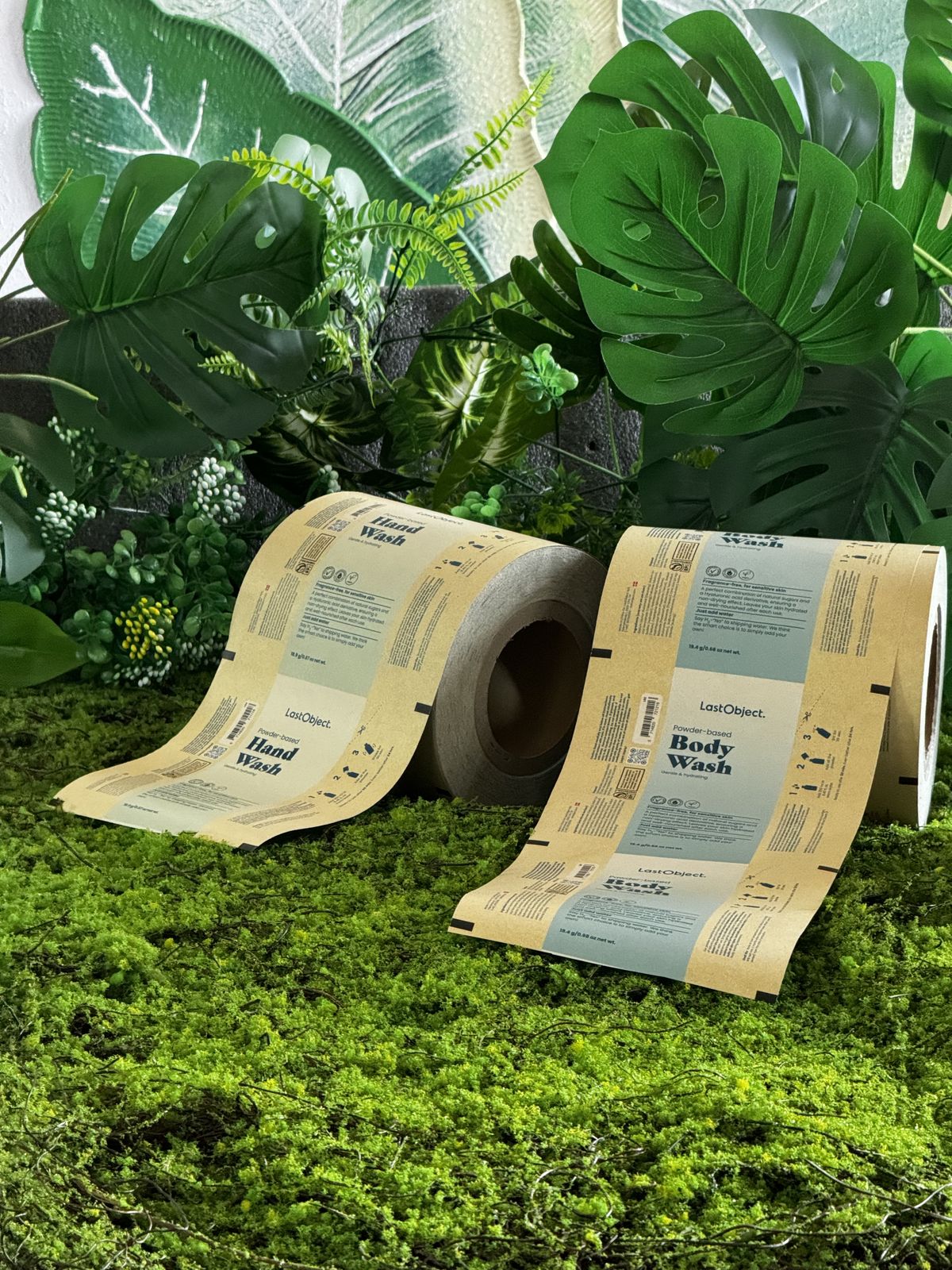
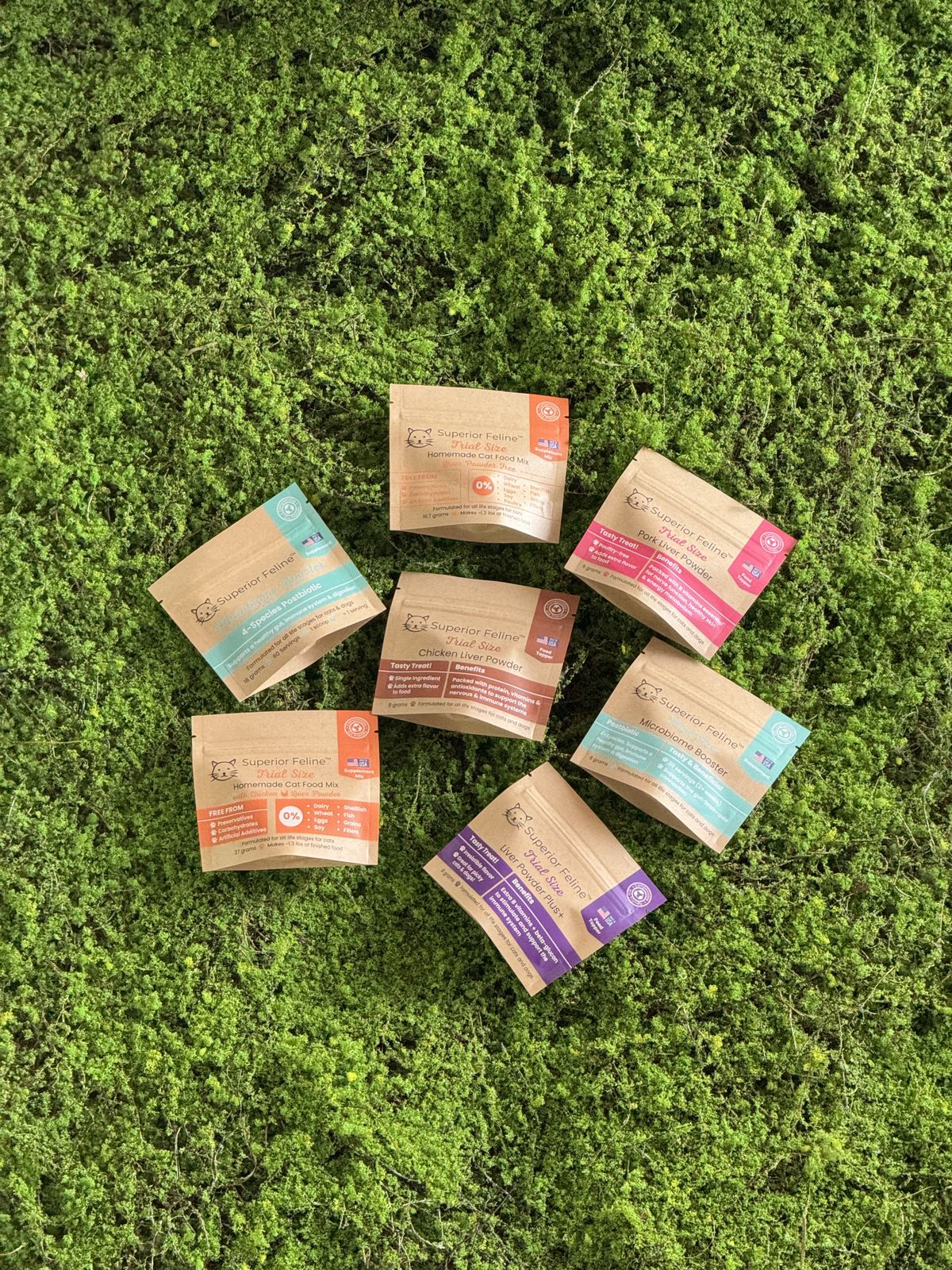
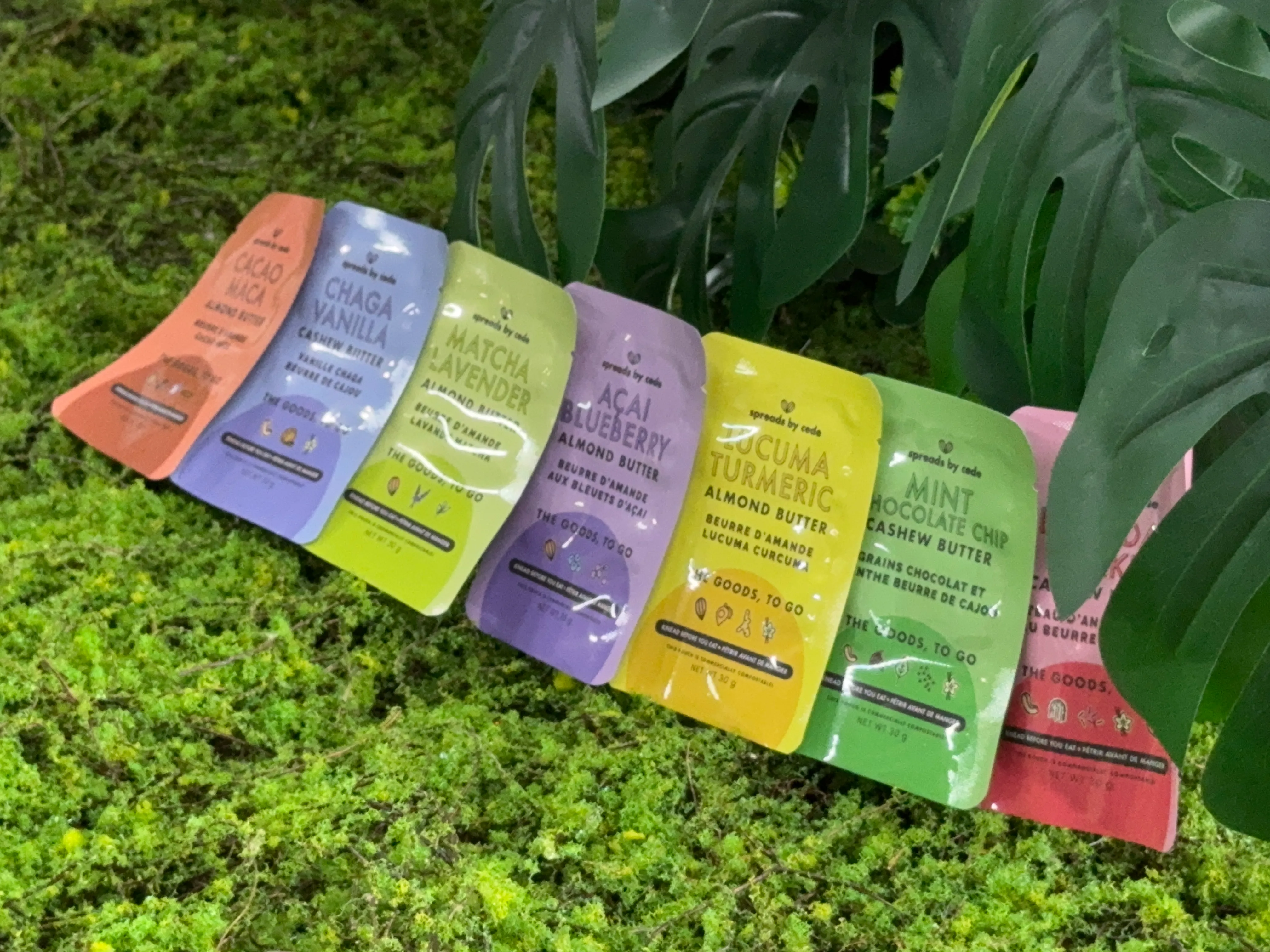
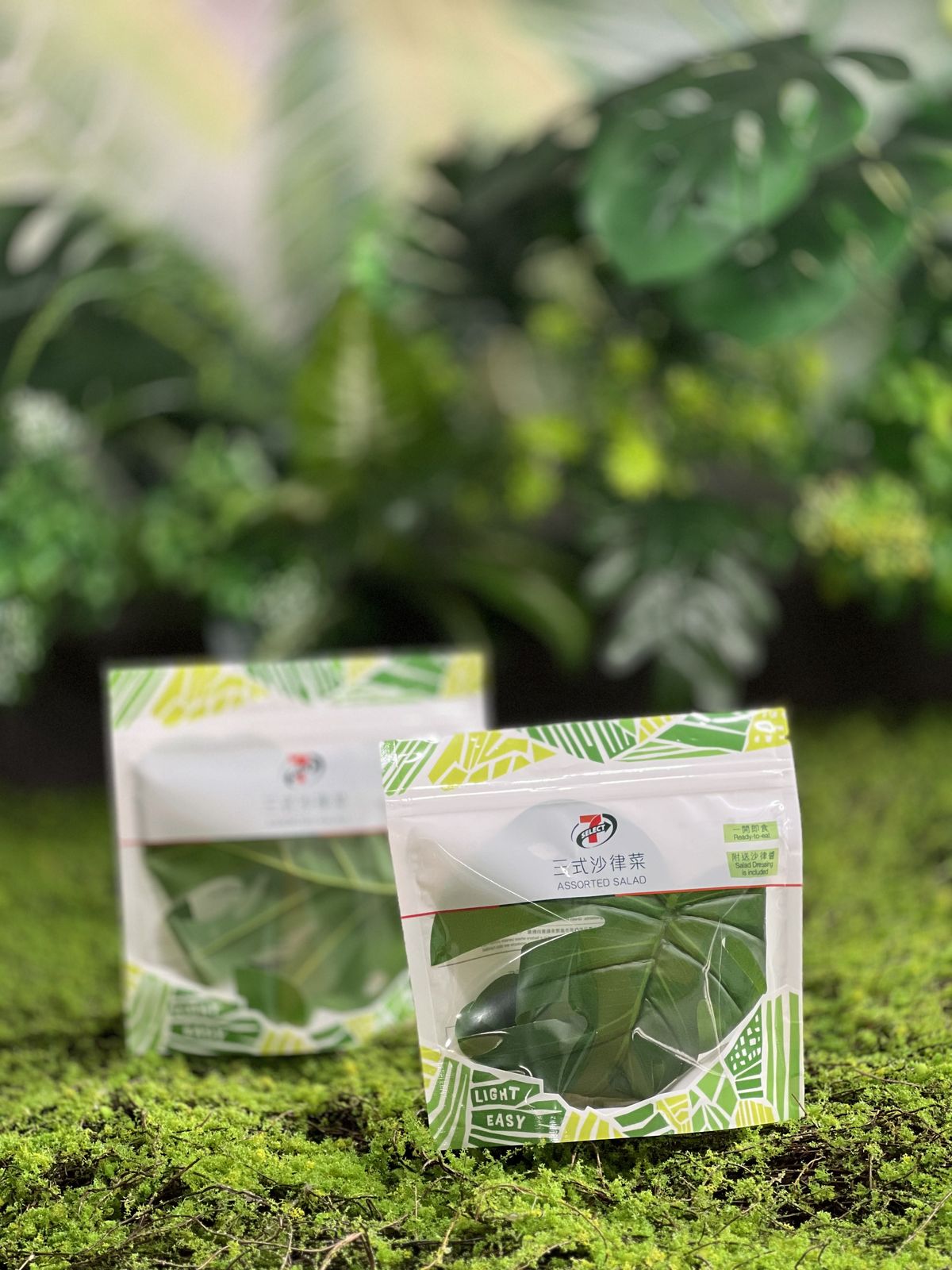
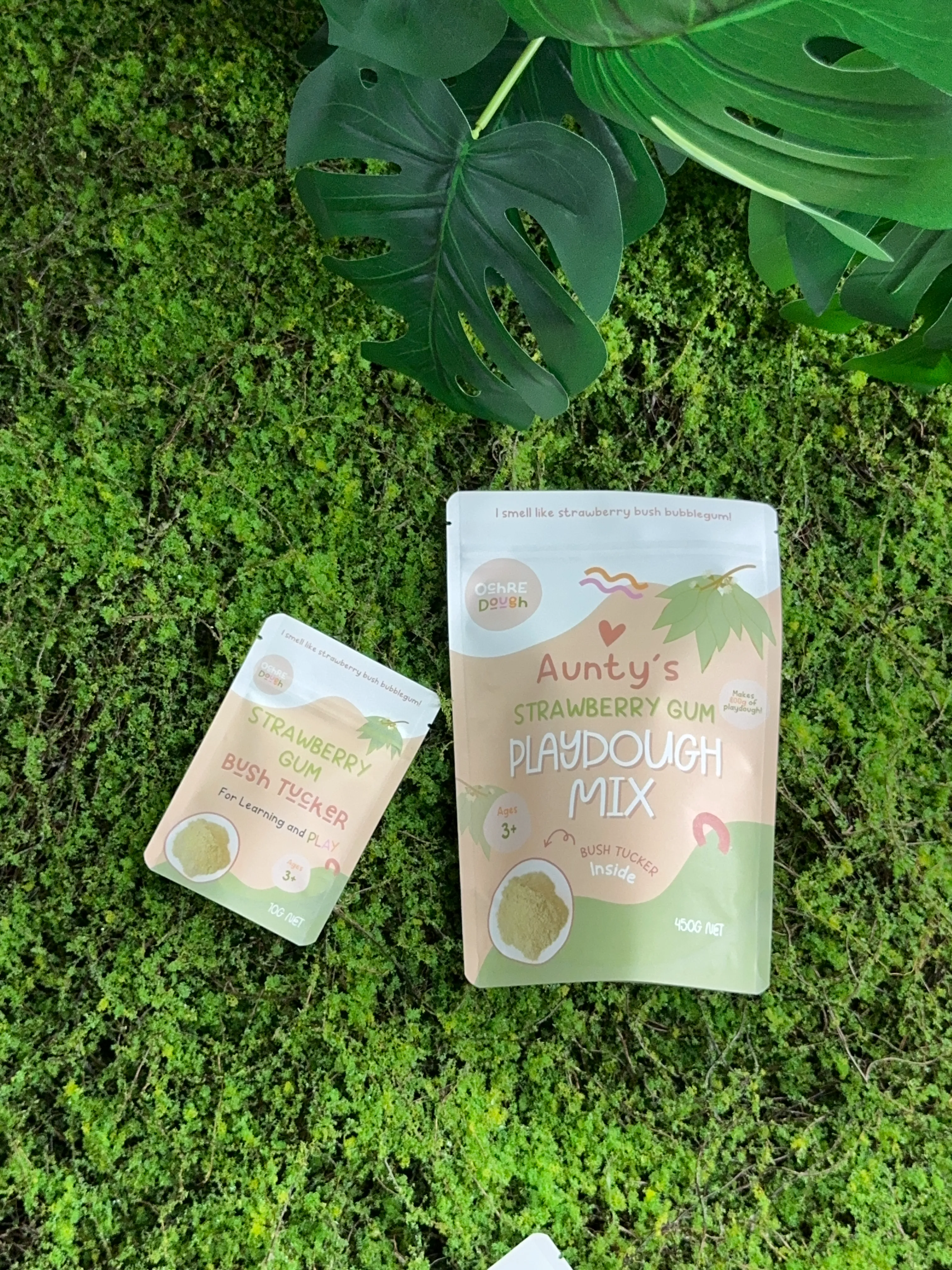
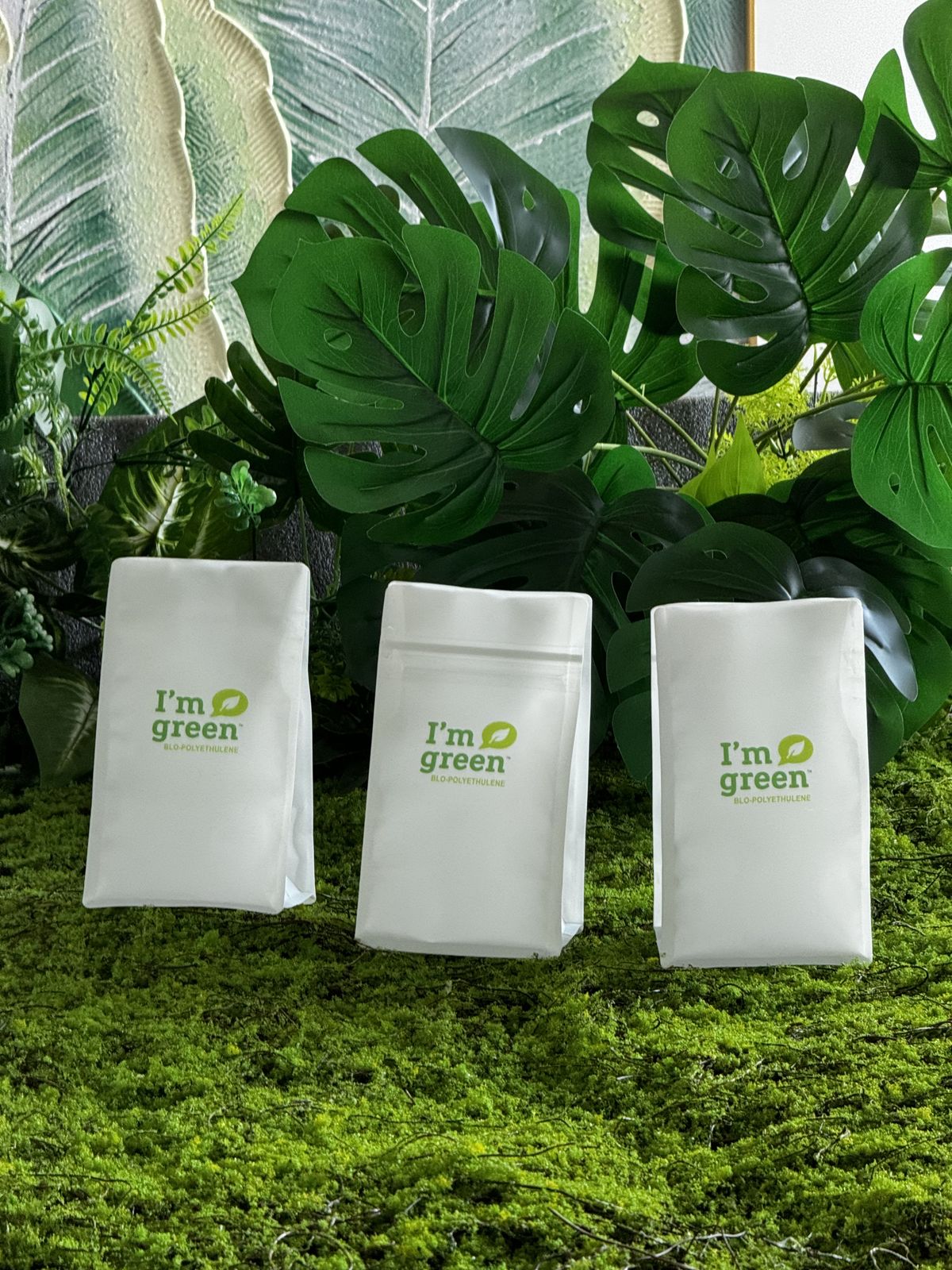
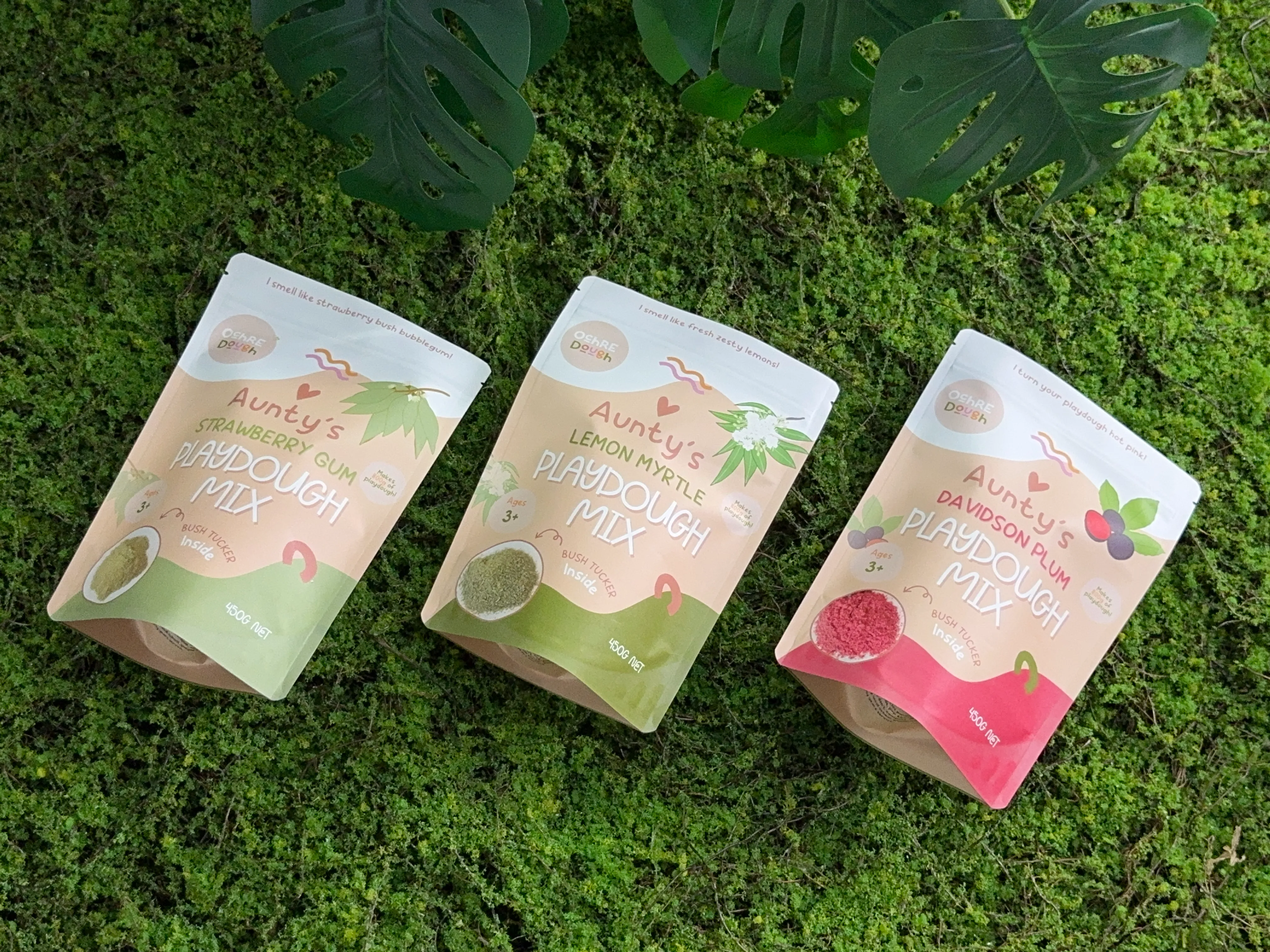
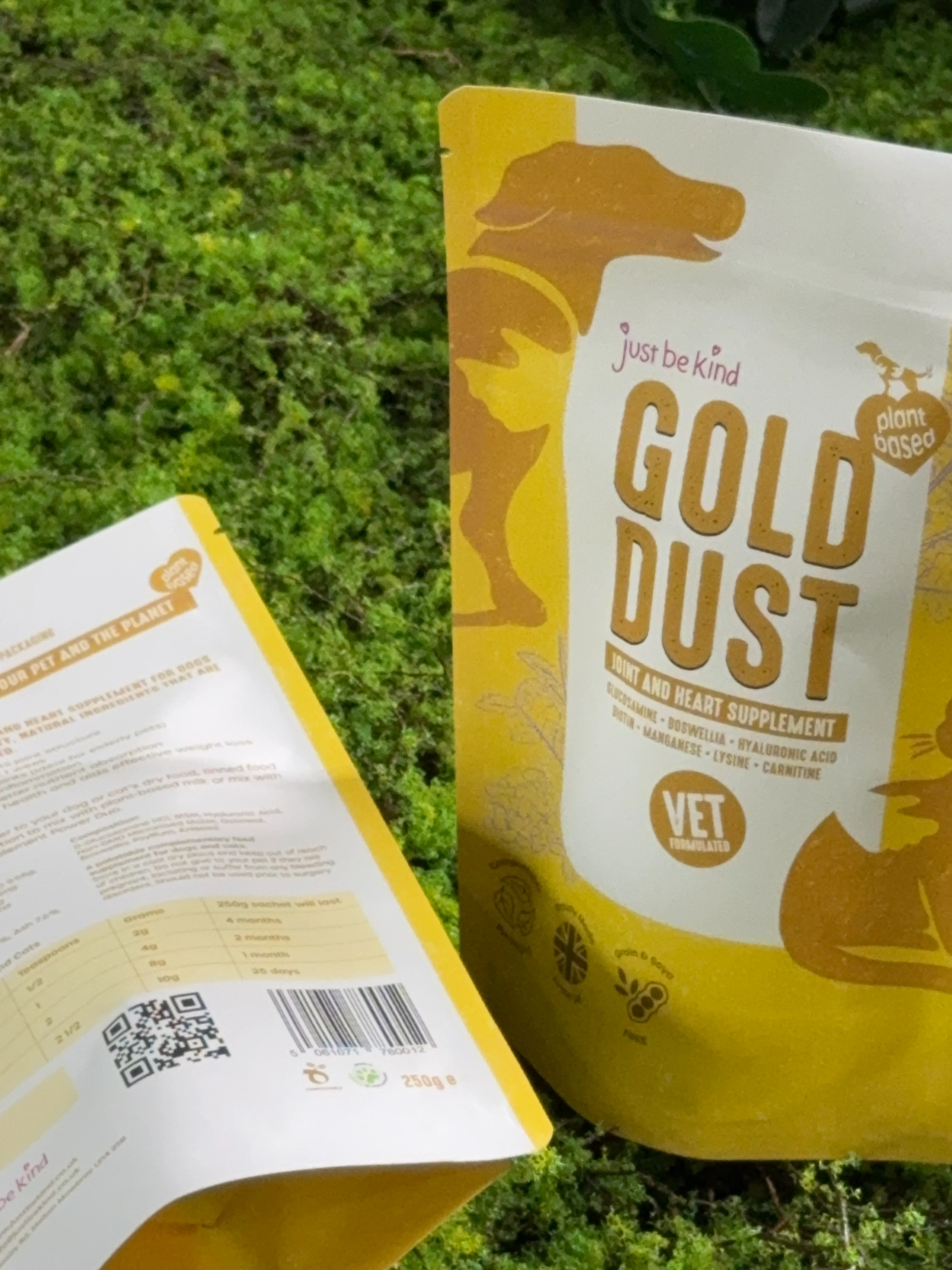
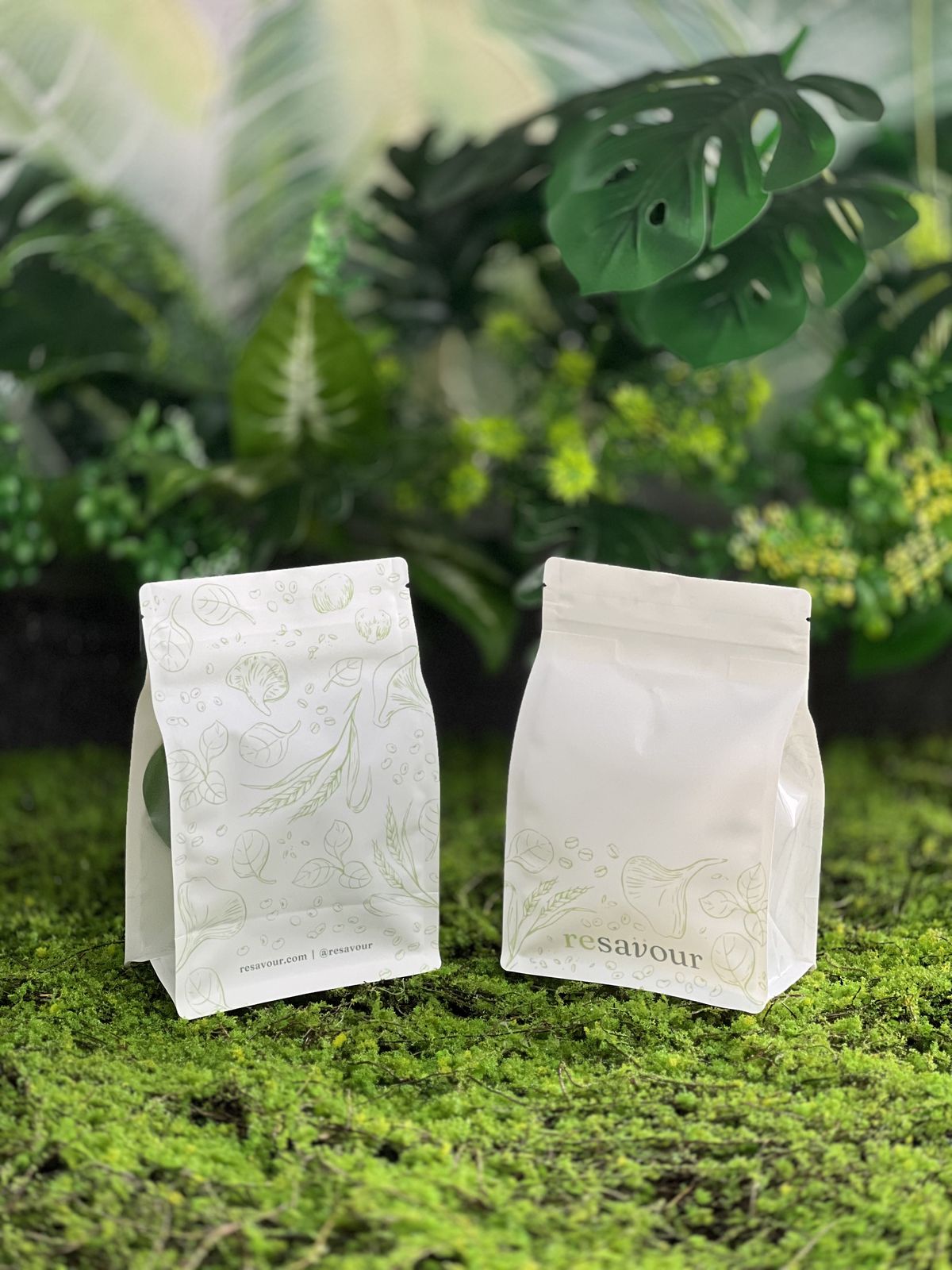
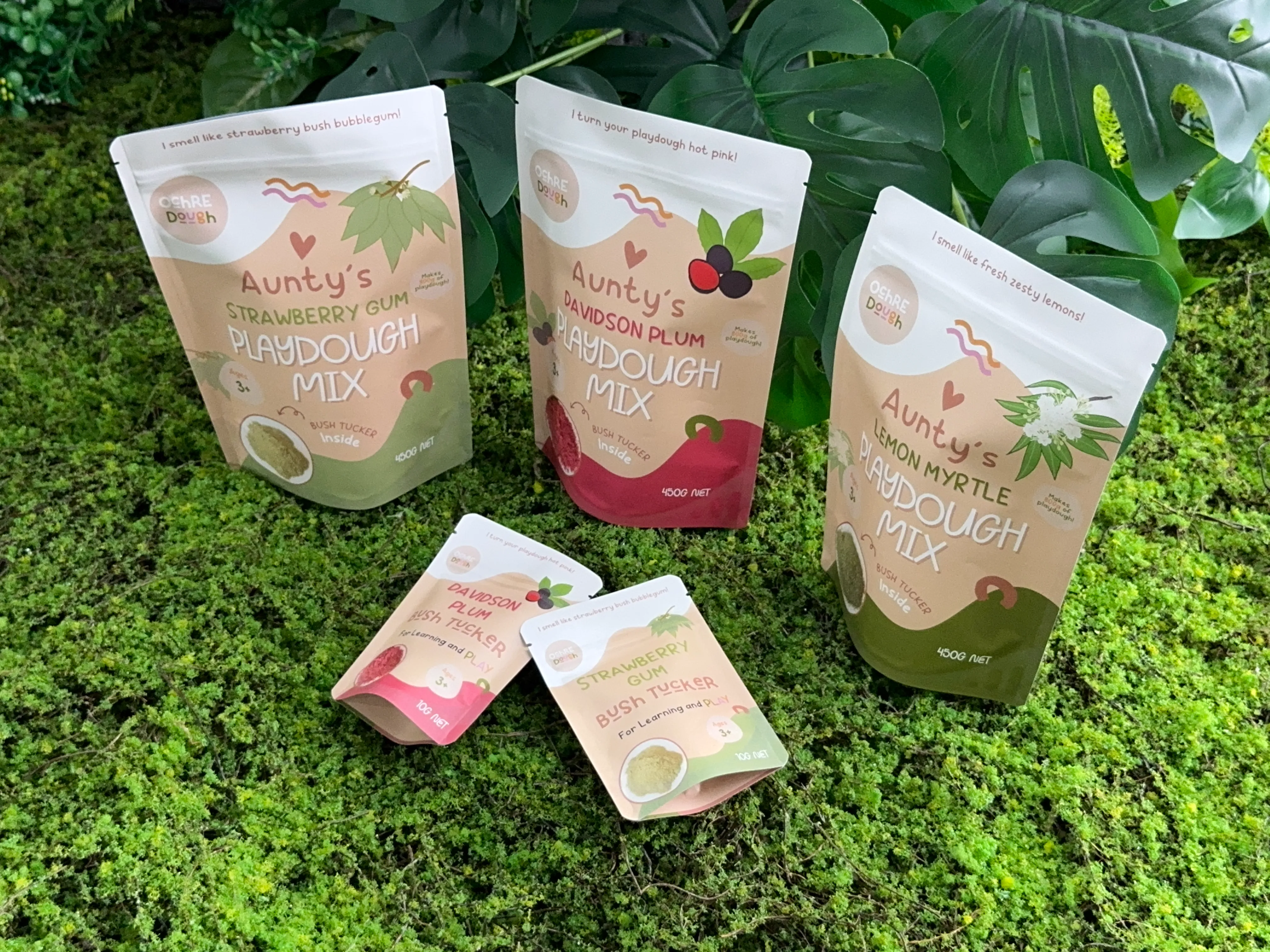
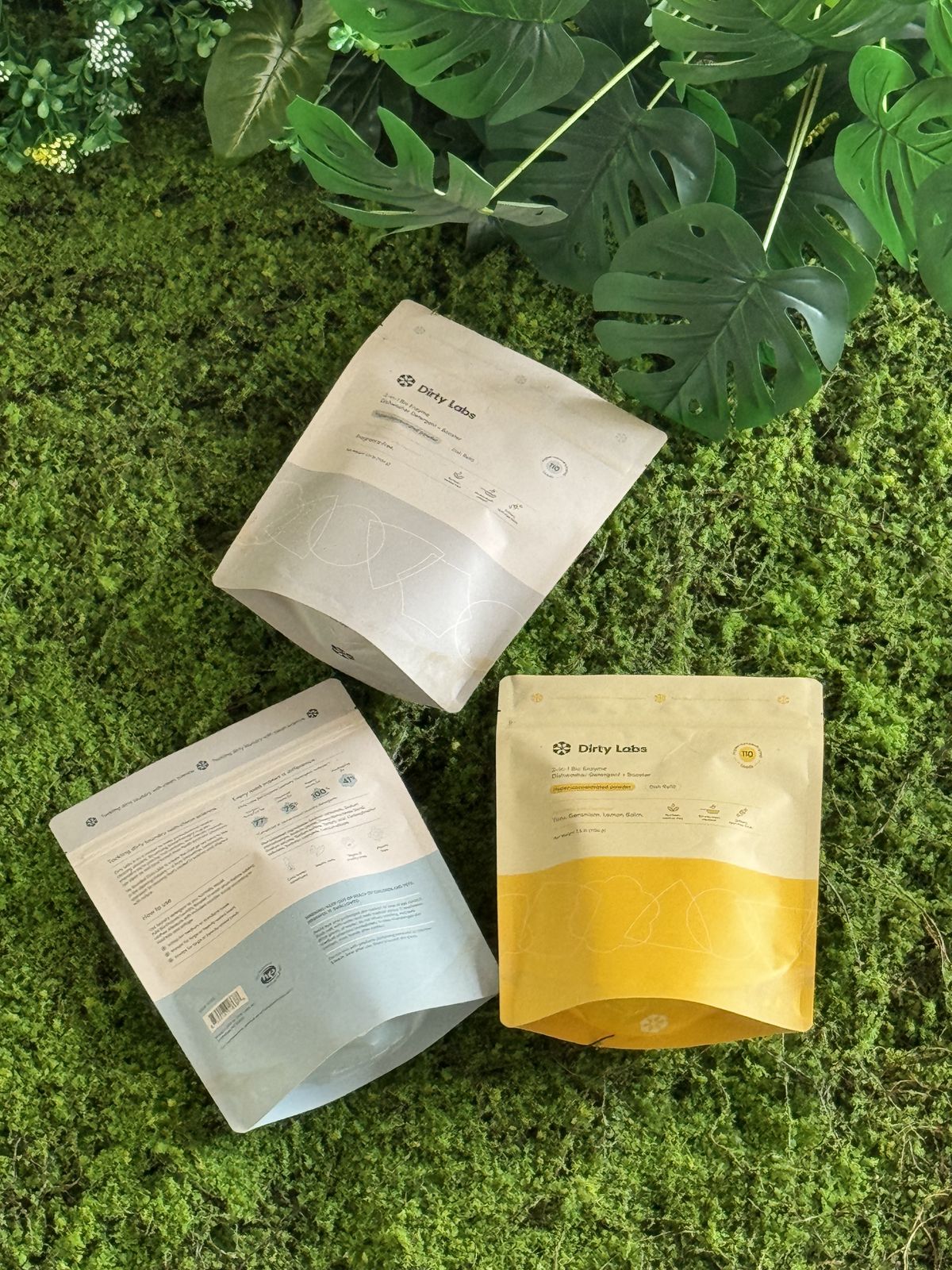
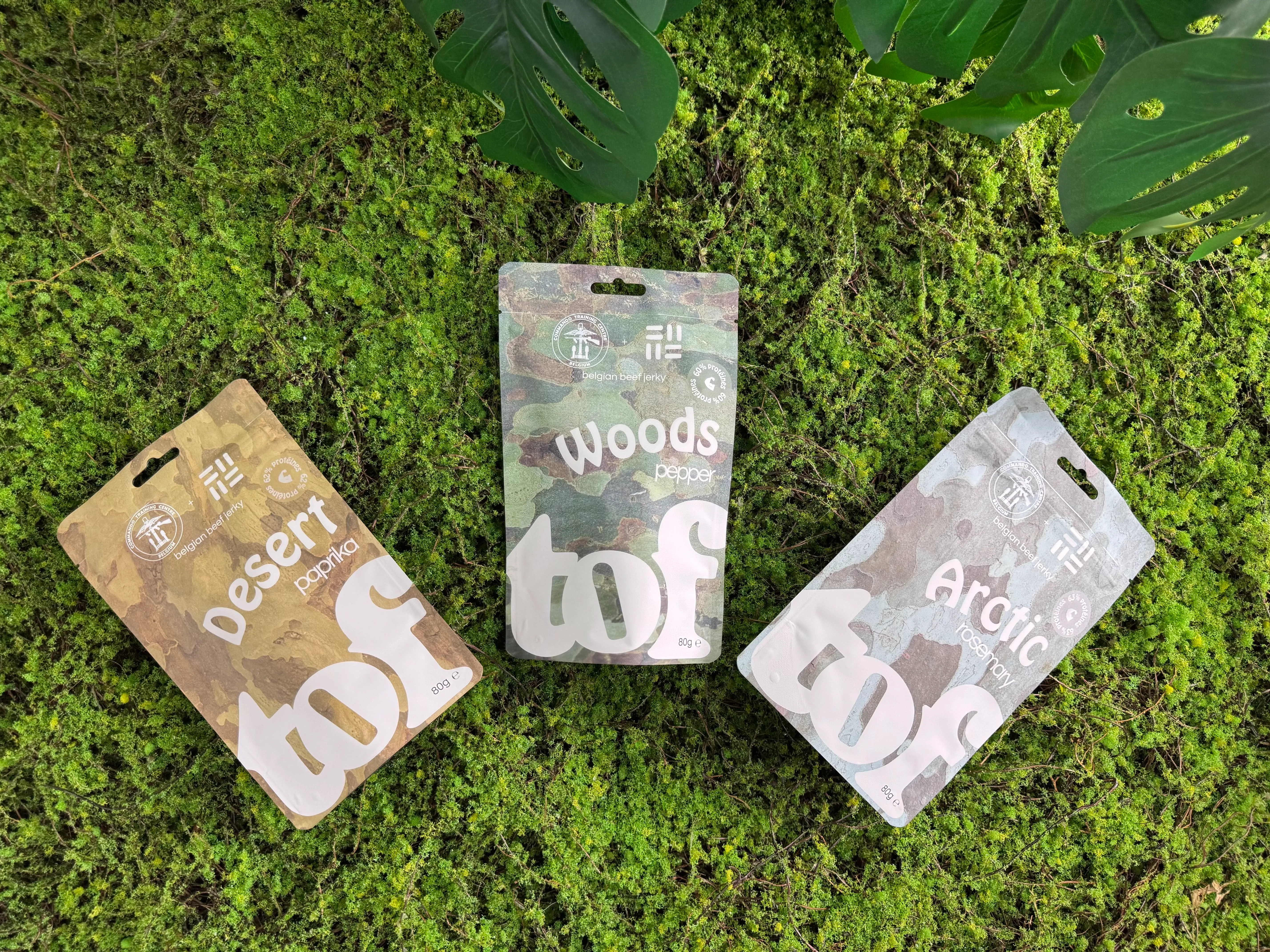
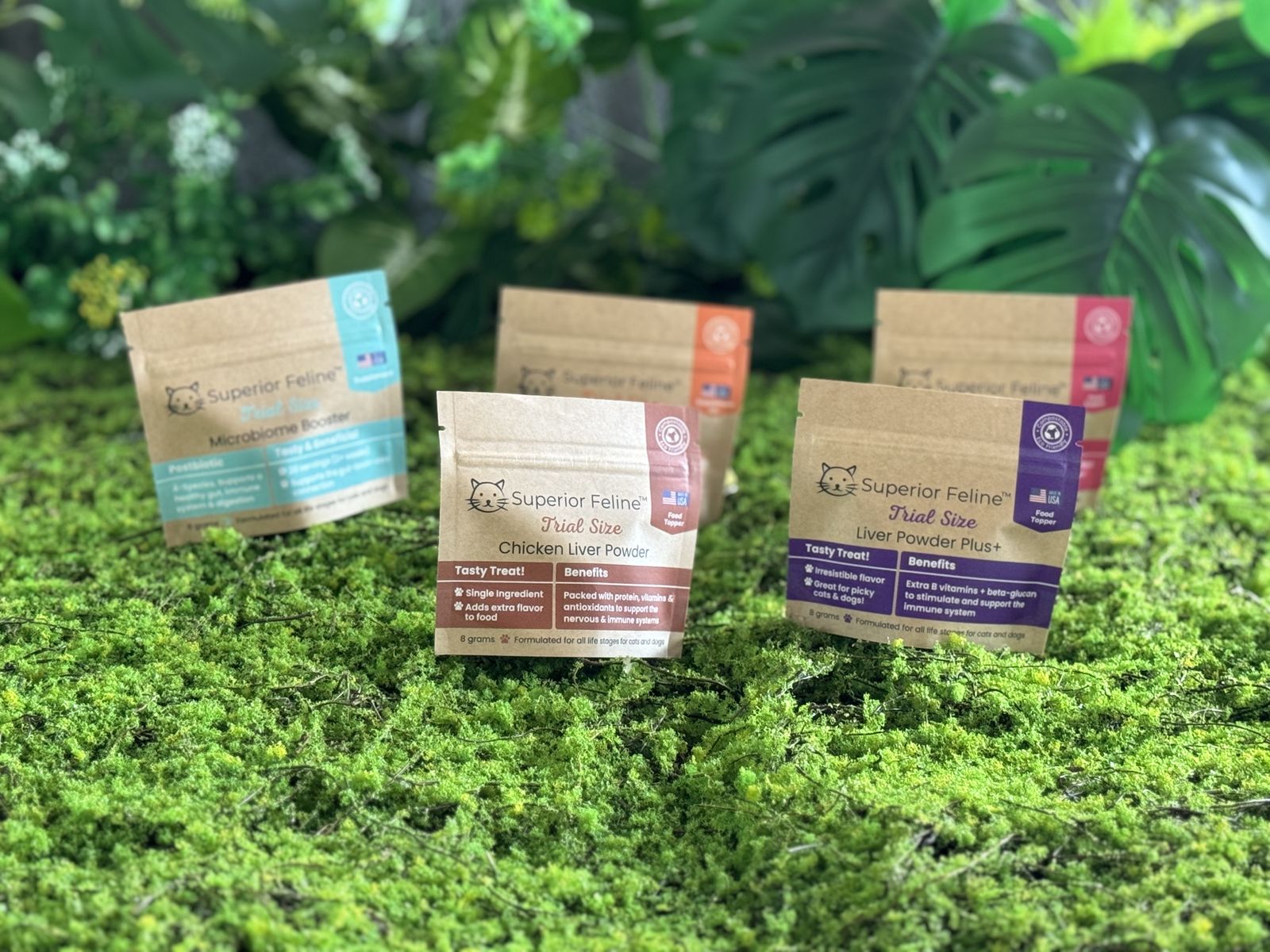
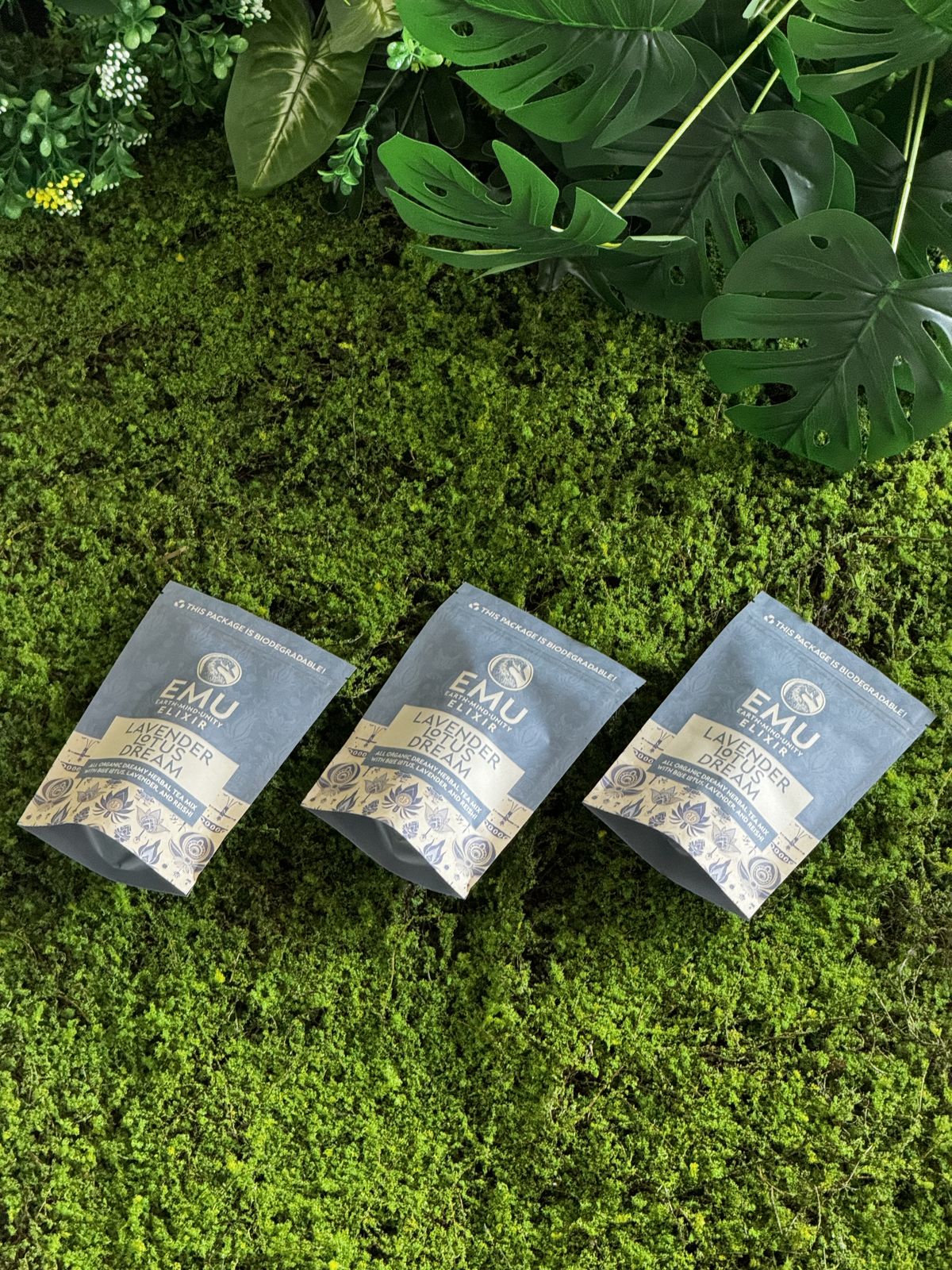
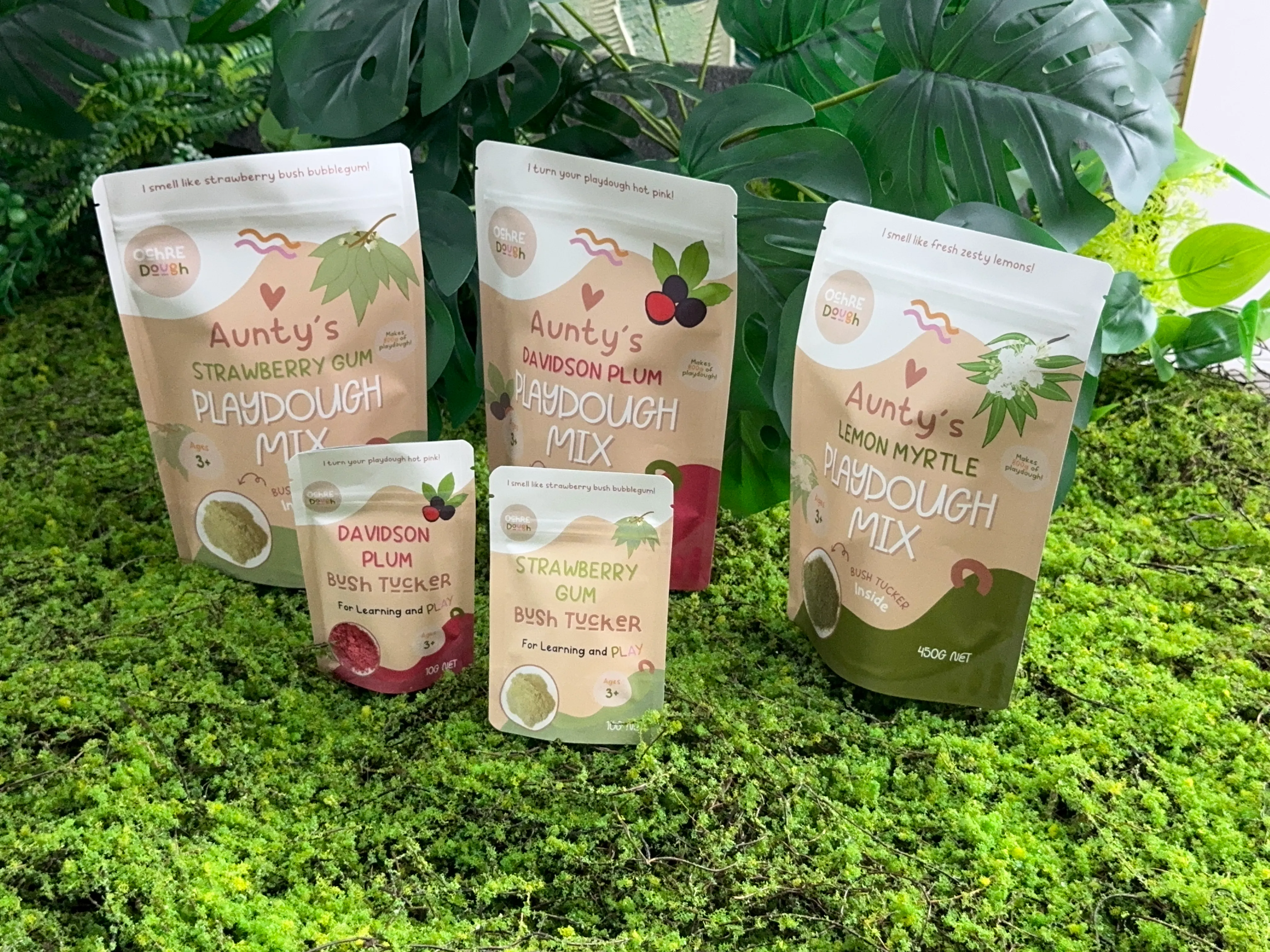
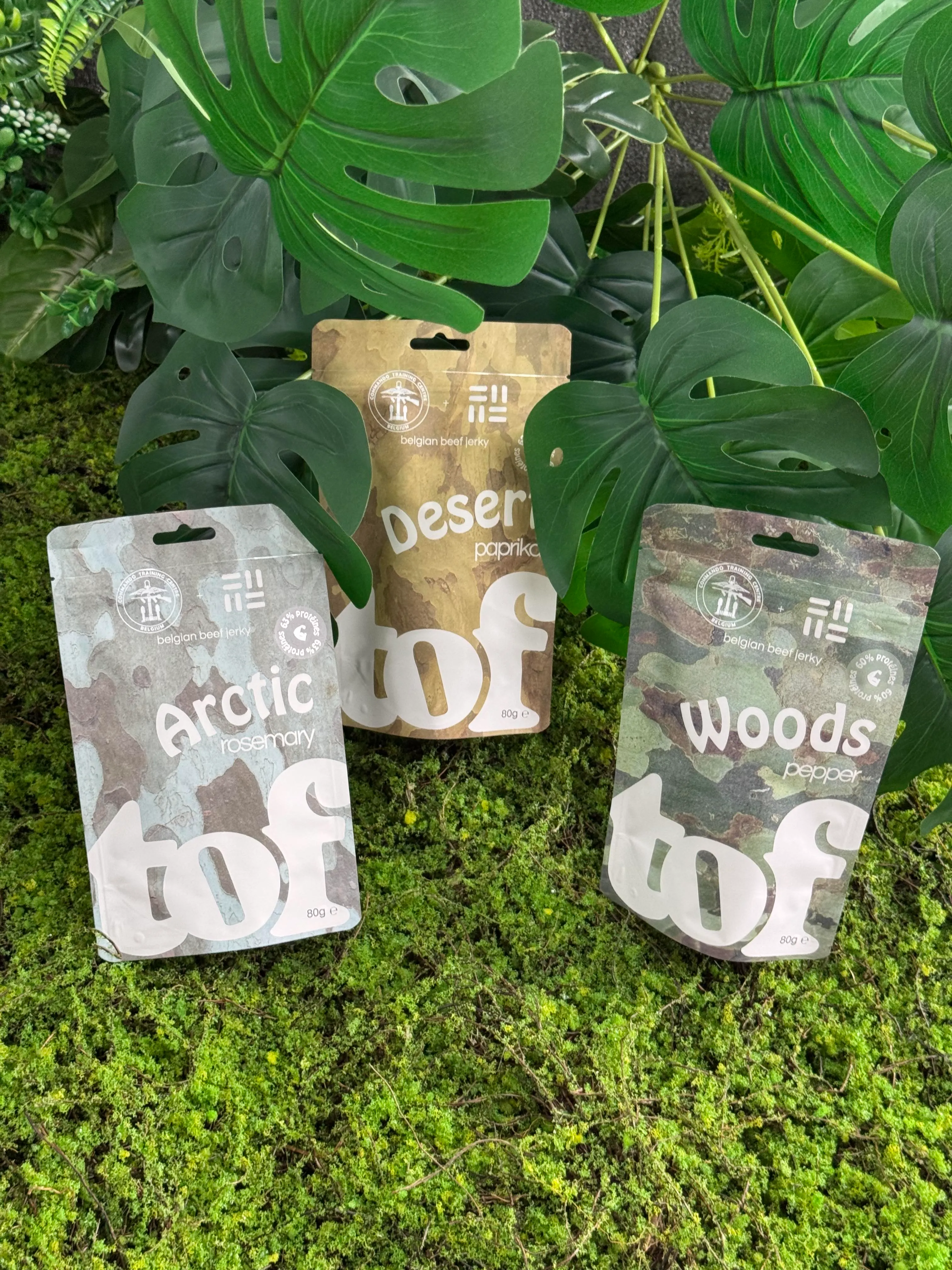
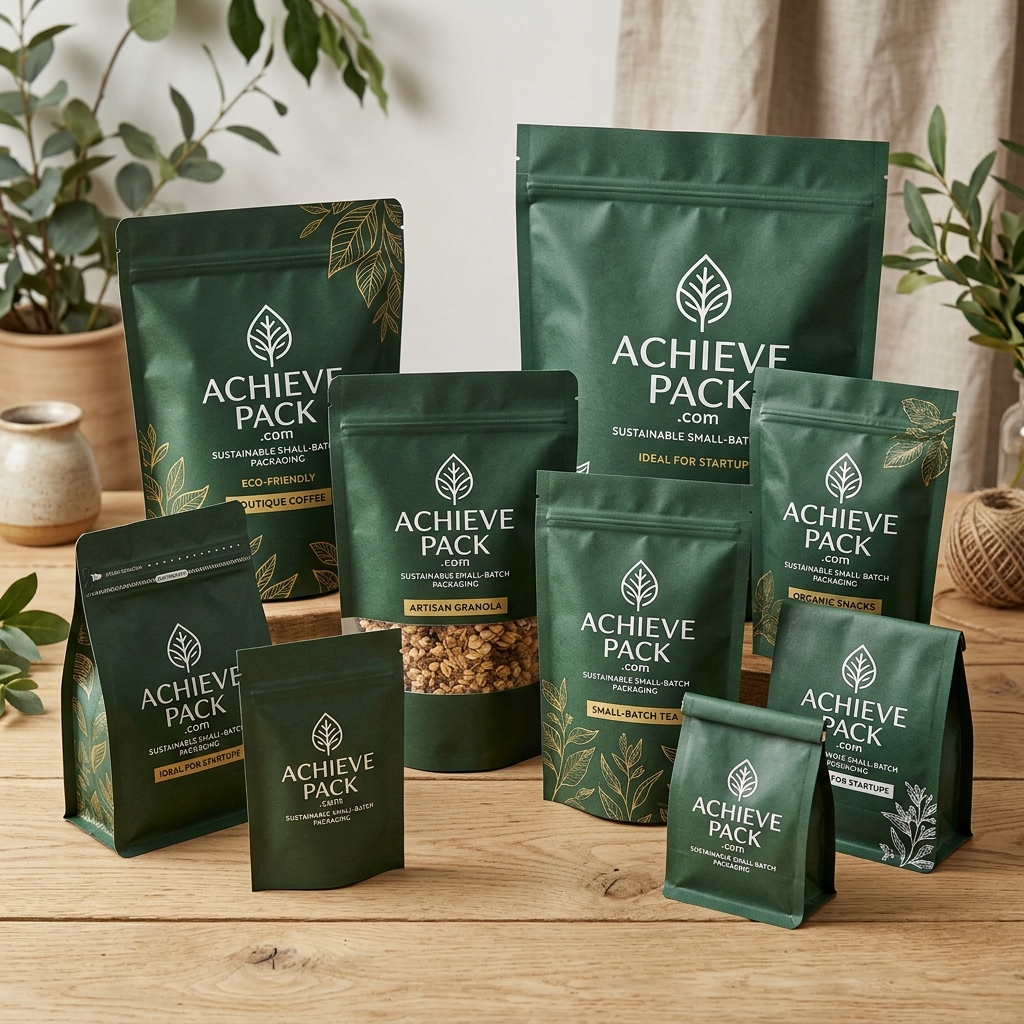
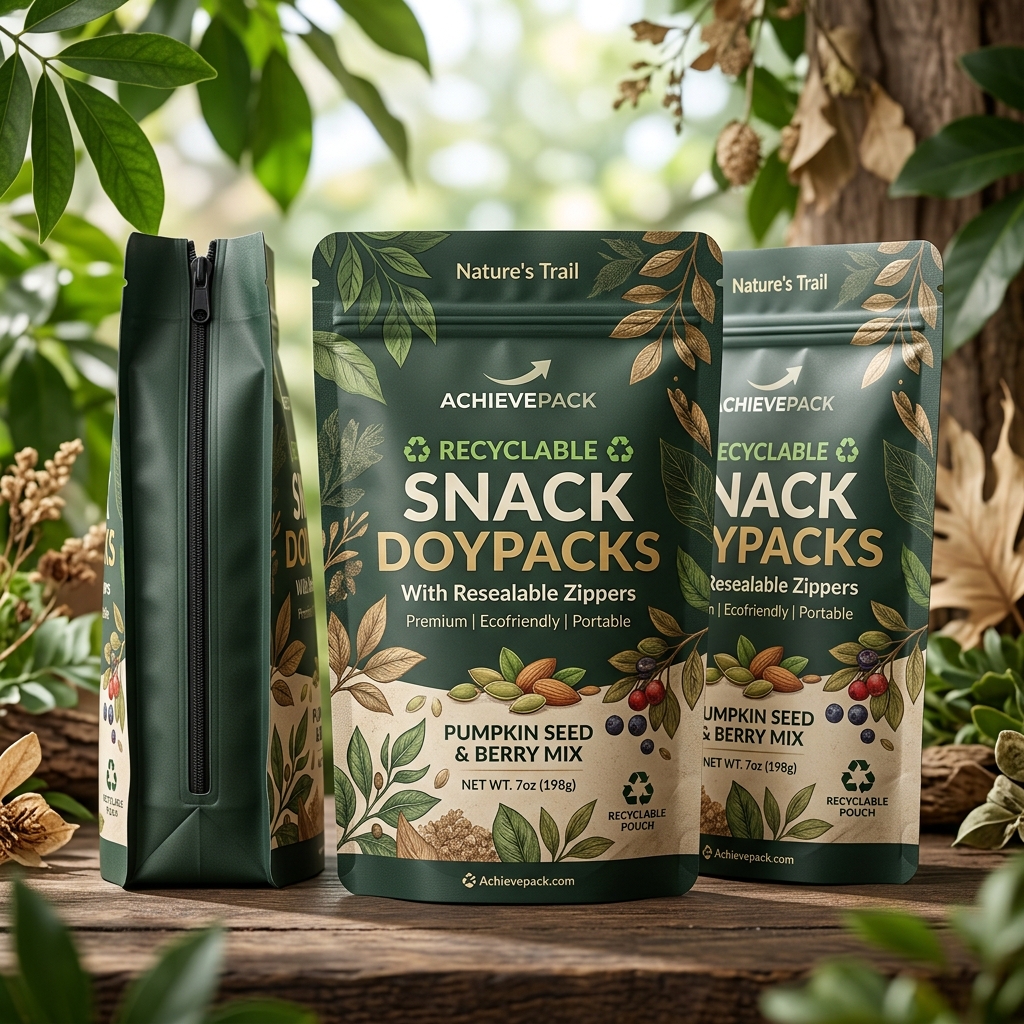
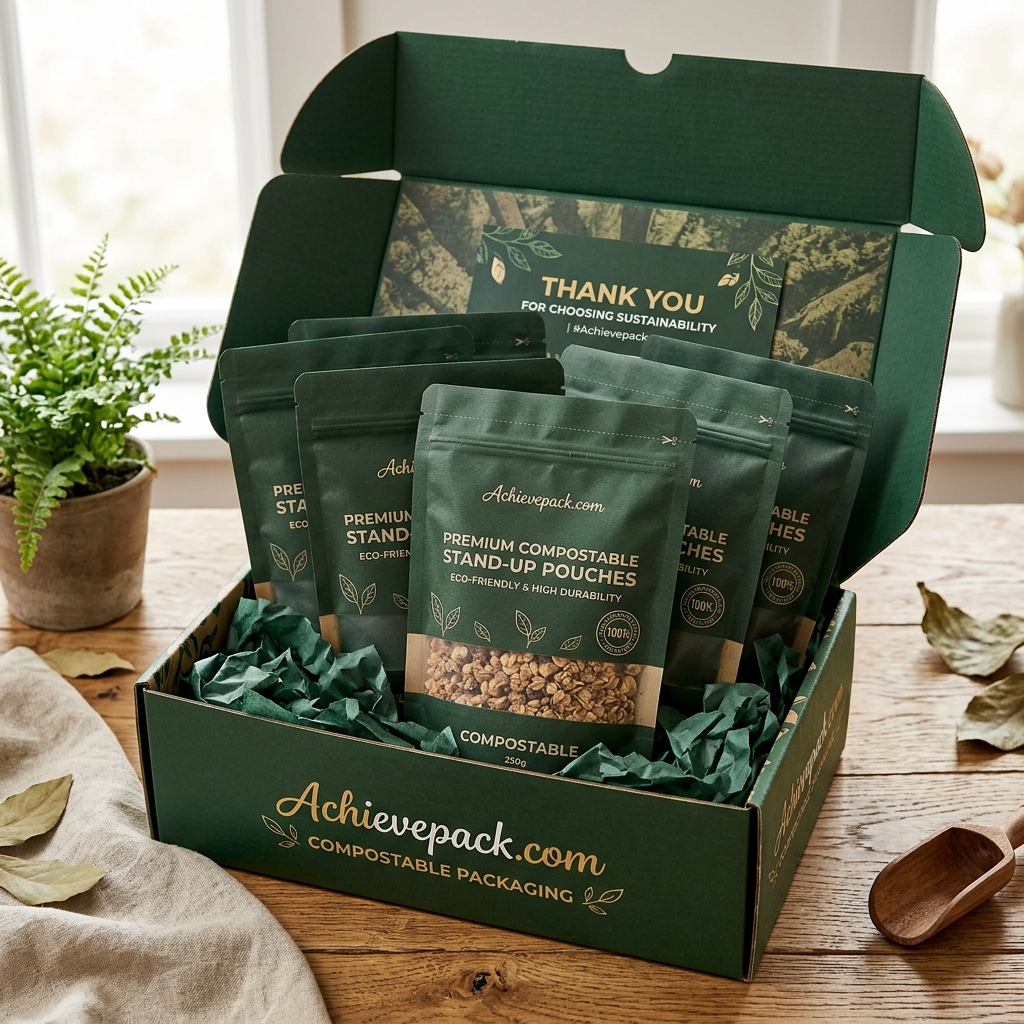
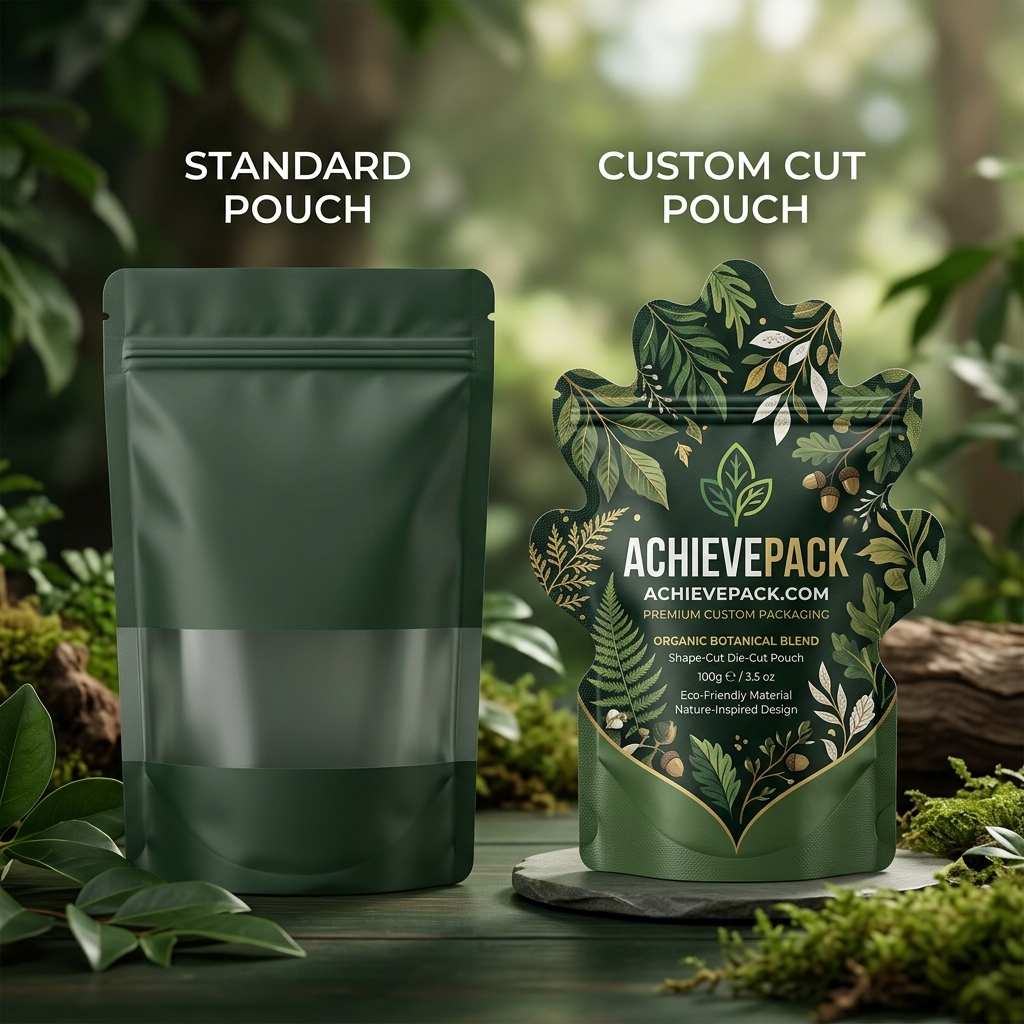
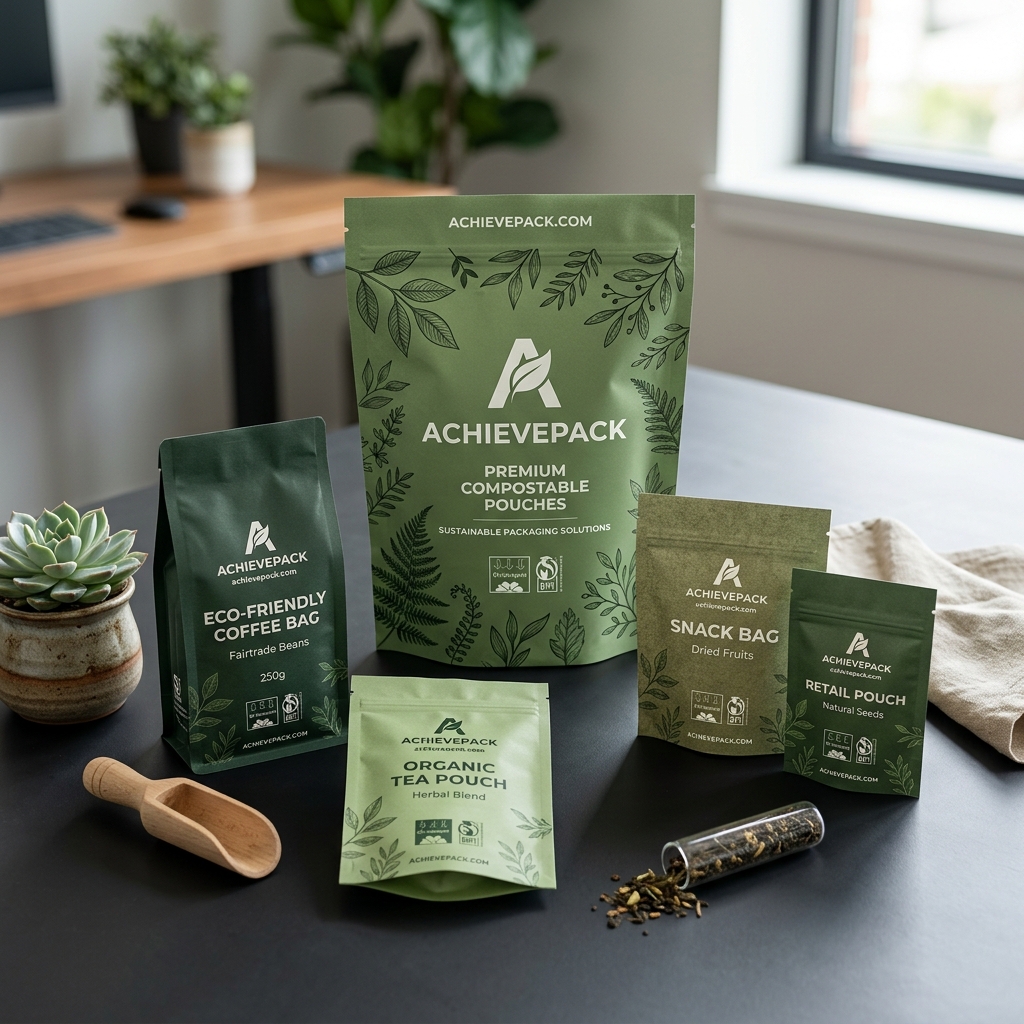
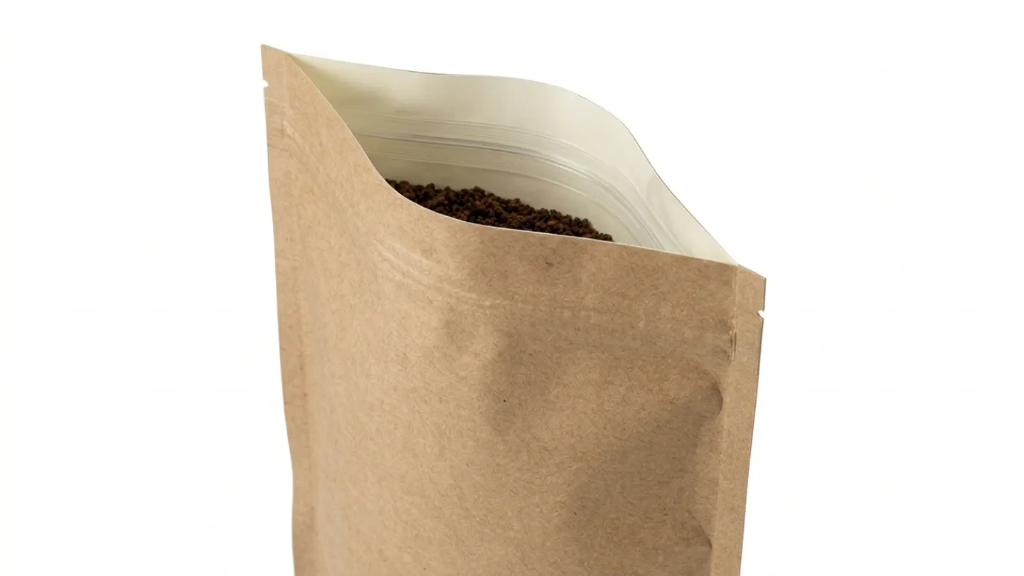
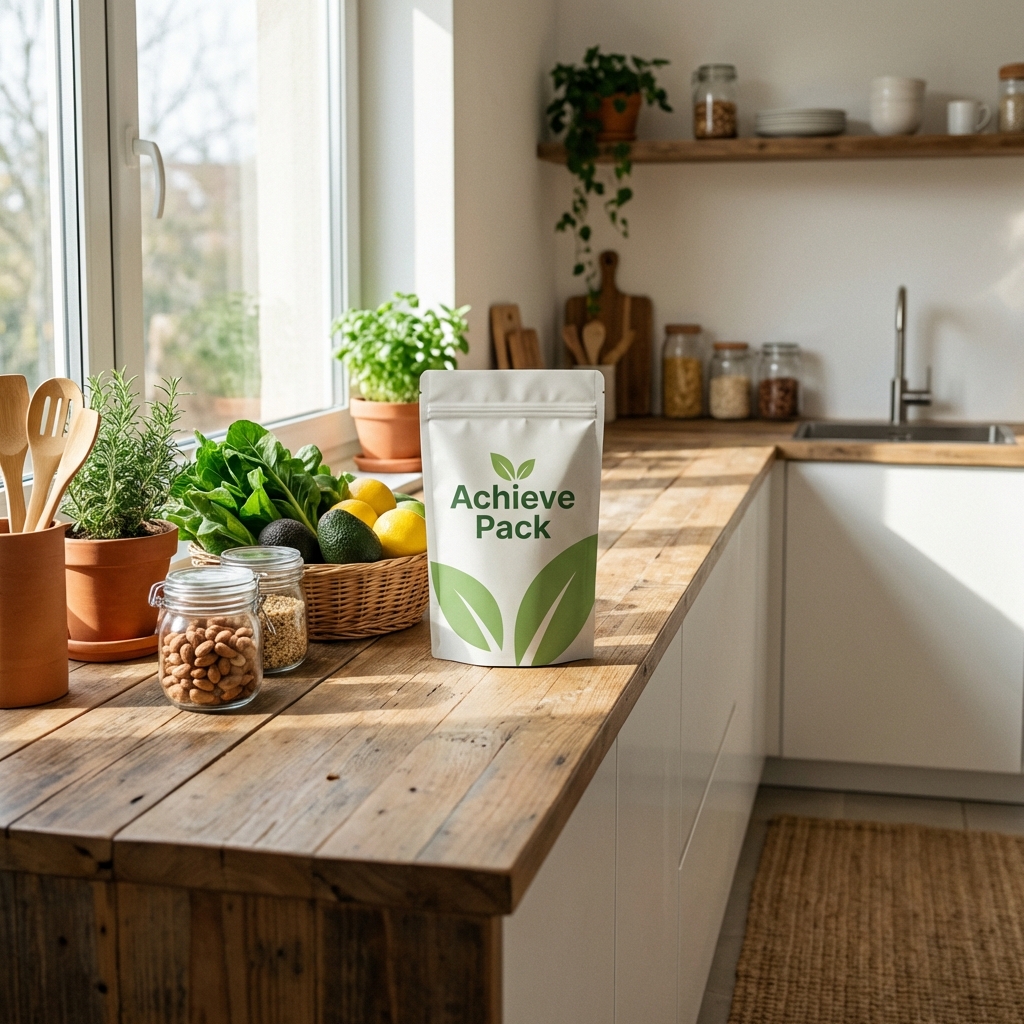
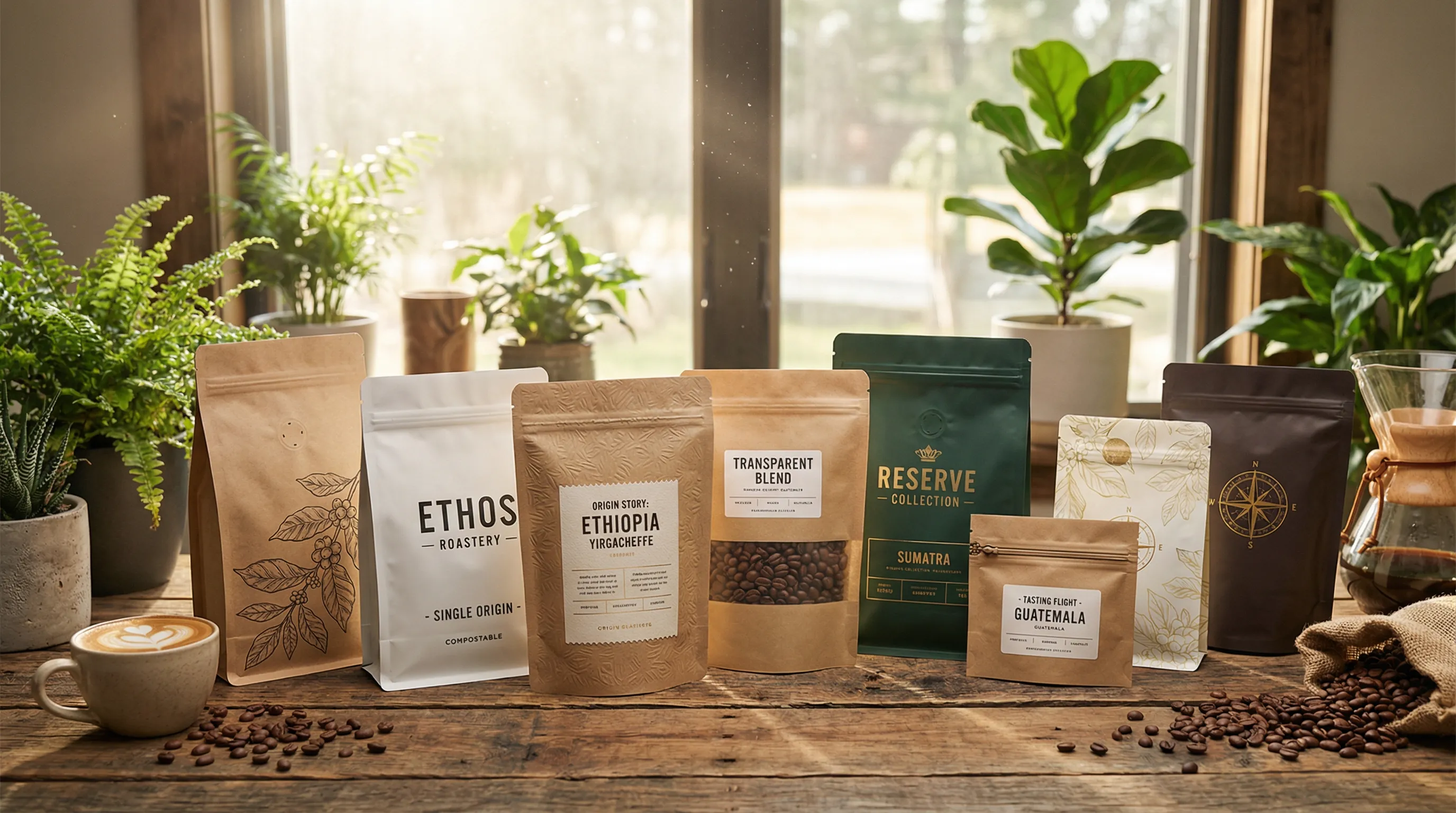
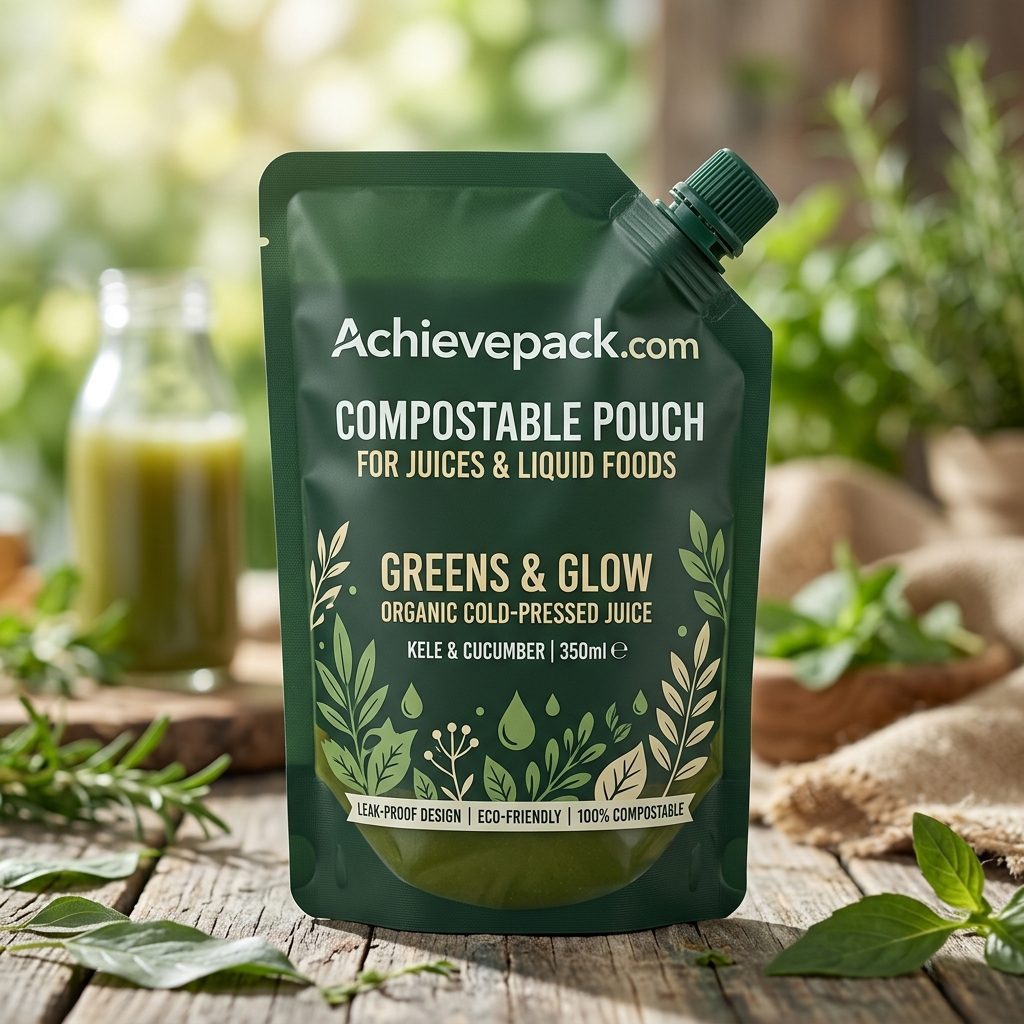
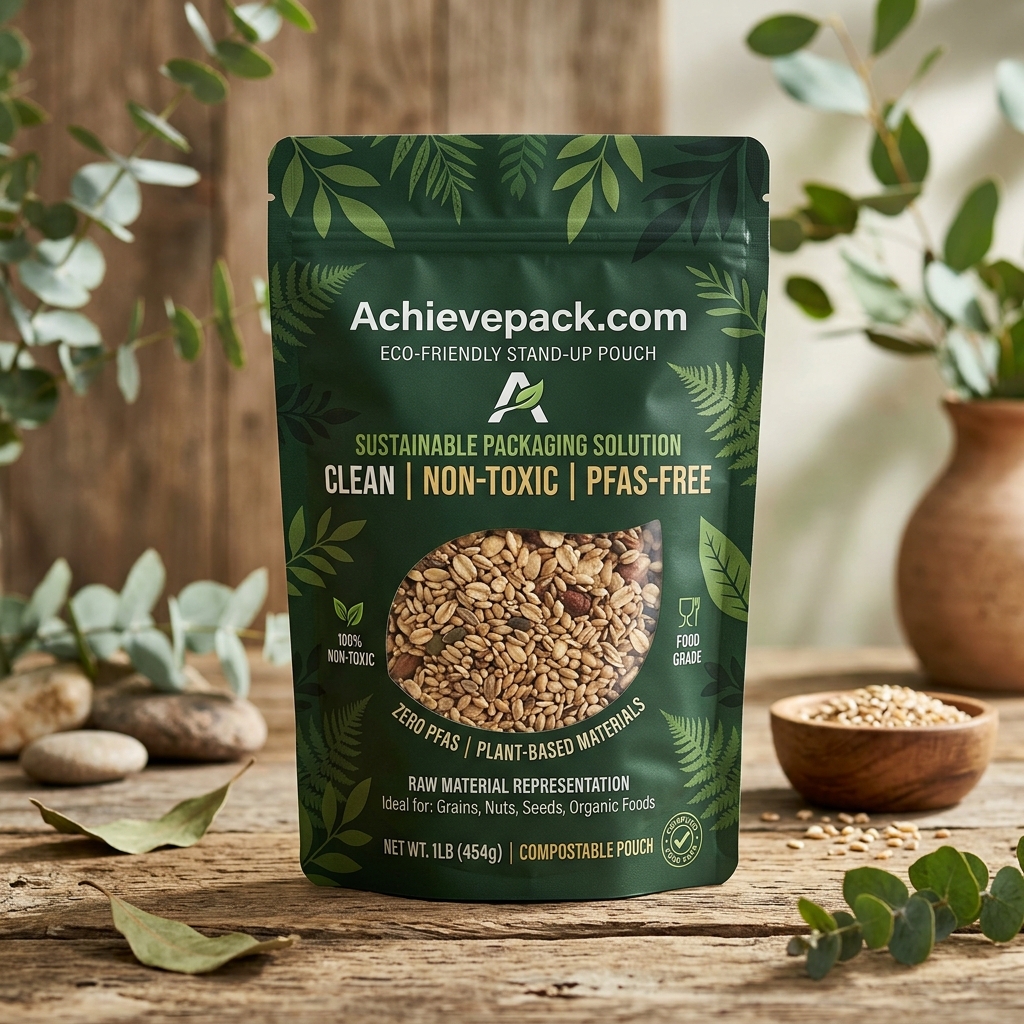
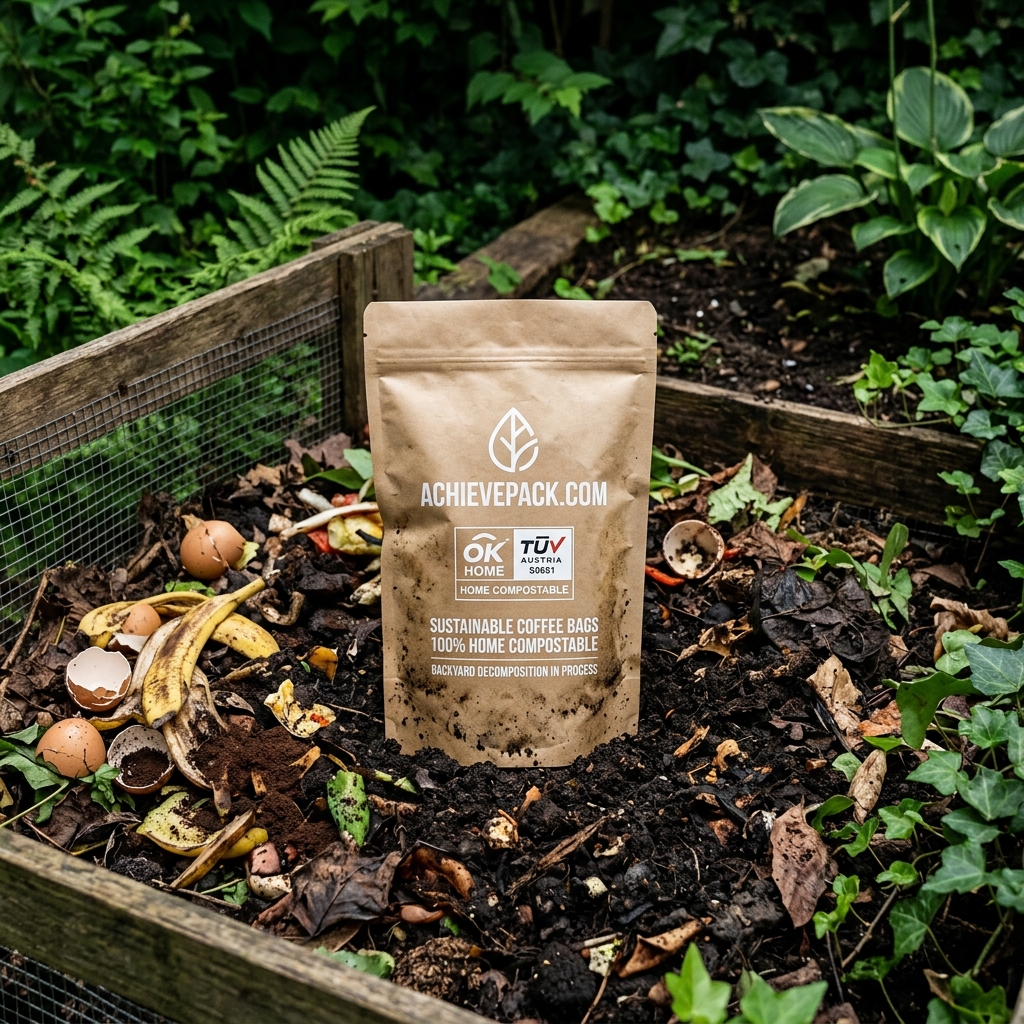
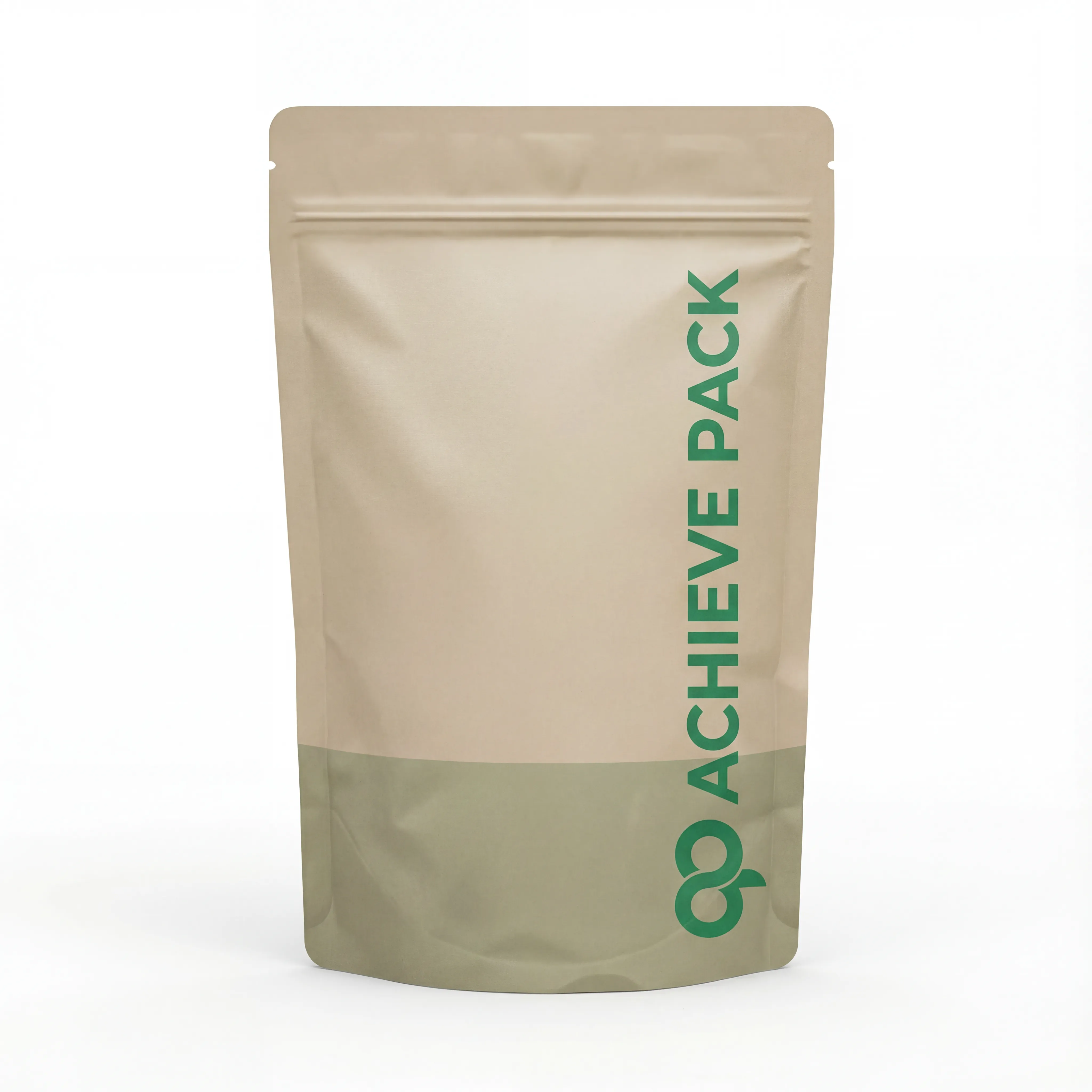
 Stand Up
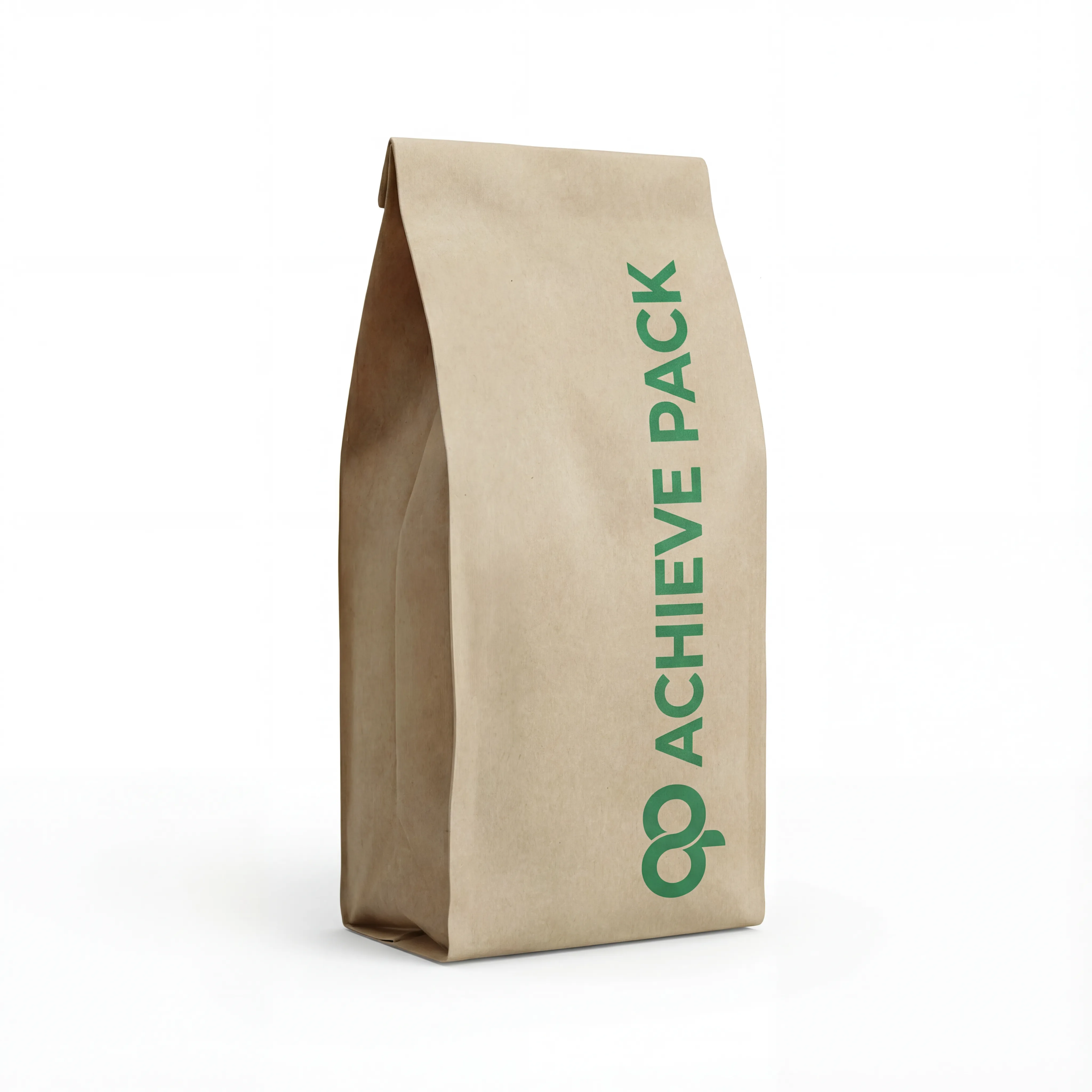 Side Gusset
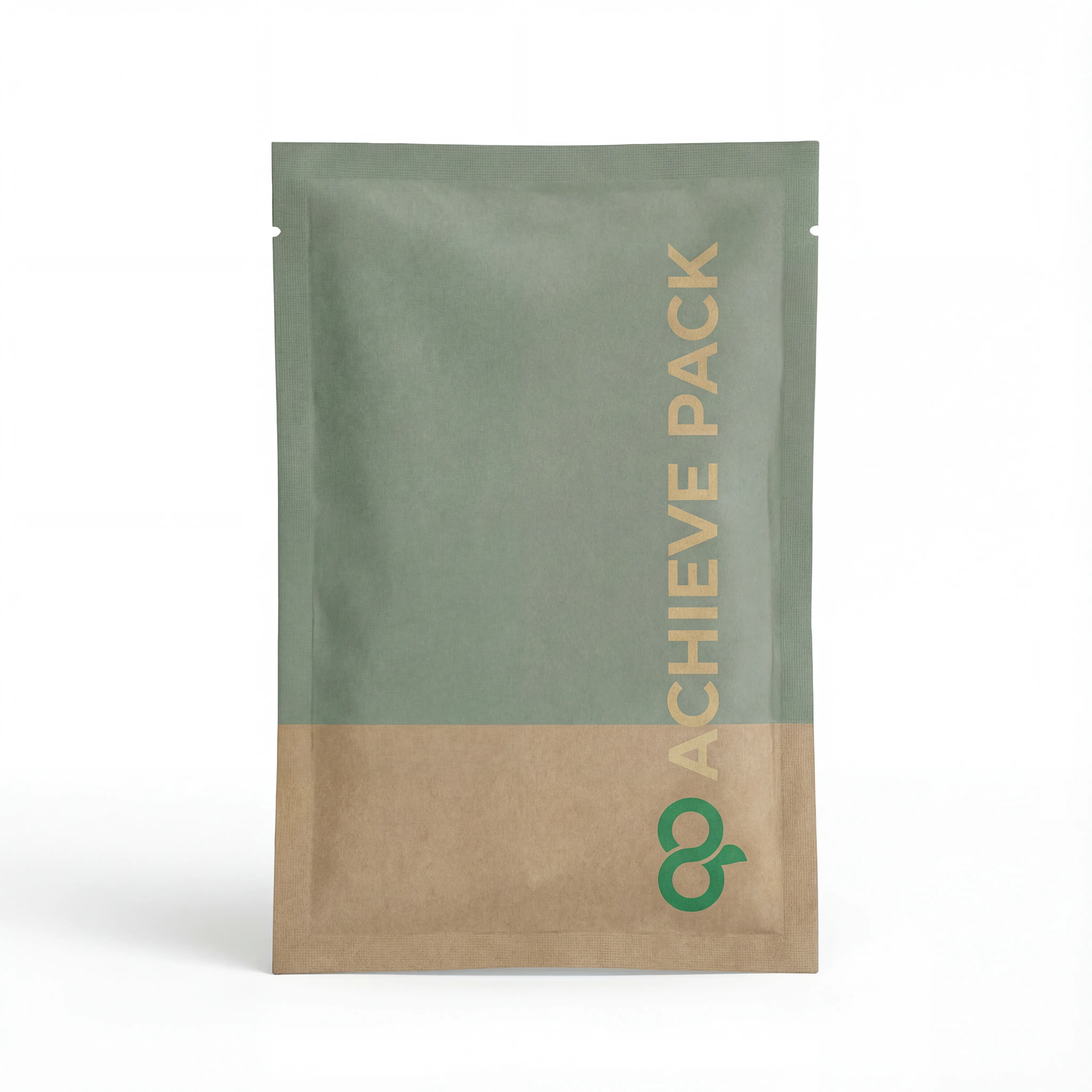 3 Side Seal
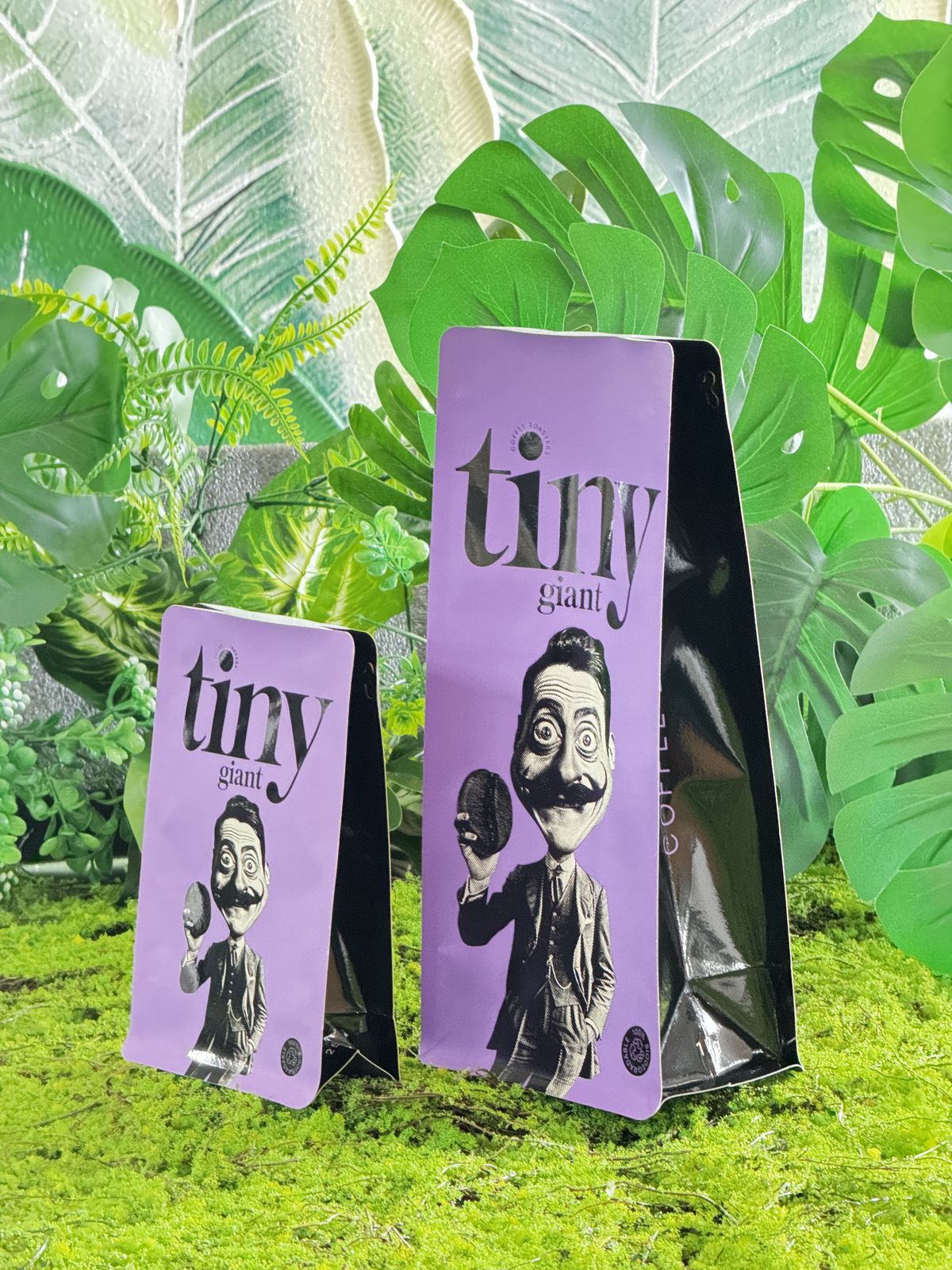
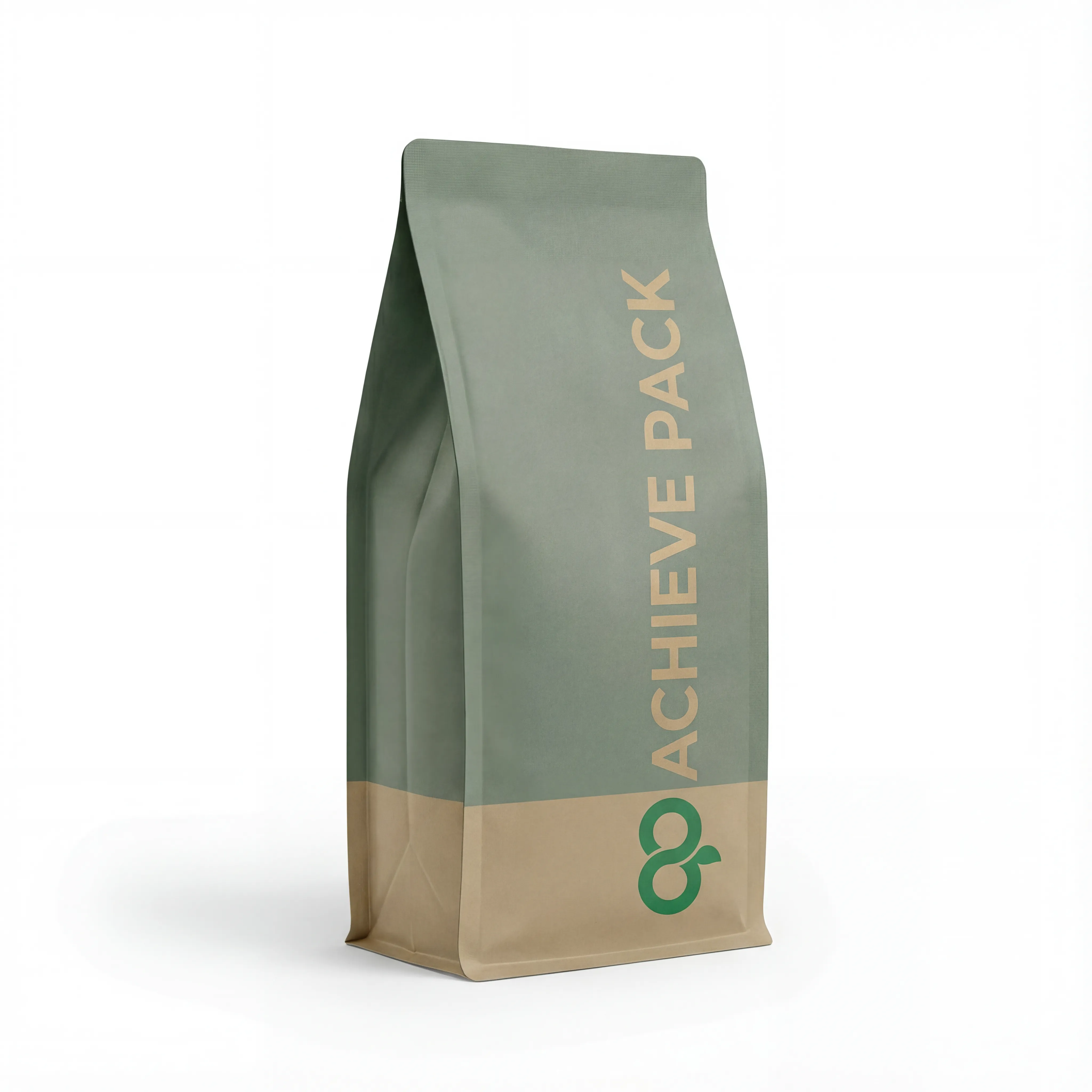 Flat Bottom
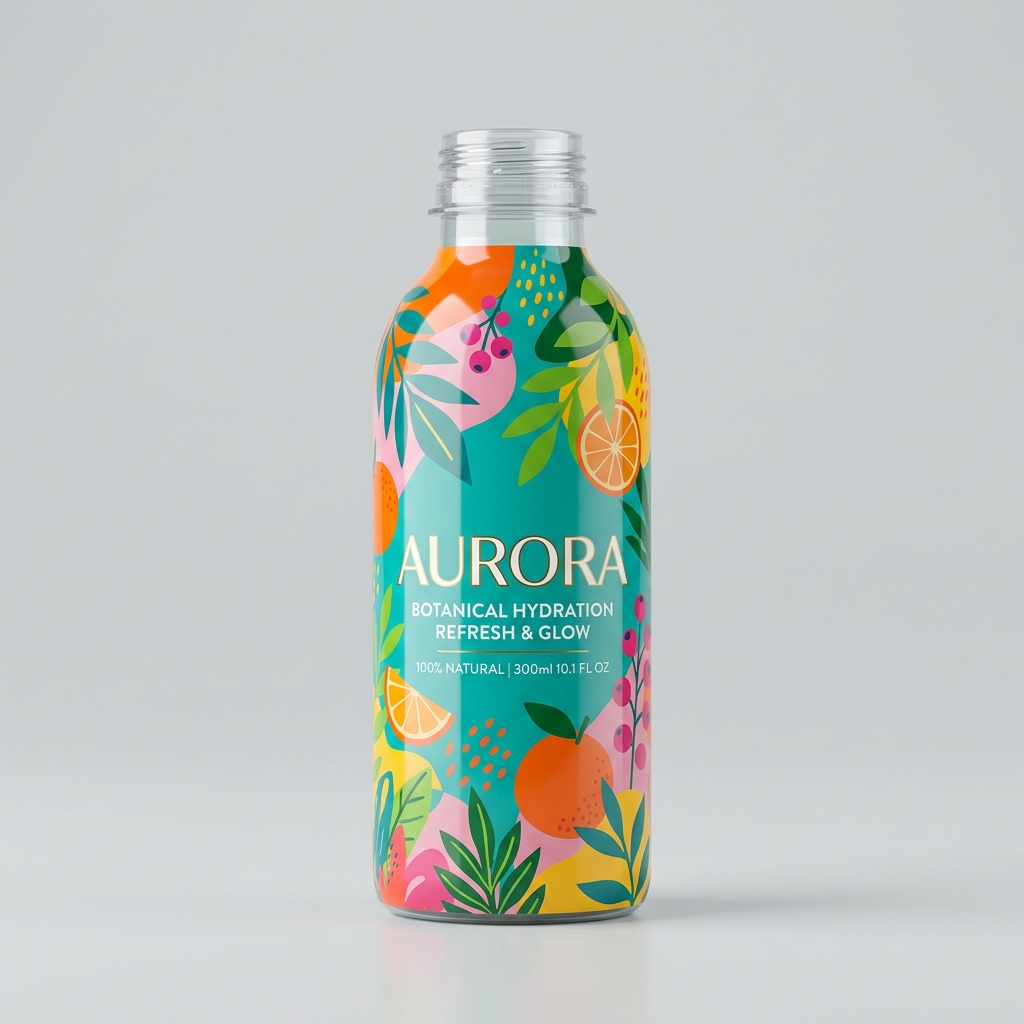 Shrink Sleeve
Scaling To 10,000 Pouches: A Real Order, Air + Sea Split | Achieve Pack Specifications
Solving Core Packaging Challenges for Scaling To 10,000 Pouches: A Real Order, Air + Sea Split | Achieve Pack
Concise B2B technical benchmarks designed to eliminate transit failures, regulatory penalties, and shelf-life loss.
Moisture Ingress & Aroma Fade in Loose Leaf
Risk: Leaf tea picks up humidity and goes flat long before the best-before date.
Aluminum-Free High-Barrier Film with Verified OTR & WVTR
Barrier is matched to the product, not guessed — we quote the numbers.
Compostable or Recyclable? Choosing Under PPWR
Risk: Picking the wrong end-of-life route locks you into a structure you cannot claim.
TÜV OK Compost HOME (EN 13432 / AS 5810) or Mono-PE Recyclable
Both routes stocked. We state the certification number on the quote.
Three Formats, Three Sets of Plate Fees
Risk: A 100 g pouch, a refill pouch and a 30 g discovery size triple your tooling cost.
Digital Printing from 500 Units per SKU
Run all formats in one order, no cylinders, no plate charge.
Experience 3D Packaging Design & Free Dielines
Preview your pouch in 3D WebGL Studio and export production-ready dielines.
Who Is This Client?
Company
Highleaf Tea Co. (name changed at client's request)
Industry
Specialty Loose-Leaf Tea
Location
Sydney, Australia
Order Size
10,000 pouches (repeat order)
An Australian specialty tea brand on its third production run with Achieve Pack. The first two runs used a conventional kraft + metallised film laminate. For this run they asked for one thing: keep the look, drop the metal. What follows is the actual sequence of decisions, quotes and freight bookings from that job — including the parts that cost them barrier performance.
Note on this page: the client's name and brand have been changed at their request. Every quantity, material, freight split, lead time and cost treatment below is taken from the real order correspondence.
What Challenge Did They Face?
Moving from 1,000 to 10,000 pouches is not the same job scaled up. Here is what actually changed for them:
- ✗Freight stopped being a rounding error. At 1,000 pouches air freight was affordable. At 10,000 it was not, and the whole order could not wait six weeks.
- ✗They wanted the metalised layer gone for end-of-life reasons, but the metallised film was doing the barrier work.
- ✗The quote dimensions were ambiguous. The quote said "unfolded" but the numbers matched the folded bag — they flagged it before paying.
- ✗Coating questions had no obvious answer. Their words: "IS THE MATTE COATING COMPOSTABLE TOO?" — a fair question most suppliers wave away.
- ✗They needed stock before the sea freight landed to avoid a gap on shelf.
How Did Achieve Pack Help?
Five concrete decisions, in the order they happened:
Material Switch, With The Trade-Off Stated
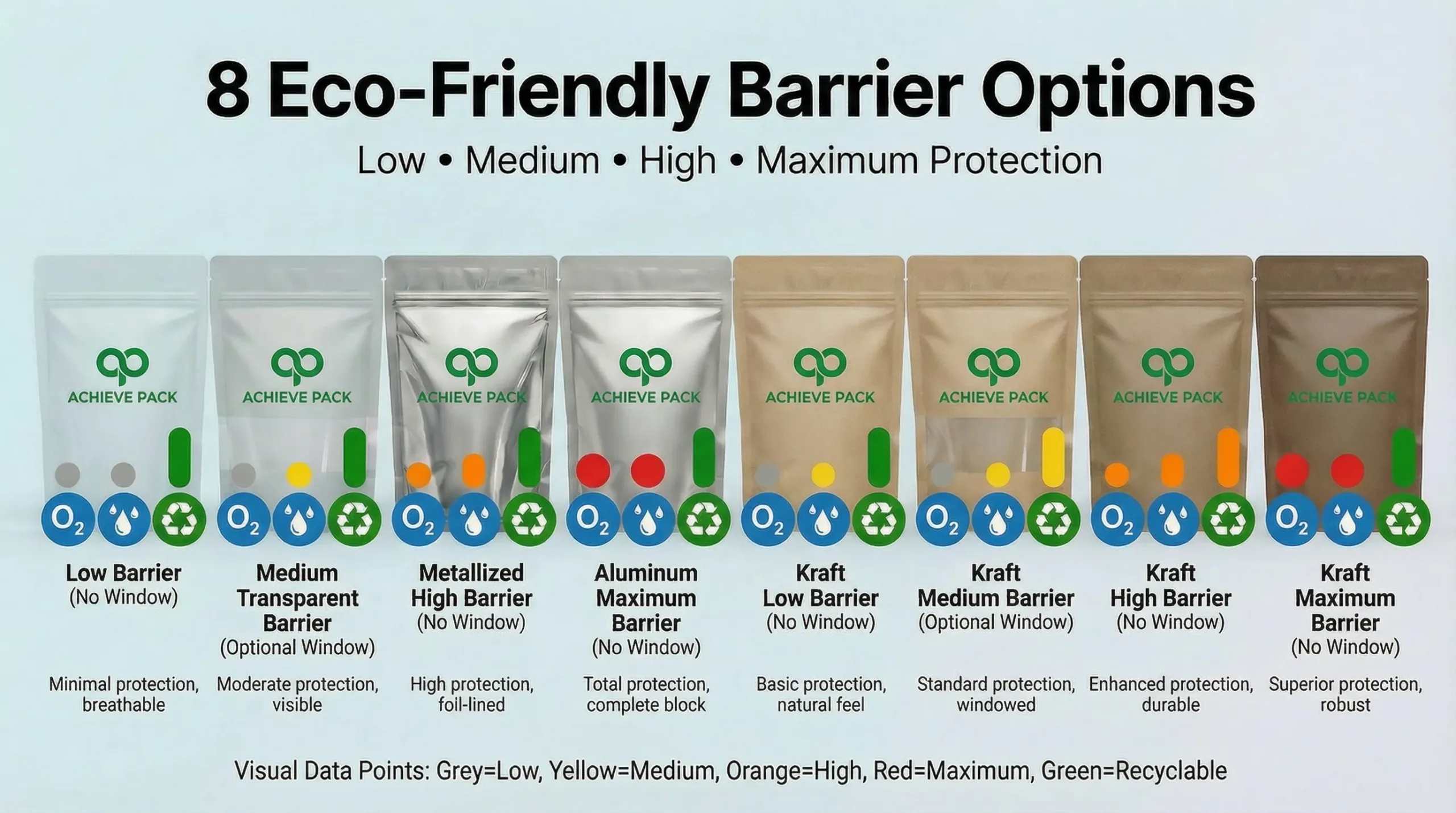
Moved from kraft + metallised triplex to Cello + Kraft Triplex — a transparent barrier coated onto cellulose instead of a metal layer. We told them upfront the oxygen and moisture barrier would be roughly half of the old structure, because the metallised layer was being removed.
Split Shipment: 800 By Air, Rest By Sea
One carton of 800 pouches flew to their door so they had sellable stock immediately. The remaining ~9,200 sailed from Shenzhen. They chose this exact split themselves: "SEA DROP + 1 CARTON AIRDROP".
Overrun Charged Honestly
The run came in over quantity. Industry standard is ±10% variation — we invoiced inside that band and gave the extra 200 pieces above the 10% tolerance free of charge, then reissued the invoice so they could see the change.
Dimension Query Answered Before Payment
They caught that a quote labelled "unfolded" was listing folded dimensions. We confirmed the actual flat and finished dimensions before the invoice went out, not after the bags were made.
Matte Coating Question Answered Directly
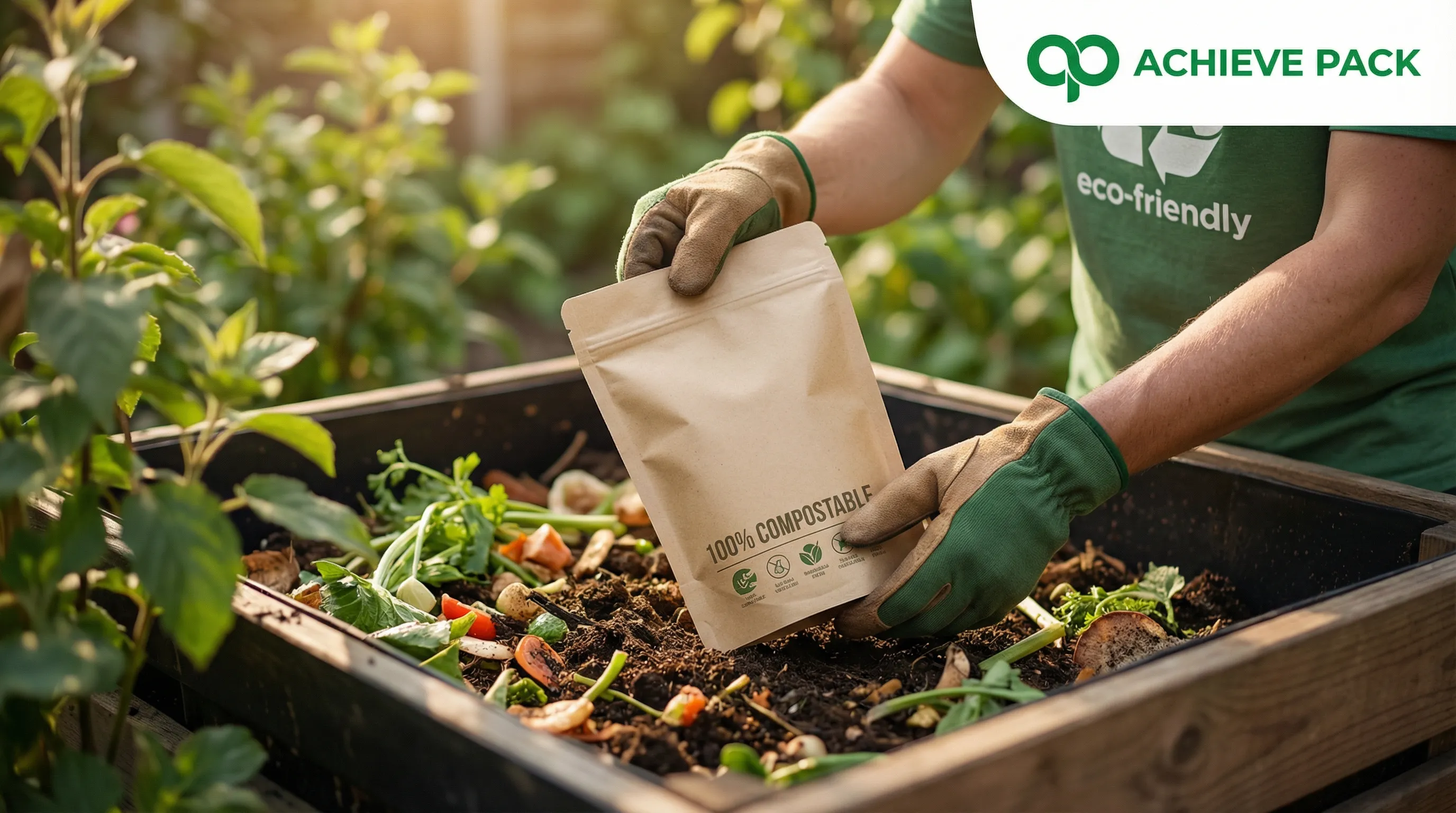
"Is the matte coating compostable too?" — the honest answer is that it depends on the coating chemistry and the certification you need, and a matte lacquer can affect the compostability claim of the whole structure even when the film underneath is certified. If you need the finished pouch to carry an EN 13432 or BPI claim, the coating has to be part of that certification, not an afterthought. Read the detail on compostable materials before you specify a finish.
What Results Did They Achieve?
They got sellable pouches in hand within days instead of six weeks, paid only inside the agreed ±10% tolerance, and moved off a metallised structure without a single surprise line item on the invoice. The order was a repeat — they came back for the next 10,000.
"Hello Ryan, that's great news and bags look good. Could you please send me the invoice link? I will pay balance."
What Packaging Specs Were Used?
What This Case Study Does NOT Mean for You
Before you copy this spec, know the limits:
- • Dropping the metal layer costs you barrier. This client accepted roughly half the oxygen and moisture barrier of their old metallised film. If your product needs a 12-month shelf life, a transparent cellulose barrier may not get you there — ask before you switch, not after.
- • A matte coating is not automatically compostable. Certification applies to the finished structure. If you need EN 13432 or BPI on the pouch, the coating has to be inside that certification.
- • ±10% overrun is standard across the industry, not just with us. Budget for it. What is not standard is eating the excess above tolerance — check whether your current supplier does.
- • Sea freight at ~6 weeks means ordering 8-10 weeks ahead once you add production time. If your reorder point is two weeks out, this model will stock you out.
- • This was a repeat client with approved artwork. A first order with new dies, new artwork and a material change will take longer.
Planning a 10,000-piece run? Tell us your volume, destination and shelf-life target and we will quote both freight options side by side. /support/contact.
What Can You Learn From This?
If you are scaling past 5,000 pieces, three things decide whether the run goes smoothly:
- Split the shipment. Air a carton for continuity, sea the rest for cost. This client got 800 pouches in days and paid sea rates on 92% of the order.
- Ask what the barrier number becomes, not whether the material is "eco". They were told "about half" before they committed.
- Read the dimension line on the quote. "Unfolded" and "folded" are different numbers. Confirm which one you are being quoted on.
- Confirm the quantity tolerance in writing. ±10% is normal. What happens above it is negotiable — and worth negotiating.
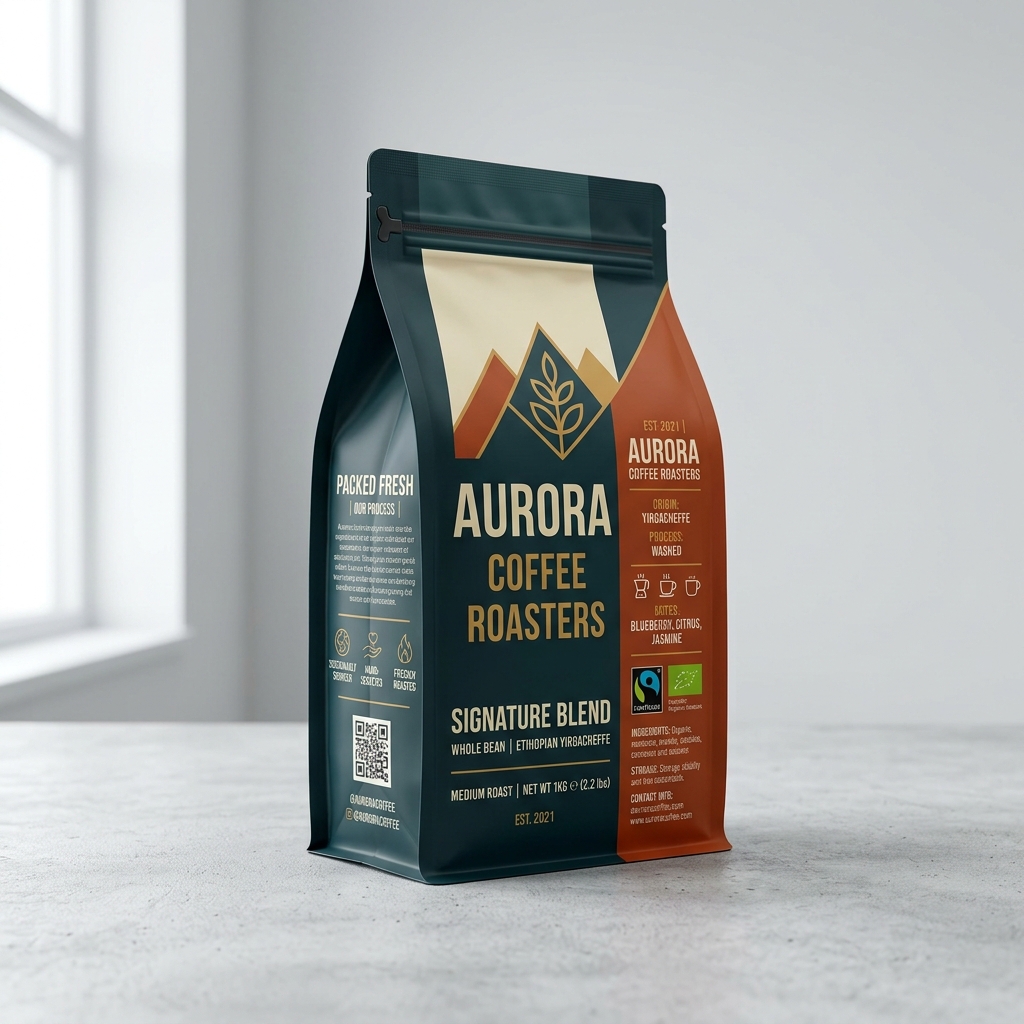
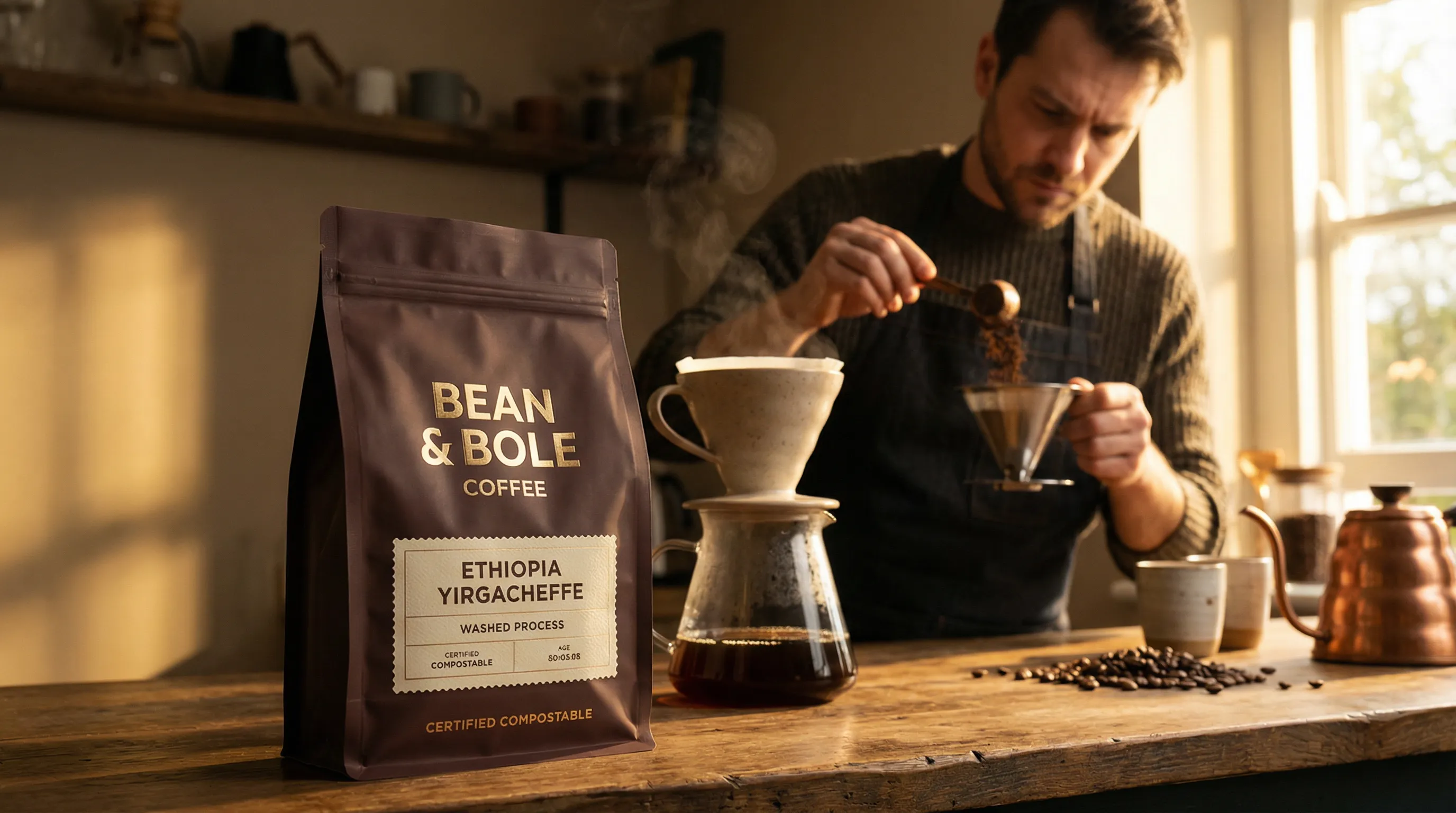
Coffee Packaging Engineering & Valve Testing
Roasting coffee releases carbon dioxide and is extremely sensitive to oxygen. We validate our degassing valve release pressure, OTR/WVTR barrier, and heat seal strength to ensure coffee aroma protection and long-term shelf life.
MOCON OTR Barrier Test
Tested under ASTM D3985 to preserve coffee aromatics and lock out oxygen.
GC-MS Solvent Residue
Gas Chromatography-Mass Spectrometry guarantees zero odor transfer into coffee beans.
Heat Seal Strength (ASTM F88)
Optimized seal strength to support heavy 1kg coffee bags without seam ruptures.
Valve Seating Pressure
Tested pressure release to expel internal CO₂ while maintaining a hermetic oxygen seal.
Puncture Test (ASTM F1306)
Prevents whole roasted coffee beans from piercing the inner laminate layers.
VFFS Line Speed Match
Sliding friction coefficient optimized for high-speed automatic bagging lines.
Packaging Transformation for Scaling To 10,000 Pouches: A Real Order, Air + Sea Split | Achieve Pack
See how upgrading from generic commoditized bags to precision-engineered flexible barrier packaging eliminates transport failures and boosts shelf authority.
Standard / Generic Packaging (Before)
Standard stock bags fail under transit stress and expose sensitive goods to moisture, UV light, and oxygen.
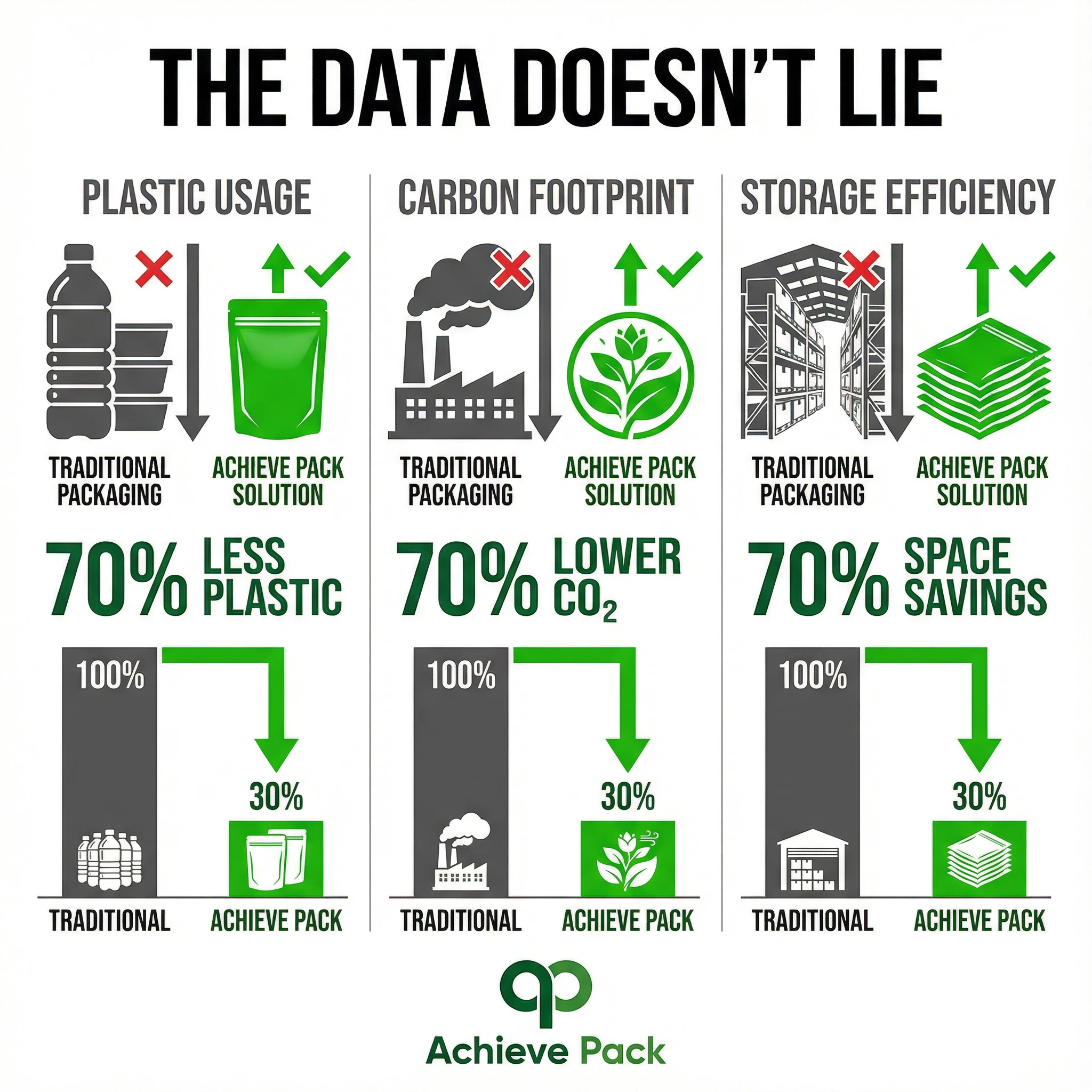
- Rapid Oxidation & Flavor DegradationCheap films allow O2 & moisture ingress, spoiling contents in < 30 days.
- High Seal Breakage in TransitThin seams fail under drop tests, leading to customer refunds & lost trust.
- Heavy Plastic Tax PenaltiesMulti-layer unrecyclable packaging incurs up to €800/ton in EU PPWR fines.
- High MOQs & Plate Cost FrictionTraditional printers force 10,000+ unit minimums and $1,500 cylinder fees.
Achieve Pack / Pouch Eco Solution (After)
Custom engineered multi-layer pouch structure tailored to your exact moisture barrier, seal strength, and aesthetic requirements.
- Ultra High-Barrier Foil/EVOH CoreGuaranteed OTR < 0.1 cc/m²/day, keeping contents fresh for 18–24 months.
- Reinforced 45N/15mm Localized Heat Seal180°C precision seam dwell time prevents bursting even under 2-meter drops.
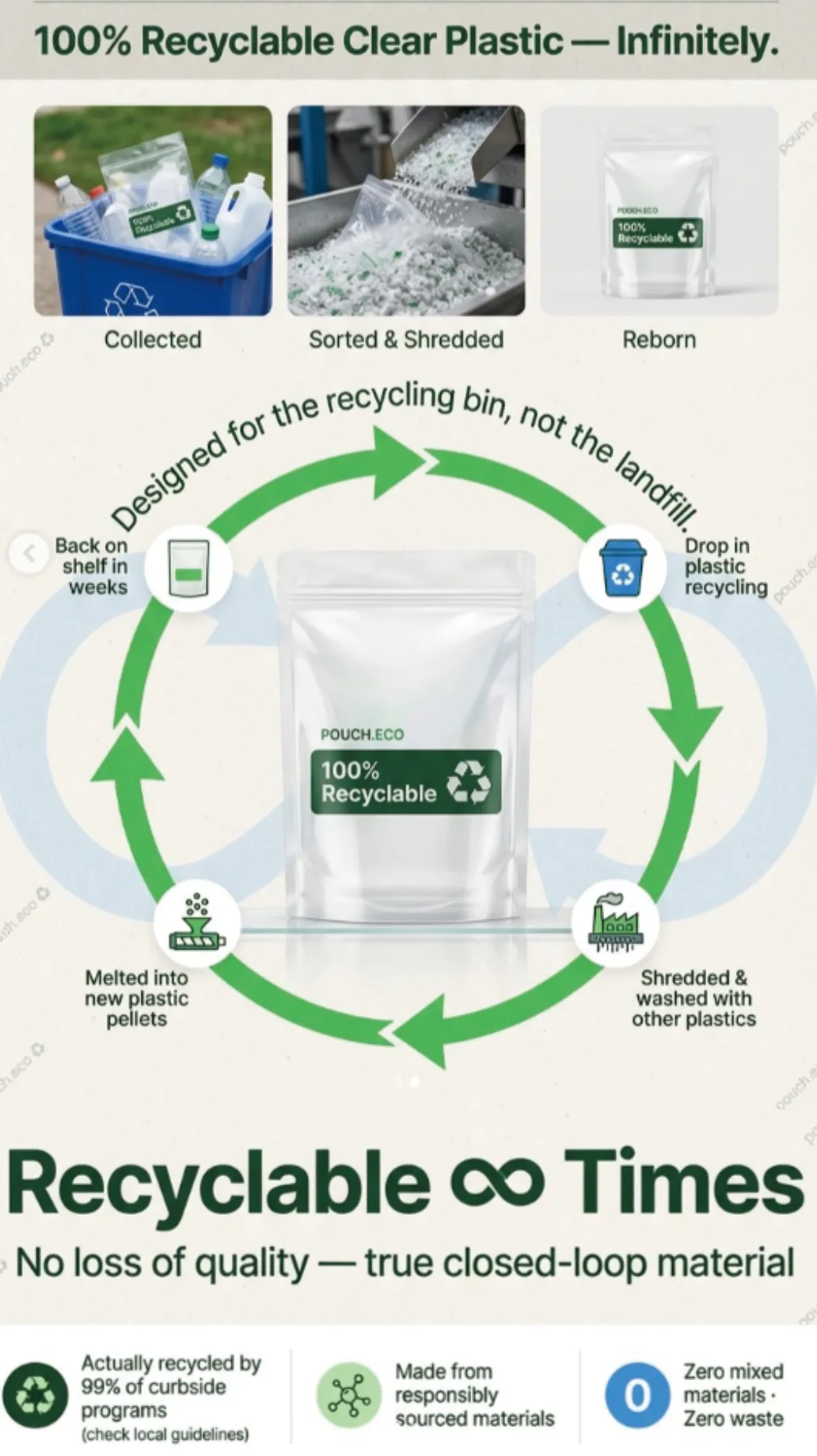
- 100% Certified Eco ComplianceTÜV OK Compost HOME (EN13432) & Mono-PE Recyclable structures (0% Tax).
- HD Digital Printing with 500-Unit Low MOQsPrint multi-SKU runs in 7 business days with zero setup plate charges.
Questions We Get Asked
What is the standard quantity tolerance on a custom pouch run?▼
Should I ship pouches by air or by sea?▼
Does removing a metallised layer reduce shelf life?▼
Is a matte coating compostable?▼
Why did the quote dimensions not match the bag?▼
Related Stuff
How We Ensure Absolute Accuracy and Trustworthiness
At Achieve Pack, sustainable packaging isn't just about printing; it's about hands-on material science. This article has been written and verified by Ryan Wong, a packaging specialist with 14+ years of experience engineering biopolymer stacks for DTC startups and Fortune 500 companies.
All research, material barrier specifications (OTR, WVTR), heat-seal values (N/15mm), and compostability timelines cited in our guides are backed by testing inside the Achieve Pack Materials Testing Lab. We cross-reference our data with official certification registries from BPI (Biodegradable Products Institute), TÜV Austria (OK Compost HOME), and FSC (Forest Stewardship Council).

Ryan Wong
Supply Chain Director
B.Eng honors degree graduate from Hong Kong Polytechnic University. Serving brands in 8 countries.
View Expert Profile →Planning A Run Of 5,000 Or More?
Send us your volume, destination and shelf-life target. We will quote air and sea side by side and tell you what barrier you are giving up before you commit.
See the Material in Action
Real footage of our eco-friendly packaging structures in action.
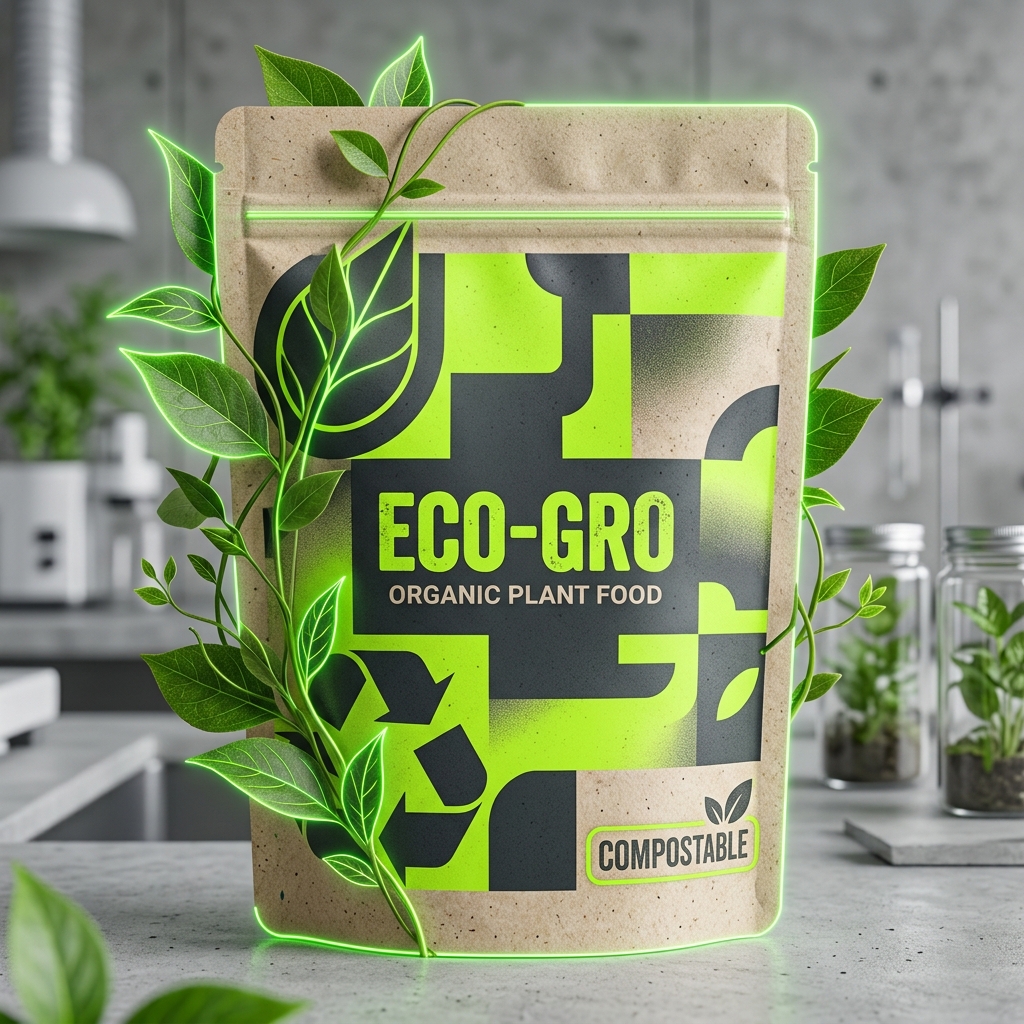
Compostable Solution
Fully compostable flexible packaging certified under ASTM D6400 and EN 13432. Engineered to break do...
- ASTM D6400 & EN 13432 Certified
- Breaks down within 180 days in soil
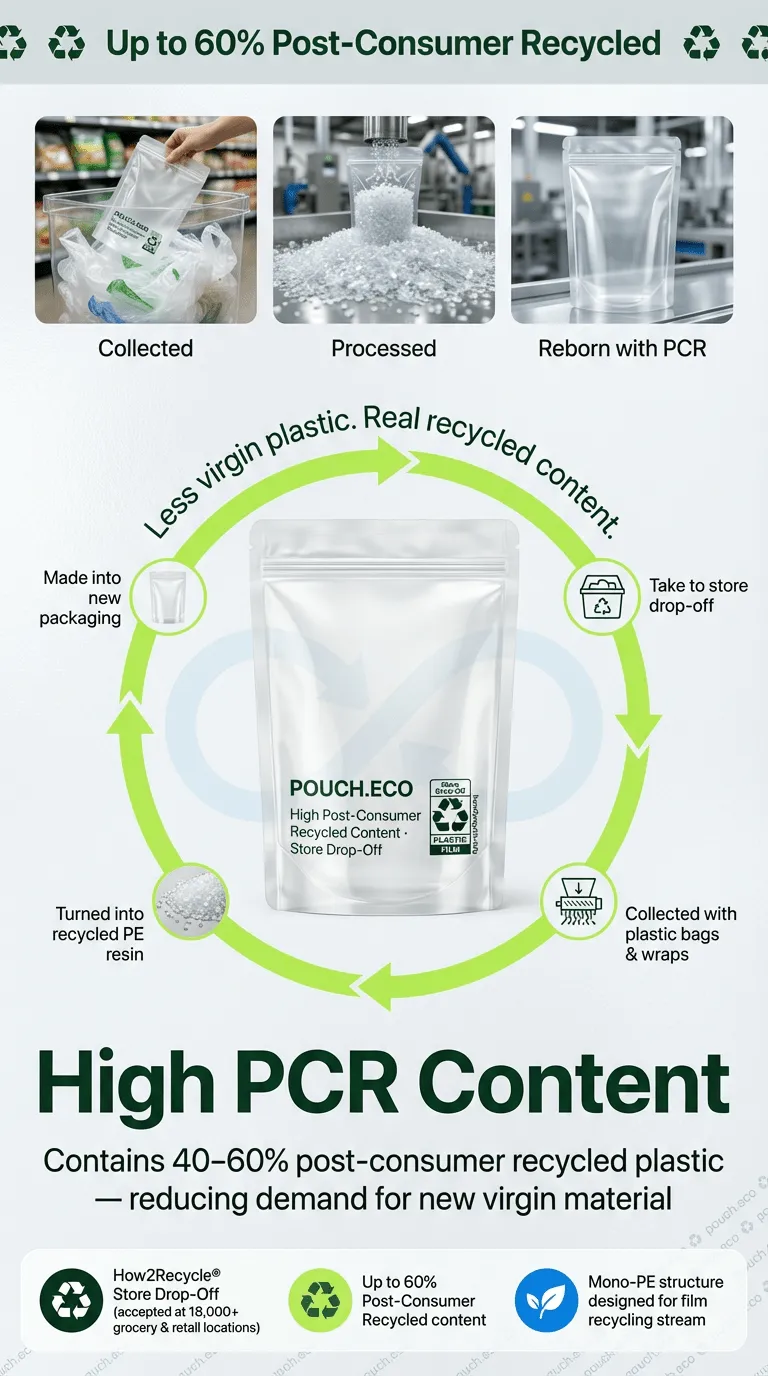
Post-Consumer Recycled (PCR)
Made from high-quality post-consumer recycled plastic waste. Our PCR structures reduce carbon footpr...
- Saves post-consumer waste from landfills
- Lowers carbon footprint substantially
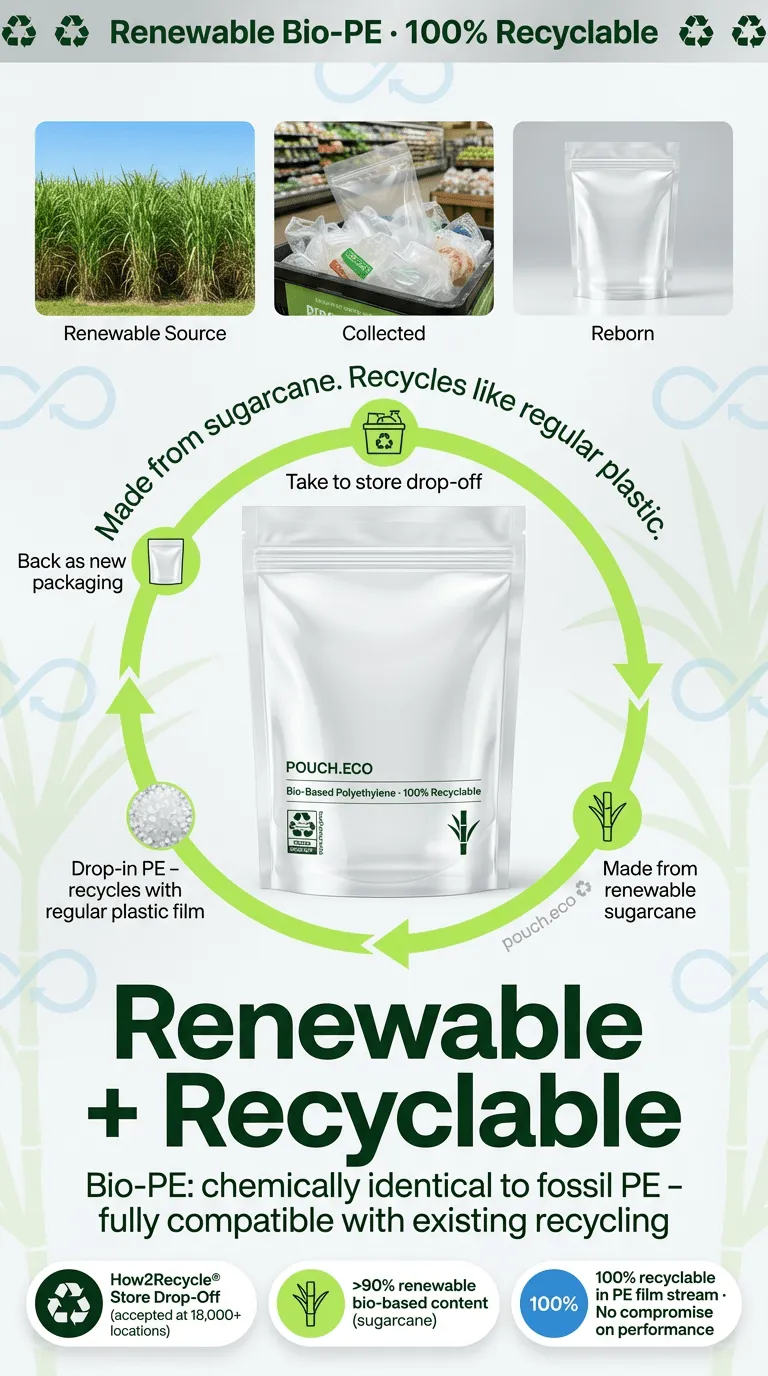
Plant-Based Bio-PE
Derived from sustainably-farmed Brazilian sugarcane. It captures atmospheric CO2 during growth and i...
- Captures CO2 during plant growth
- 100% recyclable in regular PE stream (#4)
Recyclable Mono-Material
Engineered using Mono-PE or Mono-PP structures to enable simple, circular sorting and recycling. Com...
- 100% recyclable mono-polymer structure
- Meets EU Circular Economy directives