Packaging Line Automation: Scaling Up Date Coding for SMEs | Achieve Pack Specifications
Solving Core Packaging Challenges for Packaging Line Automation: Scaling Up Date Coding for SMEs | Achieve Pack
Concise B2B technical benchmarks designed to eliminate transit failures, regulatory penalties, and shelf-life loss.
Barrier Specified Wrong, Shelf Life Lost
Risk: A film that is too thin lets oxygen and moisture through before the date code.
Structure Matched to Your Product, Quoted With OTR & WVTR
You get the barrier numbers before you approve the quote.
Compliance Documents Arriving Too Late
Risk: Retailers and co-packers hold the order until the supplier file clears their QA.
Approval Pack Issued With the Quote, Not After It
Product specification, SDS, food-grade statement, lot code statement, PFAS statement, letter of guarantee.
Plate Fees and High MOQs Killing the Range
Risk: Every variant needs its own cylinders, so the line-up never gets launched.
Digital Printing from 500 Units per SKU
Multiple designs in one run, zero plate charges.
Experience 3D Packaging Design & Free Dielines
Preview your pouch in 3D WebGL Studio and export production-ready dielines.
From Ryan Wong's Engineering Notebook
Automation Memo
"A startup coffee brand was employing three full-time workers just to hand-apply sticker labels and stamp roast dates onto 2,000 bags a day. It was incredibly slow, and dates frequently smudged. We automated their line by mounting a TIJ coder on a small modular conveyor and installing an inline label applicator. Within one shift, they went from 250 bags/hour to over 1,500 bags/hour. A single operator now manages the entire line, and the other two employees were reassigned to sales. The capital investment was recovered in exactly 42 days. If you are doing more than 1,000 units daily, manual lines are actively costing you growth."
1. The Manual Bottleneck vs. Inline Coding
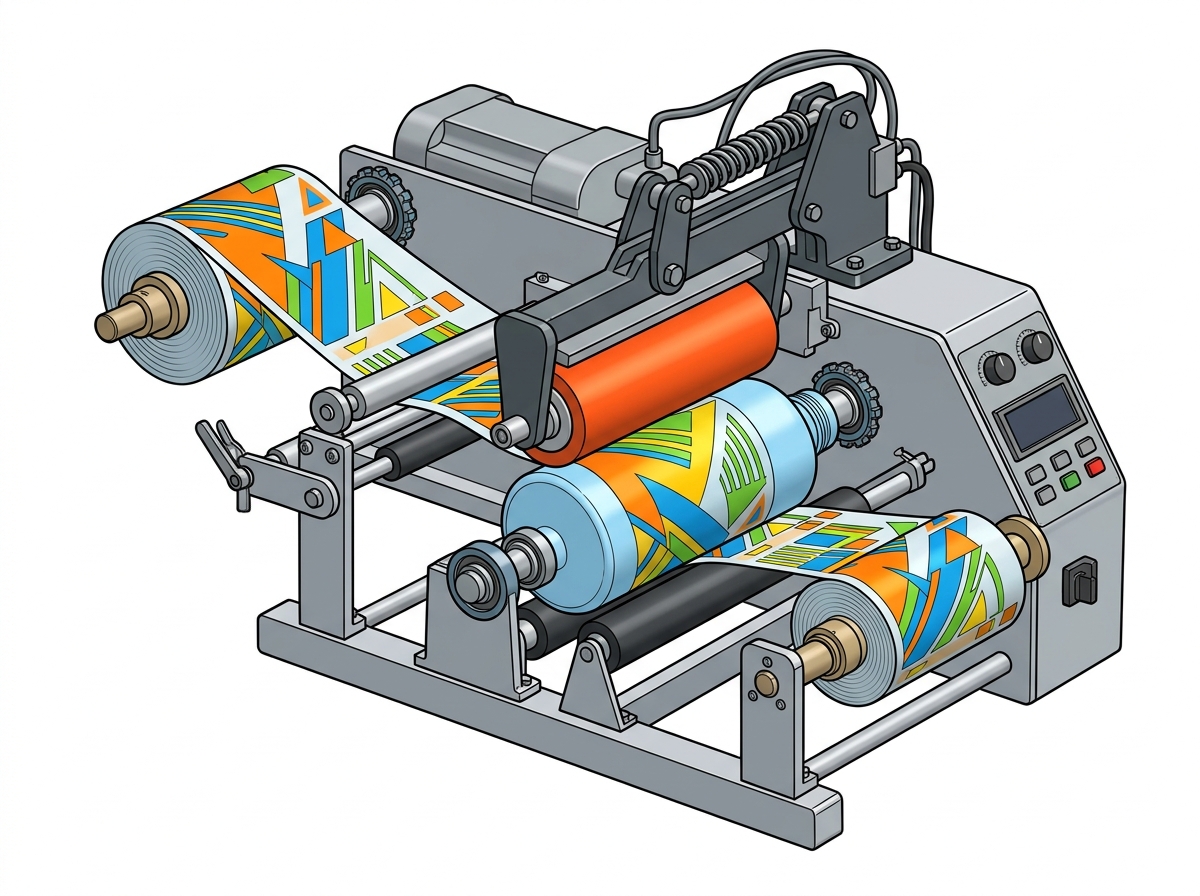
Manual stamping or hand-peeling labels is slow, inconsistent, and highly error-prone. By mounting a TIJ smart coder onto a conveyor guide rail with a photoelectric sensor, printing is automated as pouches pass by, producing identical, crisp dates and barcodes without human intervention.
2. Integrating Conveyors & Sensors
Smart TIJ systems sync with conveyor speeds using encoders. As the sensor detects a pouch edge, it signals the printhead to spray the pre-programmed template instantly. This non-contact process ensures zero damage to filled bags.
5 Packaging Pain Points & Engineering Solutions
01 / Conveyor Speed Jitter & Print Distortion
Fluctuations in conveyor belt speed cause printed codes to stretch, compress, or become illegible.
02 / Sensor Misalignment & Missed Packs
Photoelectric sensors fail to detect transparent pouches or bags with high reflectivity, causing skipped prints.
03 / Label Crinkling & Wrinkles
Manual or semi-automatic label application onto filled, uneven pouches results in bubbles and crease lines.
04 / Downtime from Ink Clogging
Production stops because inkjet nozzles dry out during brief breaks or overnight shutdown.
05 / Line Component Desynchronization
Heat sealers, conveyors, and printer brackets operate on different electrical speeds, causing product pile-ups.
3. Modular Line Setup
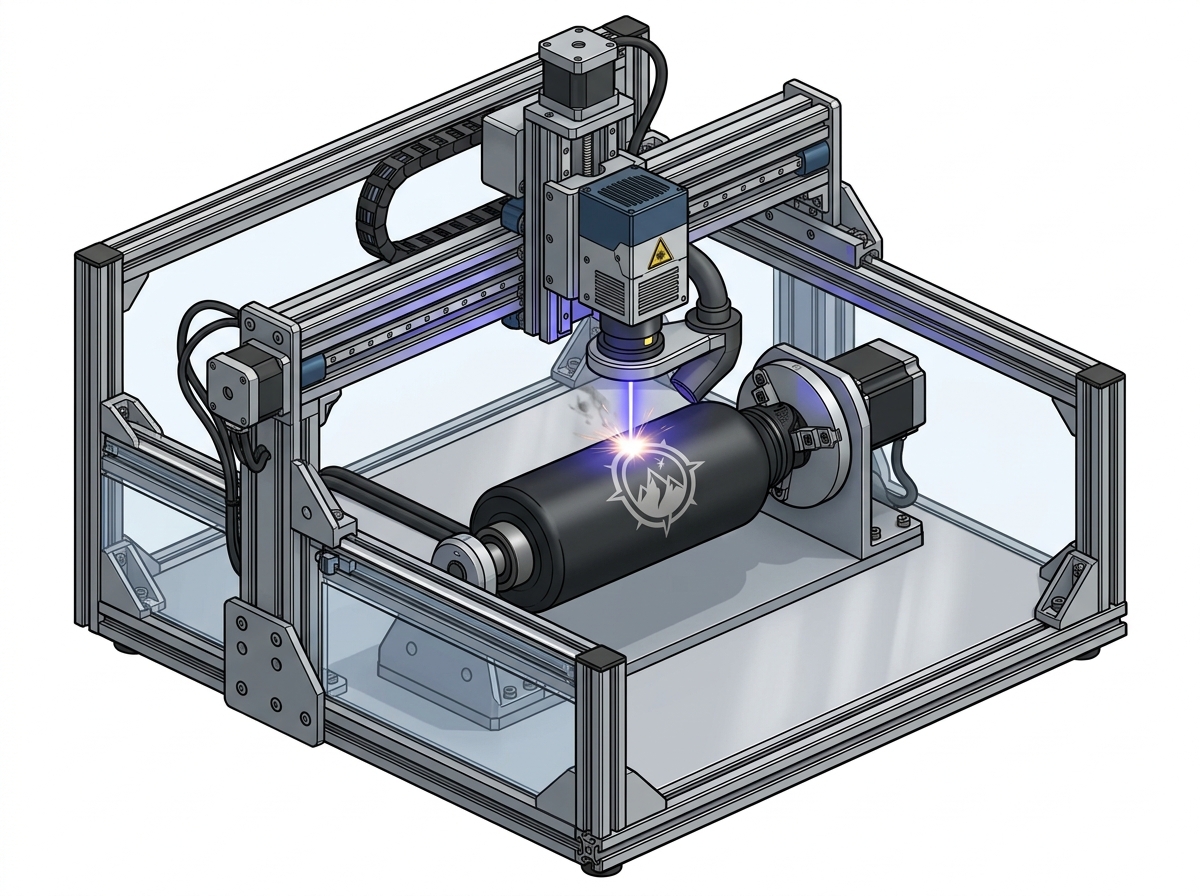
A complete SME packaging line integrates direct heat sealing, date coding, and automatic label application. Using modular machinery ensures you can adapt to different pouch sizes and materials without purchasing entirely new lines.
Recommended Automation Equipment
See Our Products
 ⚙️ Industrial Grade
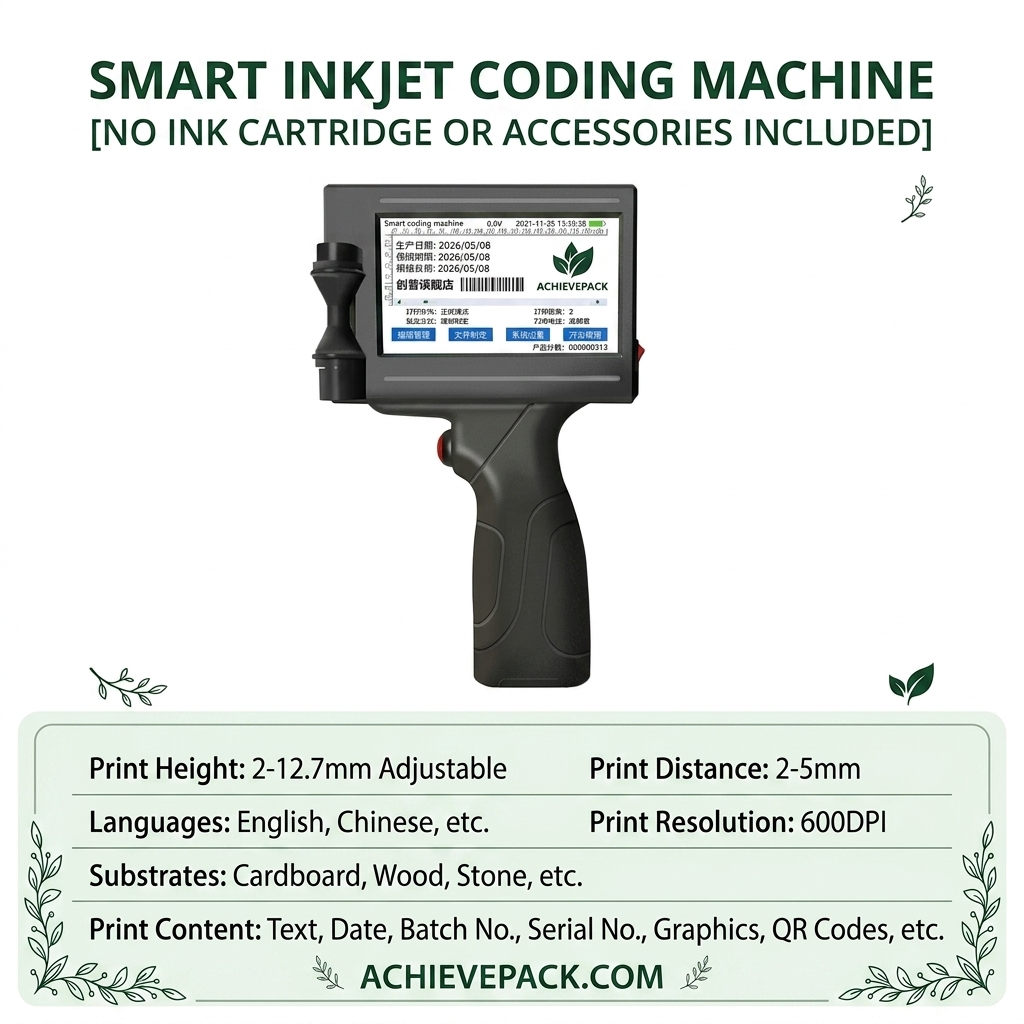
Smart Inkjet Coding Machine
Handheld mini printer and conveyor line coding machine for dates, numbers, and QR codes.
 ⚙️ Industrial Grade
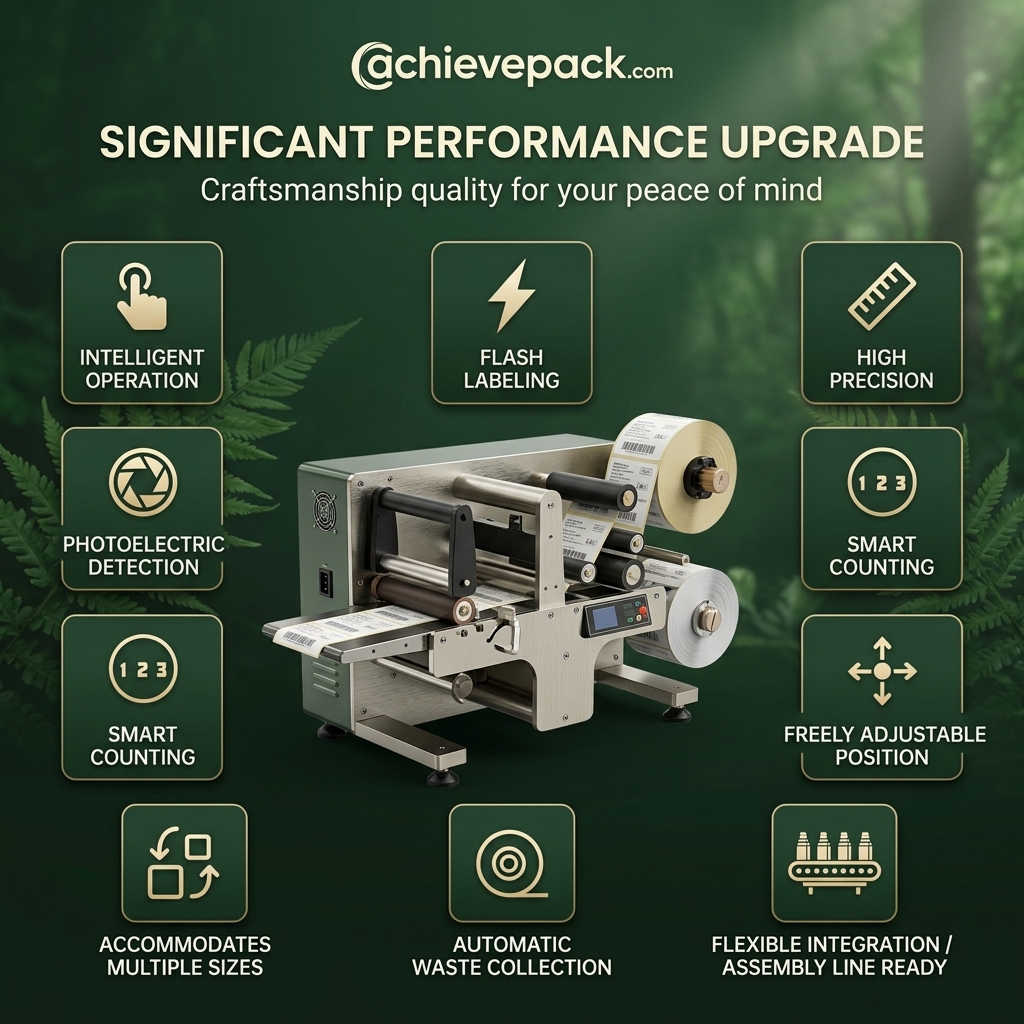
Full-automatic Labeling Machine for Packaging Boxes and Pouches
Automatic labeling machine for packaging color boxes, lids, and cards
 ⚡ High-Power Direct Heat
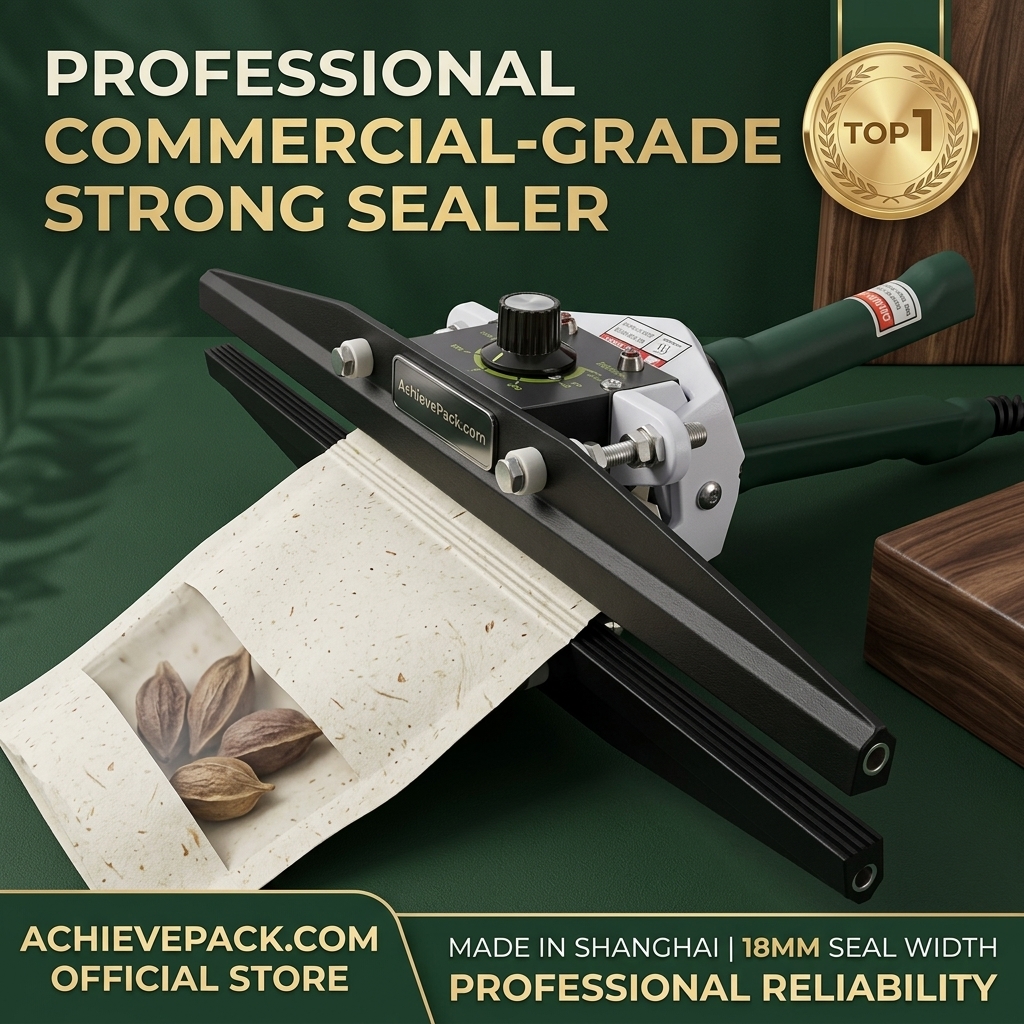
Hand-Clamp Sealer – Small Commercial Plastic, Aluminum Foil, and Kraft Paper Bag Heat Sealing Machine, Portable Handheld High-Power Thermal Sealer
Portable handheld commercial heat sealer with 0-300°C temperature control
Technical Factory Validation & Quality Control
We don't just supply pouches; we validate every batch. Every raw material and finished pouch runs through our 6-step testing protocol to guarantee automatic packaging line compatibility and food-safe barrier preservation.
OTR & WVTR Barrier (MOCON)
Tested under ASTM D3985 & ASTM F1249 to ensure fresh shelf life up to 18 months.
GC-MS Solvent Residue
Gas Chromatography-Mass Spectrometry ensures zero odor transfer and absolute food safety.
Heat Seal Strength (ASTM F88)
Guarantees no seam burst under high pressure, perfect for VFFS automatic packing lines.
BRCGS Global Standard
Produced in Class 100,000 dust-free cleanrooms, ensuring zero contamination.
Puncture Resistance (ASTM F1306)
Prevents tear or puncture from sharp, hard items like coffee beans and pet kibble.
Tensile Strength (ASTM D882)
Ensures shape retention and structural integrity when heavy bags are dropped or stacked.
Packaging Transformation for Packaging Line Automation: Scaling Up Date Coding for SMEs | Achieve Pack
See how upgrading from generic commoditized bags to precision-engineered flexible barrier packaging eliminates transport failures and boosts shelf authority.
Standard / Generic Packaging (Before)
Standard stock bags fail under transit stress and expose sensitive goods to moisture, UV light, and oxygen.
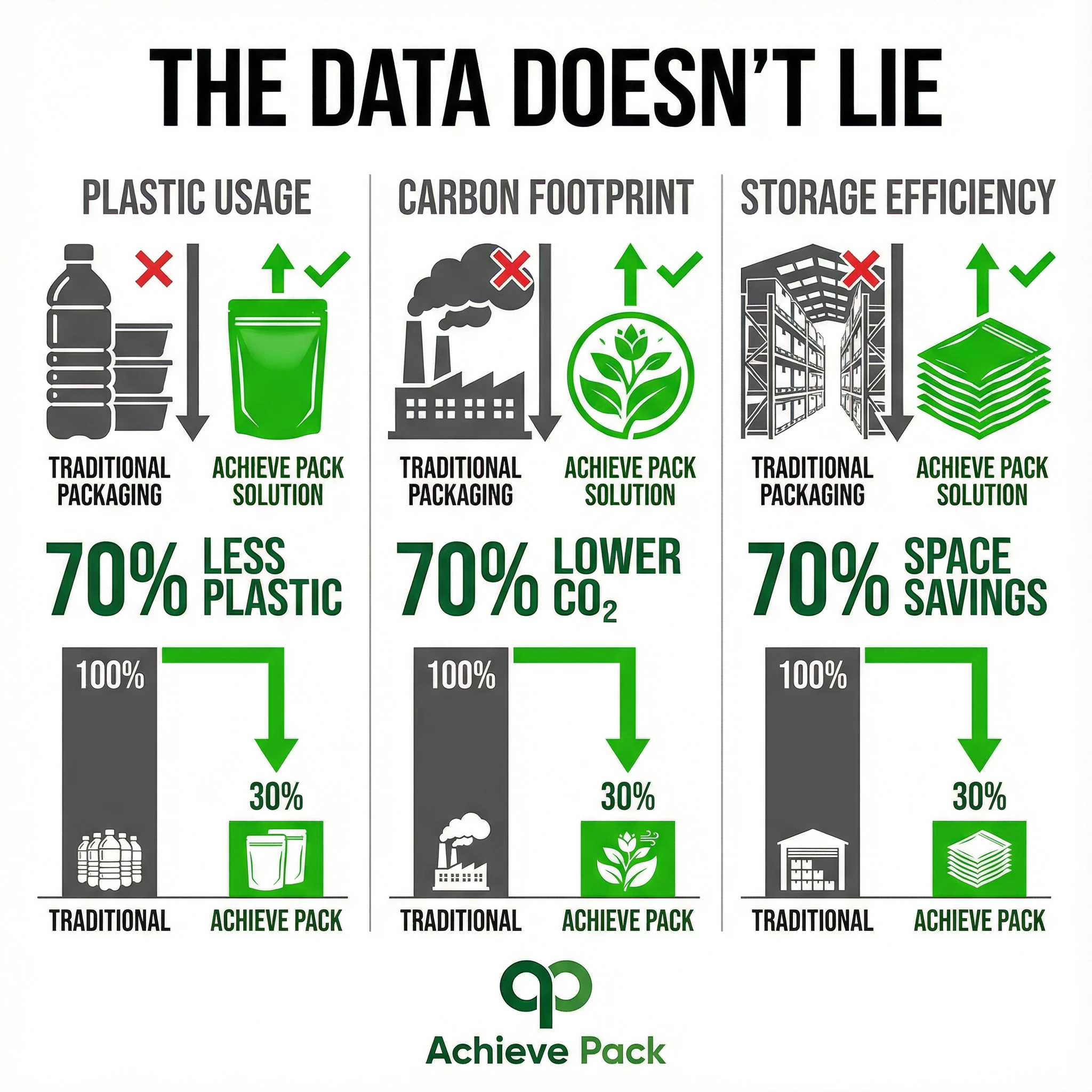
- Rapid Oxidation & Flavor DegradationCheap films allow O2 & moisture ingress, spoiling contents in < 30 days.
- High Seal Breakage in TransitThin seams fail under drop tests, leading to customer refunds & lost trust.
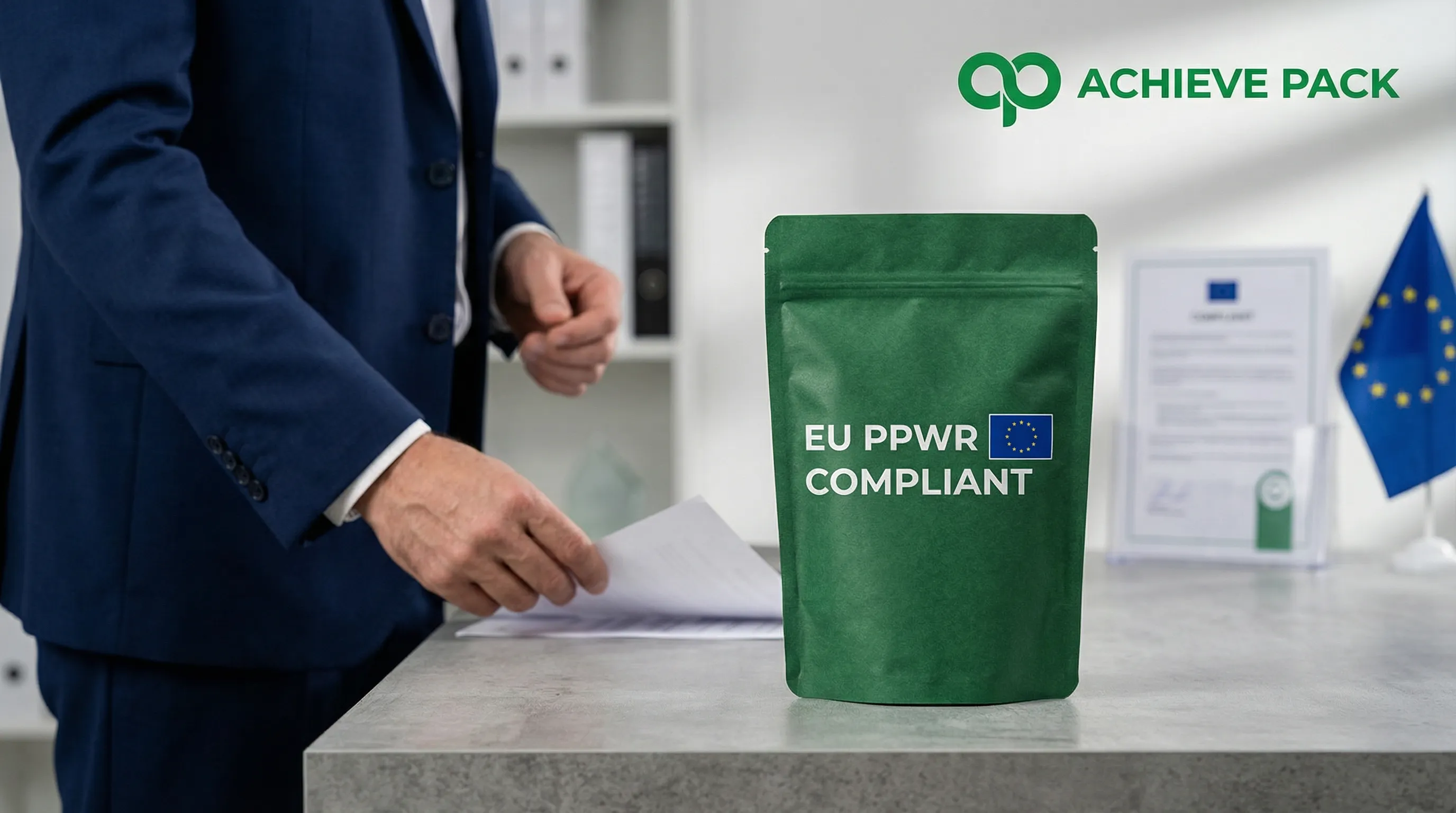
- Heavy Plastic Tax PenaltiesMulti-layer unrecyclable packaging incurs up to €800/ton in EU PPWR fines.
- High MOQs & Plate Cost FrictionTraditional printers force 10,000+ unit minimums and $1,500 cylinder fees.
Achieve Pack / Pouch Eco Solution (After)
Custom engineered multi-layer pouch structure tailored to your exact moisture barrier, seal strength, and aesthetic requirements.
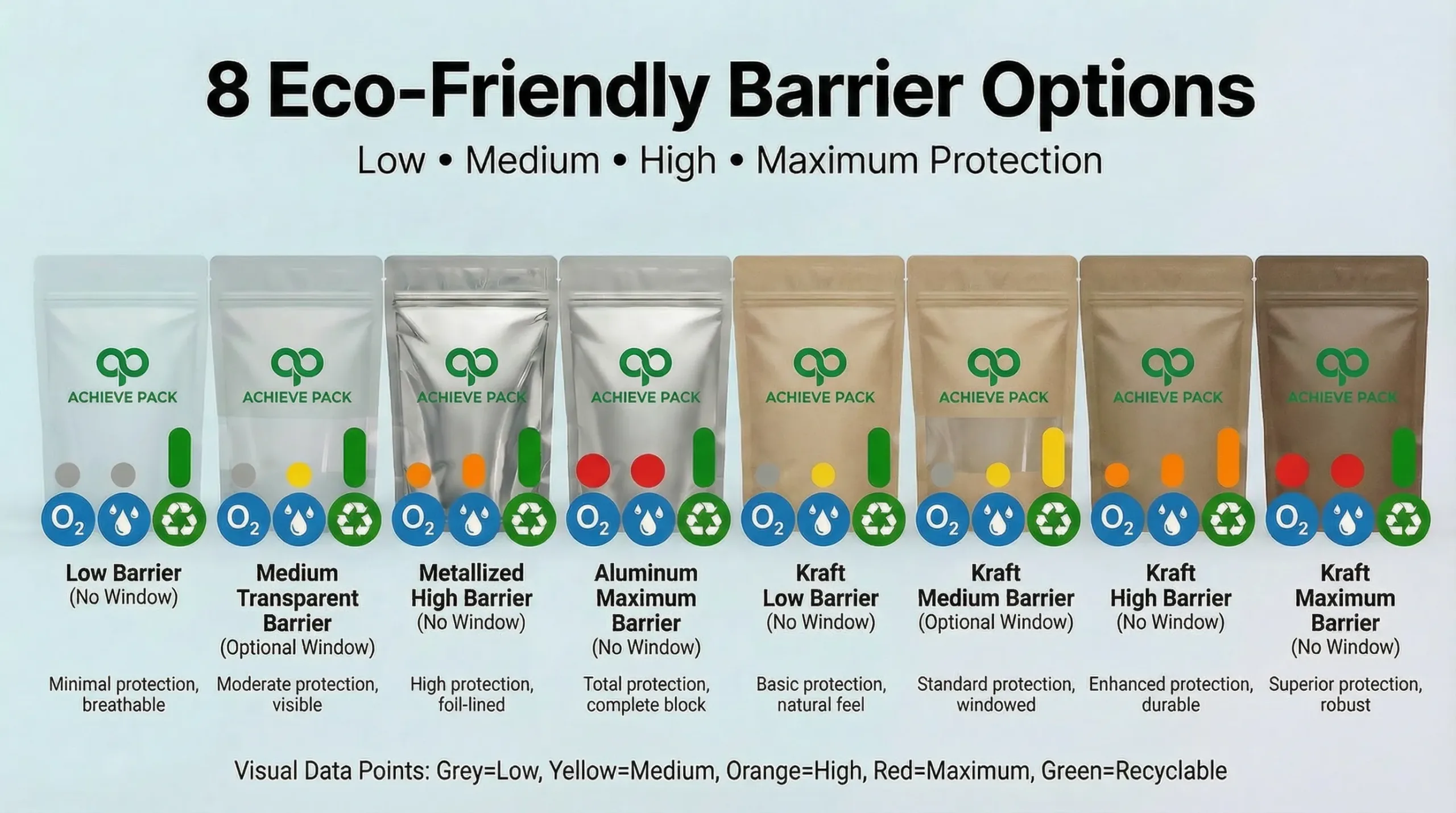
- Ultra High-Barrier Foil/EVOH CoreGuaranteed OTR < 0.1 cc/m²/day, keeping contents fresh for 18–24 months.
- Reinforced 45N/15mm Localized Heat Seal180°C precision seam dwell time prevents bursting even under 2-meter drops.
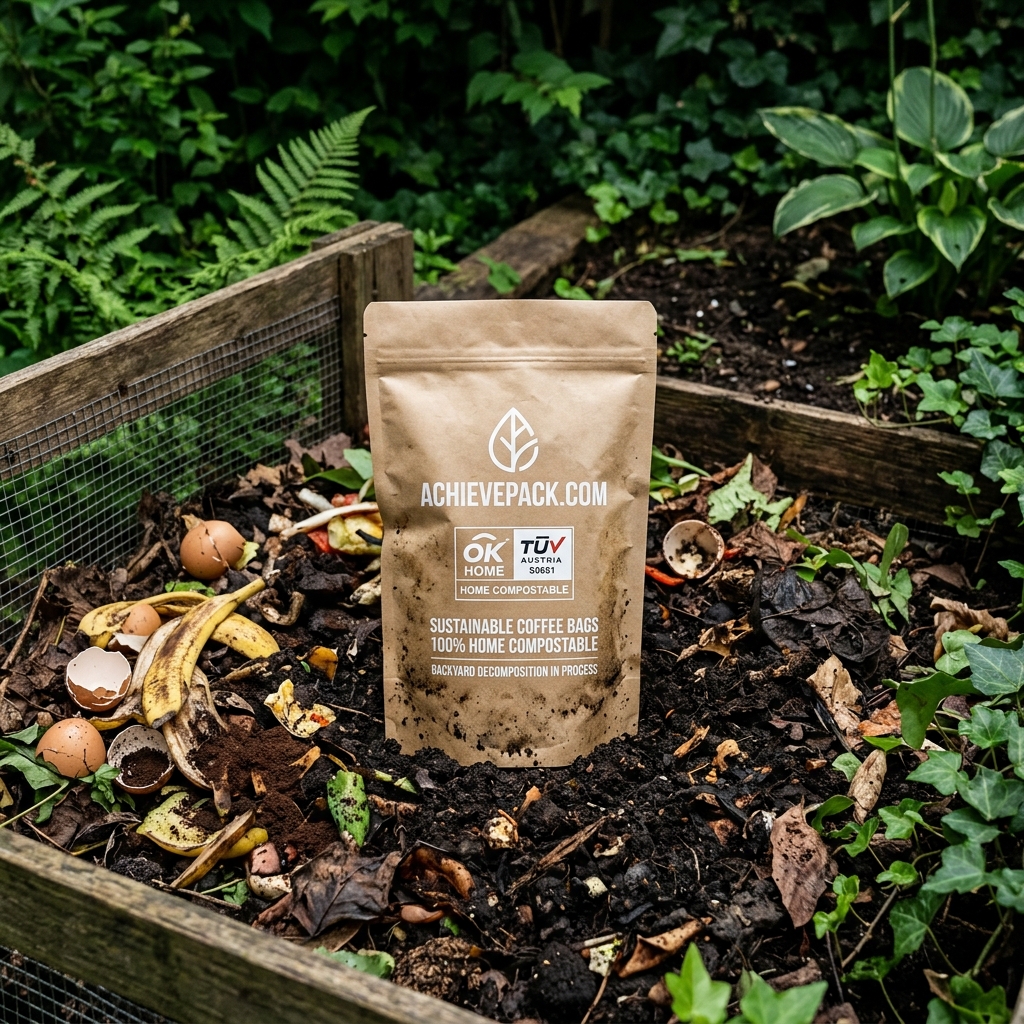
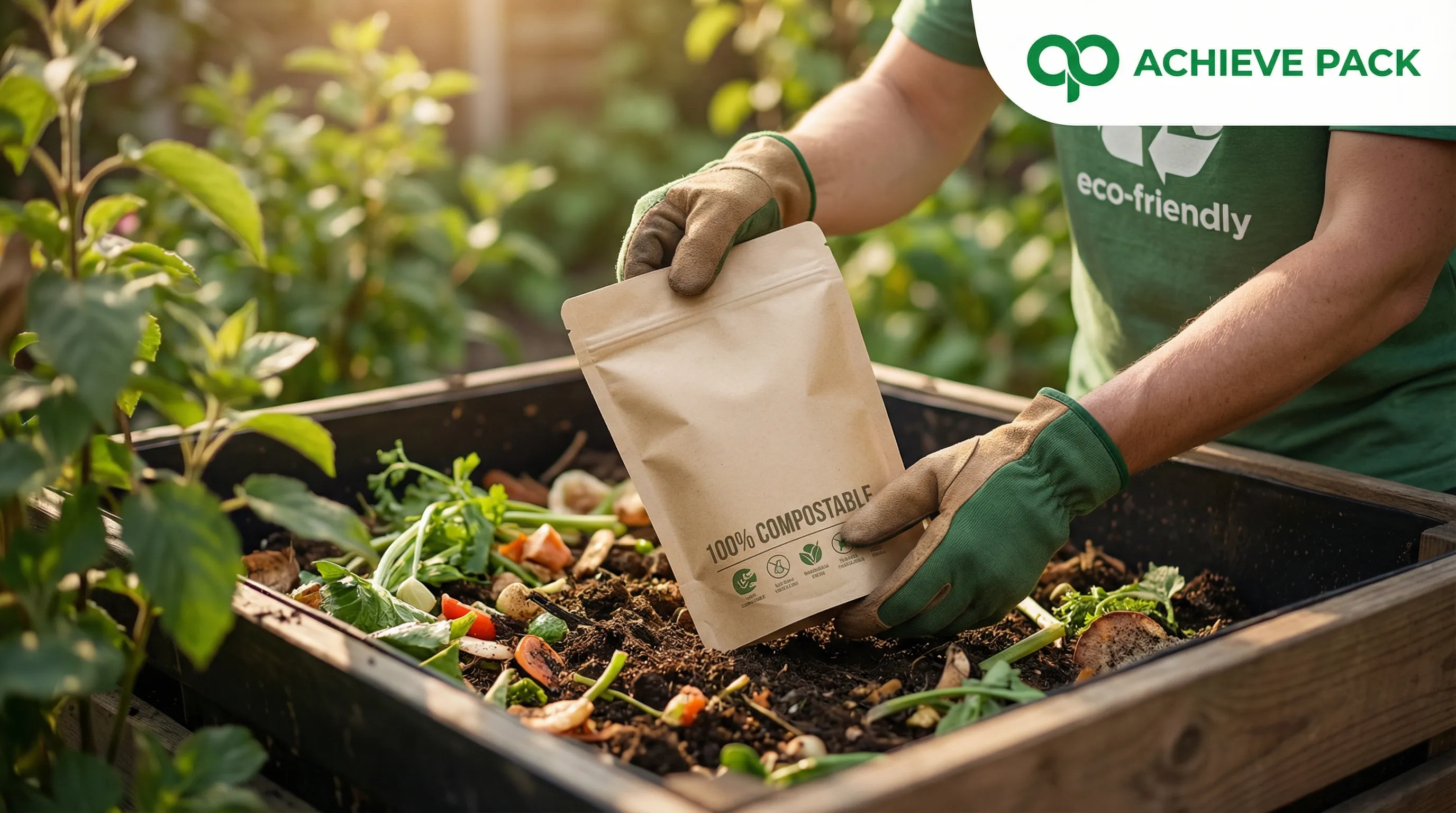
- 100% Certified Eco ComplianceTÜV OK Compost HOME (EN13432) & Mono-PE Recyclable structures (0% Tax).
- HD Digital Printing with 500-Unit Low MOQsPrint multi-SKU runs in 7 business days with zero setup plate charges.
Related Stuff
How We Ensure Absolute Accuracy and Trustworthiness
At Achieve Pack, sustainable packaging isn't just about printing; it's about hands-on material science. This article has been written and verified by Ryan Wong, a packaging specialist with 14+ years of experience engineering biopolymer stacks for DTC startups and Fortune 500 companies.
All research, material barrier specifications (OTR, WVTR), heat-seal values (N/15mm), and compostability timelines cited in our guides are backed by testing inside the Achieve Pack Materials Testing Lab. We cross-reference our data with official certification registries from BPI (Biodegradable Products Institute), TÜV Austria (OK Compost HOME), and FSC (Forest Stewardship Council).

Ryan Wong
Supply Chain Director
B.Eng honors degree graduate from Hong Kong Polytechnic University. Serving brands in 8 countries.
View Expert Profile →Automate Your Production Line
Explore our automatic labeling systems, conveyor belt combos, and smart inkjet printing packages.
See the Material in Action
Real footage of our eco-friendly packaging structures in action.
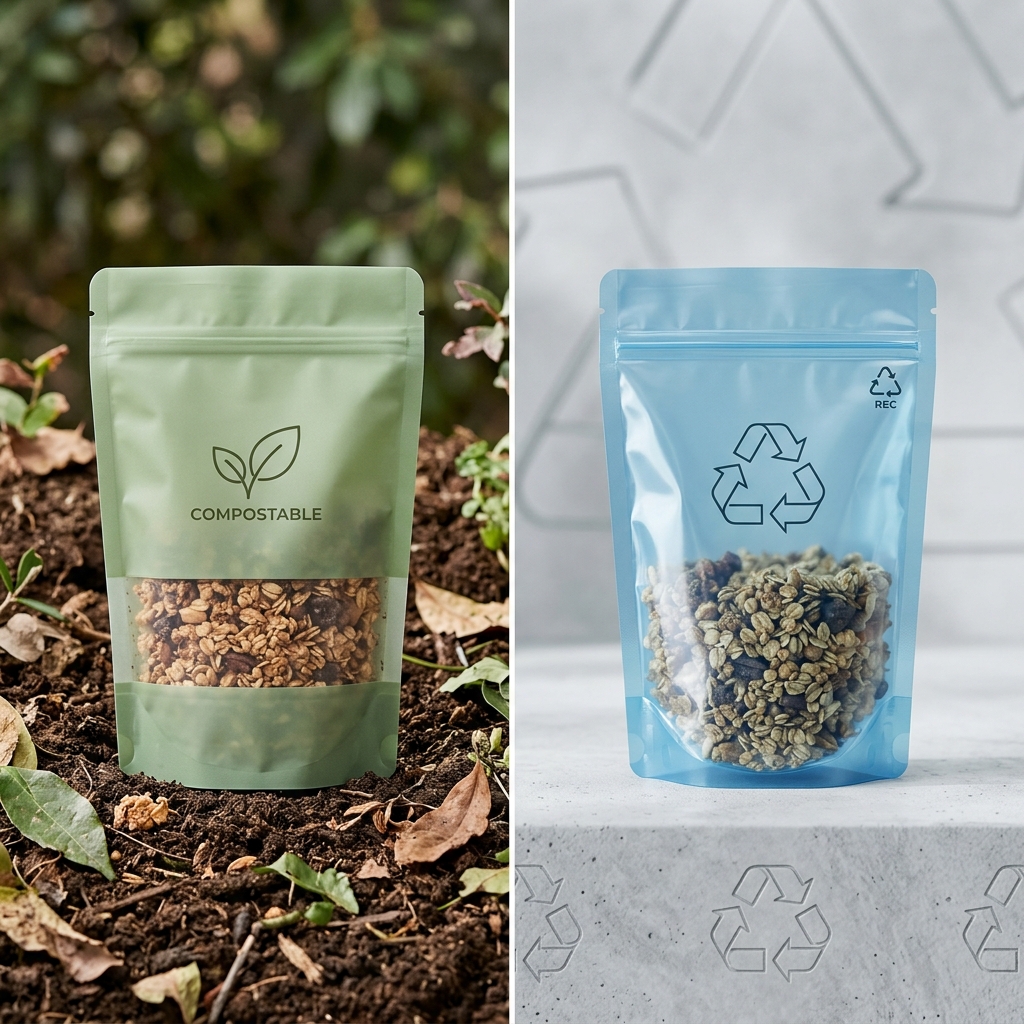
Compostable Solution
Fully compostable flexible packaging certified under ASTM D6400 and EN 13432. Engineered to break do...
- ASTM D6400 & EN 13432 Certified
- Breaks down within 180 days in soil
Post-Consumer Recycled (PCR)
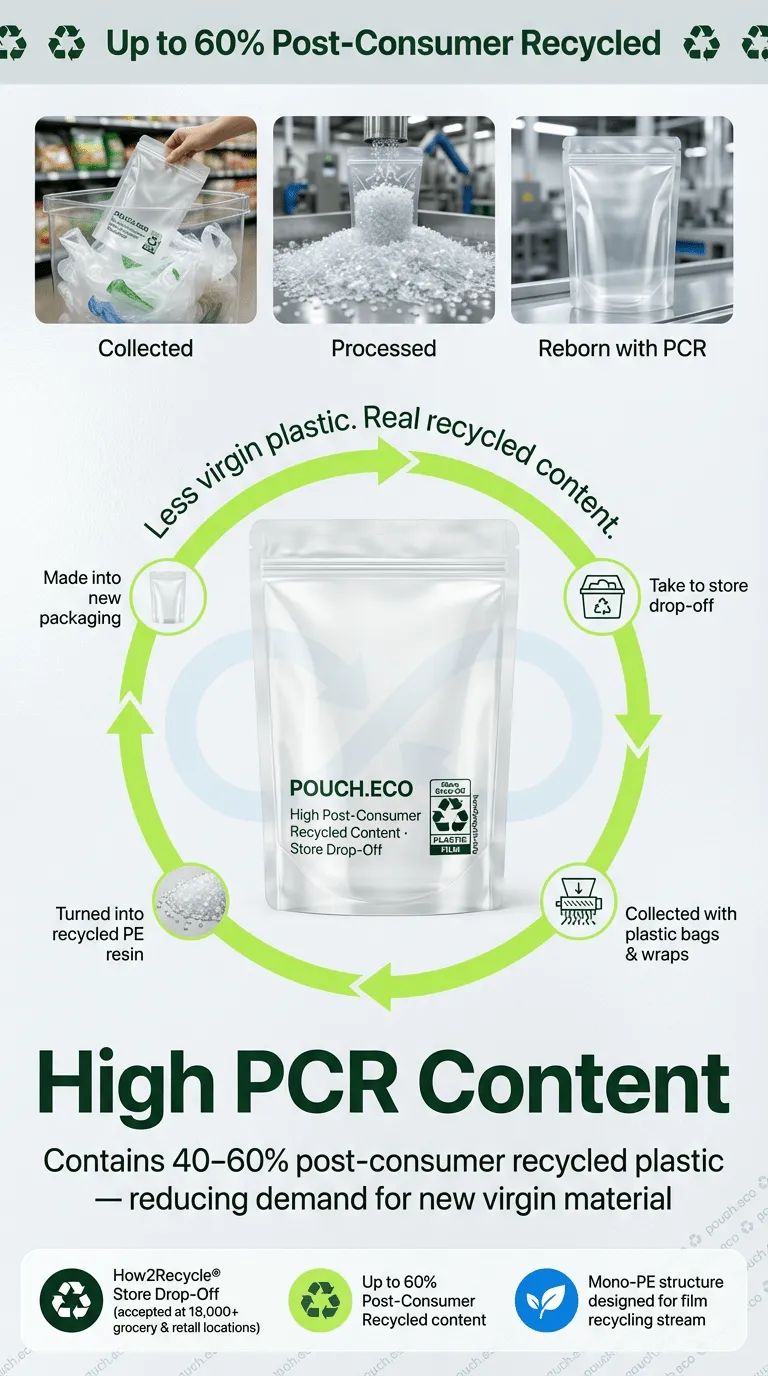
Made from high-quality post-consumer recycled plastic waste. Our PCR structures reduce carbon footpr...
- Saves post-consumer waste from landfills
- Lowers carbon footprint substantially
Plant-Based Bio-PE
Derived from sustainably-farmed Brazilian sugarcane. It captures atmospheric CO2 during growth and i...
- Captures CO2 during plant growth
- 100% recyclable in regular PE stream (#4)
Recyclable Mono-Material
Engineered using Mono-PE or Mono-PP structures to enable simple, circular sorting and recycling. Com...
- 100% recyclable mono-polymer structure
- Meets EU Circular Economy directives