Where is the best place to print an expiration date on a stand-up pouch?
The top heat-seal area is the easiest location for manual band sealers and automated hot stamping. However, for a premium look, print the date on the bottom gusset or the bottom rear quadrant using non-contact inkjet coders to keep the main graphic panel clean.
What is the difference between TIJ and CIJ inkjet date coders?
Thermal Inkjet (TIJ) uses replaceable cartridges where the print nozzle is built directly into the ink head, making it practically maintenance-free and ideal for small to mid-sized runs. Continuous Inkjet (CIJ) sprays a continuous stream of ink droplets and is built for round-the-clock high-speed production, but it requires regular solvent calibration and mechanical flushes.
Can I print scannable barcodes with a date coding machine?
Yes, Thermal Transfer Overprinters (TTO) and high-resolution Thermal Inkjet (TIJ) systems can easily print crisp, high-density 1D and 2D barcodes (such as QR codes). However, Continuous Inkjet (CIJ) and Hot Stamp sealers lack the line spacing precision required to produce retail-scannable barcodes.
Does solvent-based ink damage compostable biopolymer packaging?
No. Quick-dry solvent inks (based on MEK or ethanol) cure within milliseconds upon hitting the bag surface. The quantity of solvent is extremely micro-scale and evaporates completely, leaving the compostable substrate fully intact without degrading its mechanical or compostable properties.
Applying expiration dates to flexible pouches is done via three main methods: Thermal Transfer Overprinting (TTO) for pre-filling flat film inline; Continuous or Thermal Inkjet (CIJ/TIJ) for non-contact coding on filled bags via conveyors; and Hot Stamping or Debossing built directly into the heat sealing jaws. The choice depends on filled vs. flat film states, material composition (plastic vs. paper), and production throughput.
BY RYAN WONG, ECO PACKAGING PROTOCOL
VERIFIED BY ACHIEVE PACK SUSTAINABILITY LAB
B2B Specification Filters
Pouch Date Coding Guide: Expiration & Lot Printing | Achieve Pack Specifications
Applying expiration dates to flexible pouches is done via three main methods: Thermal Transfer Overprinting (TTO) for pre-filling flat film inline; Continuous or Thermal Inkjet (CIJ/TIJ) for non-contact coding on filled bags via conveyors; and Hot Stamping or Debossing built directly into the heat sealing jaws. The choice depends on filled vs. flat film states, material composition (plastic vs. paper), and production throughput.
Key Takeaways
TTO prints inline on flat film reels before filling, yielding ultra-sharp 300 DPI text.
TIJ/CIJ are non-contact inkjet coders printing on filled bags moving on conveyors.
Hot Stamping and Debossing integrate lot coding directly into the sealing jaws.
Always incorporate a light-colored quiet block in the pouch graphic design files.
Expert Ink Insight
"In my 14 years in packaging design, I've seen many startups run into compliance issues because their expiration dates smudged or became unreadable during shipping. Specialty films, particularly our EN 13432 certified compostable biopolymers or GRS-certified recycled PCR substrates, have surface energies that behave differently from traditional plastics."
"If you use water-based inks or standard office stamps on these materials, the print will not cure and will rub off under friction. For Thermal Inkjet (TIJ) printers, always specify a MEK-based or ethanol-based fast-cure solvent ink. For brands utilizing manual band sealers, debossing the characters directly into the heat seal seam is the ultimate fail-safe because it doesn't rely on chemical adhesion."
Ryan Wong
Co-Founder & Chief Packaging Engineer
14+ Years Packaging Engineering | GRS & FSC Auditing Expert
With a background in polytechnic materials science and GRS certification auditing, Ryan Wong helps B2B brand managers select and integrate optimal printing systems for sustainable flexible pack lines.
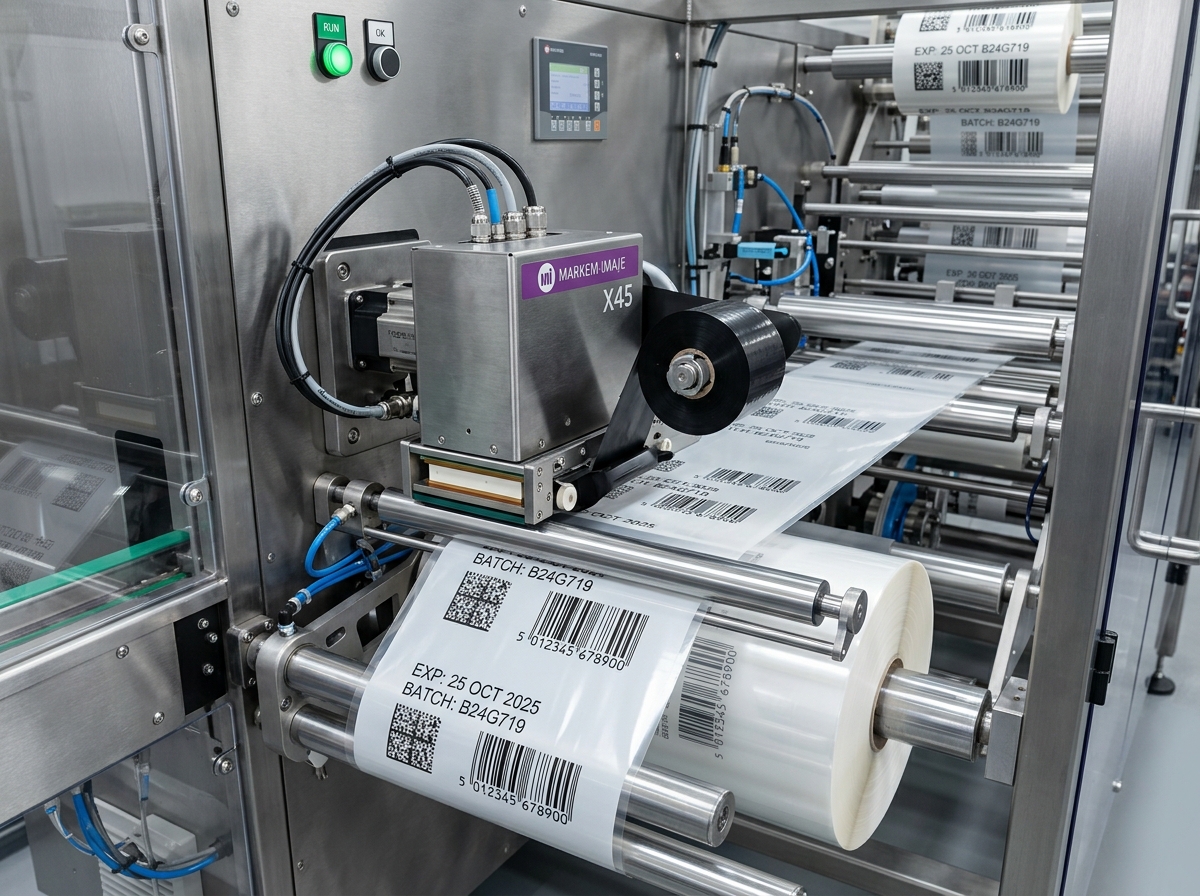
TTO is the gold standard if you are using automated Form-Fill-Seal (VFFS/HFFS) packaging machines or feed flat pre-made pouches through a friction feeder. A heated printhead presses a carbon resin ribbon directly onto the flat film substrate.
High-resolution 300 DPI text, graphics, and 1D/2D barcodes.
Immaculate print durability—resists scratch and smudge.
Works seamlessly on plastic, compostable, and paper/kraft layers.
Figure 1: TTO printing crisp lot codes onto flat packaging film before final forming.
Click to enlarge
Method 02
Thermal (TIJ) & Continuous Inkjet (CIJ)
BEST FOR: POST-FILLING / CONVEYOR ASSEMBLY LINES
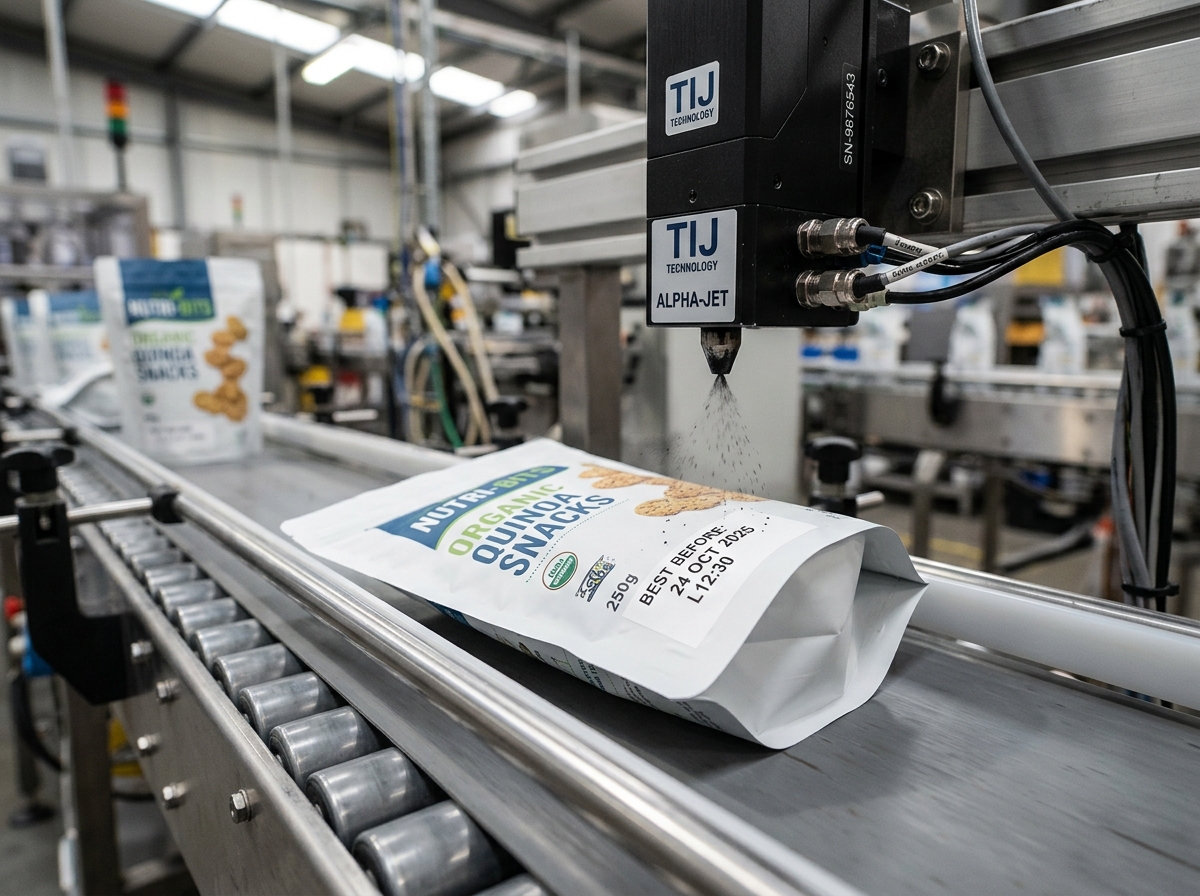
If your bags are already filled, sealed, and moving down a conveyor belt, non-contact inkjet printing is the standard choice. The printhead sprays micro-droplets of ink onto the bag as it passes by. TIJ systems are highly popular for small-to-medium runs due to zero maintenance, while CIJ serves continuous 24/7 lines.
Non-contact technology handles filled bags with slightly uneven surfaces.
TIJ cartridge replacement automatically renews the printhead.
Requires fast-dry solvent ink (MEK/ethanol) for biopolymers and glossy films.
Figure 2: TIJ coder non-contact coding on the white clear block zone of a conveyor-fed filled pouch.
Click to enlarge
Method 03
Hot Stamping & Debossing
BEST FOR: THE HEAT-SEALING PHASE (MANUAL LINES)
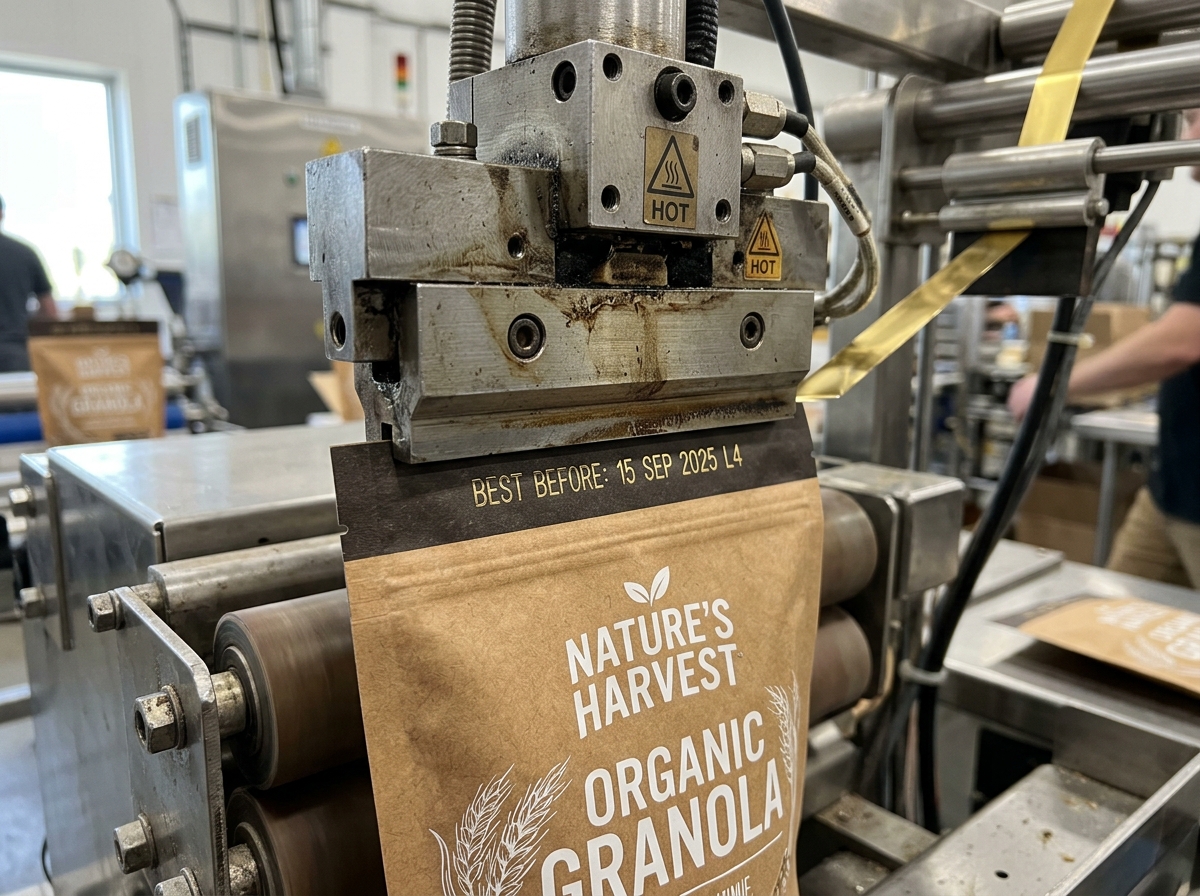
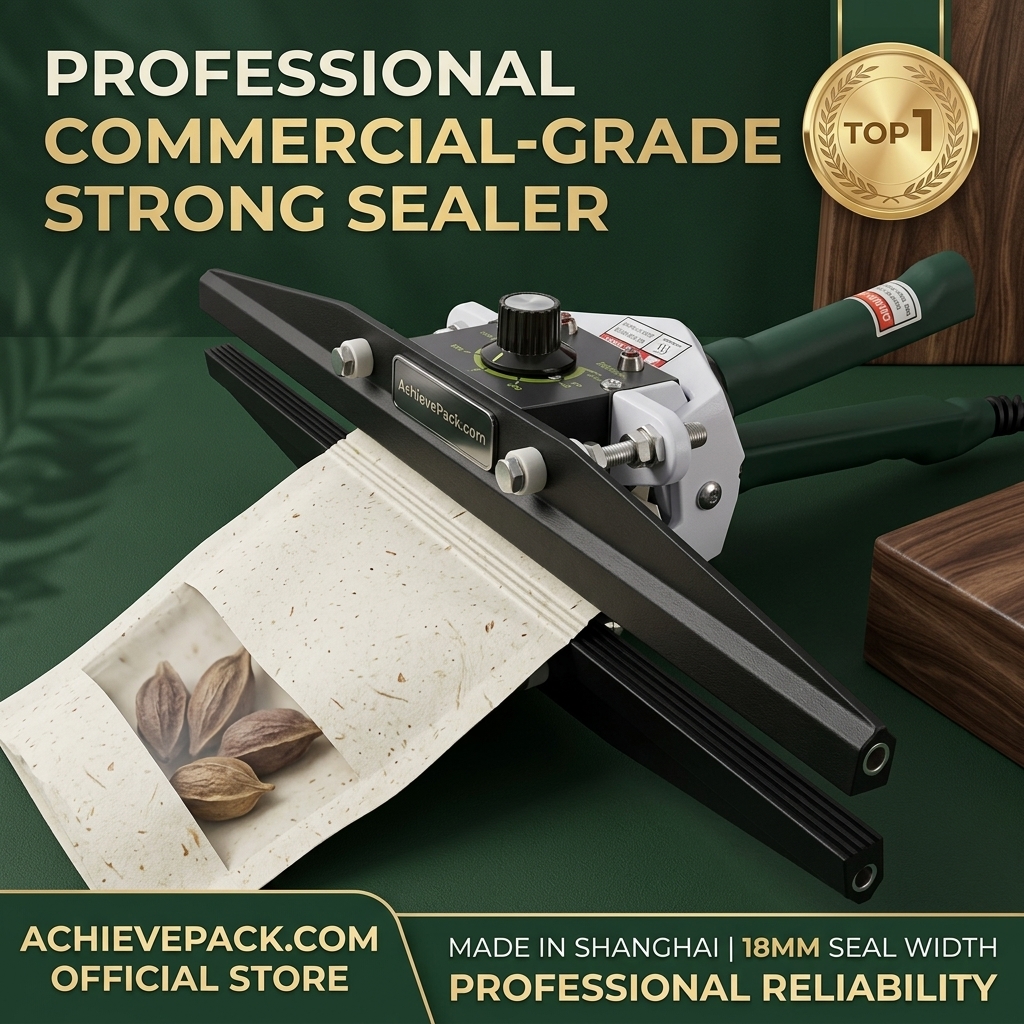
If you are sealing your pre-made pouches manually using a continuous band sealer or desktop clamp sealer, you can integrate a mechanical hot stamp or debossing coder directly into the heated sealing jaws. Hard metal type-characters are heated and physically indent the date into the pouch seal line.
Highly cost-effective—date coding and sealing occur in one movement.
No ink clogs or drying times; the indented date is permanent and un-smudgeable.
Best suited for placement within the top seal line clearance area.
Figure 3: Hot stamp coder integrated on a band sealer crimping a permanent date code into the top seal.
Click to enlarge
Technical Comparison: Pouch Coding Technologies
Selecting the right date coding machinery is a tradeoff between production volume, workflow order (filling before or after sealing), and mechanical budget. Use our engineering comparison matrix below:
Parameter
TTO (Thermal Transfer)
TIJ (Thermal Inkjet)
Hot Stamp / Deboss
Operational Phase
Pre-Filling (Flat Film Reel or Flat Pouches)
Post-Filling (Filled Bags on Conveyor)
Sealing Phase (Directly in sealer jaw)
Max Print Resolution
300 DPI (Ultra-Sharp)
300–600 DPI (Dependent on distance)
Fixed metal character stamp (No DPI)
Consumables Required
Thermal transfer resin ribbons
Ink cartridges & solvent makeup
Hot foil roll (optional for stamp; none for deboss)
Ink smudging, rubbing off, or failing friction test.
Solution: This is caused by using water-based inks on low-surface-energy films (like biopolymers or glossy laminates). Always specify solvent-based, quick-drying MEK (methyl ethyl ketone) or ethanol-based ink cartridges. We recommend submitting material samples to our packaging lab to verify curing speeds before volume runs.
02
Date print is unreadable against dark background artwork.
Solution: Design a dedicated, solid-color contrasting block (typically a white rectangle, 30mm x 15mm) on the rear or bottom gusset of your pouch artwork files. This creates a dedicated 'quiet zone' that ensures date codes remain legible to consumers and regulators.
03
Printing on pre-filled, uneven bag surfaces.
Solution: Contact-based stamps will fail on uneven filled bags. Implement a non-contact TIJ or CIJ inkjet coder mounted over a conveyor belt. Set the printhead focal distance precisely at 2mm–3mm from the bag's seal area to maintain character resolution.
04
High nozzle maintenance and clogging issues in small shops.
Solution: Traditional continuous inkjet (CIJ) systems require regular solvent cycles and line flushes. For small-scale B2C operators, transition to a Thermal Inkjet (TIJ) system. The nozzle is built directly into the ink cartridge, so replacing the cartridge completely renews the printhead.
05
Debossed date tearing or burning the pouch material.
Solution: When debossing lot codes directly into the heat seal jaws, operators often set the temperature too high or apply excessive pressure. Keep debossing jaw temperatures between 150°C–170°C and limit dwell time to 2.5 seconds to achieve a clean impression without scorching.
Strategic Guidelines for Artwork & Placement
Where and how you position your expiration date coder affects both production throughput and brand aesthetics. Follow these guidelines:
Bottom Gusset vs. Top Seal
Top Seal Placement: Easiest to print using automated heat seal coders and band sealers. It stands out clearly when the bag is opened.
Bottom Gusset / Lower Rear Placement: Highly preferred by designer brands who want to keep the front and back branding clean, minimalist, and visually premium. Requires non-contact conveyor inkjet printing.
Verify Artwork Tolerances
Keep all date code quiet zones at least 10mm away from side seal weld lines and 15mm away from zip-lock tracks. Printing too close to thermal welds causes character distortion due to uneven heat dissipation. Refer to our Dieline Creator Tool to measure custom safe zones.
Low-MOQ runs must deliver enterprise-level visual branding. We inspect color alignment tolerances, ink adhesion strength, and white underprint opacity using spectrophotometer color matching to ensure pixel-perfect pouch graphics.
ASTM TESTED
Color Matching (X-Rite)
ΔE < 1.5 Tolerance
Spectrophotometer validation ensuring brand color consistency across batches.
ASTM TESTED
Ink Adhesion Test (ASTM D3359)
Grade 5B (100% Adhesion)
Tape peel test to ensure ink does not peel or scratch during shipping and handling.
ASTM TESTED
White Ink Underprint Opacity
> 85% Density
Ensures rich, vibrant colors when printing on transparent or brown kraft films.
ISO / BRCGS
Digital Press Calibration
HP Indigo Digital Certified
HP-validated polymer ink integration, offering excellent heat and rub resistance.
ASTM TESTED
Lamination Peeling Force
> 2.0 N / 15mm Width
Ensures the printed film layer never delaminates or separates from barrier layers.
ASTM TESTED
VFFS Low-Temp Sealing
Validated at 130°C
Ensures digital-printed pouches seal perfectly on standard heat-sealer jaws.
Packaging Transformation for Pouch Date Coding Guide: Expiration & Lot Printing | Achieve Pack
See how upgrading from generic commoditized bags to precision-engineered flexible barrier packaging eliminates transport failures and boosts shelf authority.
BEFOREGeneric Packaging
Standard / Generic Packaging (Before)
Standard stock bags fail under transit stress and expose sensitive goods to moisture, UV light, and oxygen.
High Risk / Compromised
Rapid Oxidation & Flavor DegradationCheap films allow O2 & moisture ingress, spoiling contents in < 30 days.
High Seal Breakage in TransitThin seams fail under drop tests, leading to customer refunds & lost trust.
Heavy Plastic Tax PenaltiesMulti-layer unrecyclable packaging incurs up to €800/ton in EU PPWR fines.
High MOQs & Plate Cost FrictionTraditional printers force 10,000+ unit minimums and $1,500 cylinder fees.
Result: Customer Churn & High Damage Rates
AFTEREngineered Barrier Solution
Achieve Pack / Pouch Eco Solution (After)
Custom engineered multi-layer pouch structure tailored to your exact moisture barrier, seal strength, and aesthetic requirements.
Reinforced 45N/15mm Localized Heat Seal180°C precision seam dwell time prevents bursting even under 2-meter drops.
100% Certified Eco ComplianceTÜV OK Compost HOME (EN13432) & Mono-PE Recyclable structures (0% Tax).
HD Digital Printing with 500-Unit Low MOQsPrint multi-SKU runs in 7 business days with zero setup plate charges.
Result: Zero transit leaks & premium brand retentionUpgrade Now
Questions We Get Asked
Where is the best place to print an expiration date on a stand-up pouch?▼
The top heat-seal area is the easiest location for manual band sealers and automated hot stamping. However, for a premium look, print the date on the bottom gusset or the bottom rear quadrant using non-contact inkjet coders to keep the main graphic panel clean.
What is the difference between TIJ and CIJ inkjet date coders?▼
Thermal Inkjet (TIJ) uses replaceable cartridges where the print nozzle is built directly into the ink head, making it practically maintenance-free and ideal for small to mid-sized runs. Continuous Inkjet (CIJ) sprays a continuous stream of ink droplets and is built for round-the-clock high-speed production, but it requires regular solvent calibration and mechanical flushes.
Can I print scannable barcodes with a date coding machine?▼
Yes, Thermal Transfer Overprinters (TTO) and high-resolution Thermal Inkjet (TIJ) systems can easily print crisp, high-density 1D and 2D barcodes (such as QR codes). However, Continuous Inkjet (CIJ) and Hot Stamp sealers lack the line spacing precision required to produce retail-scannable barcodes.
Does solvent-based ink damage compostable biopolymer packaging?▼
No. Quick-dry solvent inks (based on MEK or ethanol) cure within milliseconds upon hitting the bag surface. The quantity of solvent is extremely micro-scale and evaporates completely, leaving the compostable substrate fully intact without degrading its mechanical or compostable properties.
How We Ensure Absolute Accuracy and Trustworthiness
At Achieve Pack, sustainable packaging isn't just about printing; it's about hands-on material science. This article has been written and verified by Ryan Wong, a packaging specialist with 14+ years of experience engineering biopolymer stacks for DTC startups and Fortune 500 companies.
All research, material barrier specifications (OTR, WVTR), heat-seal values (N/15mm), and compostability timelines cited in our guides are backed by testing inside the Achieve Pack Materials Testing Lab. We cross-reference our data with official certification registries from BPI (Biodegradable Products Institute), TÜV Austria (OK Compost HOME), and FSC (Forest Stewardship Council).
TÜV OK Compost HOMEBPI Certification #10529618ASTM D6400 / EN 13432HP Indigo Digital Certified
Ryan Wong
Supply Chain Director
B.Eng honors degree graduate from Hong Kong Polytechnic University. Serving brands in 8 countries.