7 Things to Check Before Switching to PCR Packaging | Achieve Pack Specifications
Solving Core Packaging Challenges for 7 Things to Check Before Switching to PCR Packaging | Achieve Pack
Concise B2B technical benchmarks designed to eliminate transit failures, regulatory penalties, and shelf-life loss.
Structure Approved Before It Is Ever Tested
Risk: The laminate looks right on paper and fails on your actual product, wasting the run.
Sample Packs in the Exact Structure, Tested With Your Product
You run your own fill and shelf-life test before any tooling is cut.
Barrier Numbers Missing From the Quote
Risk: You approve a film without knowing its oxygen or moisture transmission rate, then find out on shelf.
OTR and WVTR Stated on Every Quotation
The barrier figure is on the quote, not buried in a datasheet you never see.
Sustainability Claim Without a Certificate Behind It
Risk: An unsubstantiated compostable or recycled claim fails retailer and marketplace review.
Certificate Numbers Issued With the Quote
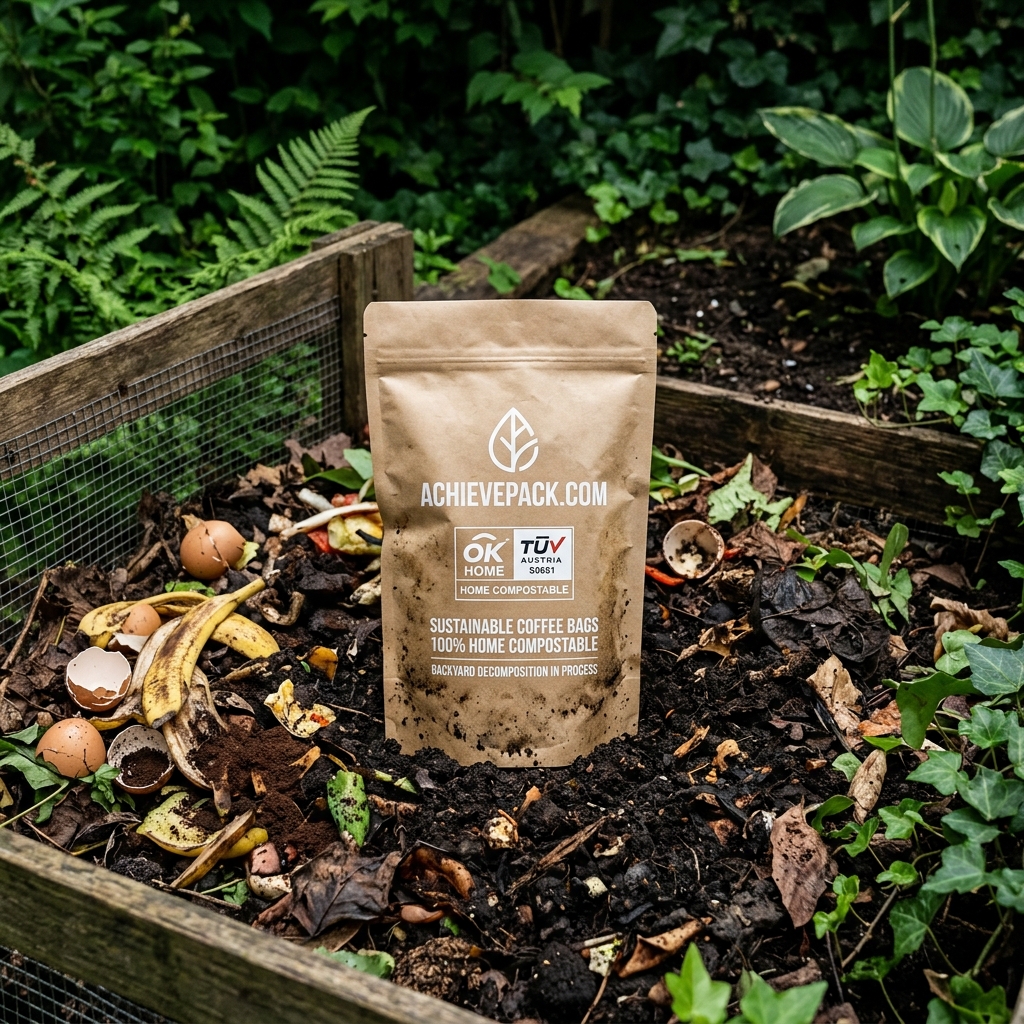
TÜV OK Compost HOME, BPI, EN 13432, AS 5810, GRS — referenced by certificate number.
Experience 3D Packaging Design & Free Dielines
Preview your pouch in 3D WebGL Studio and export production-ready dielines.
Key Takeaways
- Visual tolerance: Evaluate if your brand can embrace slight color/clarity variations
- Supply stability: Confirm your partner has qualified suppliers and contingency plans
- Start practical: Begin with 20-30% PCR and scale based on results
- Line test first: Run controlled trials before full rollout
Reduce Surprises, Not Just Virgin Plastic
Many small and medium-sized brands are convinced that PCR is the right direction but still worry about hidden pitfalls—unexpected line issues, inconsistent appearance, or unreliable supply.
This seven-point checklist gives your team a structured way to evaluate PCR flexible packaging before committing, using Achieve Pack's Eco Digital PCR solutions as a reference.
Can Your Product Tolerate Color and Clarity Variations?
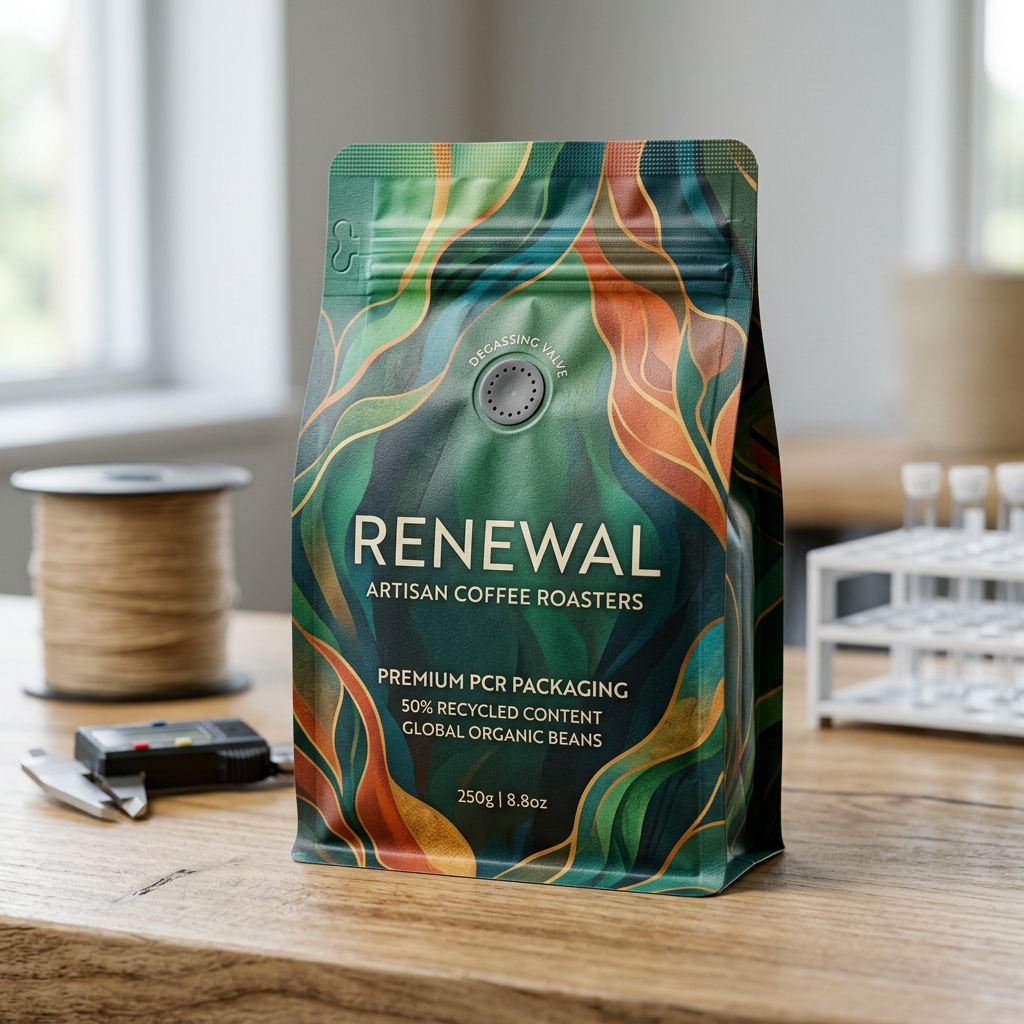
PCR films often show subtle differences in base color and haze compared with virgin films, and batch-to-batch variation can be more noticeable.
Ask yourself:
- • Does your brand depend on ultra-clear windows or perfectly consistent translucency?
- • Or can you move toward more printed coverage and intentional design elements?
Eco Digital printing makes it easy to adapt artwork so PCR's visual differences become a feature, not a bug.
Is a Steady Supply of Food-Grade PCR Available?
Food-grade PCR, particularly for certain polymers and color specs, remains a constrained resource.
Before switching:
- • Confirm that your packaging partner has qualified suppliers and contingency plans
- • Check whether planned PCR percentages are realistic given your volumes
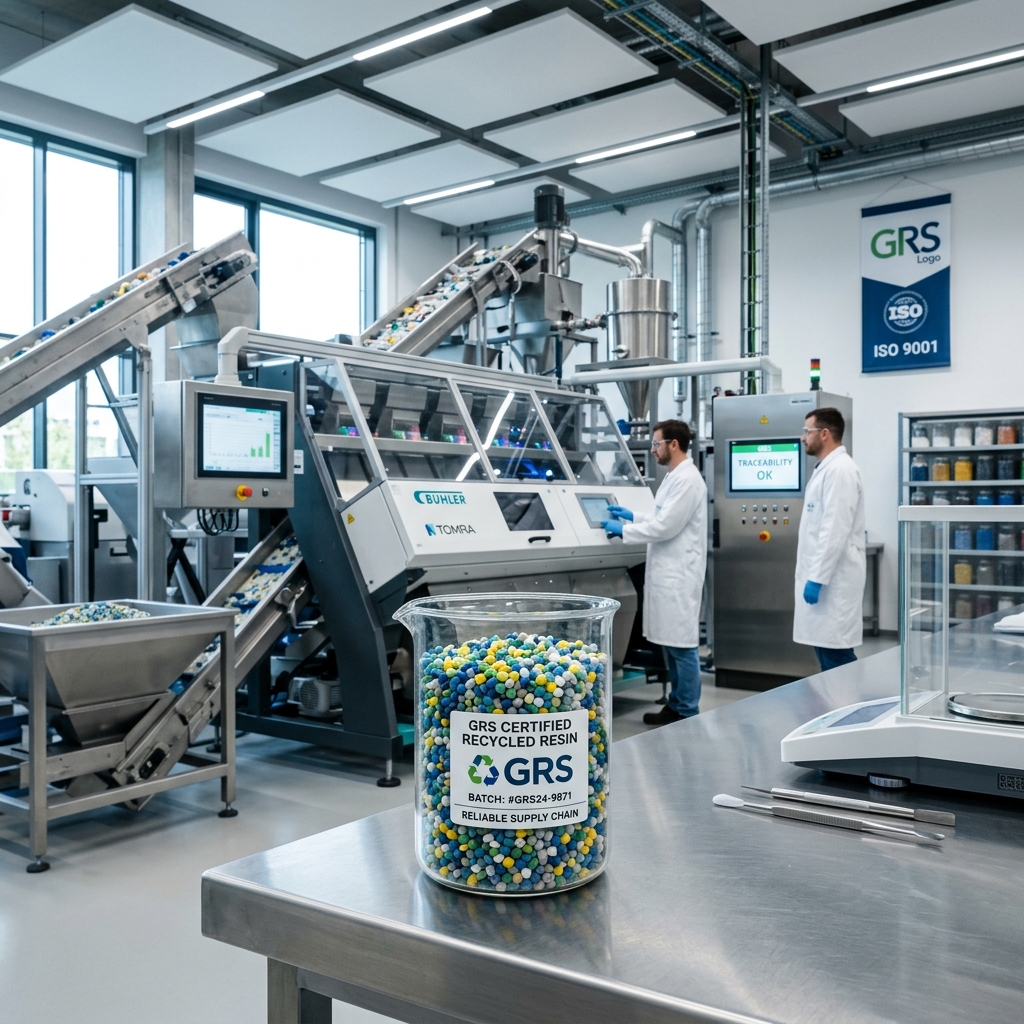
Achieve Pack aggregates demand across clients, helping secure consistent PCR streams for Eco Digital structures suited to SME volumes.
From Ryan Wong's Engineering Notebook

Ryan Wong
Co-Founder & Chief Packaging Engineer | GRS & FSC Auditing Expert
"In my 14 years in packaging design, I've seen countless brands struggle when transitioning to Post-Consumer Recycled (PCR) materials. The biggest mistake is assuming PCR performs exactly like virgin plastic. It doesn't."
"When you run PCR film on high-speed VFFS machines, the altered melting points often lead to compromised seal integrity and bag burst issues. We mitigate this by engineering A-B-A co-extruded structures, placing the PCR layer in the core while using a functional virgin PE sealant layer on the inside. This ensures you meet your sustainability targets without sacrificing the hermetic seal required for food safety."
Ensure your transition to eco-friendly packaging is flawless.
What PCR Percentage Is Realistic for Your First Step?
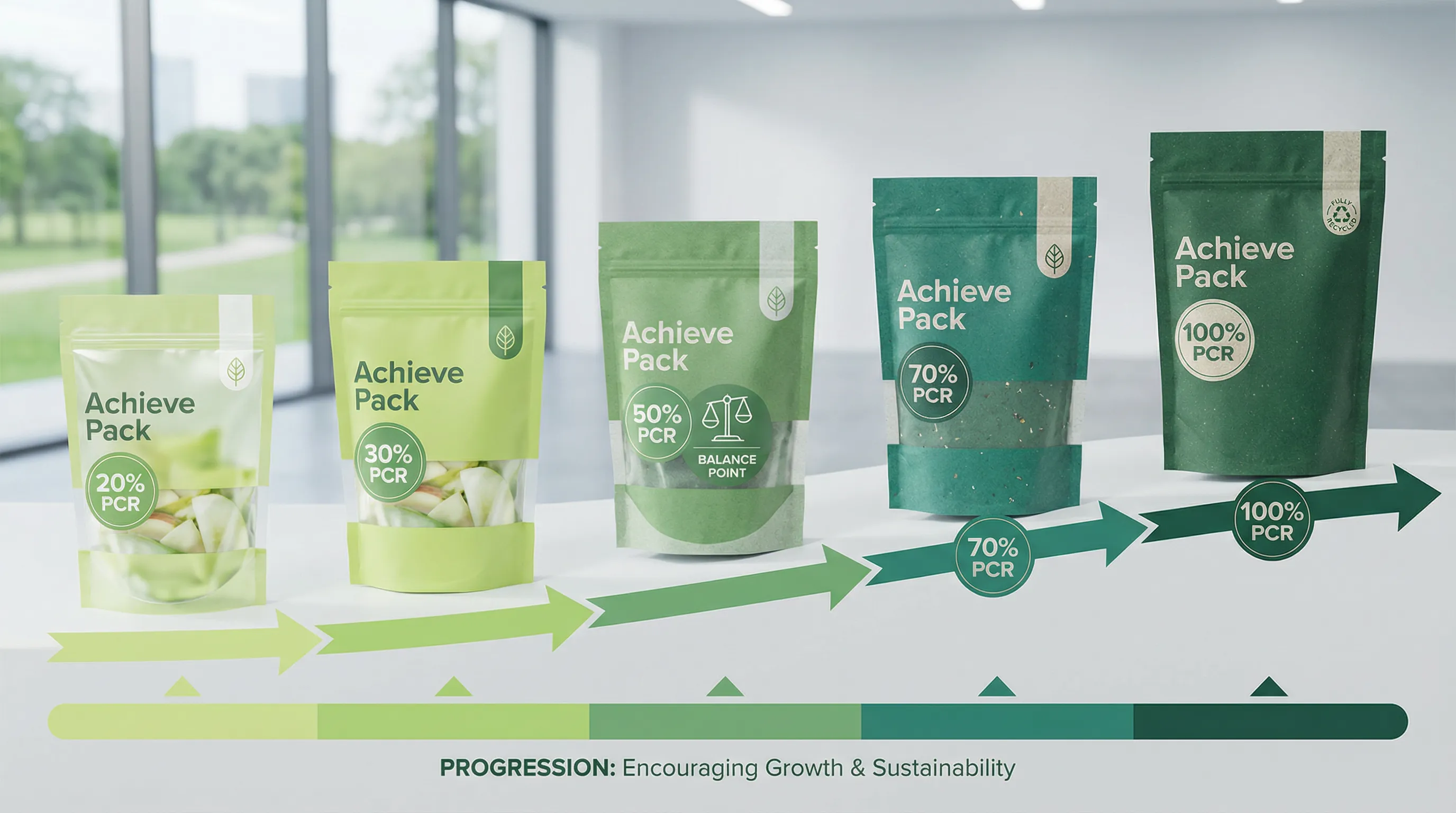
Jumping straight to 100% PCR in flexible packaging is often unnecessary and risky.
A more robust approach:
- • Start with 20-30% PCR in target SKUs to validate performance and supply
- • Increase toward 50%+ where it makes sense, based on product type and positioning
Eco Digital PCR pouches can be specified at different PCR levels, allowing you to treat percentage as a controllable variable.
Will Your Filling and Sealing Lines Behave Differently?
PCR can influence film behavior in ways that matter on your line:
- Slight changes in stiffness, slip and seal initiation temperature
- Potential impacts on forming, filling speed and heat-seal consistency
Mitigate this risk by:
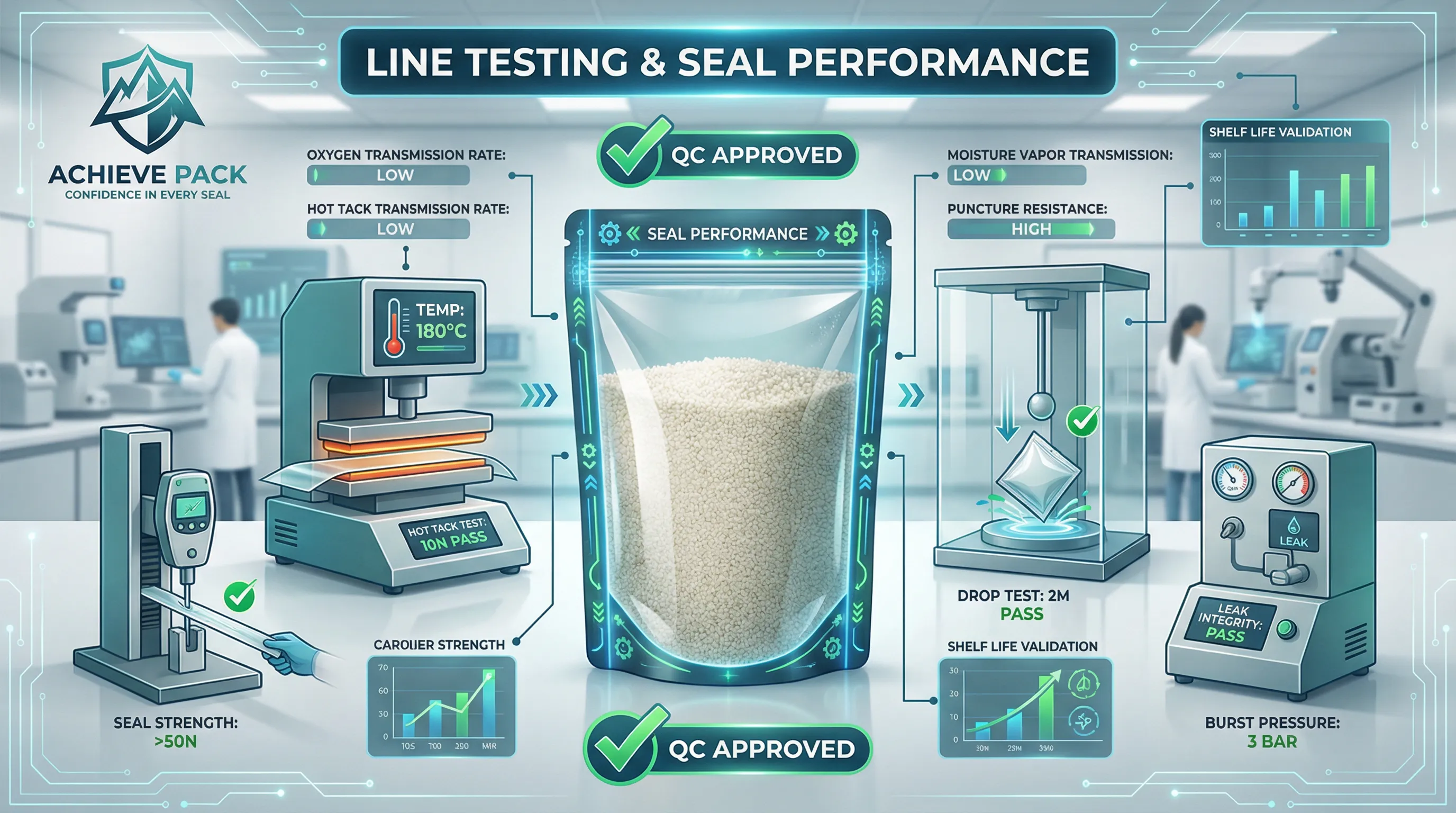
- Running lab tests on seal strength, hot tack and drop performance
- Conducting controlled line trials at different settings before full rollout
Achieve Pack's technical team supports this process, helping you adjust parameters and avoid expensive surprises.
Does PCR Support Your Recyclability Claims?
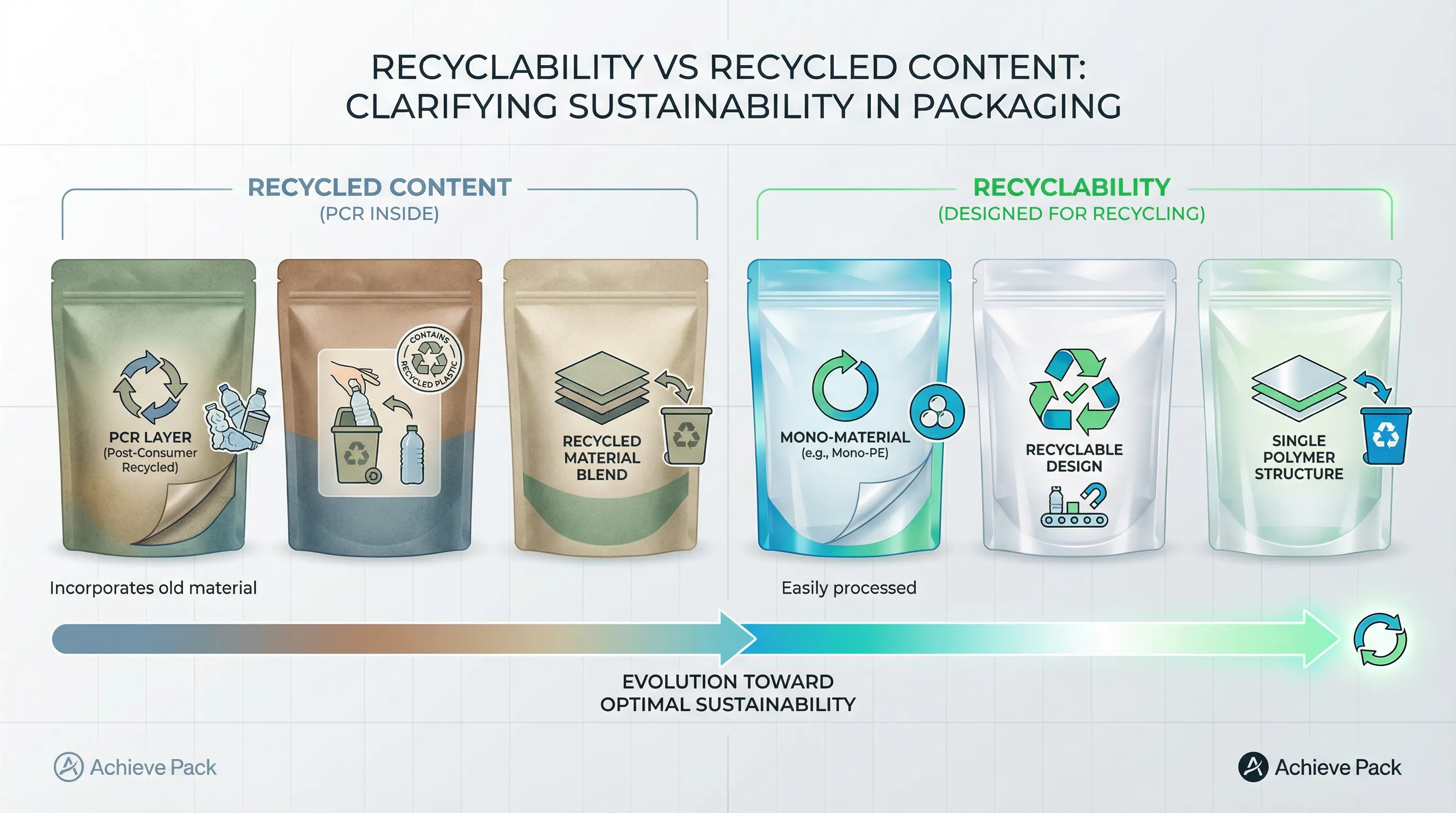
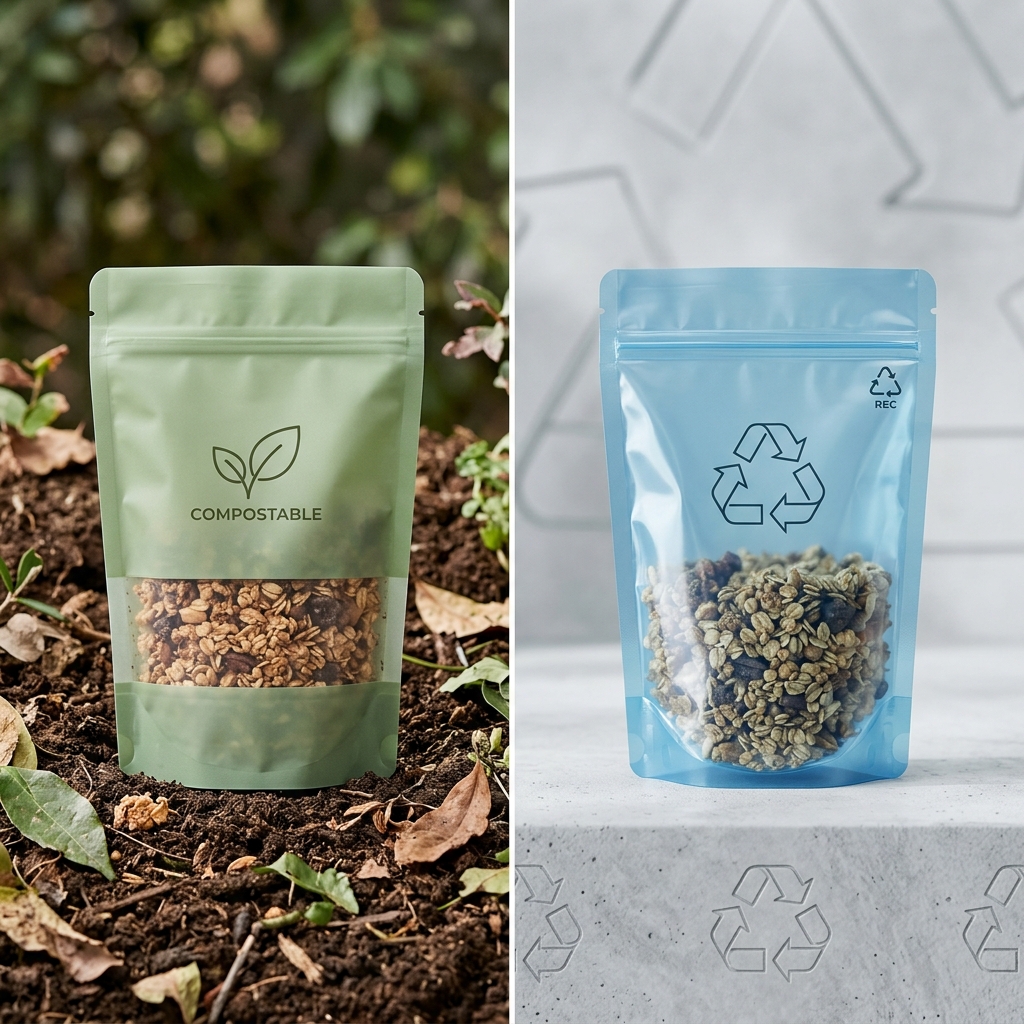
Recycled content and recyclability are related but distinct concepts.
A pouch with PCR can still be hard to recycle if it uses complex multi-material laminates. Conversely, a mono-material pack without PCR can be highly recyclable but contain only virgin resin.
Achieve Pack's Eco Digital PCR offerings prioritize mono-material designs where possible so you can improve both recycled content AND recyclability.
Looking for fully recyclable alternatives?
Explore Recyclable Mono-Material PackagingHow Will You Communicate PCR On Pack and Online?
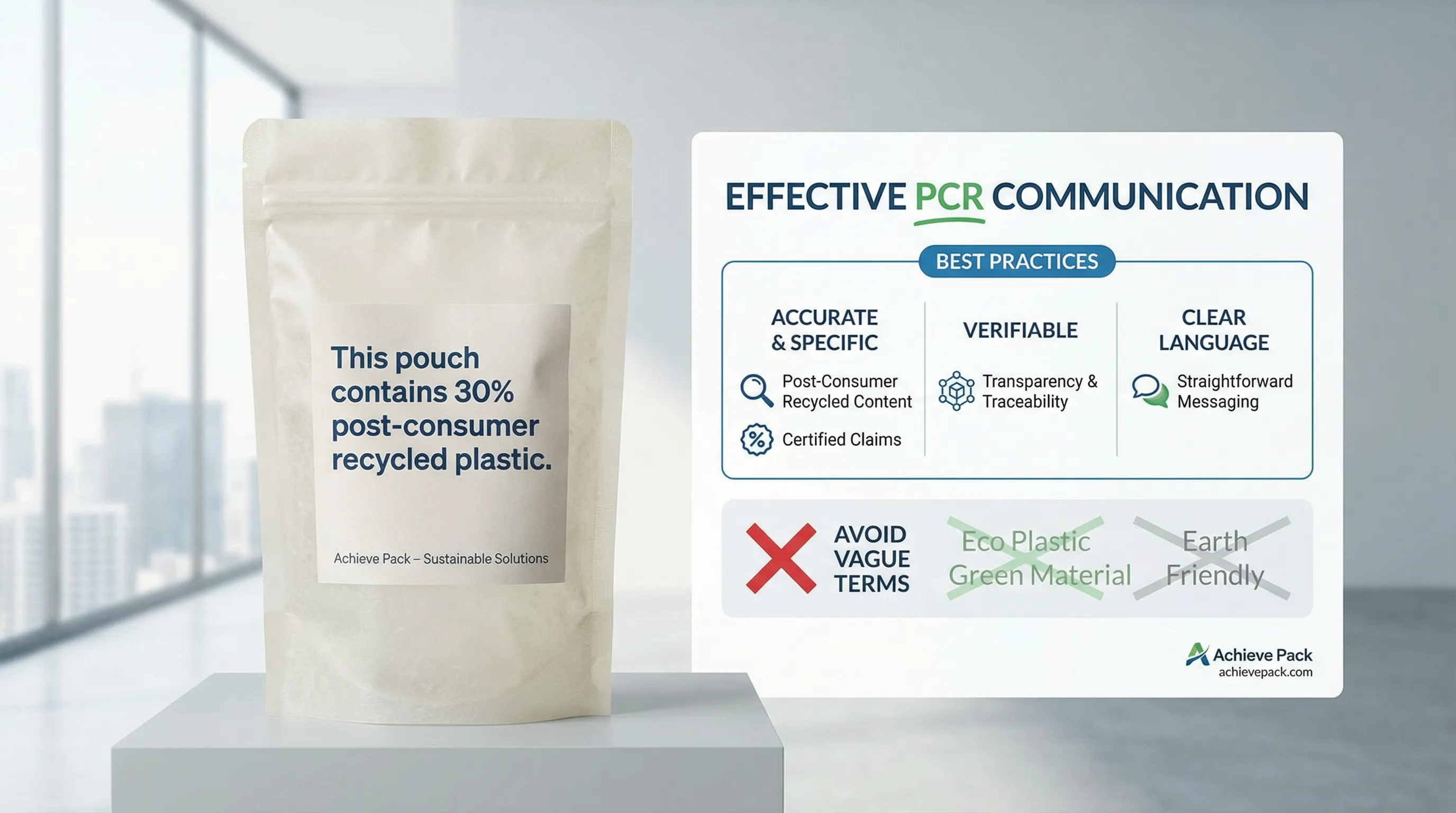
PCR only delivers brand value if it is communicated accurately and clearly:
Avoid vague terms like "eco plastic" or "green material". Use precise wording such as "This pouch contains 30% post-consumer recycled plastic".
Eco Digital print allows you to iterate messaging and layout quickly, testing what resonates with customers without the cost of new plates.
Do You Have the Right Packaging Partner?
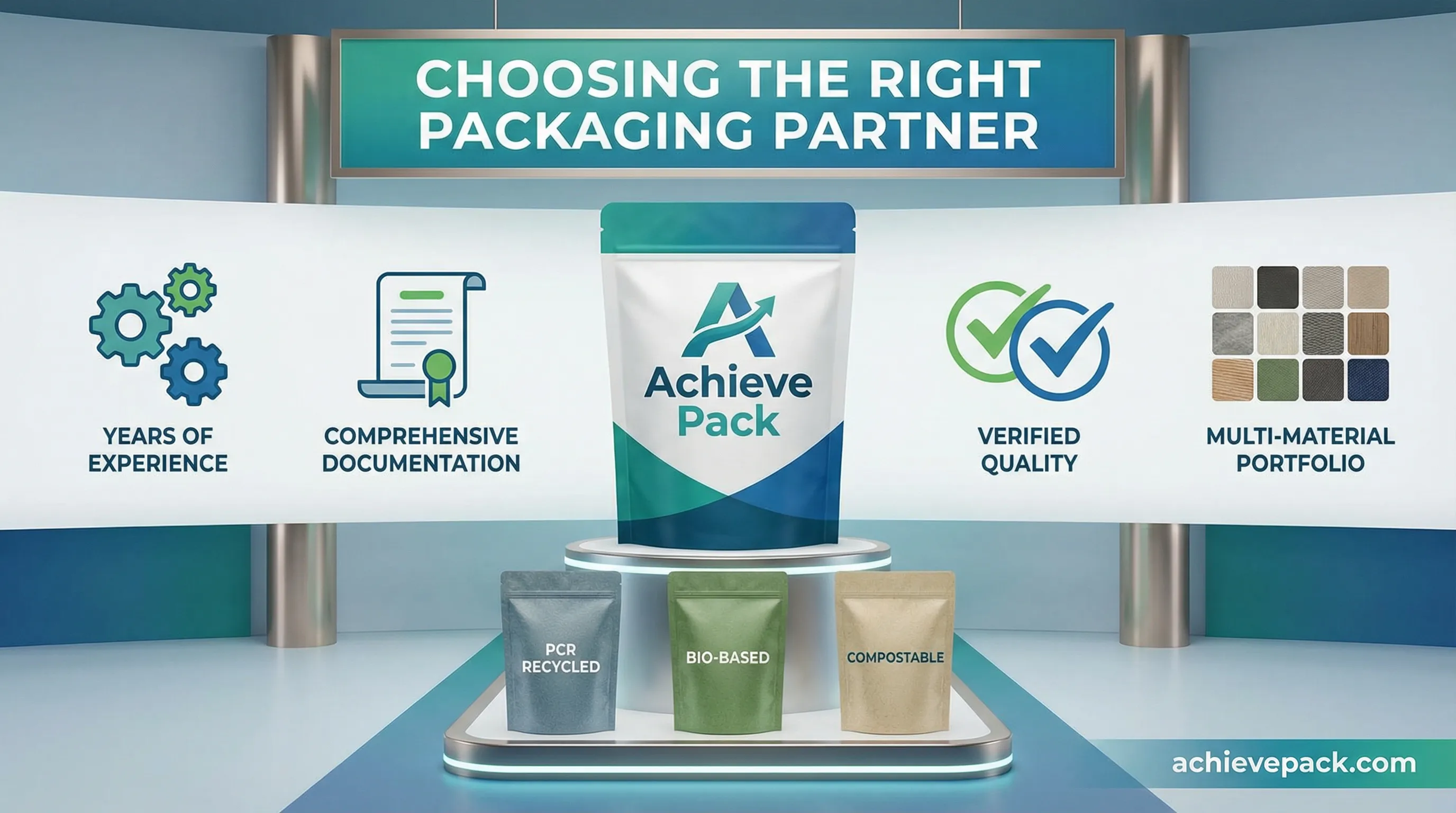
Finally, PCR success depends heavily on the capabilities of your packaging partner.
Look for:
- • Experience working with PCR resins and film structures
- • Access to food-grade, traceable PCR supply
- • Ability to provide documentation on recycled content and compliance
- • Support for low-MOQ testing and multi-material portfolios
Achieve Pack's Eco Digital platform is built around these needs, giving SME brands a way to add PCR thoughtfully, backed by data and technical support.
5 Common PCR Packaging Problems (And Solutions)
Inconsistent Material Quality & Color Variations
PCR batches often vary in color and contain impurities.
Compromised Mechanical Strength
Recycled plastics can be more brittle and less durable than virgin materials.
Unpleasant Odors
Residual smells from post-consumer use can remain in the recycled plastic.
Supply Chain Unpredictability
Sourcing a consistent volume of high-quality PCR resin can be challenging.
Regulatory Compliance & Safety
Meeting food-grade or cosmetic-grade standards with PCR is rigorous and complex.
What PCR Packaging Will NOT Do
- • NOT a recyclability claim. GRS verifies recycled content. Whether the pouch itself can be recycled depends on the structure — a multi-material PCR laminate is still hard to recycle.
- • NOT compostable or biodegradable. PCR is conventional plastic with recycled feedstock. It belongs in recycling streams, never in compostable messaging.
- • NOT visually identical to virgin film. Slight haze, tint, and batch variation are normal — if your brand requires ultra-clear windows, plan heavier print coverage or a lower PCR percentage.
- • NOT a \"set and forget\" spec. Feedstock supply shifts. Lock in qualified suppliers, contingency plans, and documentation before you scale past pilot volumes.
Working through this checklist with a real product? Order the $40+ sample kit (credited toward your first order) or talk to our team.
Technical Factory Validation & Quality Control
We don't just supply pouches; we validate every batch. Every raw material and finished pouch runs through our 6-step testing protocol to guarantee automatic packaging line compatibility and food-safe barrier preservation.
OTR & WVTR Barrier (MOCON)
Tested under ASTM D3985 & ASTM F1249 to ensure fresh shelf life up to 18 months.
GC-MS Solvent Residue
Gas Chromatography-Mass Spectrometry ensures zero odor transfer and absolute food safety.
Heat Seal Strength (ASTM F88)
Guarantees no seam burst under high pressure, perfect for VFFS automatic packing lines.
BRCGS Global Standard
Produced in Class 100,000 dust-free cleanrooms, ensuring zero contamination.
Puncture Resistance (ASTM F1306)
Prevents tear or puncture from sharp, hard items like coffee beans and pet kibble.
Tensile Strength (ASTM D882)
Ensures shape retention and structural integrity when heavy bags are dropped or stacked.
Packaging Transformation for 7 Things to Check Before Switching to PCR Packaging | Achieve Pack
See how upgrading from generic commoditized bags to precision-engineered flexible barrier packaging eliminates transport failures and boosts shelf authority.
Standard / Generic Packaging (Before)
Standard stock bags fail under transit stress and expose sensitive goods to moisture, UV light, and oxygen.
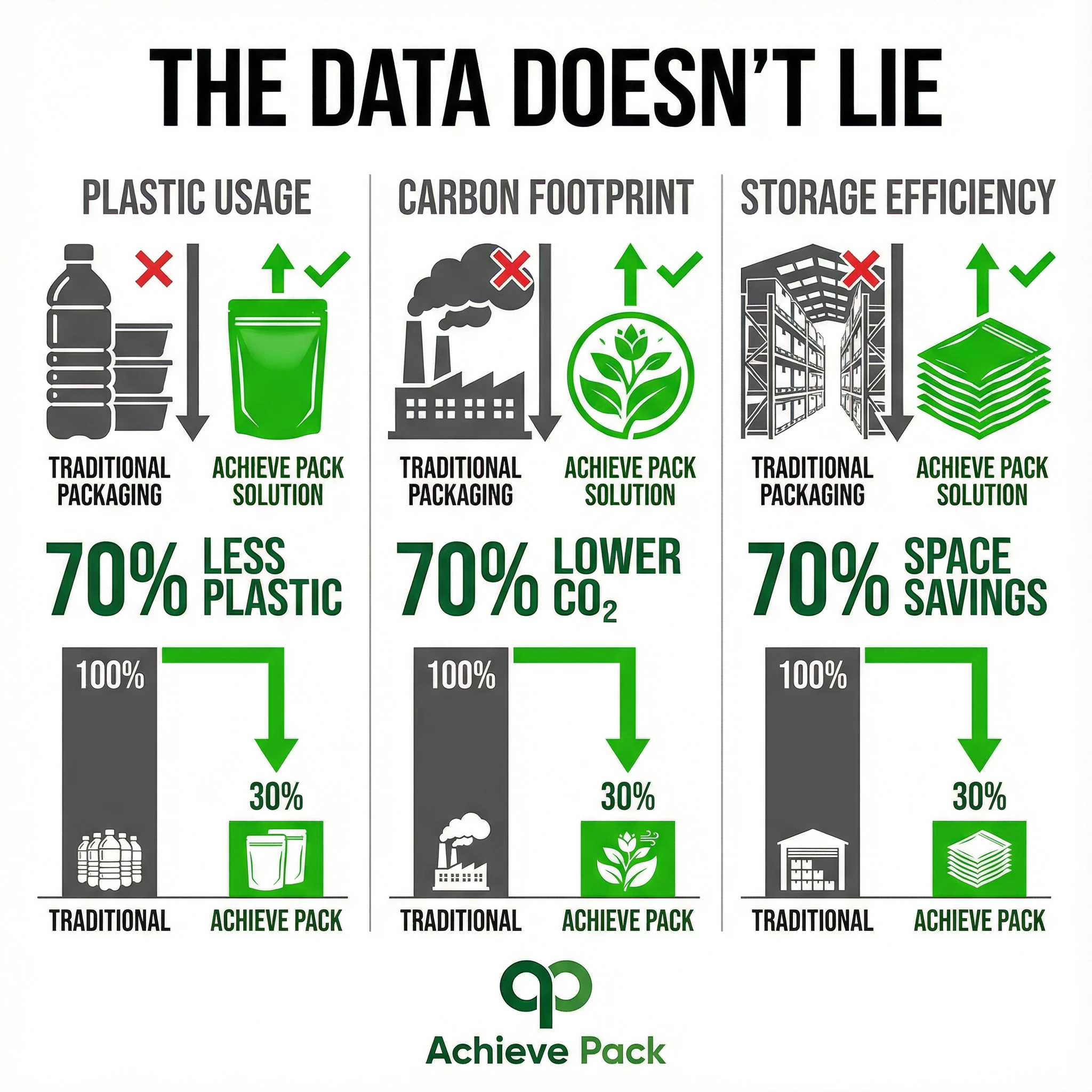
- Rapid Oxidation & Flavor DegradationCheap films allow O2 & moisture ingress, spoiling contents in < 30 days.
- High Seal Breakage in TransitThin seams fail under drop tests, leading to customer refunds & lost trust.
- Heavy Plastic Tax PenaltiesMulti-layer unrecyclable packaging incurs up to €800/ton in EU PPWR fines.
- High MOQs & Plate Cost FrictionTraditional printers force 10,000+ unit minimums and $1,500 cylinder fees.
Achieve Pack / Pouch Eco Solution (After)
Custom engineered multi-layer pouch structure tailored to your exact moisture barrier, seal strength, and aesthetic requirements.
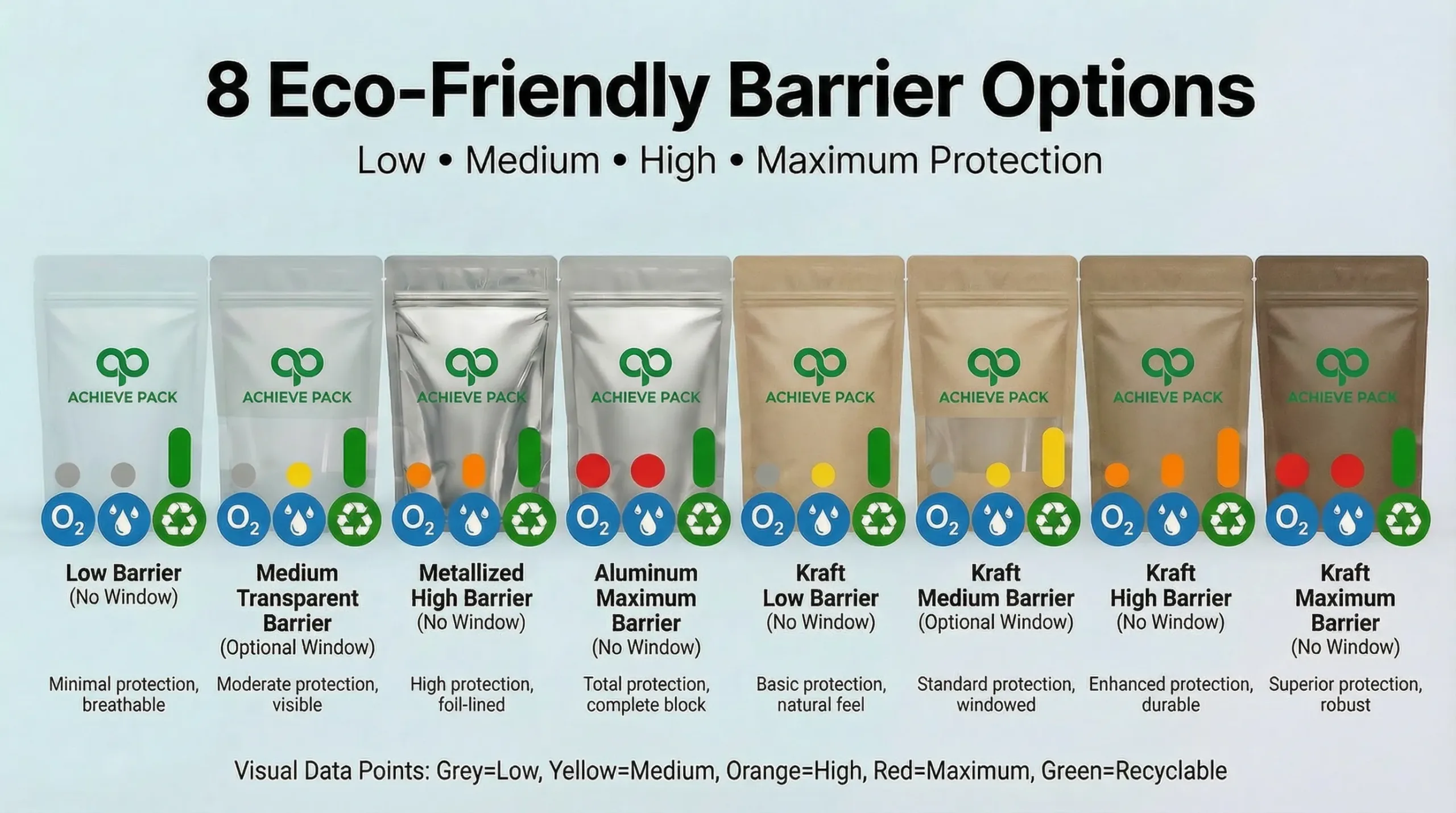
- Ultra High-Barrier Foil/EVOH CoreGuaranteed OTR < 0.1 cc/m²/day, keeping contents fresh for 18–24 months.
- Reinforced 45N/15mm Localized Heat Seal180°C precision seam dwell time prevents bursting even under 2-meter drops.
- 100% Certified Eco ComplianceTÜV OK Compost HOME (EN13432) & Mono-PE Recyclable structures (0% Tax).
- HD Digital Printing with 500-Unit Low MOQsPrint multi-SKU runs in 7 business days with zero setup plate charges.
Questions We Get Asked
What PCR percentage should I start with?▼
Will PCR affect my filling line performance?▼
How do I communicate PCR on my packaging?▼
Is PCR the same as recyclable packaging?▼
How can I verify my supplier's PCR claims?▼
Related Stuff
How We Ensure Absolute Accuracy and Trustworthiness
At Achieve Pack, sustainable packaging isn't just about printing; it's about hands-on material science. This article has been written and verified by Ryan Wong, a packaging specialist with 14+ years of experience engineering biopolymer stacks for DTC startups and Fortune 500 companies.
All research, material barrier specifications (OTR, WVTR), heat-seal values (N/15mm), and compostability timelines cited in our guides are backed by testing inside the Achieve Pack Materials Testing Lab. We cross-reference our data with official certification registries from BPI (Biodegradable Products Institute), TÜV Austria (OK Compost HOME), and FSC (Forest Stewardship Council).

Ryan Wong
Supply Chain Director
B.Eng honors degree graduate from Hong Kong Polytechnic University. Serving brands in 8 countries.
View Expert Profile →Start With a Pilot, Not a Leap
Work through this checklist with material in hand. The $40+ sample kit — credited toward your first order — lets you run seal, print, and line trials before you commit to a 500 pc pilot run.
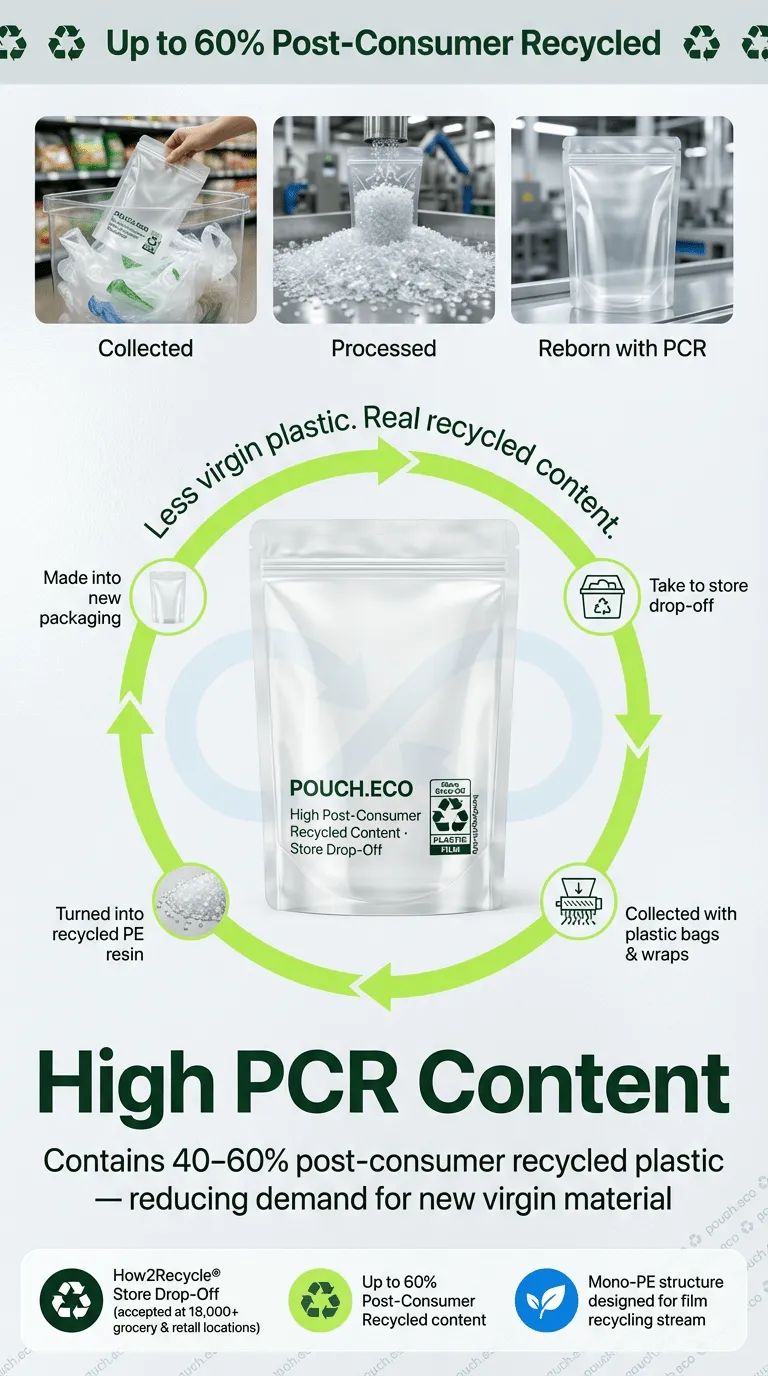
Post-Consumer Recycled (PCR)
Made from high-quality post-consumer recycled plastic waste. Our PCR structures reduce carbon footprint and keep plastic out of landfills and oceans, while maintaining premium barrier strength.
- Saves post-consumer waste from landfills
- Lowers carbon footprint substantially
- Meets consumer demand for recycled packaging
- Excellent tear resistance & print quality