Wash-Off Water-Soluble Food Labels Specifications
Solving Core Packaging Challenges for Wash-Off Water-Soluble Food Labels
Concise B2B technical benchmarks designed to eliminate transit failures, regulatory penalties, and shelf-life loss.
Scraping Glue Off Containers Between Runs
Risk: Kitchen staff spend minutes per container soaking and scraping a permanent label, and the container still goes back into rotation with a glue ring that traps debris.
An Adhesive Specified to Let Go in the Wash
Water-dispersible acrylic on paper facestock: the label leaves in the dishwasher cycle instead of being removed by hand.
A Plastic Liner Nobody Can Recycle
Risk: A PET release liner turns a paper label into mixed waste, and on a high-volume line those liners are the bulk of the label waste stream.
Glassine Paper Liner as Standard
The spent liner goes in with paper and card rather than the plastic film bin. No downgauged PET film hiding in the waste stream.
Sustainability Claims That Cannot Be Documented
Risk: A retailer or importer asks for the certificate behind the word on the label and the supplier cannot produce it, so the artwork is pulled at the last minute.
Claims Matched to Documents, Per Order
FSC chain of custody plus a transaction certificate, food-contact statement, and EN 13432 or ASTM D6400 only where the finished construction holds it.
Experience 3D Packaging Design & Free Dielines
Preview your pouch in 3D WebGL Studio and export production-ready dielines.
Two Builds, One Job: The Label Has to Leave
Every other label you buy is specified to stay on. This one is specified to come off — cleanly, in one wash, without a scraper and without a glue ring. A wash-off label pairs paper facestock with a water-dispersible acrylic adhesive. On the shelf, in the chiller and through handling it behaves like a permanent label. In a wash cycle the adhesive lets go and the paper breaks up, so a container comes out of the machine ready to refill.
We build it two ways, because "washes off" and "dissolves" are not the same promise:
Wash-off (standard)
FSC Recycled paper on a water-dispersible adhesive. Releases in a commercial wash cycle at 55 °C and above with alkaline detergent; the paper softens, tears and leaves with the water. This is the food-rotation build: day dots, use-by, prep date, allergen and HACCP labels.
Water-soluble (zero residue)
The facestock itself is water-soluble paper — no wood pulp — on a water-soluble adhesive. It dissolves in still water in under two minutes, which is the build for laboratory glassware, sample containers and anywhere a single fibre left behind is a failure, not an annoyance.
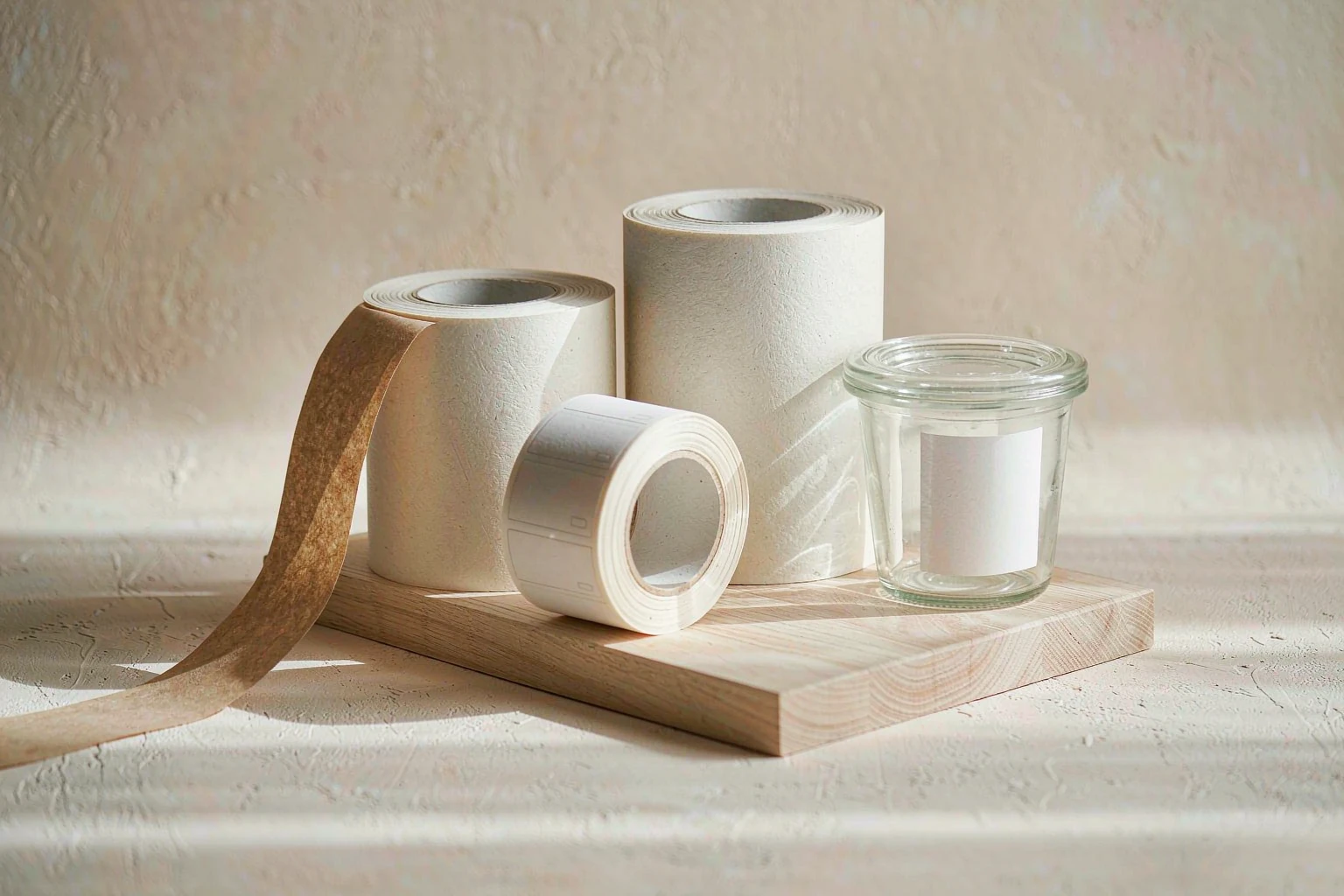
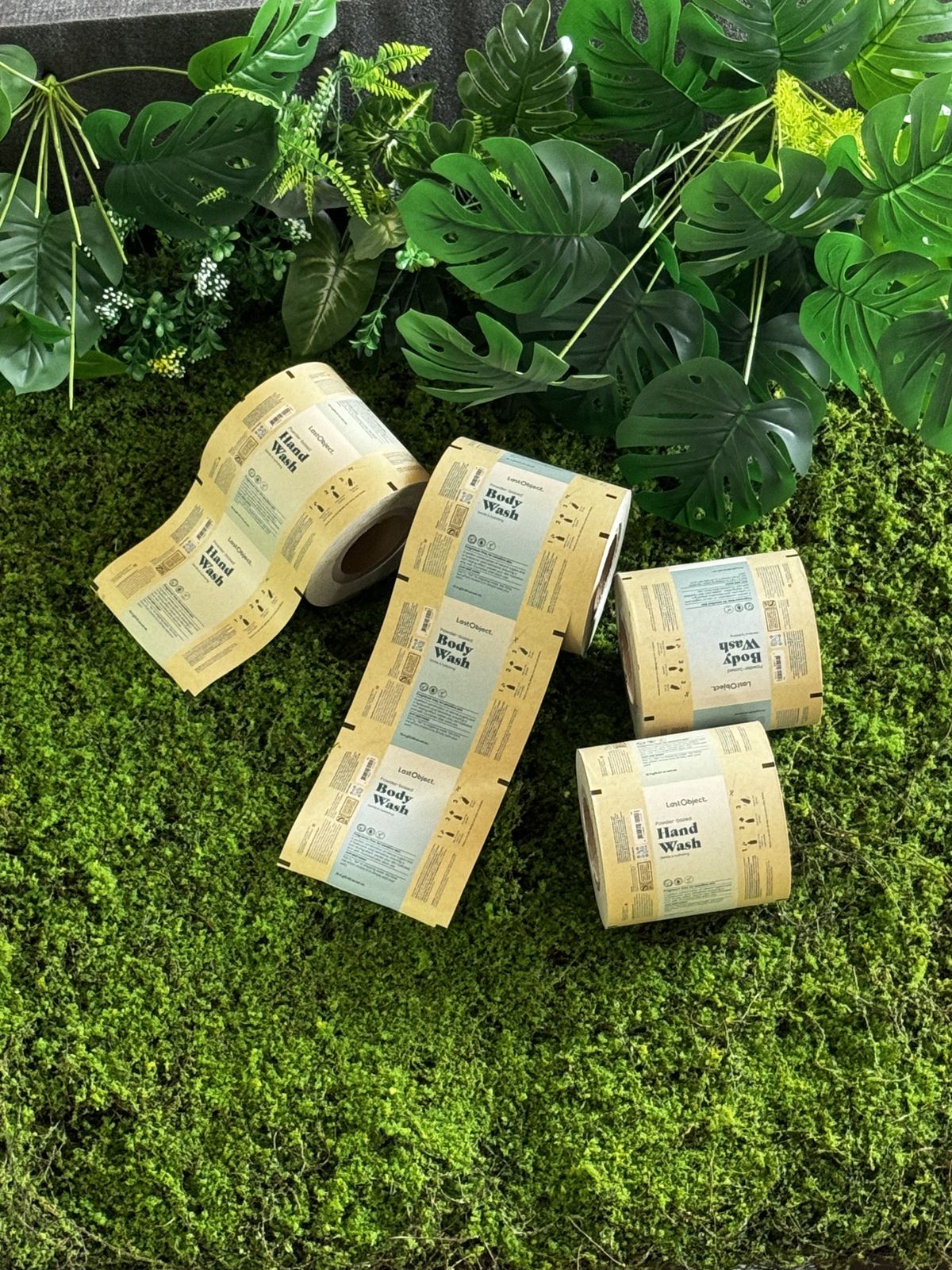
Standard wash-off stock: FSC Recycled paper facestock on a glassine paper liner, so the spent liner goes in with the cardboard rather than the plastic film bin.
What Actually Happens in the Wash
The adhesive is the engineering. A water-dispersible acrylic is formulated so that hot water and surfactant reach the polymer and drop its peel strength; the paper then takes on water faster than the adhesive can hold it, and the label lifts and breaks apart. Three things drive the result:
- Temperature. Release starts at roughly 55 °C. A cold rinse will not remove it — that is the single most common misunderstanding we correct, usually after the first trial run.
- Dwell and agitation. Two to four minutes in a commercial dishwasher, or 30-90 seconds of running water with a rub for hand washing. More agitation removes faster; a still sink of cold water is the slowest case and can take several minutes even on the water-soluble build.
- Detergent. Alkaline detergent accelerates release. Plain water works, detergent works faster, and a caustic bottle-wash line is the fastest case of all.
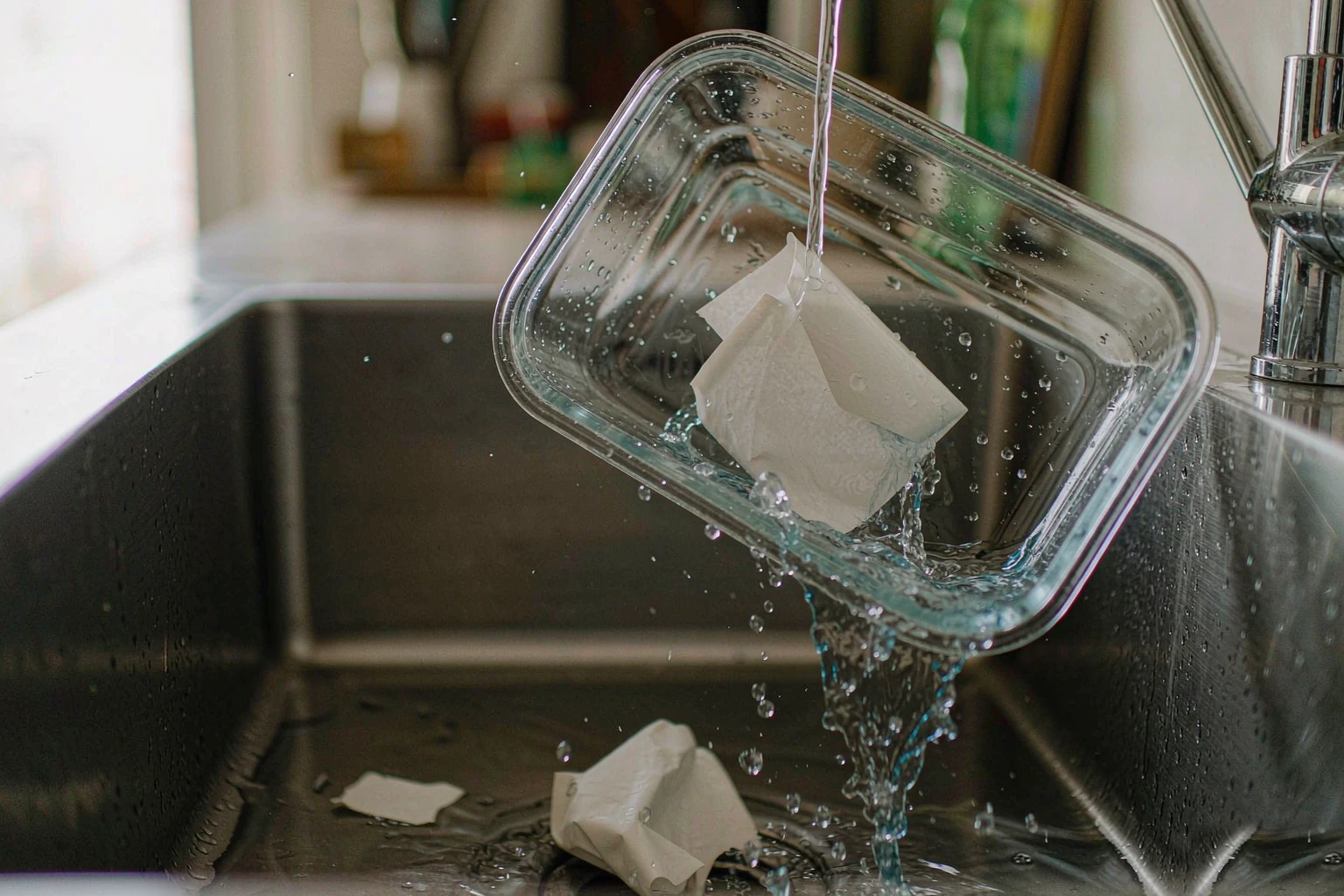
Rinse test on our sample bench: the label lifts at the edge, water gets behind the facestock, and the glass comes out clean. The liner is glassine paper — it does not leave a PET film in the wash water.
Where This Label Earns Its Keep: Bottle Recycling
A PET bottle is not recycled as a bottle. It is shredded and then washed in a hot caustic bath before the flake can be sold, and anything printed or glued to that bottle has to leave in the bath. A label that will not release contaminates the flake; a label that releases leaves clean material. That is why "wash-off" is a specification term in bottle recycling rather than a marketing adjective.
For a brand, this is where label choice connects to compliance. Under the EU Packaging and Packaging Waste Regulation the design of a component is judged on whether it interferes with the recycling of the main body — and a label that only comes off with a knife is exactly that interference. If you are building a bottle range for the EU market, put the label in the design review at the same time as the closure, not after the artwork is signed off.
What we will and will not say: we supply an adhesive grade specified for caustic wash-off and we provide the adhesive manufacturer's wash-off performance data with the quote. We will not promise a release result on your line without a trial, because bath temperature, dwell time and bottle geometry all move the answer.
Where This Label Is the Wrong Choice
We would rather lose the order than ship a label into an application it fails in. Four cases where you should specify something else:
- 01Cold, wet containers at application. A label applied to a chilled or damp surface will not wet out, and it will lift at the edge within days. Apply at room temperature, or specify a wet-surface adhesive grade.
- 02Long-life or premium retail goods. A wash-off adhesive is not a permanent adhesive. For a product that sits on a shelf for 18 months, in humid retail, being handled, use a permanent paper or film label instead.
- 03Oily, silicone-treated or untreated PE surfaces. Peel strength falls away and the failure looks random, which is worse than a consistent one. Send a sample container and we will test.
- 04Anywhere the claim on the label is "biodegradable" with no standard behind it. We will not print that word unqualified, on this product or any other.
What Can Legally Be Printed on the Label
A label is the smallest billboard your brand owns and the easiest place to make a claim you cannot defend. This is our working list, and it is the same list we use when we check artwork before print.
| Claim on artwork | Verdict | What it needs to be defensible |
|---|---|---|
| FSC Recycled | Yes, with documents | Chain of custody on our side, a transaction certificate naming your order, and your own FSC licence code for the on-product mark. |
| Industrial compostable (EN 13432 / ASTM D6400) | Yes, on the certified build only | The finished label — facestock plus adhesive plus varnish — must hold the certificate as a combination. A certified film with an uncertified adhesive is not a certified label. |
| Home compostable (TÜV OK Compost HOME) | Only if the finished construction holds it | Home composting is a stricter and slower environment than industrial. Do not borrow the industrial certificate for a home-compost claim. |
| Wash-off / removes in the dishwasher | Yes, with conditions stated | Say the temperature and the cycle. "Washes off" without "at 55 °C and above" invites a complaint from someone who rinsed it cold. |
| Biodegradable | No, not unqualified | A timeframe and a test standard or nothing. This is the word regulators are actively enforcing against, and it buys you nothing that "compostable to EN 13432" does not buy you better. |
Ordering, Sampling and Artwork
Three steps, and the second one exists so that the third one does not go wrong:
- Sample the adhesive first. We send blank stock in your label size so you can wash it in your own machine, on your own containers, at your own temperature. That test settles more questions than any specification sheet.
- Approve a printed proof. Artwork is checked against the claims table above before it goes to print, and you get a proof showing the actual facestock tone — recycled paper is not bright white, and a brand colour that assumes coated white will read differently on it.
- Run, then reorder on the same stock. Keep the adhesive grade and the facestock lot consistent between runs. A different adhesive grade from a different supplier is the usual reason a label that used to wash off stops washing off.
Useful things to send with an enquiry: container material and surface finish, application temperature, wash temperature and dwell time, label size and shape, how many SKUs, and whether the label carries variable data from a thermal printer.
Biopolymer Lab Validation & Compostability Proof
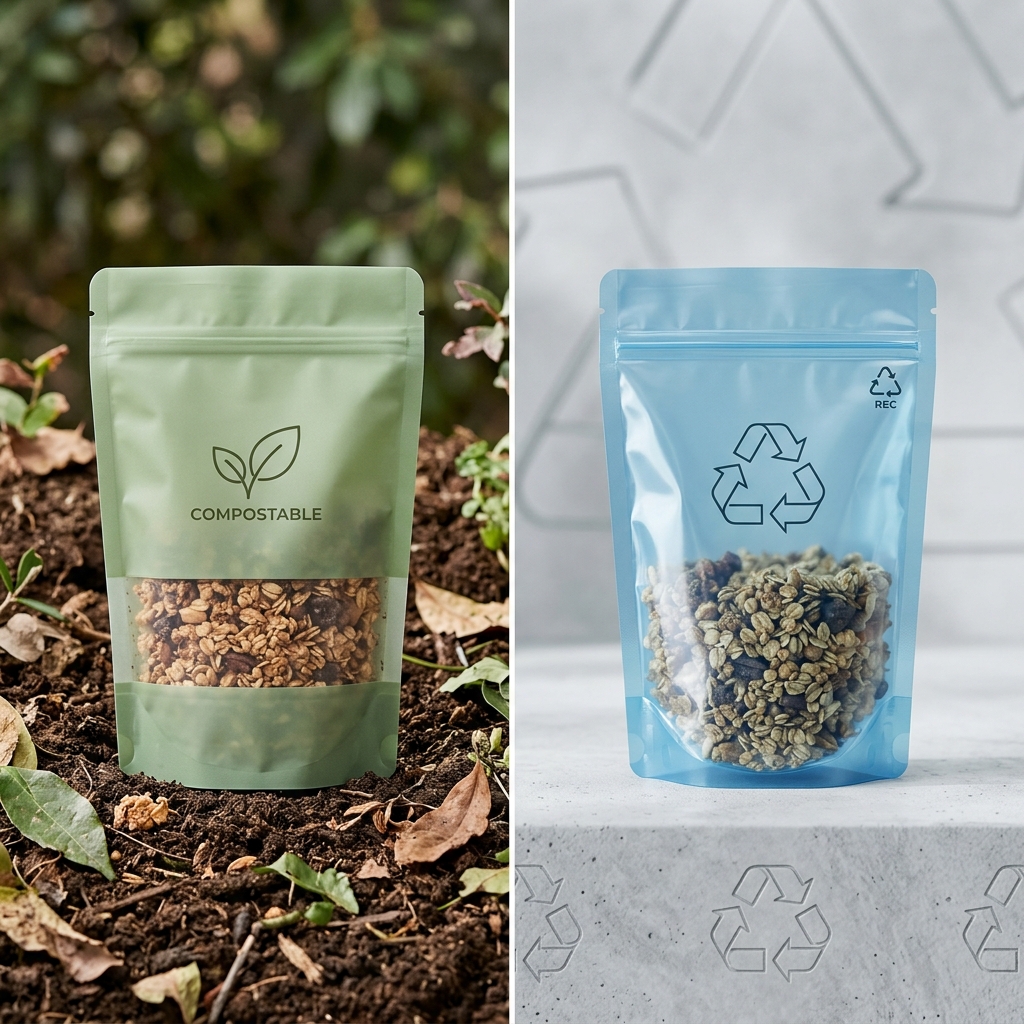
We don't make vague green claims. Our biopolymers (NatureFlex, PLA/PBAT) are batch-tested to verify 100% biodegradation in home and industrial composting within 180 days with zero toxic ecotoxicity residues.
Compostable Barrier (OTR)
Tested barrier layers (NK/NatureFlex) ensuring moisture and aroma protection.
Organic Chemical Purity
Exceeds EN 13432 criteria for organic safety and clean soil composting.
Biopolymer Sealing Window
Narrowed sealing temperature range preventing biopolymer deformation or thermal burn.
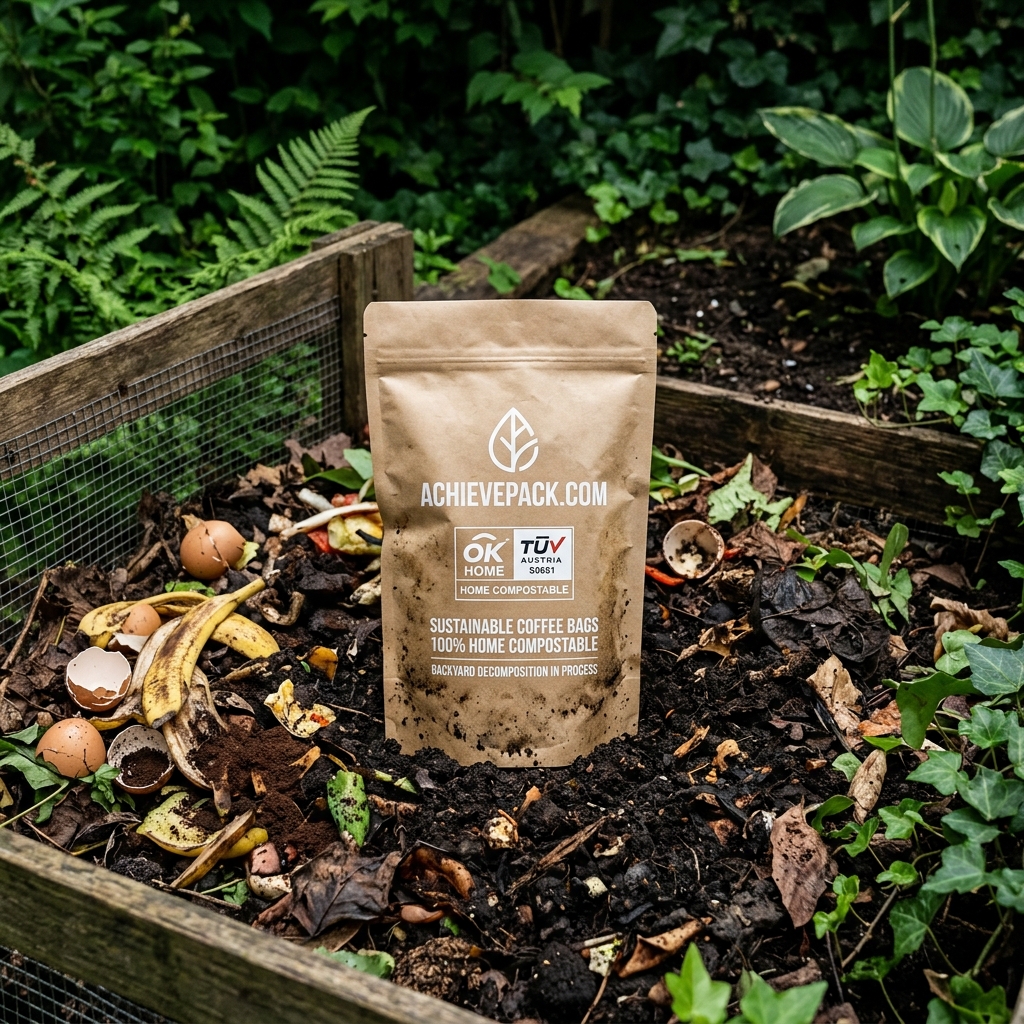
TÜV OK Compost HOME
Guarantees complete organic degradation in backyard compost bins within 26 weeks.
Puncture Strength (ASTM F1306)
Ensures biopolymer bag walls resist puncture during manual handling and packing.
Tensile Strength (ASTM D882)
Ensures biopolymer bags support products securely without structural stretch.
Packaging Transformation for Wash-Off Water-Soluble Food Labels
See how upgrading from generic commoditized bags to precision-engineered flexible barrier packaging eliminates transport failures and boosts shelf authority.
Standard / Generic Packaging (Before)
Standard stock bags fail under transit stress and expose sensitive goods to moisture, UV light, and oxygen.
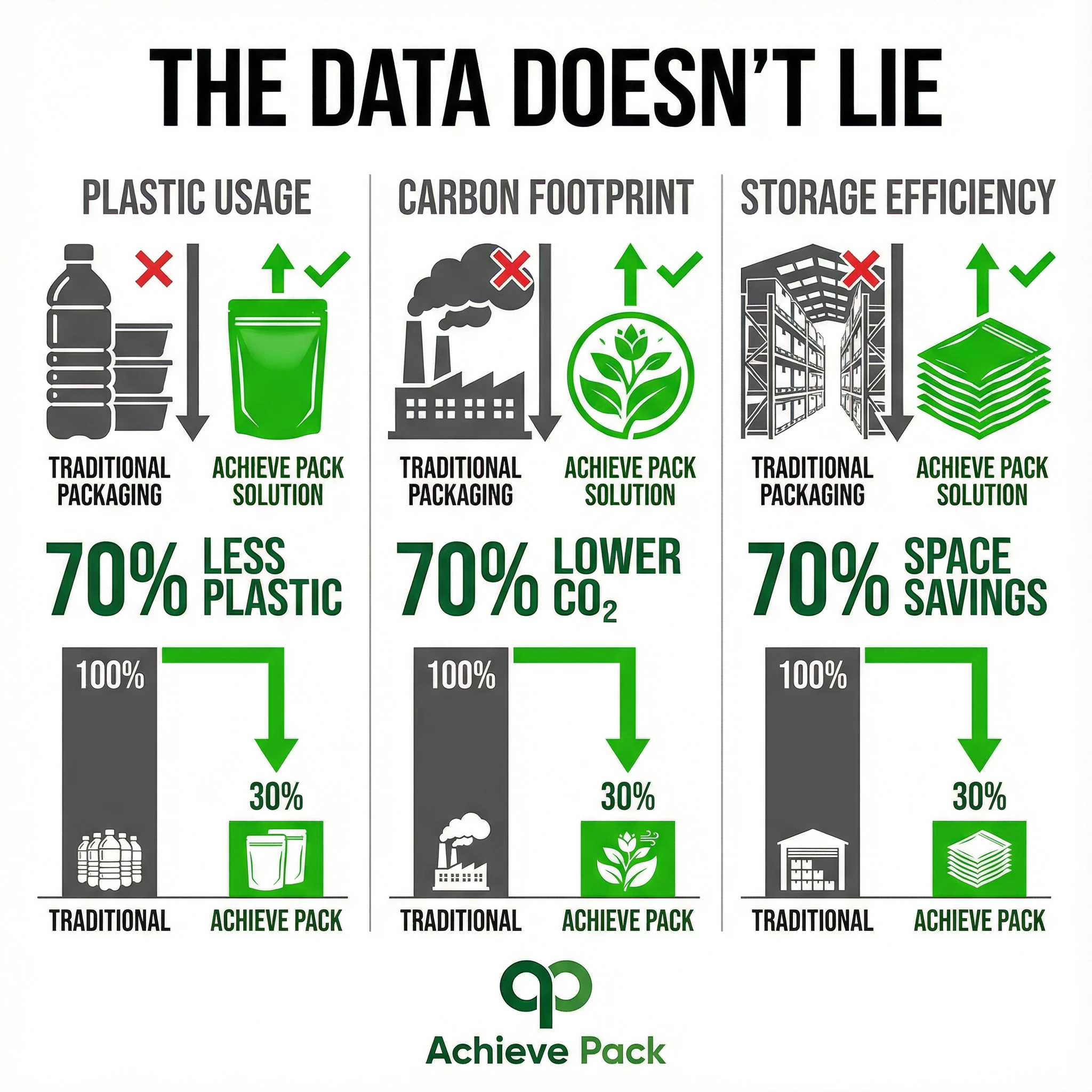
- Rapid Oxidation & Flavor DegradationCheap films allow O2 & moisture ingress, spoiling contents in < 30 days.
- High Seal Breakage in TransitThin seams fail under drop tests, leading to customer refunds & lost trust.
- Heavy Plastic Tax PenaltiesMulti-layer unrecyclable packaging incurs up to €800/ton in EU PPWR fines.
- High MOQs & Plate Cost FrictionTraditional printers force 10,000+ unit minimums and $1,500 cylinder fees.
Achieve Pack / Pouch Eco Solution (After)
Custom engineered multi-layer pouch structure tailored to your exact moisture barrier, seal strength, and aesthetic requirements.
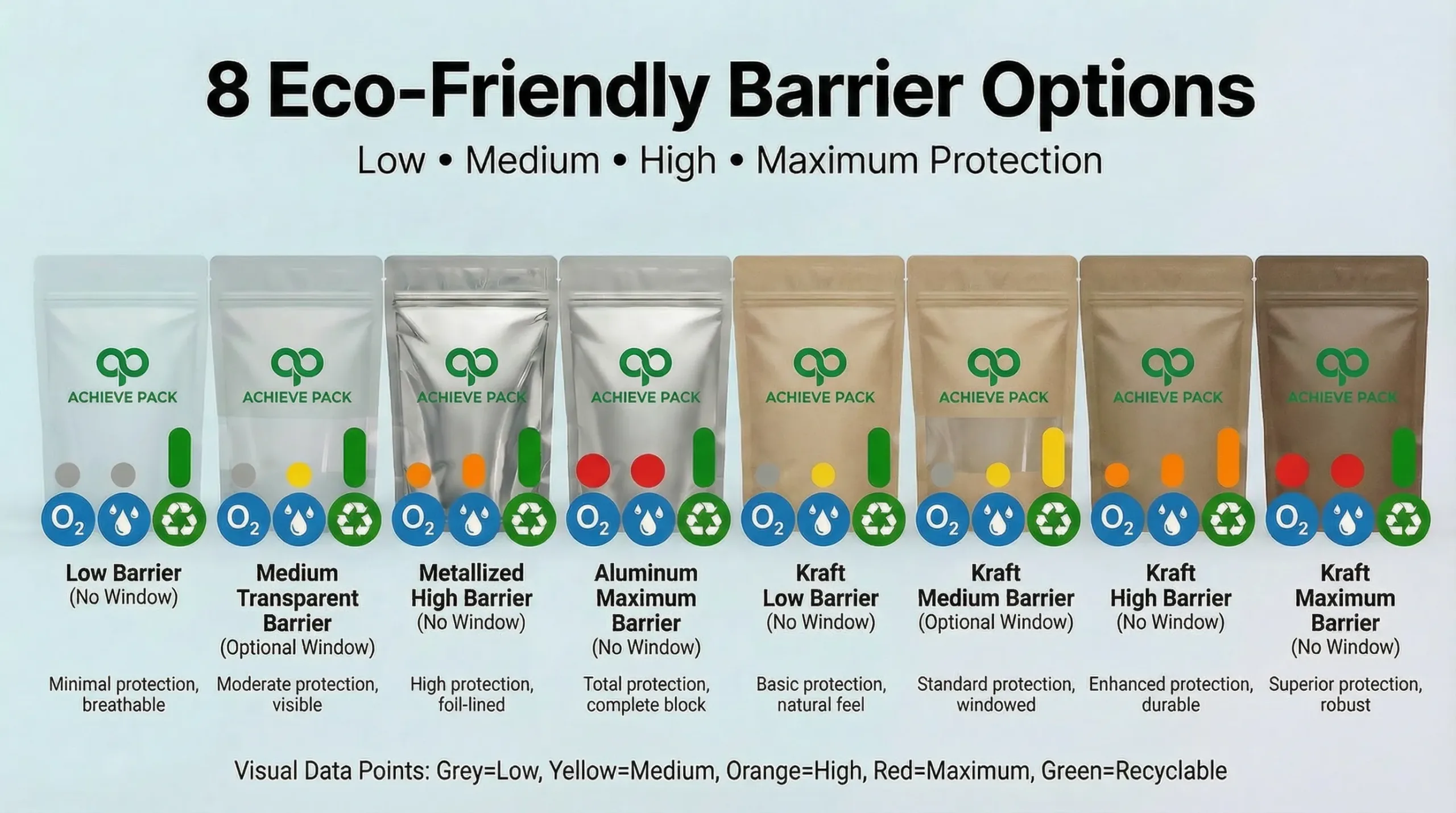
- Ultra High-Barrier Foil/EVOH CoreGuaranteed OTR < 0.1 cc/m²/day, keeping contents fresh for 18–24 months.
- Reinforced 45N/15mm Localized Heat Seal180°C precision seam dwell time prevents bursting even under 2-meter drops.
- 100% Certified Eco ComplianceTÜV OK Compost HOME (EN13432) & Mono-PE Recyclable structures (0% Tax).
- HD Digital Printing with 500-Unit Low MOQsPrint multi-SKU runs in 7 business days with zero setup plate charges.
Label Construction: Standard vs Water-Soluble
| Layer | Wash-off (standard) | Water-soluble (zero residue) |
|---|---|---|
| Facestock | 80 gsm FSC Recycled uncoated paper, natural white | 60-90 gsm water-soluble paper, no wood pulp |
| Adhesive | Water-dispersible acrylic, permanent while dry | Water-soluble acrylic |
| Liner | 62 gsm glassine paper (no PET film) | 62 gsm glassine paper |
| Release behaviour | Releases at 55 °C and above, 2-4 min with detergent | Dissolves in still water in 30-90 s |
| Service temperature | -20 °C to +70 °C | -5 °C to +60 °C, below 80 % RH |
| Food-contact basis | EC 1935/2004 + GMP 2023/2006; BfR XXXVI; FDA 21 CFR 175.105 / 176.170 | Same framework; paper compliance statement issued per order |
| End of life | Repulpable paper label; compostable build available to EN 13432 | Dissolves in waste water; not a compostable claim |
Formats, Minimums and Lead Times
| Format | Common sizes | Minimum | Lead time |
|---|---|---|---|
| Rolls, 76 mm core | 25 / 38 / 50 / 75 mm circles; 50 × 25 mm; 100 × 50 mm | 1,000 labels per SKU (digital) | 10-15 business days |
| Sheets, A4 / A3 | Up to 24 labels per A4 sheet, any die shape | 100 sheets | 10-15 business days |
| Fan-fold, thermal printer | 50 × 25 mm, 100 × 50 mm, day-dot sets | 5,000 labels | 15-20 business days |
| Flexo printed rolls | Any die shape, 1-6 spot colours | 5,000 labels per SKU | 20-25 business days |
| Blank stock (trial) | Your size, unprinted, from stock | 1 roll | 3-5 business days |
Questions We Get Asked
What is a wash-off label, and how is it different from a normal sticker?▼
Does the adhesive go down the drain, and will it clog anything?▼
Is the label compostable or biodegradable?▼
Is the paper actually FSC certified?▼
Which surfaces does it stick to?▼
Will it survive a freezer and a chilled display?▼
Does a wash-off label help with bottle recycling?▼
What is the minimum order, and how long does it take?▼
Related Stuff
How We Ensure Absolute Accuracy and Trustworthiness
At Achieve Pack, sustainable packaging isn't just about printing; it's about hands-on material science. This article has been written and verified by Ryan Wong, a packaging specialist with 14+ years of experience engineering biopolymer stacks for DTC startups and Fortune 500 companies.
All research, material barrier specifications (OTR, WVTR), heat-seal values (N/15mm), and compostability timelines cited in our guides are backed by testing inside the Achieve Pack Materials Testing Lab. We cross-reference our data with official certification registries from BPI (Biodegradable Products Institute), TÜV Austria (OK Compost HOME), and FSC (Forest Stewardship Council).

Ryan Wong
Supply Chain Director
B.Eng honors degree graduate from Hong Kong Polytechnic University. Serving brands in 8 countries.
View Expert Profile →Sample the adhesive before you print anything
Tell us the container, the wash temperature and the label size. We will send blank stock for you to run through your own machine, then quote against the grade that actually passed.
Compostable Solution
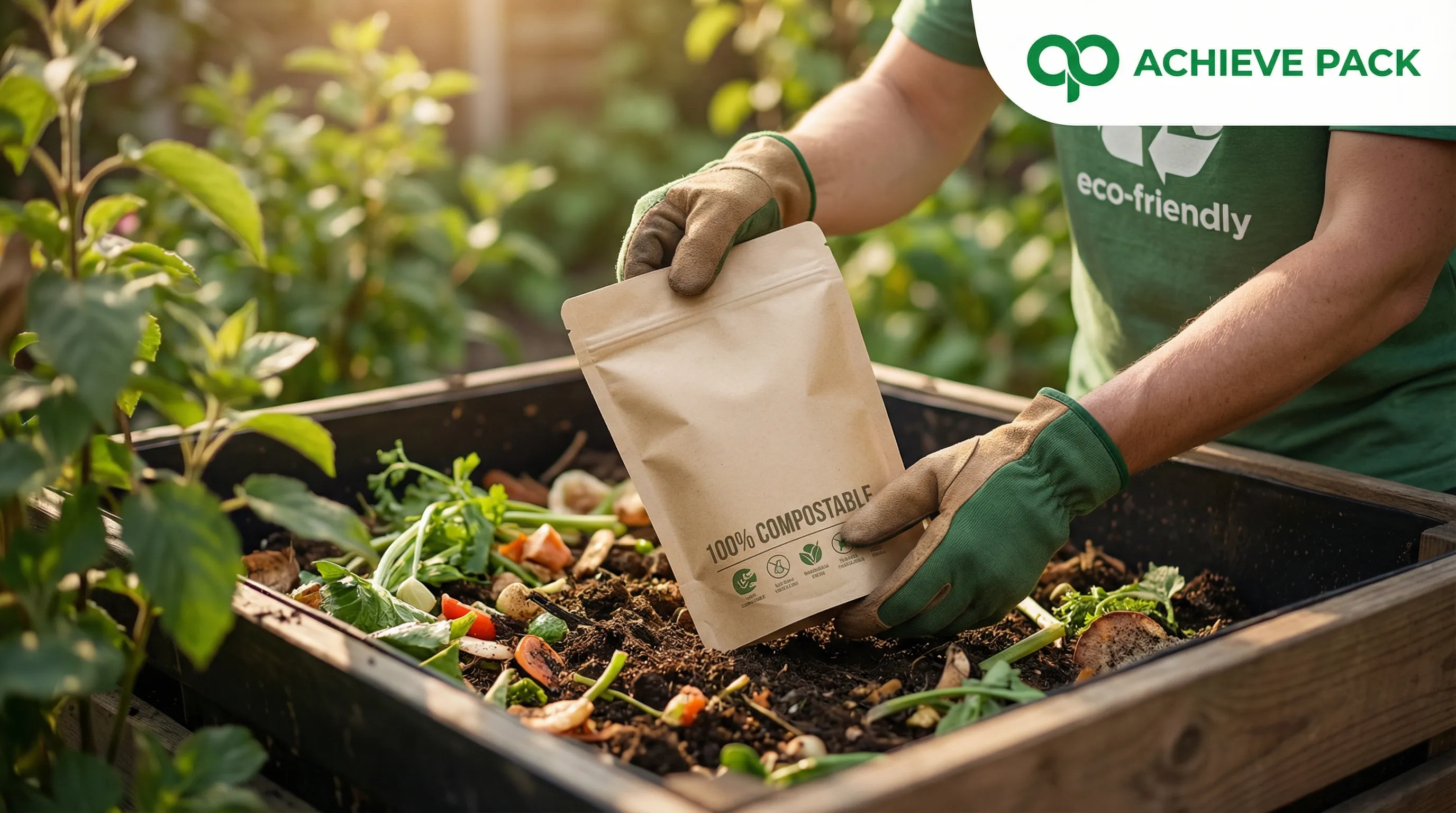
Fully compostable flexible packaging certified under ASTM D6400 and EN 13432. Engineered to break down completely in industrial or home composting environments within 180 days, returning to the soil with zero toxic residues.
- ASTM D6400 & EN 13432 Certified
- Breaks down within 180 days in soil
- High gas & moisture barrier options
- Food-contact safe (FDA compliant)