Pouch Heat Sealing Temperature Settings & Testing Guide

A leaking seal costs you product, refunds, and reviews. Dial in temperature, pressure, and dwell time with the same calibration method our engineers use on the factory floor.

Pouch Heat Sealing Temperature Settings & Testing Guide

The Short Version

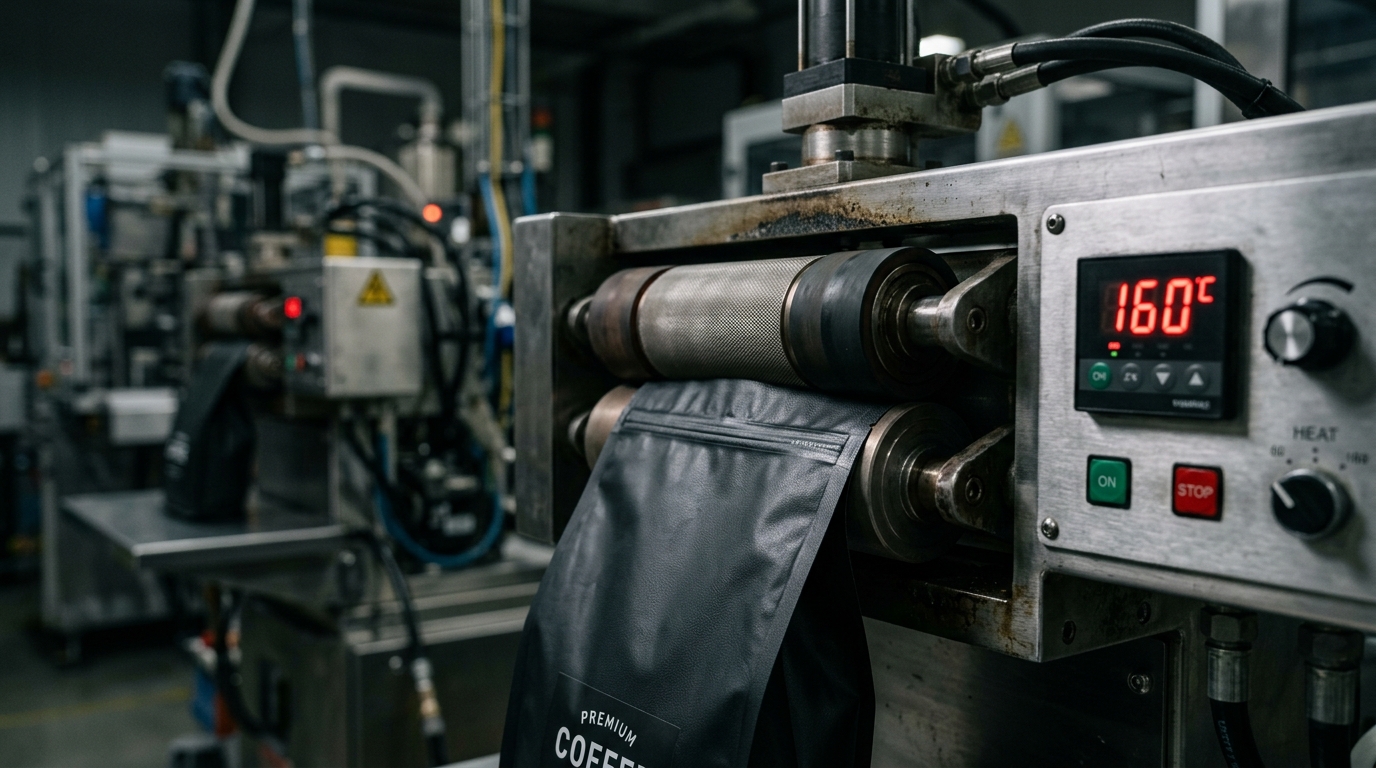
If your pouches are leaking or scorching, start here: on a roller sealing machine, most flexible pouches seal at around 160°C with a 3-second dwell time and 40psi of pressure. Your material thickness changes that number—so before you run a full batch, calibrate with the 'Strip Test' below instead of sacrificing good pouches.

Ryan WongBY RYAN WONG, ECO PACKAGING PROTOCOL
VERIFIED BY ACHIEVE PACK SUSTAINABILITY LAB
B2B Specification Filters

Pouch Heat Sealing Temperature Settings & Testing Guide | Achieve Pack Specifications

View Full Material Catalog
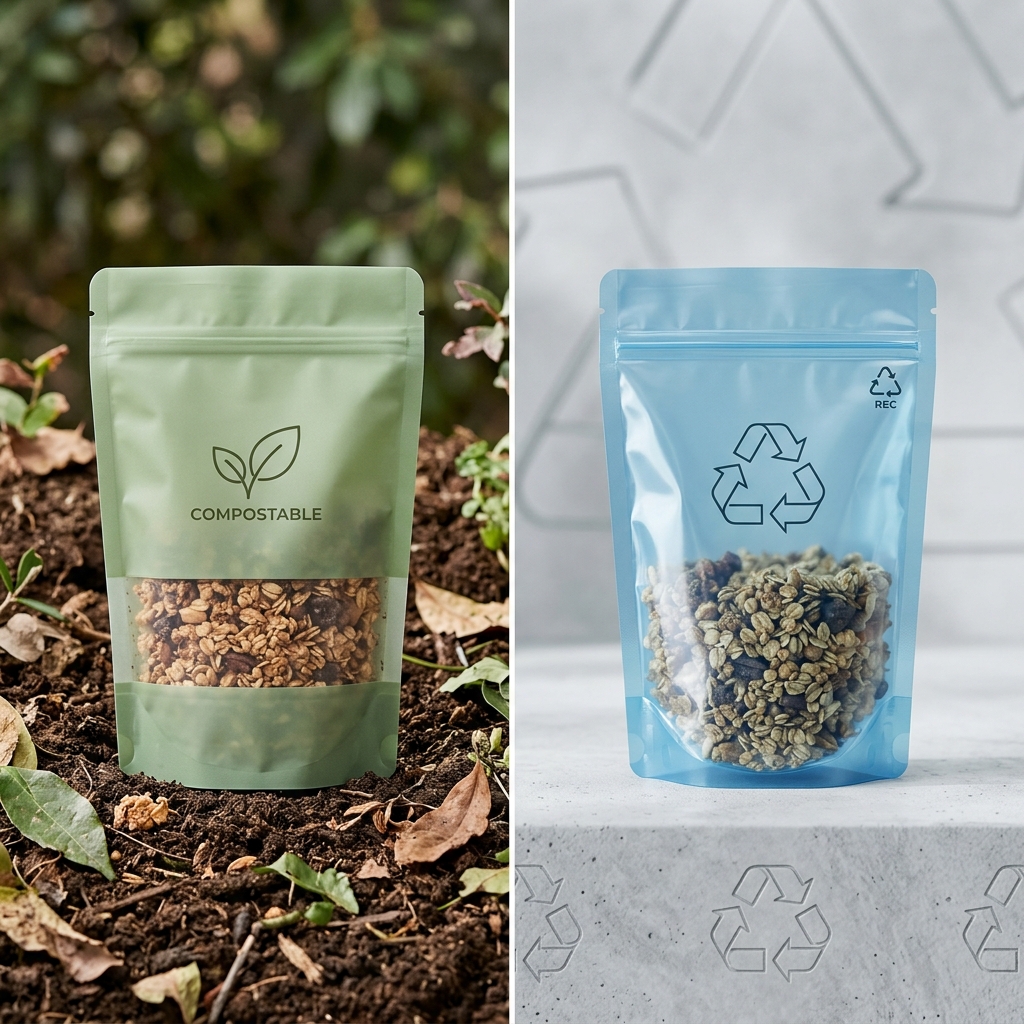
100% Home Compostable (PLA/PBAT)Recyclable Mono-PE (GRS Certified)Stand-Up Doypack PouchesFlat Bottom Box PouchesSpout & Liquid Barrier BagsTÜV OK Compost HOMEBPI Certified #10529618ASTM D6400 / EN 13432Aroma Degassing ValvePouch Heat Sealing TemperatureFlexible Packaging Sealer SettingsHow to seal coffee bags at homeHeat sealing troubleshootingOptimal sealing temp for pouches
Enterprise Packaging Performance

Solving Core Packaging Challenges for Pouch Heat Sealing Temperature Settings & Testing Guide | Achieve Pack

Concise B2B technical benchmarks designed to eliminate transit failures, regulatory penalties, and shelf-life loss.

CHALLENGE 01

Structure Approved Before It Is Ever Tested

Risk: The laminate looks right on paper and fails on your actual product, wasting the run.

Engineer Solution

Sample Packs in the Exact Structure, Tested With Your Product

You run your own fill and shelf-life test before any tooling is cut.

CHALLENGE 02

Barrier Numbers Missing From the Quote

Risk: You approve a film without knowing its oxygen or moisture transmission rate, then find out on shelf.

Engineer Solution

OTR and WVTR Stated on Every Quotation

The barrier figure is on the quote, not buried in a datasheet you never see.

CHALLENGE 03

Sustainability Claim Without a Certificate Behind It

Risk: An unsubstantiated compostable or recycled claim fails retailer and marketplace review.

Engineer Solution

Certificate Numbers Issued With the Quote

TÜV OK Compost HOME, BPI, EN 13432, AS 5810, GRS — referenced by certificate number.

Experience 3D Packaging Design & Free Dielines

Preview your pouch in 3D WebGL Studio and export production-ready dielines.

From Ryan Wong's Engineering Notebook

Pouch Heat Sealing Guide

Expert Engineering Insight

"In my 14 years in packaging design, I’ve seen countless brands struggle with leaky seals simply because of incorrect temperature settings. There is no 'one size fits all' temperature because it depends entirely on the machine (roller vs. impulse) and the material thickness (e.g., 80 microns vs. 120 microns)."

"For our standard industrial roller sealing machines, we typically establish a baseline of 3 seconds / 40psi / 160°C. But before running a full batch, I always require my team to perform the 'Strip Test' to avoid wasting expensive printed stock."

Ryan Wong

Ryan Wong

Co-Founder & Chief Packaging Engineer

14+ Years Packaging Engineering | GRS & FSC Auditing Expert

With a background in polytechnic materials science, Ryan has helped over 500+ global brands scale from prototype testing to industrial vertical packaging lines.

Sealing & Assembly Cross-References

For details on structural seal styles, read our guide comparing Fin Seal vs. Lap Seal joints . If you are utilizing a manual sealer, consult our instructions for Hand Clamp Sealers .

How to Perform the 'Strip Test'

Instead of wasting an entire bag to test a single temperature setting, the most cost-effective calibration method is the Strip Test. Since the entire pouch features heat-sealable properties, you can maximize your testing surface area.

Step 1 Start Low

Cut one bag into multiple strips across the width. Mark them with a sharpie starting at 150°C, increasing by 5°C (155°C, 160°C, 165°C).

Step 2 Incremental Testing

Run each strip through your machine at the designated temperature. Wait for it to cool down completely before evaluating.

Step 3 Peel Strength Test

Pull the sealed strip apart. The seal is optimal when the layers fuse completely. If the exterior film stretches or melts, the temp is too high.

Heat Sealing Strip Test
View Full Size

5 Common Heat Sealing Problems (And Solutions)

Heat sealing issues typically stem from an imbalance between temperature, pressure, and dwell time. Here are the 5 most common pain points our clients face and how to resolve them:

1. The exterior of the pouch is melting or scorching.

Solution: Your temperature is too high, or your dwell time is too long. The exterior layer (PET, BOPP, Kraft) has a higher melting point than the inner PE layer, but it will melt if overheated. Decrease the dwell time slightly, or lower the temperature by 10°C. Also, ensure your PTFE (Teflon) covers on the sealing bars are not worn out.

2. The seal easily peels apart (Weak Seal).

Solution: The inner PE sealant layer hasn't reached its melting point. Increase the temperature by 5°C increments using the Strip Test. If the temperature is correct but it still leaks, increase the jaw pressure (psi).

3. Wasting too many bags trying to find the right setting.

Solution: Never use a full pouch for calibration. Use the "Strip Test" method. Cut one pouch vertically into 5-6 strips and test incrementing temperatures on each strip. One pouch is all you need.
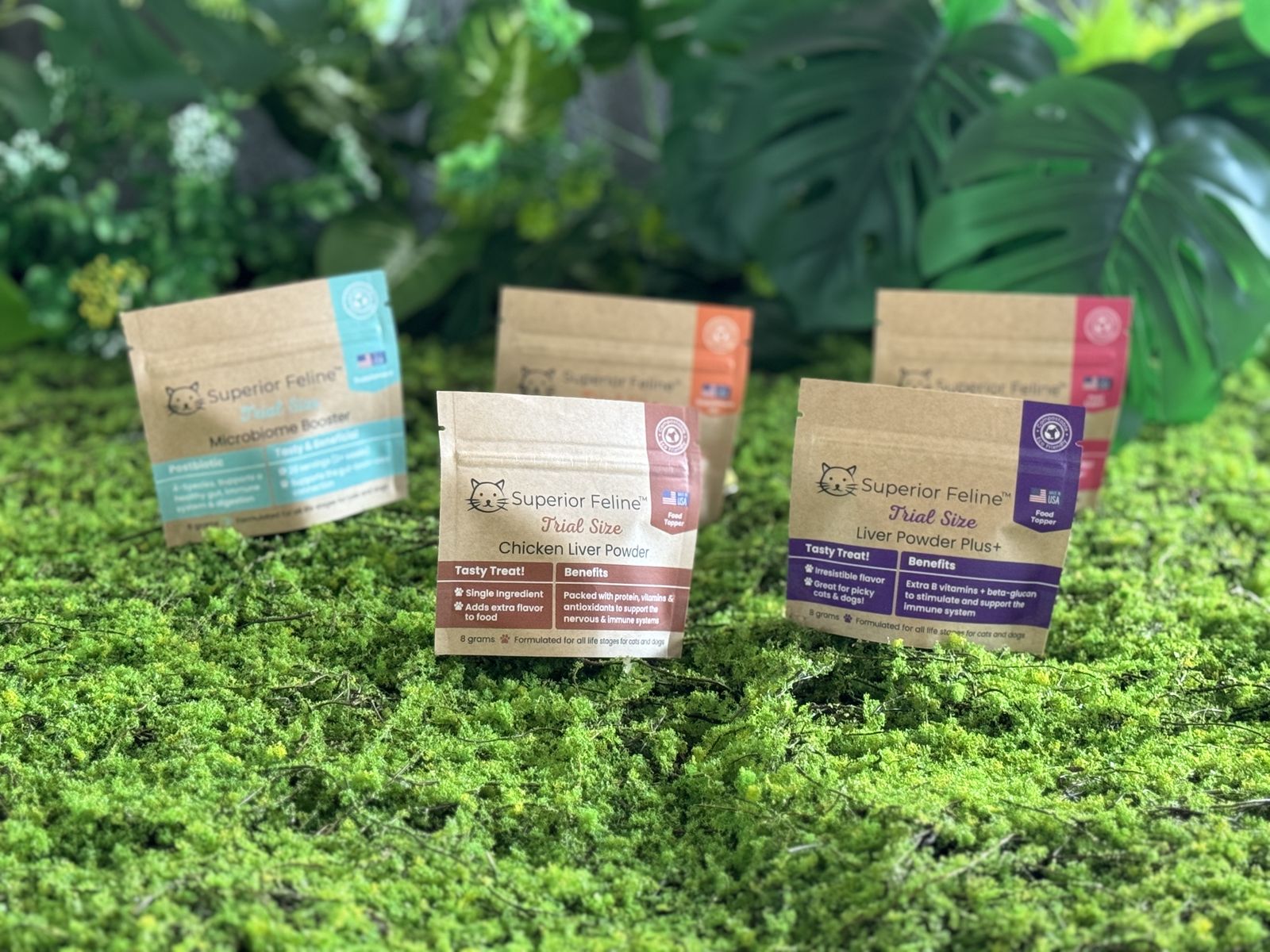
4. The seal has wrinkles or creases.

Solution: Wrinkles are usually caused by uneven tension during feeding. Ensure the pouch is pulled taut before engaging the sealing jaws. On continuous band sealers, check that the cooling belts are synchronized with the heating belts.

5. Applying labels melts the pouch.

Solution: If you are heat-pressing labels, you must separate the label application parameters from the sealing parameters. Labels typically require lower temperatures. Test the label adhesion on a strip first, finding the minimum heat required to activate the adhesive without scorching the substrate.

Identifying a Perfect Seal

A flawless heat seal creates an airtight barrier that protects against OTR (Oxygen Transmission Rate) and MVTR (Moisture Vapor Transmission Rate) while maintaining the structural integrity of the pouch's exterior aesthetic.

Perfect Heat Seal
View Macro Shot

Need Production Help?

Struggling with inconsistent seals or changing over to new compostable materials? Let our engineers audit your line.

Consult an Engineer

When Temperature Settings Are NOT the Problem

No amount of calibration fixes these:

  • • If your pouch film has NO proper sealant layer, no temperature will save it. The material spec is wrong—check the structure before blaming the machine.
  • • If you're running thick laminates through a small impulse sealer, the machine is NOT rated for the job. You need a band sealer, not more dwell time.
  • • If you're switching to compostable films, do NOT reuse your PE settings. Compostable sealant layers have a narrower temperature window—run the Strip Test from scratch.
  • • If the sealing jaws or PTFE covers are worn, the problem is mechanical. We don't service machines, but we can tell you if the fault is the film or the hardware.

Not sure if the pouch or the machine is at fault? Order the $40+ sample kit (credited to your first order) to test our film on your line, or describe your setup at /support/contact.

FACTORY PROOF & LAB VALIDATION

Technical Factory Validation & Quality Control

We don't just supply pouches; we validate every batch. Every raw material and finished pouch runs through our 6-step testing protocol to guarantee automatic packaging line compatibility and food-safe barrier preservation.

ASTM TESTED

OTR & WVTR Barrier (MOCON)

< 0.1 cc / < 0.1 g/m²/24h

Tested under ASTM D3985 & ASTM F1249 to ensure fresh shelf life up to 18 months.

ASTM TESTED

GC-MS Solvent Residue

< 5 mg/m²

Gas Chromatography-Mass Spectrometry ensures zero odor transfer and absolute food safety.

ASTM TESTED

Heat Seal Strength (ASTM F88)

> 15 N / 15mm Width

Guarantees no seam burst under high pressure, perfect for VFFS automatic packing lines.

ISO / BRCGS

BRCGS Global Standard

Grade AA Certified Factory

Produced in Class 100,000 dust-free cleanrooms, ensuring zero contamination.

ASTM TESTED

Puncture Resistance (ASTM F1306)

> 12 N Peak Force

Prevents tear or puncture from sharp, hard items like coffee beans and pet kibble.

ASTM TESTED

Tensile Strength (ASTM D882)

MD > 35 MPa / TD > 30 MPa

Ensures shape retention and structural integrity when heavy bags are dropped or stacked.

Packaging Performance Case Study

Packaging Transformation for Pouch Heat Sealing Temperature Settings & Testing Guide | Achieve Pack

See how upgrading from generic commoditized bags to precision-engineered flexible barrier packaging eliminates transport failures and boosts shelf authority.

BEFOREGeneric Packaging

Standard / Generic Packaging (Before)

Standard stock bags fail under transit stress and expose sensitive goods to moisture, UV light, and oxygen.

Before packaging failure
High Risk / Compromised
  • Rapid Oxidation & Flavor DegradationCheap films allow O2 & moisture ingress, spoiling contents in < 30 days.
  • High Seal Breakage in TransitThin seams fail under drop tests, leading to customer refunds & lost trust.
  • Heavy Plastic Tax PenaltiesMulti-layer unrecyclable packaging incurs up to €800/ton in EU PPWR fines.
  • High MOQs & Plate Cost FrictionTraditional printers force 10,000+ unit minimums and $1,500 cylinder fees.
Result: Customer Churn & High Damage Rates
AFTEREngineered Barrier Solution

Achieve Pack / Pouch Eco Solution (After)

Custom engineered multi-layer pouch structure tailored to your exact moisture barrier, seal strength, and aesthetic requirements.

After precision packaging solution
100% Quality Guaranteed
  • Ultra High-Barrier Foil/EVOH CoreGuaranteed OTR < 0.1 cc/m²/day, keeping contents fresh for 18–24 months.
  • Reinforced 45N/15mm Localized Heat Seal180°C precision seam dwell time prevents bursting even under 2-meter drops.
  • 100% Certified Eco ComplianceTÜV OK Compost HOME (EN13432) & Mono-PE Recyclable structures (0% Tax).
  • HD Digital Printing with 500-Unit Low MOQsPrint multi-SKU runs in 7 business days with zero setup plate charges.
Result: Zero transit leaks & premium brand retentionUpgrade Now

Questions We Get Asked

What temperature should I seal my coffee bags at?▼
For a standard roller sealing machine, a baseline of 160°C with 3 seconds of dwell time and 40psi of pressure is recommended. However, it is always advised to test starting at 150°C and increase in 5°C increments.
Why is my pouch melting when I heat seal it?▼
If the exterior of your pouch is melting or distorting, your temperature is set too high or the dwell time is too long. The exterior layer (usually PET or BOPP) has a higher melting point than the inner PE layer, but extreme temperatures will damage it.
Can I seal labels with the same heat sealer?▼
Yes, but you must find the minimum temperature where the label adheres without scorching the substrate. Use the strip test method to avoid wasting full labels during calibration.

Related Stuff

E-E-A-T Research & Materials Verification

How We Ensure Absolute Accuracy and Trustworthiness

At Achieve Pack, sustainable packaging isn't just about printing; it's about hands-on material science. This article has been written and verified by Ryan Wong, a packaging specialist with 14+ years of experience engineering biopolymer stacks for DTC startups and Fortune 500 companies.

All research, material barrier specifications (OTR, WVTR), heat-seal values (N/15mm), and compostability timelines cited in our guides are backed by testing inside the Achieve Pack Materials Testing Lab. We cross-reference our data with official certification registries from BPI (Biodegradable Products Institute), TÜV Austria (OK Compost HOME), and FSC (Forest Stewardship Council).

TÜV OK Compost HOMEBPI Certification #10529618ASTM D6400 / EN 13432HP Indigo Digital Certified
Ryan Wong

Ryan Wong

Supply Chain Director

B.Eng honors degree graduate from Hong Kong Polytechnic University. Serving brands in 8 countries.

View Expert Profile →

Still Fighting Inconsistent Seals?

Send us your material spec and machine type. An engineer will suggest a starting temperature window—and if the problem is the pouch structure, we'll say so.

Material Showcase

See the Material in Action

Real footage of our eco-friendly packaging structures in action.

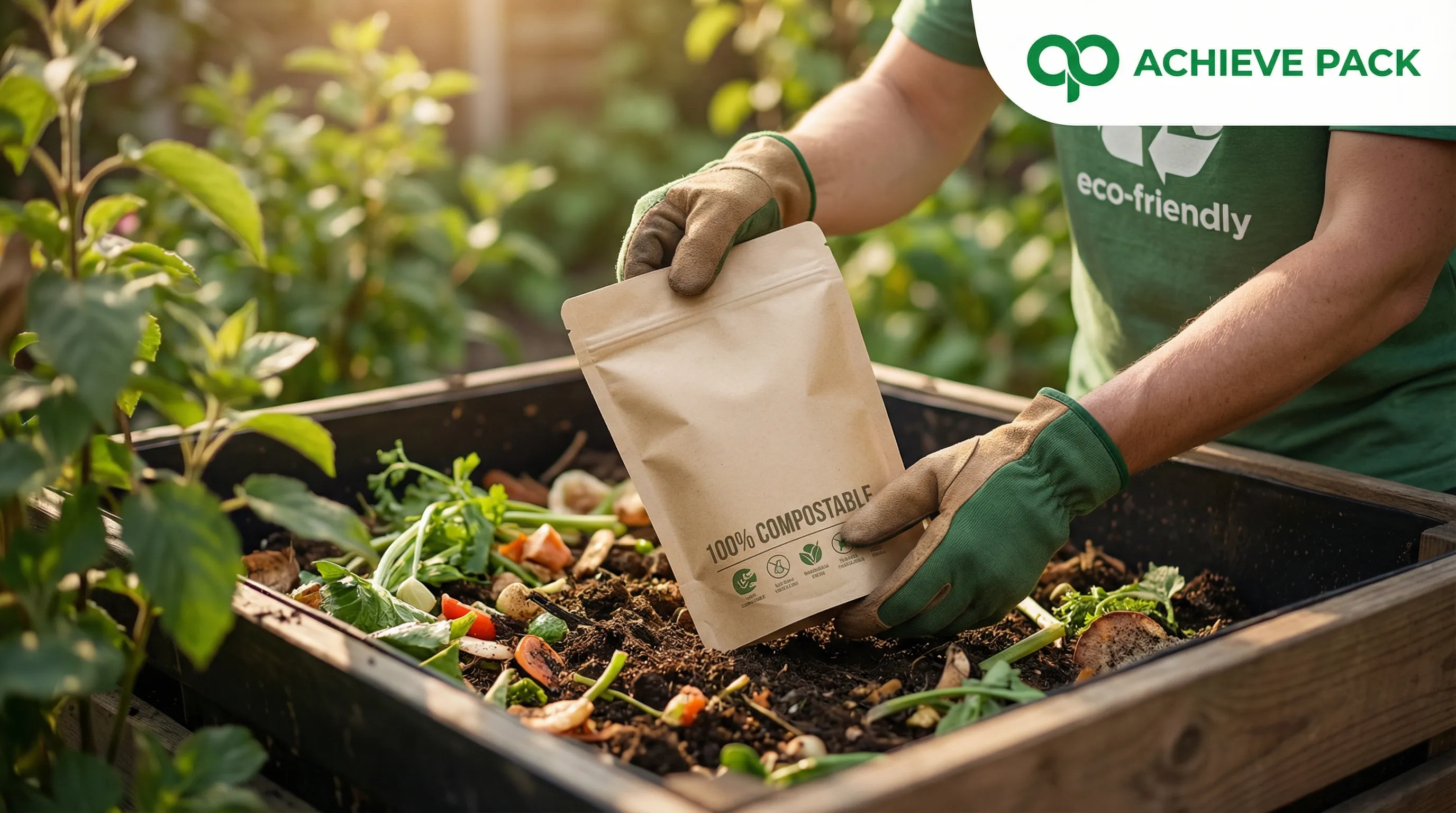
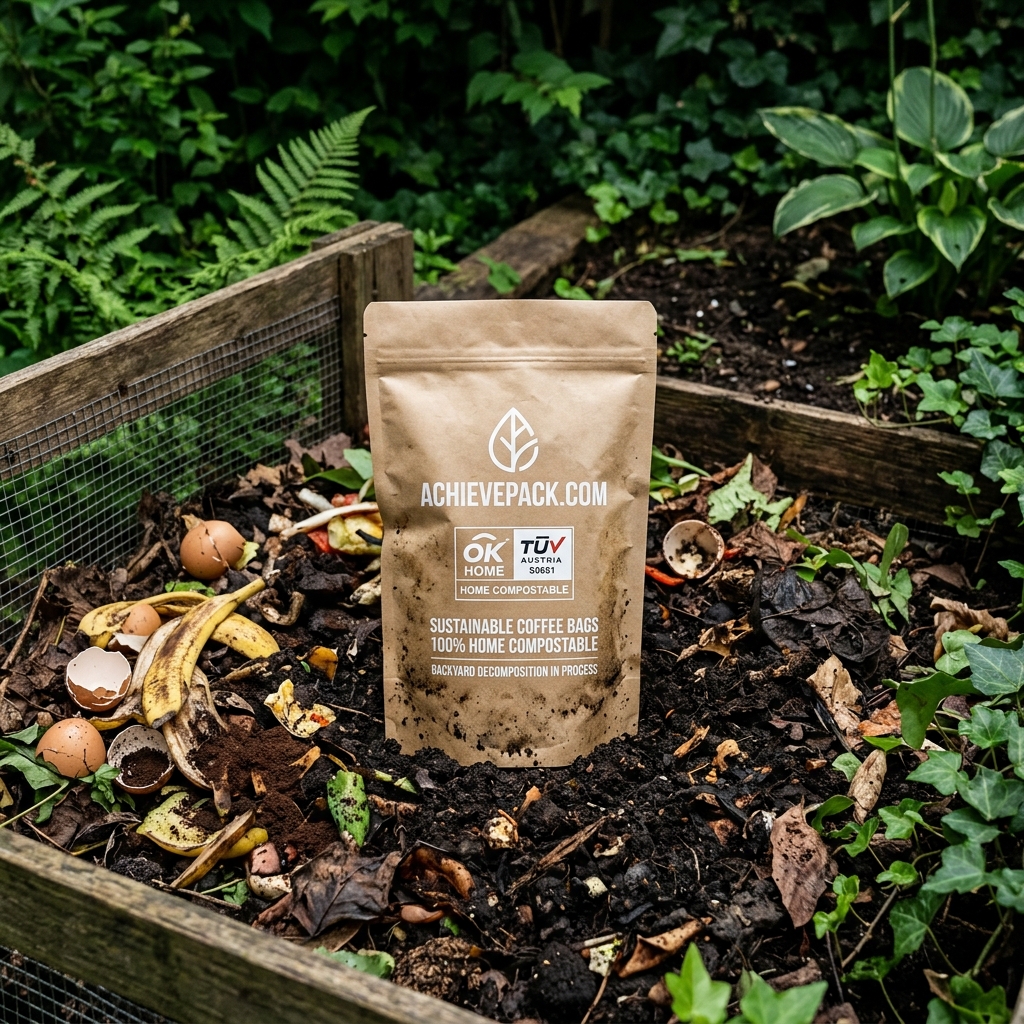
100% Compostable

Compostable Solution

Fully compostable flexible packaging certified under ASTM D6400 and EN 13432. Engineered to break do...

  • ASTM D6400 & EN 13432 Certified
  • Breaks down within 180 days in soil
View Material Details
Up to 100% Recycled Content

Post-Consumer Recycled (PCR)

Made from high-quality post-consumer recycled plastic waste. Our PCR structures reduce carbon footpr...

  • Saves post-consumer waste from landfills
  • Lowers carbon footprint substantially
View Material Details
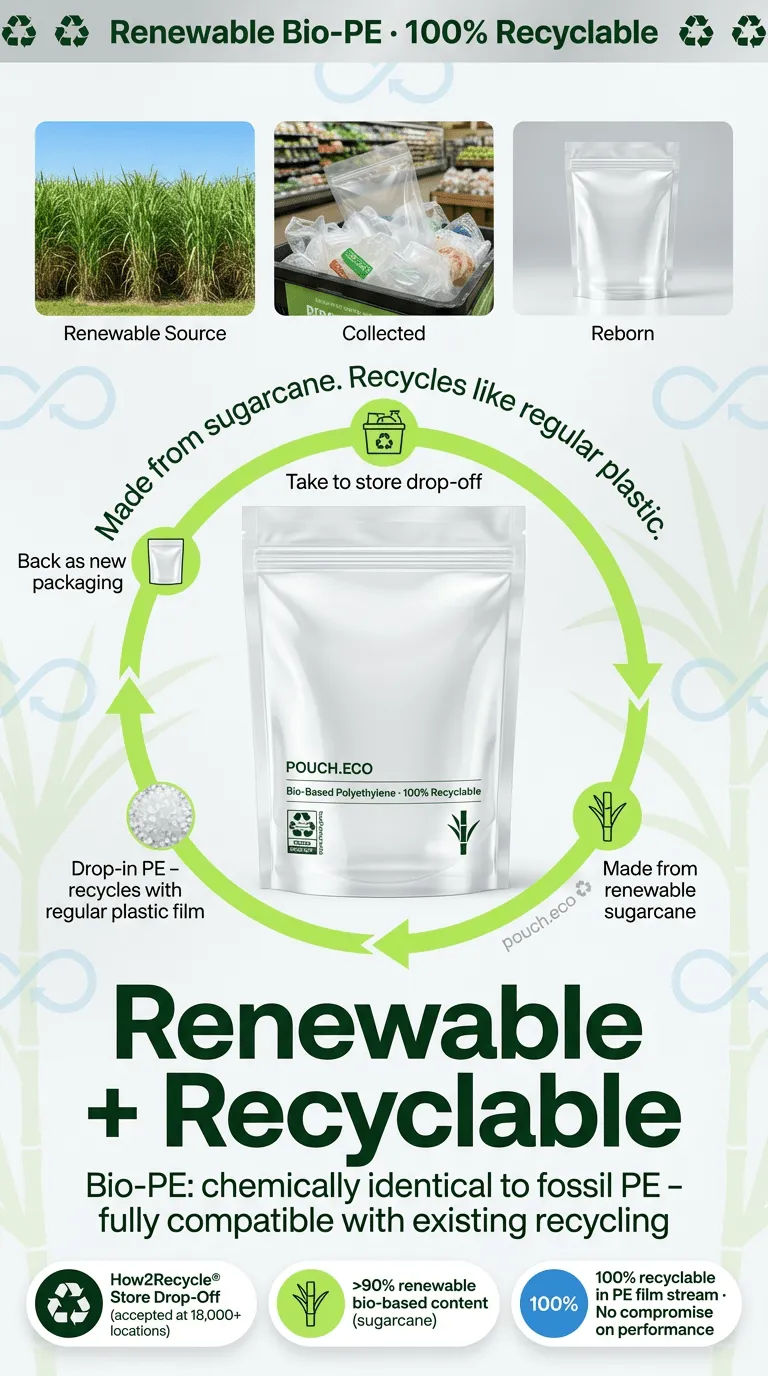
100% Sugarcane Ethanol

Plant-Based Bio-PE

Derived from sustainably-farmed Brazilian sugarcane. It captures atmospheric CO2 during growth and i...

  • Captures CO2 during plant growth
  • 100% recyclable in regular PE stream (#4)
View Material Details
100% Mono-Material

Recyclable Mono-Material

Engineered using Mono-PE or Mono-PP structures to enable simple, circular sorting and recycling. Com...

  • 100% recyclable mono-polymer structure
  • Meets EU Circular Economy directives
View Material Details
// Our Portfolio

See Our Work

Browse real product photos from brands we've helped launch. Your custom packaging could be next.

// Our Expertise

See Our Know How

Explore our comprehensive knowledge base on sustainable materials, packaging specifications, cost structures, and D2C strategies.

Still reading the footer? You must be serious.
$40+ sample kit — credited to your first order. Or book 15 minutes with a human.
Get the Sample KitBook a Call
WhatsApp (Real Person)LIVE
Book Meeting (Real Person)1:1
AI Packaging Assistant

We use cookies to improve your experience. View our Cookie Policy.