Barrier Options
Explained Simply
Not sure which barrier you need? No worries! We'll help you choose between Low, Medium, and High barrier based on your product type and shelf life goals.
What's a "Barrier" Anyway?
Think of it like sunscreen...
Just like sunscreen protects your skin from UV rays, barrier layers protect your product from:
- Oxygen - Makes food go stale or rancid
- Moisture - Causes products to clump or spoil
- Light - Degrades vitamins and colors
- Odors - Keeps flavors in, bad smells out
The Golden Rule:
Higher barrier = Longer shelf life = Higher cost
Pick the minimum barrier you need! Over-engineering costs money and might reduce recyclability.
Compare All Three Levels
Low Barrier
Fast Turnover Products
3-6 Months
Typical Shelf Life
Great for products that sell quickly or have naturally long shelf life. Best eco-credentials!
Best for:
Medium Barrier
The Sweet Spot
6-12 Months
Typical Shelf Life
Most popular choice! Balances protection, cost, and sustainability perfectly.
Best for:
High Barrier
Maximum Protection
12-24 Months
Typical Shelf Life
For products that are super sensitive to oxygen and moisture. Premium positioning!
Best for:
Which One Should You Pick?
Fast Sellers
Product turns over in 3-6 months
Low BarrierExamples: Cookies, tea, popcorn
Standard Products
Need 6-12 months on shelf
Medium BarrierExamples: Coffee, nuts, pet food
Premium / Sensitive
Need 12-24 months protection
High BarrierExamples: Supplements, baby food
Real-World Examples
Organic Tea Brand
Loose leaf tea in 50g pouches. Product naturally stable, sells fast in local markets.
Result: Used Low Barrier kraft pouches, saved $0.10 per unit, maintained eco-friendly positioning.
Specialty Coffee Roaster
12oz bags of roasted whole beans. Needs to stay fresh through retail + online distribution.
Result: Medium Barrier with degassing valve, perfect 9-month shelf life, competitive pricing.
Probiotic Supplement Brand
Live cultures extremely sensitive to oxygen. International distribution needs 18+ months.
Result: High Barrier with aluminum foil, guaranteed 24-month shelf life, passed stability testing.
5 Common Pouch Barrier Problems (And Solutions)
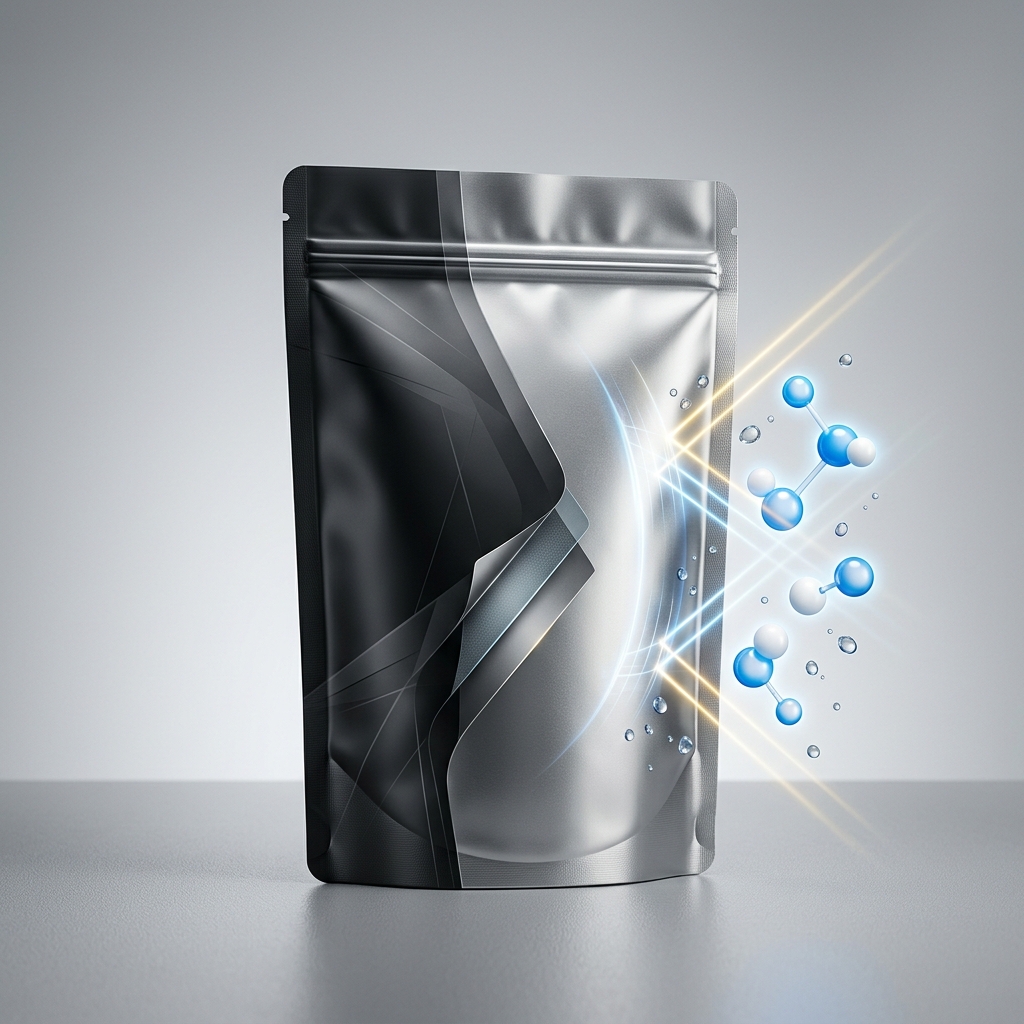
Oxygen Ingress & Premature Spoilage (OTR)
Atmospheric oxygen permeates the film, causing oxidation, rancidity, and rapid microbial growth.
Incorporate high-barrier EVOH co-extrusions or pure Aluminum foil layers to drop OTR below 1 cc/m²/day.
Moisture Penetration & Product Clumping (MVTR)
Ambient humidity enters the pouch, causing dry powders, spices, or dehydrated goods to harden and clump.
Deploy Metallized Polyester (VMPET) or high-density PE sealant layers to achieve near-zero MVTR.
UV & Light-Induced Quality Degradation
Exposure to ultraviolet and visible light degrades vitamins, alters colors, and creates off-flavors in light-sensitive products.
Integrate fully opaque metallized films or high-density white pigmented barrier structures that block 100% of light.
Aroma Loss & Flavor Scalping
Volatile aromatic compounds escape outward, while package polymers absorb flavor compounds, leaving products tasteless.
Utilize high-barrier BOPA (Nylon) or special aroma-preserving EVOH resins to lock in aroma and prevent flavor migration.
Flex Cracking & Puncture Failures
Stress during transit creates micro-pinholes or cracks in aluminum foil, instantly destroying the barrier performance.
Reinforce laminate structures with BOPA (Nylon) for outstanding puncture resistance and flex-crack survival.
Still Not Sure?
We offer FREE shelf-life testing to figure out exactly what barrier you need!
What we'll test:
- ✓ Oxygen permeability over time
- ✓ Moisture absorption rates
- ✓ Product stability at different temps
- ✓ Actual vs theoretical shelf life
Ready to Choose Your Barrier?
Book a consultation and we'll recommend the perfect option for your product!
Talk to an Expert