The Rise of Bio-Based Sugarcane PE
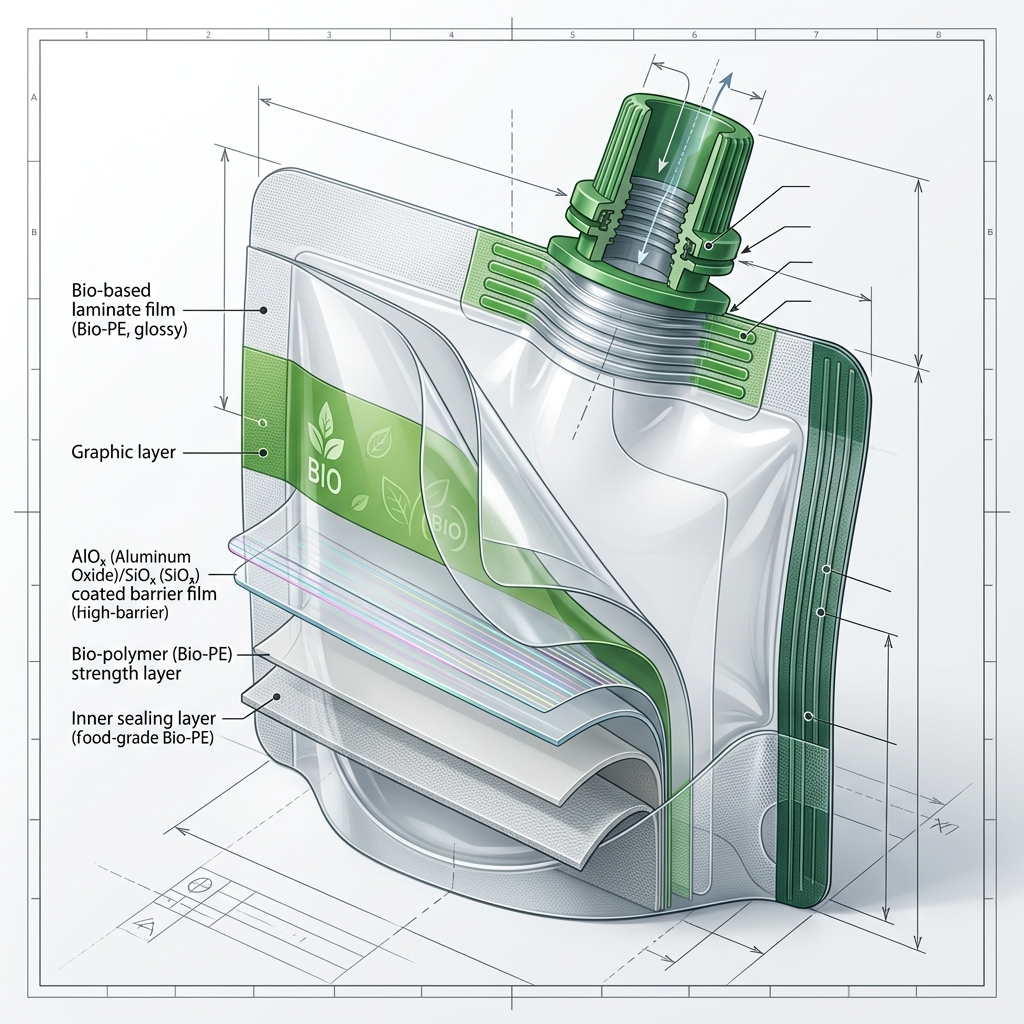
The packaging industry is shifting away from fossil-based resins. Bio-based Polyethylene (Bio-PE) is manufactured using ethylene derived from sugarcane ethanol. During its growth cycle, sugarcane captures atmospheric CO₂, resulting in a packaging material with a negative carbon footprint from birth.
Bio-PE Sourcing Highlights:
- →Identical Performance: Bio-based PE possesses the exact chemical structure as traditional fossil PE, ensuring identical moisture barriers and seal strength.
- →100% Recyclable: Because it is chemically equivalent to HDPE/LDPE, Bio-PE is fully recyclable in the standard plastic recycling stream (RIC #4).
- →EPR Compliance: Helps brands lower eco-tax fees under California SB 343 and European Extended Producer Responsibility laws.
Compostable Liquid Barrier Laminations
For brands targeting zero plastic waste, we offer certified compostable spout pouches. These utilize vacuum-metallized cellulose layers combined with biodegradable polybutylene succinate (Bio-PBS) to handle wet ingredients without dissolving.
Compostable Liquid Caliper Specifications
Technical Specs & Spout Fittings
Our factory integrates various spout sizes and caps designed to match commercial liquid filling machinery. We support custom positionings (corner spout or center top spout) depending on your brand's application:
| Spout Diameter | Cap Configuration | Ideal Liquid Application |
|---|---|---|
| 8.6mm Spout | Standard Screw Cap or Anti-Choke Cap | Juices, baby food purees, gel packs, water |
| 10mm / 15mm Spout | Tamper-Evident Ribbed Screw Cap | Syrups, honey, cosmetics refills, liquid soap |
| 22mm Spout | Wide-mouth Dispenser Cap | Thick purees, yogurts, engine oil, industrial soap |
Environmental Impact & Lifecycle Metrics
Replacing rigid glass bottles or heavy plastic jars with flexible bio-based spout pouches significantly reduces supply chain emissions:
5 Common Bio-Based Spout Pouch Problems (And Solutions)
Leakage at Spout Seal
Bio-based films often have narrower sealing windows. Solution: Advanced low-temperature ultrasonic sealing technology.
Compromised Barrier Properties
Bio-plastics can be permeable. Solution: Applying invisible AlOx/SiOx high-barrier coatings.
Layer Delamination
Adhesives failing under liquid weight. Solution: Proprietary bio-compatible strong lamination adhesives.
Reduced Puncture Resistance
Increased risk of bursting during transport. Solution: Multi-layer co-extrusion with strengthening bio-polymers.
Slower Filling Speeds
Material stiffness affecting spout alignment. Solution: High-precision automated filling machinery adjustments.
AchievePack Eco Material Specifications
Direct-Factory Certified Sustainable Laminates
AchievePack designs and manufactures five classes of circular flexible barrier packaging materials. These options help brand owners meet regulatory standards (like EU PPWR and state-level laws) without sacrificing barrier performance or shelf-life.
1. Curbside Recyclable Mono-PE
Made from 100% Polyethylene (LDPE #4). This single-polymer structure is fully recyclable through European/UK curbside collection and USA Store Drop-Off networks. Optional EVOH coatings (<5% total weight) deliver extreme oxygen and moisture barriers without compromising the recycling stream.
2. Heat-Resistant Recyclable Mono-PP
Formulated from single-polymer Polypropylene (PP #5), providing excellent optical clarity, high rigidity, and thermal tolerance. Engineered specifically to survive hot-fill processes, pasteurization, retort cooking, and microwave sterilization lines.
3. Certified Compostable Biopolymers
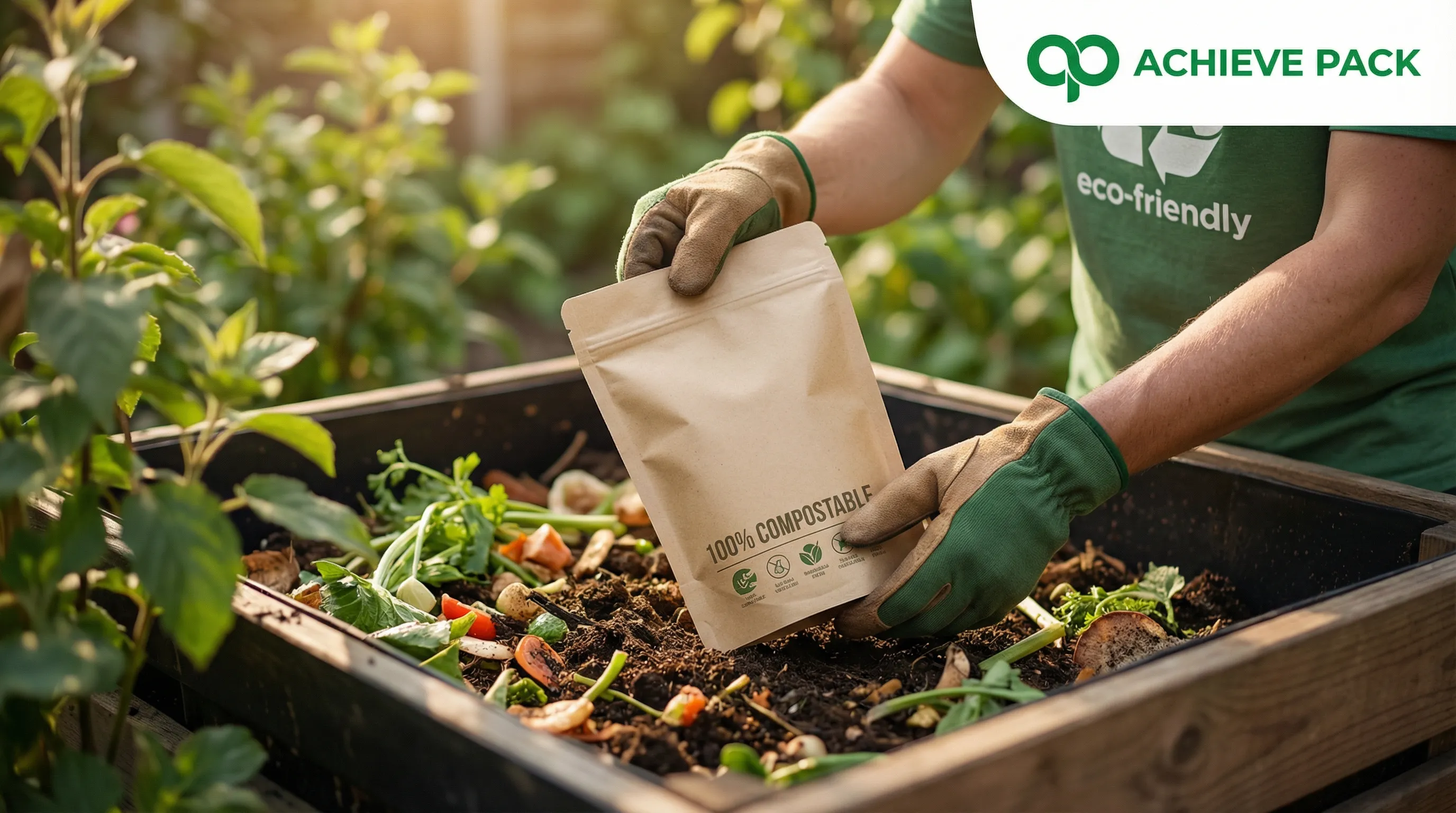
Constructed from plant-derived biopolymers including natural Kraft paper, NatureFlex cellulose, and certified PLA/PBAT/PHA sealable blends. Extensively tested and certified under ASTM D6400 (USA) and EN 13432 (EU) to degrade into organic soil nutrients within 180 days.
4. PCR (Post-Consumer Recycled) Polymers
Integrates GRS-certified post-consumer recycled plastic resins into the laminate structure. Helps brands reduce dependence on virgin fossil resources, lower carbon footprints, and completely bypass plastic packaging taxes in global regions.
5. Carbon-Negative Sugarcane Bio-PE
Sourced from sugarcane bio-PE that acts exactly like petroleum PE. Captures atmospheric CO₂ during sugarcane growth, delivering carbon-negative performance while remaining 100% recyclable in standard PE sorting streams (#4).
Biopolymer Lab Validation & Compostability Proof
We don't make vague green claims. Our biopolymers (NatureFlex, PLA/PBAT) are batch-tested to verify 100% biodegradation in home and industrial composting within 180 days with zero toxic ecotoxicity residues.
Compostable Barrier (OTR)
Tested barrier layers (NK/NatureFlex) ensuring moisture and aroma protection.
Organic Chemical Purity
Exceeds EN 13432 criteria for organic safety and clean soil composting.
Biopolymer Sealing Window
Narrowed sealing temperature range preventing biopolymer deformation or thermal burn.
TÜV OK Compost HOME
Guarantees complete organic degradation in backyard compost bins within 26 weeks.
Puncture Strength (ASTM F1306)
Ensures biopolymer bag walls resist puncture during manual handling and packing.
Tensile Strength (ASTM D882)
Ensures biopolymer bags support products securely without structural stretch.