Packaging Technical Data Sheet (TDS) Directory
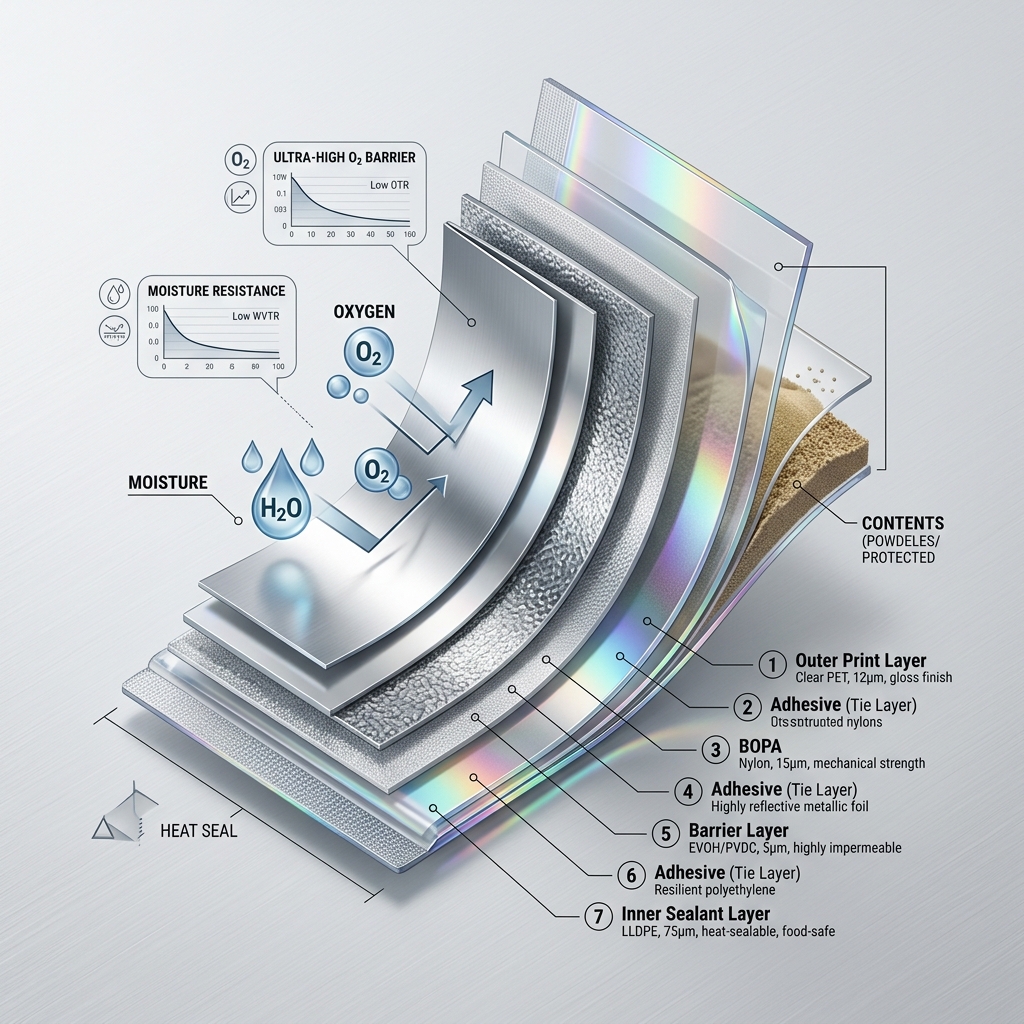
Technical Data Sheets (TDS) provide validated test reports detailing the physical properties, lamination thickness, polymer compositions, and gas barriers of our packaging films. Browse our complete structural directory below:
Understanding TDS Parameters (OTR & WVTR)
Procurement teams and packaging engineers audit OTR and WVTR values to secure exact food shelf-lives. These parameters measure how much gas passes through a square meter of film in 24 hours under standard lab conditions:
Oxygen Transmission Rate (OTR)
Measures cc/m²/24hr. Oxygen causes oxidation, leading to product staleness, oil rancidity, and color loss. Coffee and fat-heavy foods require OTR below 1.0.
Water Vapor Transmission Rate (WVTR)
Measures g/m²/24hr. Moisture transmission causes crisp snacks to go soggy, or dry powders to cake and clump. Moisture barriers protect dry ingredients.
Industry Standard Certifications
All materials detailed on our Technical Data Sheets carry independent certifications to verify environmental compliance and food contact safety:
| Certification Mark | Standard Body | Compliance Meaning |
|---|---|---|
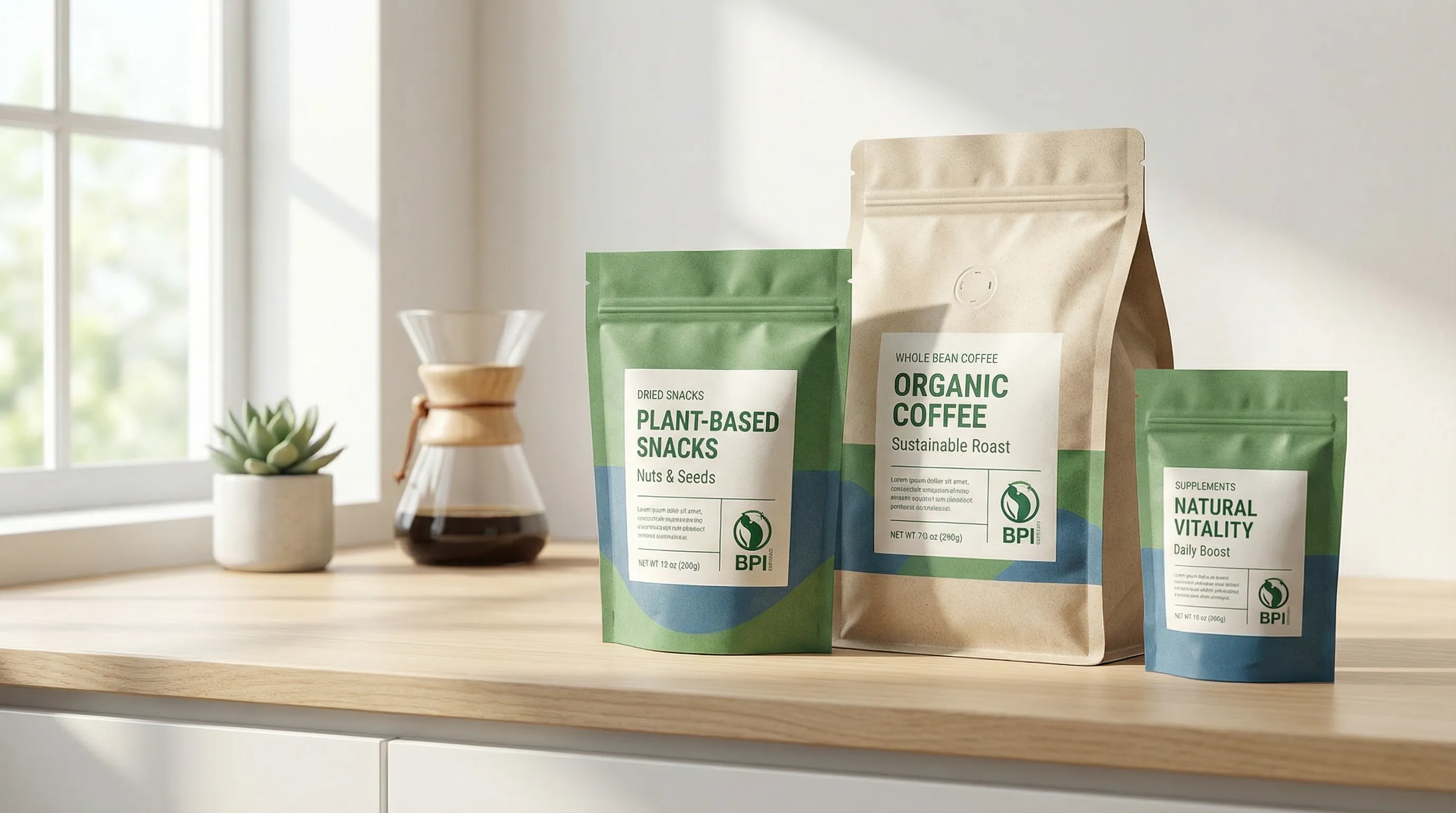
| BPI Certified | Biodegradable Products Institute (USA) | Meets ASTM D6400 specs for compostability in municipal facilities. |
| OK Compost HOME / Industrial | TÜV Austria | Meets European EN 13432 compost standards for backyard or commercial bins. |
| GRS (Global Recycled Standard) | Textile Exchange | Validates post-consumer recycled (PCR) content percentages. |
5 Common TDS Problems (And Solutions)
Problem 1: Inconsistent Barrier Properties (OTR/WVTR).
Solution: Ensure the TDS provides values based on established testing standards (ASTM D3985 for OTR, ASTM F1249 for WVTR).
Problem 2: Vague Material Compositions.
Solution: Demand a detailed multi-layer breakdown with precise thickness (microns) and material grades.
Problem 3: Non-Compliant Certifications.
Solution: Cross-reference food-grade and compostability claims with valid, unexpired certificates.
Problem 4: Poor Sealing Temperature Specs.
Solution: Follow the recommended heat-seal temperature and pressure ranges provided in the TDS to prevent weak seals.
Problem 5: Shelf Life Miscalculations.
Solution: Correlate the TDS barrier values with the product's sensitivity to oxygen and moisture using shelf-life modeling.
AchievePack Sustainable Material Specifications
Factory-Direct Certified Sustainable Flexible Packaging Structures
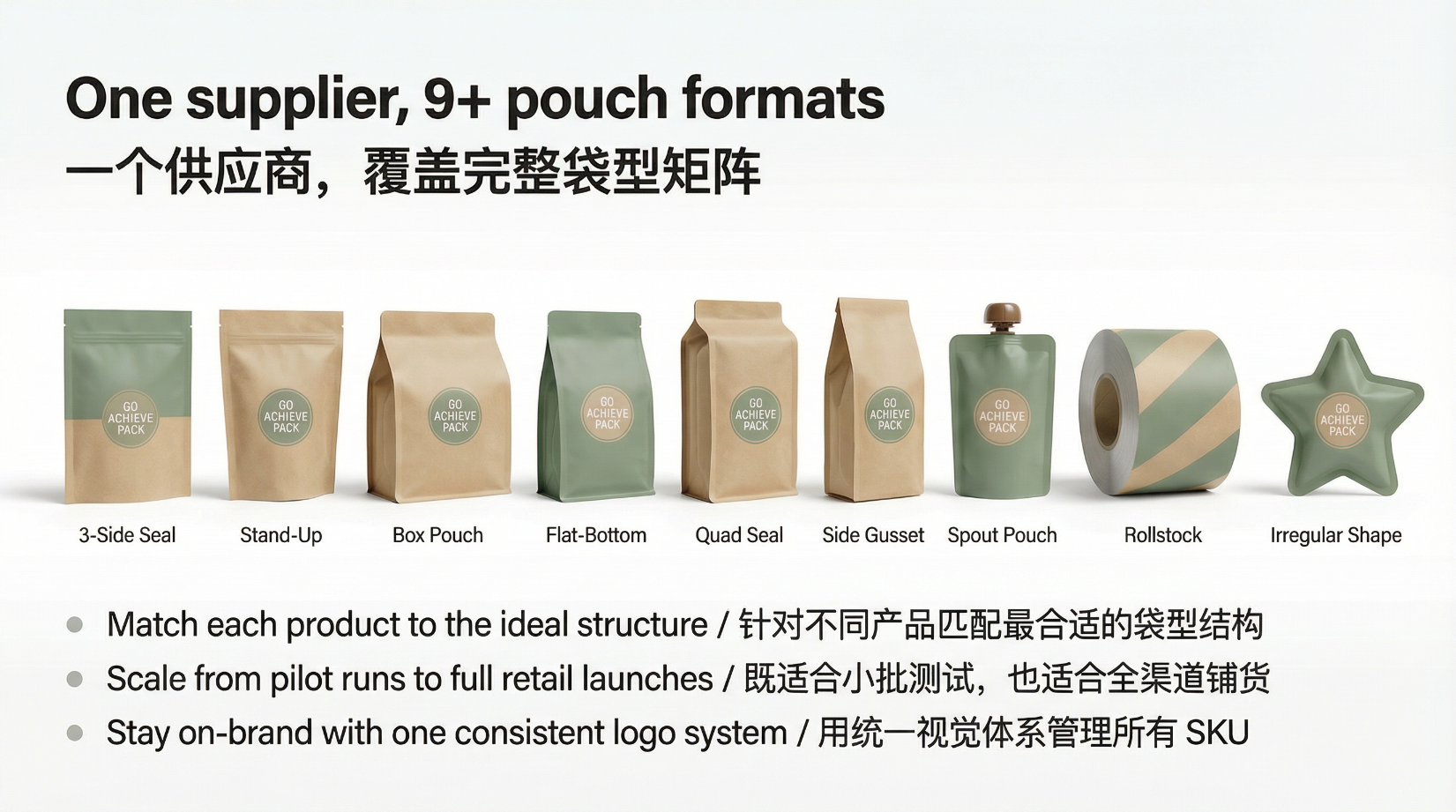
AchievePack engineers and manufactures five core classifications of circular flexible packaging. Designed for modern eco-conscious brands, these materials guarantee regulatory compliance (such as EU PPWR and state-level environmental guidelines) while maintaining optimal barrier integrity and shelf life.
1. Curbside Recyclable Mono-PE
Made from 100% Polyethylene (LDPE #4). This single-polymer structure is fully recyclable through European/UK curbside collection and USA Store Drop-Off networks. Optional EVOH coatings (<5% total weight) deliver extreme oxygen and moisture barriers without compromising the recycling stream.
2. Heat-Resistant Recyclable Mono-PP
Formulated from single-polymer Polypropylene (PP #5), providing excellent optical clarity, high rigidity, and thermal tolerance. Engineered specifically to survive hot-fill processes, pasteurization, retort cooking, and microwave sterilization lines.
3. Certified Compostable Biopolymers
Constructed from plant-derived biopolymers including natural Kraft paper, NatureFlex cellulose, and certified PLA/PBAT/PHA sealable blends. Extensively tested and certified under ASTM D6400 (USA) and EN 13432 (EU) to degrade into organic soil nutrients within 180 days.
4. PCR (Post-Consumer Recycled) Polymers
Integrates GRS-certified post-consumer recycled plastic resins into the laminate structure. Helps brands reduce dependence on virgin fossil resources, lower carbon footprints, and completely bypass plastic packaging taxes in global regions.
5. Carbon-Negative Sugarcane Bio-PE
Sourced from sugarcane bio-PE that acts exactly like petroleum PE. Captures atmospheric CO₂ during sugarcane growth, delivering carbon-negative performance while remaining 100% recyclable in standard PE sorting streams (#4).
Biopolymer Lab Validation & Compostability Proof
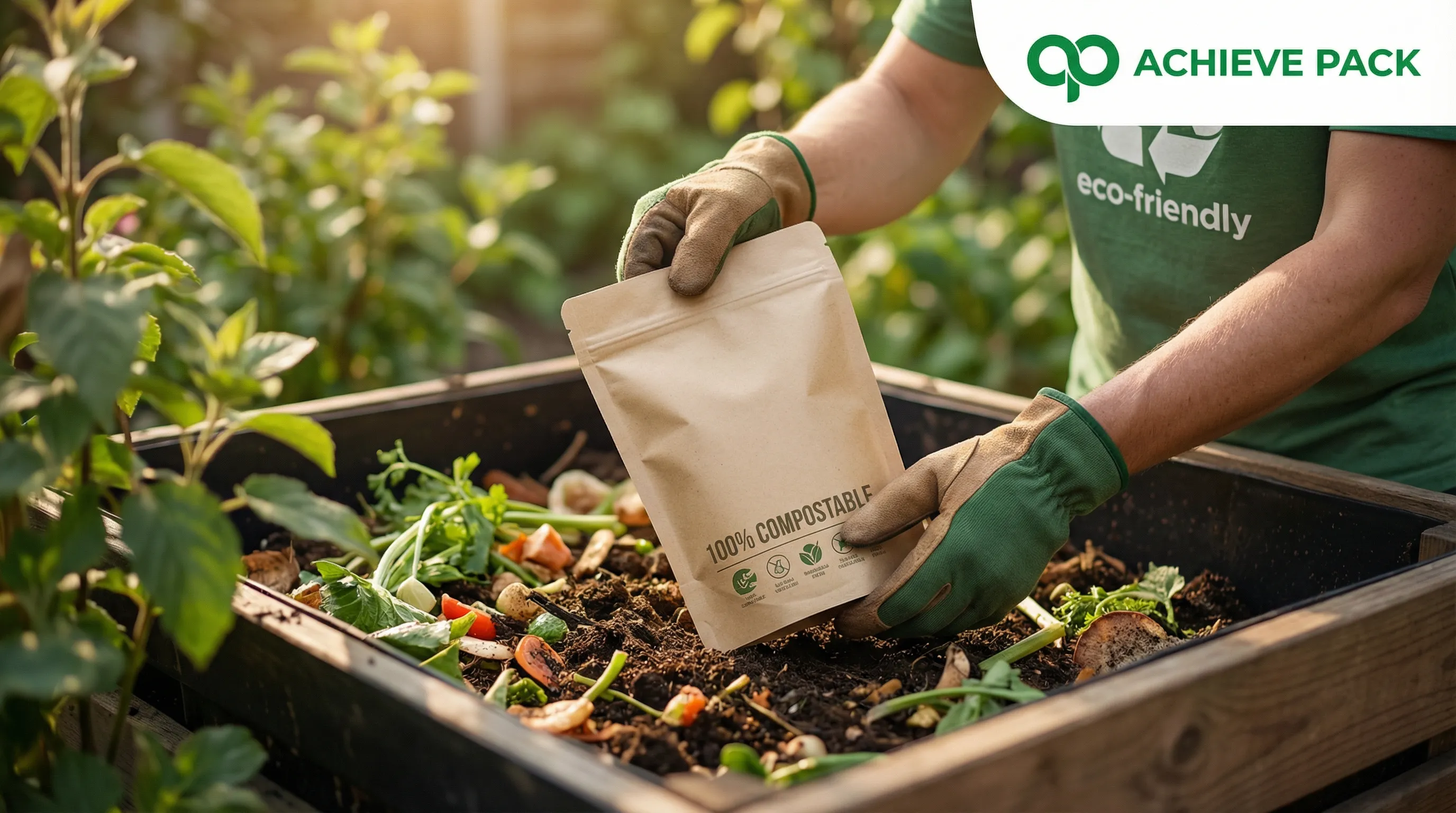
We don't make vague green claims. Our biopolymers (NatureFlex, PLA/PBAT) are batch-tested to verify 100% biodegradation in home and industrial composting within 180 days with zero toxic ecotoxicity residues.
Compostable Barrier (OTR)
Tested barrier layers (NK/NatureFlex) ensuring moisture and aroma protection.
Organic Chemical Purity
Exceeds EN 13432 criteria for organic safety and clean soil composting.
Biopolymer Sealing Window
Narrowed sealing temperature range preventing biopolymer deformation or thermal burn.
TÜV OK Compost HOME
Guarantees complete organic degradation in backyard compost bins within 26 weeks.
Puncture Strength (ASTM F1306)
Ensures biopolymer bag walls resist puncture during manual handling and packing.
Tensile Strength (ASTM D882)
Ensures biopolymer bags support products securely without structural stretch.