- →
- →
- →
- ✓
- ✓
- ✓
- ✓
- ✗
- ✗
- ✗
- ✗
5 Common Trapping & Keyline Problems (And Solutions)
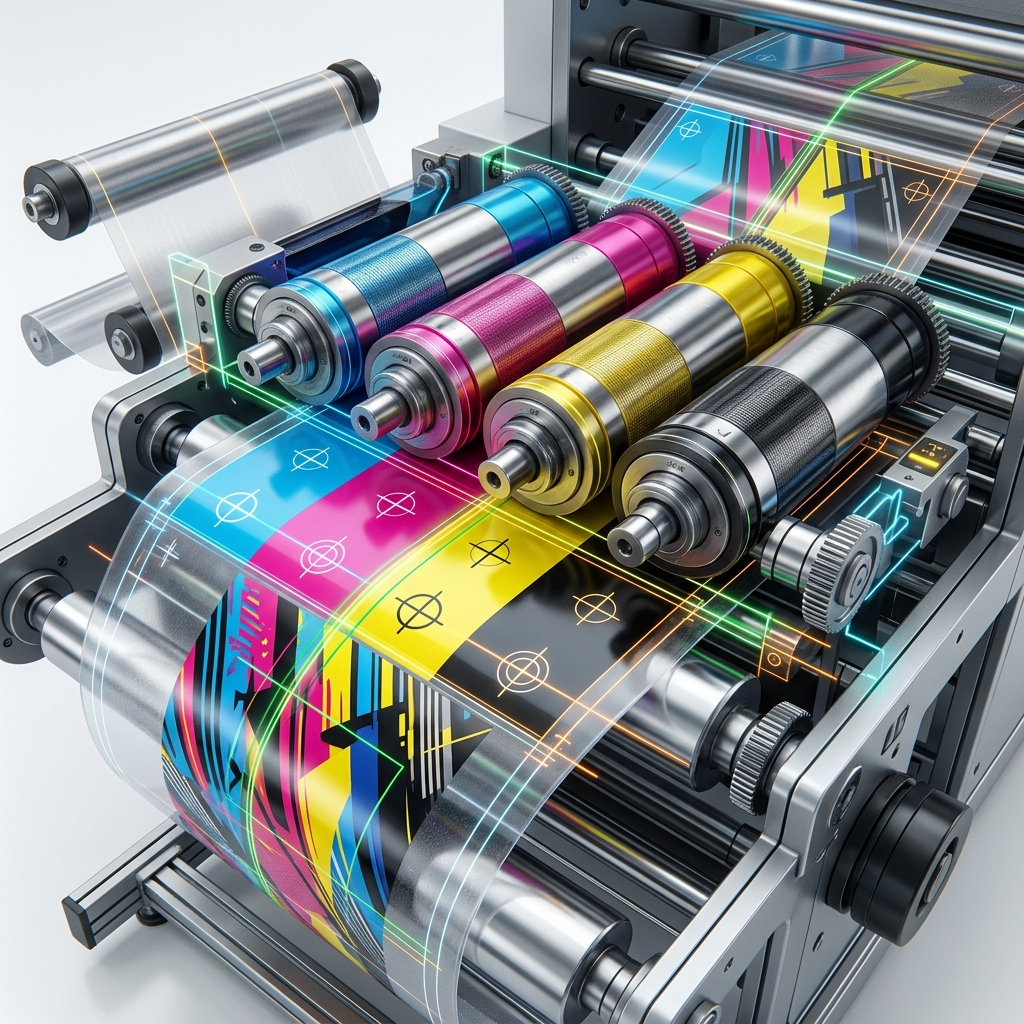
Color Registration Shift (Misregistration)
High-speed printing can cause slight misalignment. Solution: Apply a calculated overlap (trap) between adjacent colors to prevent white gaps.
Dark Outlines on Light Elements
Spreading dark colors over light ones reduces legibility. Solution: Use choke trapping (shrinking the background under the light element) instead of spreading.
Ink Bleeding at Edges
Wet inks can mix at their boundaries. Solution: Add a keyline (a thin holding line) around elements to contain colors and improve sharpness.
Knockout Text Filling In
Small white text on dark backgrounds often fills with ink. Solution: Implement proper keep-away (reverse trapping) to ensure text remains clean.
Inconsistent Special Finishes
Metallic foils or spot UV can overlap standard inks, causing adhesion issues. Solution: Use precise keylines to isolate specialty finishes from standard inks.
AchievePack Eco Material Specifications
Direct-Factory Certified Sustainable Laminates
AchievePack designs and manufactures five classes of circular flexible barrier packaging materials. These options help brand owners meet regulatory standards (like EU PPWR and state-level laws) without sacrificing barrier performance or shelf-life.
1. Curbside Recyclable Mono-PE
Made from 100% Polyethylene (LDPE #4). This single-polymer structure is fully recyclable through European/UK curbside collection and USA Store Drop-Off networks. Optional EVOH coatings (<5% total weight) deliver extreme oxygen and moisture barriers without compromising the recycling stream.
2. Heat-Resistant Recyclable Mono-PP
Formulated from single-polymer Polypropylene (PP #5), providing excellent optical clarity, high rigidity, and thermal tolerance. Engineered specifically to survive hot-fill processes, pasteurization, retort cooking, and microwave sterilization lines.
3. Certified Compostable Biopolymers
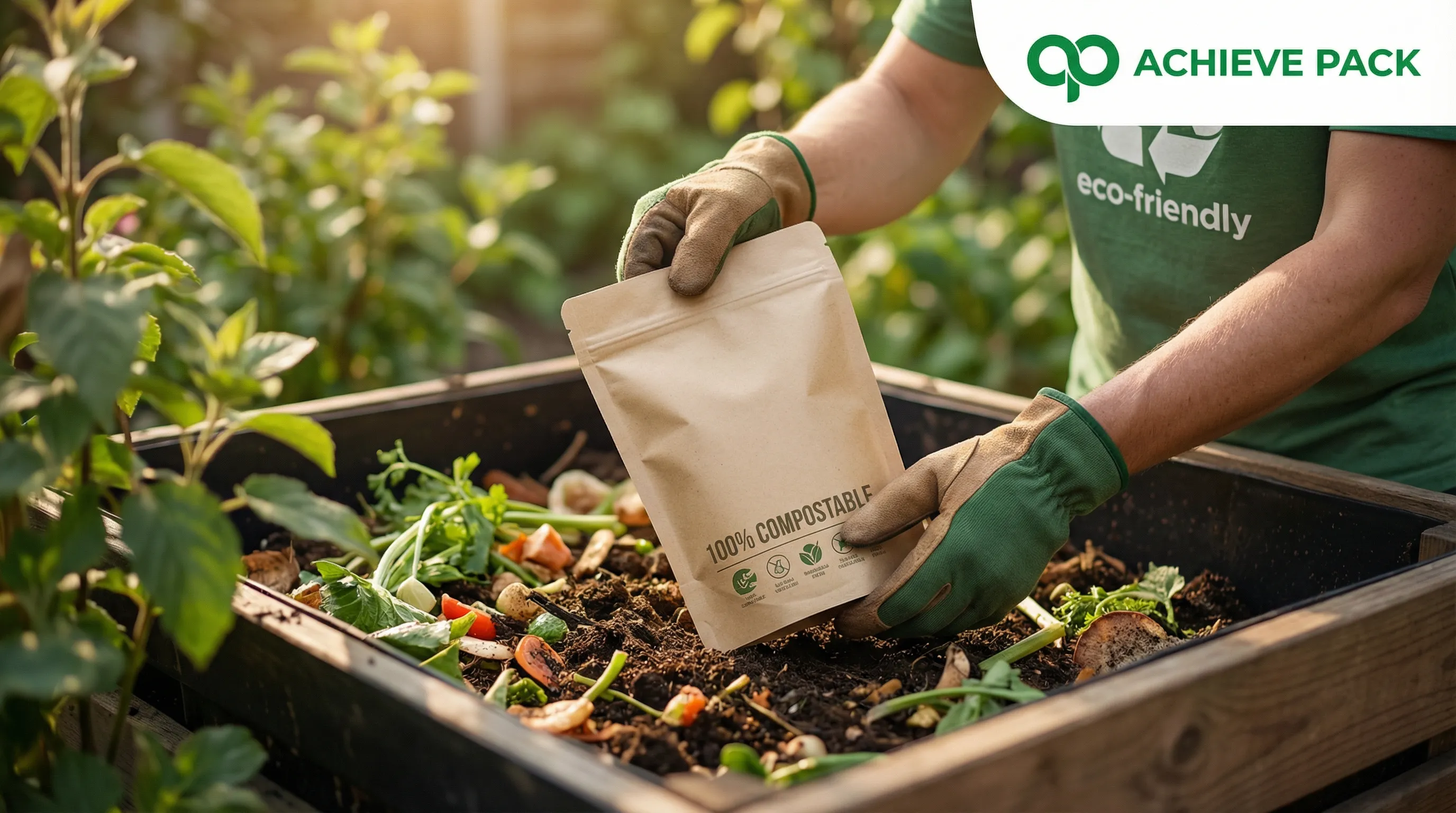
Constructed from plant-derived biopolymers including natural Kraft paper, NatureFlex cellulose, and certified PLA/PBAT/PHA sealable blends. Extensively tested and certified under ASTM D6400 (USA) and EN 13432 (EU) to degrade into organic soil nutrients within 180 days.
4. PCR (Post-Consumer Recycled) Polymers
Integrates GRS-certified post-consumer recycled plastic resins into the laminate structure. Helps brands reduce dependence on virgin fossil resources, lower carbon footprints, and completely bypass plastic packaging taxes in global regions.
5. Carbon-Negative Sugarcane Bio-PE
Sourced from sugarcane bio-PE that acts exactly like petroleum PE. Captures atmospheric CO₂ during sugarcane growth, delivering carbon-negative performance while remaining 100% recyclable in standard PE sorting streams (#4).
Technical Factory Validation & Quality Control
We don't just supply pouches; we validate every batch. Every raw material and finished pouch runs through our 6-step testing protocol to guarantee automatic packaging line compatibility and food-safe barrier preservation.
OTR & WVTR Barrier (MOCON)
Tested under ASTM D3985 & ASTM F1249 to ensure fresh shelf life up to 18 months.
GC-MS Solvent Residue
Gas Chromatography-Mass Spectrometry ensures zero odor transfer and absolute food safety.
Heat Seal Strength (ASTM F88)
Guarantees no seam burst under high pressure, perfect for VFFS automatic packing lines.
BRCGS Global Standard
Produced in Class 100,000 dust-free cleanrooms, ensuring zero contamination.
Puncture Resistance (ASTM F1306)
Prevents tear or puncture from sharp, hard items like coffee beans and pet kibble.
Tensile Strength (ASTM D882)
Ensures shape retention and structural integrity when heavy bags are dropped or stacked.